

JB Insights
Union Budget 2026-27 is a boost for India’s gems & jewellery sector via liquidity, manufacturing support, and exports.
A design-led innovation that interprets the language of the face to create a more intuitive, confident jewellery experience to frame the unique ‘Shape of You’!


#JbExclusive

Kirit Bhansali, Chairman -GJEPC
The proposed measures focus on easing trade and strengthening the gems and jewellery ecosystem through a mix of regulatory and financial reforms. Customs processes are set to become more trust-based, with digital appraisals and simplified clearances aimed at reducing delays and costs. To help manufacturers utilise idle capacity amid US tariffs, SEZ units will be allowed to sell into the domestic tariff area at concessional duties.
MSMEs and e-commerce exporters will benefit from an increased Rs.10 lakh cap on courier exports and the introduction of advance filing of Bills of Entry for faster clearances. Financial support is being reinforced through a Rs.10,000 crore Growth Fund, Rs.2,000 crore for micro units, expanded TReDS financing of Rs.7 lakh crore, and an extension of duty deferment to 30 days. Additionally, duty-free imports of lab-grown diamonds and sawn diamonds have been extended until 2028, alongside the establishment of a new National Institute of Design–linked initiative to drive design innovation, supporting the long-term goal of achieving $100 billion in gems and jewellery exports by 2047.
Prithviraj Kothari, National President-IBJA
Union Budget 2026–27 focused on sustained 7% growth through fiscal discipline, structural reforms, and people-centric development. It prioritised manufacturing, MSMEs, services, infrastructure, energy security, and trust-based governance, while advancing Viksit Bharat via inclusive growth, financial stability, and ease of doing business. The bullion industry had expected a cut in import duty on gold, GST rationalisation, export incentives and extended credit support.
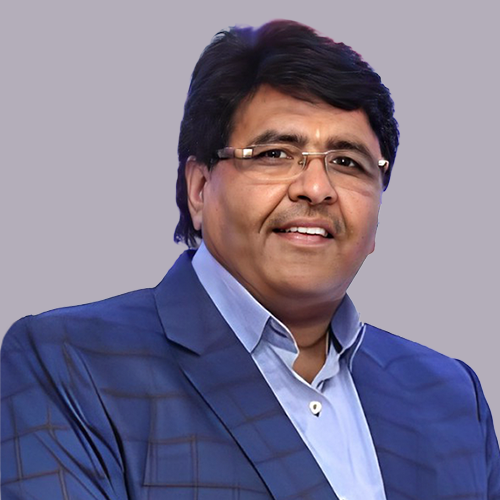
The Budget announced capital gains tax exemption on RBI Sovereign Gold Bonds, applicable only to original subscribers, not to secondary market buyers, while there were no announcements of any meaningful reduction in gold import duty or GST reforms.

Rajesh Rokde, Chairman- GJC
The Union Budget 2026–27 reflects a stable and sensitive approach towards the Gems & Jewellery industry. The absence of any increase in customs duty or GST, continued policy certainty, strong MSME and cluster support, ease-of-doing-business measures, and litigation-reducing income-tax reforms together provide confidence to the trade and reinforce the Government’s recognition of our sector as a key contributor to employment, exports, and economic growth.
Avinash Gupta, Vice Chairman, GJC
The Gems & Jewellery trade welcomes the Union Budget 2026-27. The absence of any increase in customs duty, combined with strong MSME support, improved access to finance, simplified income-tax compliance, and enhanced ease-of-doing-business measures, will enable jewellers across the value chain to plan confidently and focus on sustainable growth amid global uncertainties.
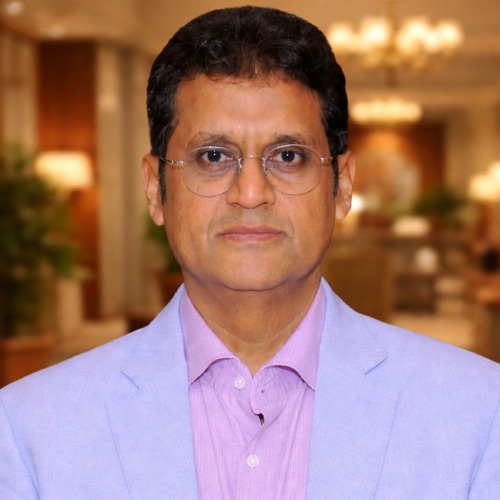

Surendra Mehta, National Secretary IBJA
Gold and silver industry is relieved as there is no change in custom duty. A consistent customs duty helps industry and does not create confusion in the buyer’s mind.
Capital gain exemption on redemption of maturity of sovereign gold bond is now kept only for original subscriber -this is also a welcome step; it will avoid different tax treatment by officers for different assessee.
Jignesh Mehta, MD and Founder – Divine Solitaires
While the Finance Minister’s long-term focus on infrastructure development, skill development, and AI/technology-enabled growth elevate the manufacturing ecosystem at a broader level, the absence of key announcements for the natural diamonds industry and the Gems & Jewellery sector was a disappointment.
We were expecting more targeted reforms, given India’s position as one of the largest diamond manufacturing and processing hubs globally.

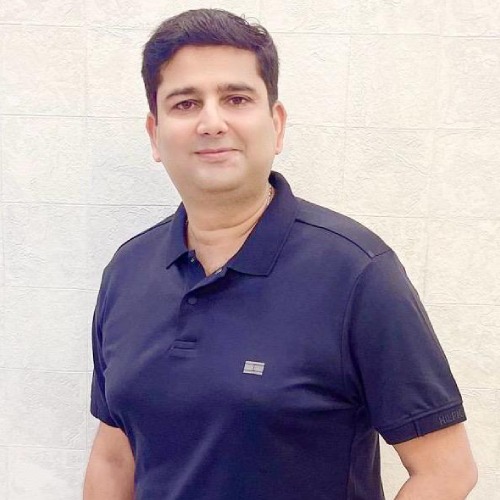
Manoj Jha, CMD Kamakhya Jewels Ltd
The Budget strikes a strong balance between growth and fiscal discipline, reinforcing stability for the gems & jewellery industry. Policy continuity, infrastructure focus and tax clarity boost confidence, improve planning across the ecosystem, and support sustainable long-term growth in India and global markets.
Suvankar Sen, MD & CEO, Senco Gold and Diamonds
The Union Minister’s focus on macroeconomic stability, infrastructure, MSME growth, skilling, and technology adoption reflects a strong long-term vision. For eastern India–based manufacturers like us, the emphasis on skilling and regional development is especially encouraging, as it will strengthen the workforce with professionally trained talent.

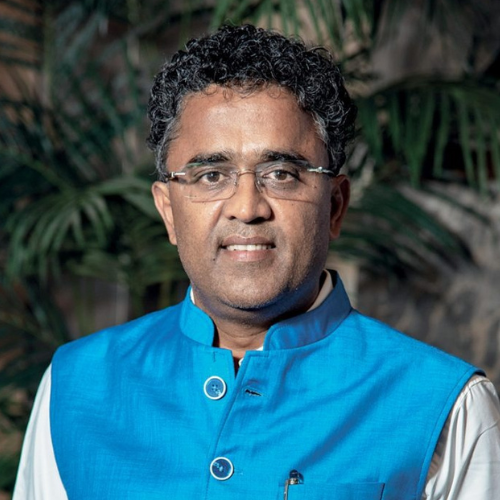
Ghanshyam Dholakia, Founder & MD-Hari Krishna Exports and KISNA
We view the Union Budget 2026–27 as a constructive and growth-oriented step for the gems and jewellery sector, with an emphasis on ease of doing business. The move toward trust-based customs, faster clearances, smoother bonded warehouse movements, removal of the cap on courier exports, and an improved GST refund framework will enhance supply-chain efficiency and unlock working capital across the value chain.
Enhanced MSME financing backed by credit guarantees further strengthens liquidity for manufacturers and exporters. The balanced tax treatment of Sovereign Gold Bonds and physical gold also supports a fair and consumer-friendly market.
Kaushlendra Sinha CEO- Indian Association for Gold Excellence and Standards (IAGES)
“The Budget’s emphasis on economic stability and formalisation creates a supportive environment for India’s gold ecosystem. Amid volatile gold and silver prices, the industry’s commitment through IAGES to transparency, governance and recognised standards is vital to sustaining consumer trust. As demand grows beyond metros, compliance and excellence will be key to building a credible and globally competitive gold industry.”


Paul Alukkas, MD-Jos Alukkas
The Union Budget 2026–27 reinforces confidence in the economy by backing growth of around 7% while staying on a fiscal consolidation path, with the deficit targeted to decline from 4.8% in FY25 to 4.4% in FY26. This focus on macroeconomic stability is reassuring for households and businesses. Measures such as TDS rationalisation and lower TCS on education expenses abroad should boost disposable incomes and discretionary spending and this is a welcome measure.
The continued emphasis on MSMEs, credit availability and formalisation is expected to support jewellers, particularly in tier-2, tier-3 and rural markets.
Naresh Balani,Chairman, JMA Forum
The Union Budget 2026 is a positive and encouraging step for the MSME manufacturing sector. Its focus on credit access, technology, and Make in India will strengthen jewellery machinery manufacturers and help Indian MSMEs compete globally.

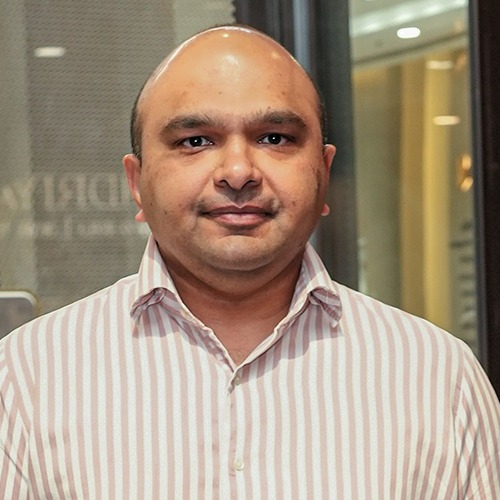
Neil Sonawala,MD, Zen Diamond
Budget 2026 strikes a pragmatic balance between fiscal discipline and consumption-led growth, which is critical for the jewellery industry. The continued focus on stable customs duties on gold and inputs brings much-needed predictability to the sector, allowing brands to plan pricing and inventory with greater confidence. Measures that support disposable income and urban consumption will directly benefit discretionary categories such as fine jewellery.
Dr. Renisha Chainani, Head of Research – Augmont
Union Budget 2026-27 focuses on action-led, people-centric growth, targeting ~7% GDP expansion through fiscal discipline, infrastructure-led capex, MSME support, manufacturing, services growth and green initiatives under the ‘Viksit Bharat’ vision. However, despite industry expectations for relief amid high gold and silver prices-such as import duty cuts, GST rationalisation and customs reforms-the Budget did not announce any major sector-specific measures for the gems and jewellery industry.


Namita Kothari, Founder – Akoirah by Augmont
Union Budget 2026-27 supports productivity-led growth and fiscal stability, reinforcing long-term confidence in discretionary sectors like jewellery. While there are no direct incentives for the industry, the focus on trade facilitation, competitiveness and capital market participation-including wider NRI access-is positive for organised, compliant players. For emerging segments like lab-grown diamonds, long-term growth will depend on manufacturing strength, skilling, export readiness and building consumer trust through transparency and quality standards.





By Invitation
India’s Next Decade in Jewellery Exports: Scale, Discipline & Global Positioning
By Darshan Chauhan, Director –


Sky Gold Ltd.
India’s jewellery export journey has been built on generations of craftsmanship, entrepreneurial resilience and an unmatched manufacturing ecosystem. From artisan-led workshops to technologically advanced facilities, the country has steadily earned global recognition as a reliable sourcing destination. Yet the coming decade represents a transition. The conversation is no longer only about producing more; it is about exporting smarter, operating with discipline and positioning India as a structured global partner rather than merely a manufacturing base.
The global jewellery trade itself is undergoing a quiet transformation. International buyers today evaluate suppliers through a wider lens. Design capability and competitive pricing remain important, but equal weight is now given to compliance, transparency, delivery consistency and financial stability. Export relationships are becoming long-term strategic partnerships rather than transactional buying arrangements.
For Indian exporters, this shift presents both an opportunity and a responsibility.
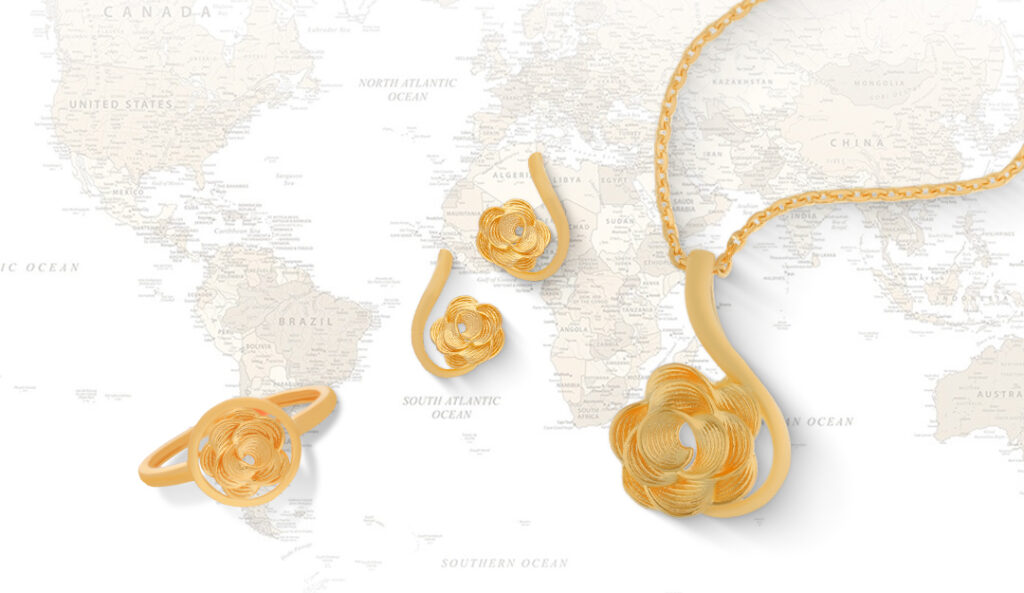
One of the most significant changes ahead will be market diversification. The United States has historically driven a substantial share of India’s jewellery exports, and it will continue to remain a vital market. However, concentration in a single geography exposes businesses to currency fluctuations, economic cycles and regulatory shifts. The Middle East has emerged as a strong growth corridor, supported by trade agreements, logistical advantages and evolving consumer demand. At the same time, regions such as Australia and parts of Europe are opening opportunities for exporters willing to meet higher compliance standards.
Diversification, therefore, is not about expanding aggressively into every market. It is about building balanced exposure that enhances stability while protecting margins.
Alongside geographic expansion, compliance is becoming a defining factor in global positioning. Responsible sourcing practices, traceability systems and governance standards are increasingly shaping procurement decisions. International brands are consolidating supplier networks and partnering with exporters who demonstrate reliability beyond production capability. In this environment, compliance should not be viewed as an external obligation. It strengthens credibility and enables access to premium markets where trust carries measurable value.
Equally important is capital discipline. Jewellery exports operate within a high-value commodity framework where gold price volatility directly impacts profitability. Elevated gold prices amplify the cost of inefficiencies, whether through excess inventory, unhedged exposure or extended payment cycles. Export growth in the coming decade will depend on closer alignment between procurement, treasury management and production planning. Structured hedging practices, bullion banking relationships and disciplined working capital management will increasingly separate stable exporters from vulnerable ones.
Manufacturing evolution will also play a central role. India already possesses scale; the next step is precision. Technology adoption, including CNC manufacturing, advanced prototyping and integrated digital production systems, enhances consistency while reducing wastage. Global buyers value predictability as much as creativity. When craftsmanship is supported by
process-driven manufacturing, India’s competitive advantage becomes far more compelling.
At the same time, India must gradually move beyond being perceived solely as a cost-competitive supplier. Countries that have successfully strengthened their global positioning have invested in design identity, innovation and long-term brand perception. Indian exporters have the opportunity to shift the narrative toward reliability, creativity and manufacturing excellence. Building deeper partnerships with international buyers, rather than focusing only on order volumes, will help achieve this transition.
Sustainability is emerging as another critical dimension of export strategy. Renewable energy adoption, responsible sourcing and environmental accountability are becoming key evaluation criteria in developed markets. These initiatives are not merely ethical considerations; they are risk-management tools that safeguard long-term market access. Exporters who align early with global sustainability expectations will find themselves better positioned as international standards continue to evolve.
Domestic retail trends are also influencing export direction more than before. The growing demand for lightweight, versatile jewellery in India mirrors changing consumer preferences globally. Faster design cycles and data-led product planning are reshaping manufacturing strategies. Exporters who remain closely connected to consumer behaviour both domestically and internationally gain stronger foresight into demand patterns.
The next decade of Indian jewellery exports will therefore be defined by alignment: scale supported by systems, creativity supported by discipline and growth supported by governance. India already has the foundation, skilled artisans, manufacturing depth and strong global relationships. The opportunity now lies in strengthening operational maturity.
If approached with clarity and intention, India can transition from being viewed primarily as the world’s jewellery workshop to being recognised as a trusted global partner in design, manufacturing and supply chain excellence. The future of exports will not depend solely on how much we produce, but on how confidently global markets rely on us.
In that shift lies the true potential of India’s next decade in jewellery exports.




Indriya unveils ‘Orizon’ at Lakmē Fashion Week X FDCI, in partnership with Amit Aggarwal

Ashth Prive’s New Udaya collection Turns the Geometry of Rani ki Vav into Radiant High Jewellery

Lukson Launches ‘Glitch Glam’ – A Bold New Collection Inspired by the Electric Energy of EDM Nights

IIJS Bharat Tritiya 2026 Wraps Up Triumphant 4th Edition, Connecting 15,000 Buyers with India’s Top Jewellery Manufacturers

Bhima Jewellery’s Theni Showroom Relaunched By Actress Aishwarya Lekshmi

India’s Next Decade in Jewellery Exports: Scale, Discipline & Global Positioning
-
 ShowBuzz2 days ago
IIJS Bharat Tritiya 2026 Wraps Up Triumphant 4th Edition, Connecting 15,000 Buyers with India’s Top Jewellery Manufacturers
-
 GlamBuzz2 days ago
Bhima Jewellery’s Theni Showroom Relaunched By Actress Aishwarya Lekshmi
-
 By Invitation2 days ago
India’s Next Decade in Jewellery Exports: Scale, Discipline & Global Positioning
-

 New Premises22 hours ago
PNG Jewellers intensifies retail strength with launch of its New Store in Varanasi by Madhuri Dixit