
JB Insights
Gold is Talking, Silver is Screaming – A Case for Prudent Repositioning
A WhiteOak Capital MF Report


In the language of commodities, Gold is supposed to be the steady narrator of macroeconomic health. When it “talks”, it mainly signals geopolitical tensions, systemic risks inside or outside major global economies, and may portend currency devaluation because of the above risks. But when Silver begins to “scream”, outperforming gold with high velocity/parabolic moves, it often signals the final, speculative stage of a run; one that historically ends against investors’ best interests.
As we move through Q1 2026, the screaming has reached a fever pitch that should give every investor pause. With Gold near Rs.1,58,885/10g and Silver testing Rs.3,45,375/kg, the data suggests that for the prudent Indian investor, the most profitable move now is not to chase, but to diversify.
The Ratio Trap: Why Silver is “Expensive” in INR
The Gold-to-Silver Ratio (GSR) measures the relative value between the two metals.
- The Compression: Based on current prices, the ratio has collapsed to approximately 46:1.
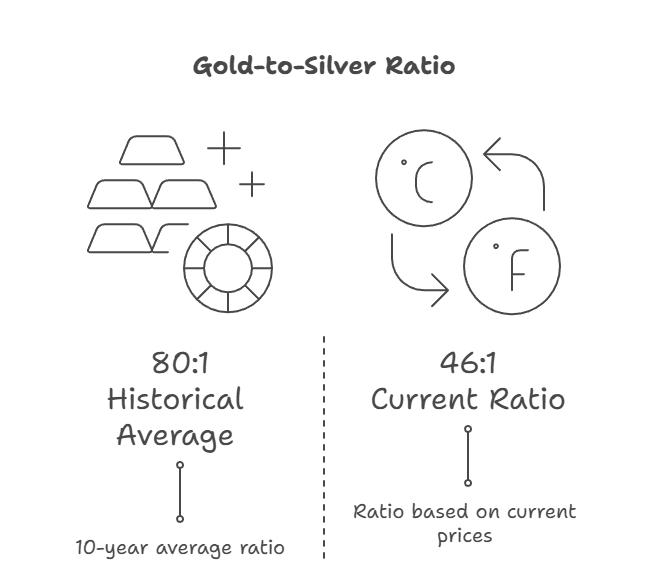
- The Warning: Historically, the 10-year ratio averages close to 80:1. When it drops below 50:1, silver is no longer cheap. In previous cycles, a ratio this low has preceded a mean reversion where silver prices corrected significantly faster relative to gold.
The Case for Indian Equities over exposure to these metals
The biggest risk of holding metals at record highs is the opportunity cost.
- Earnings vs. Inertia: An ounce of gold/silver produces no cash flow. In contrast, the Nifty 50 companies reinvest profits to grow, and reward investors by returning cash (in the form of dividends), as well as through capital appreciation. Since inception, the Nifty 50 (TRI) has matched or exceeded gold’s CAGR of ~13.2% while providing far superior liquidity compared to holding physical metal.
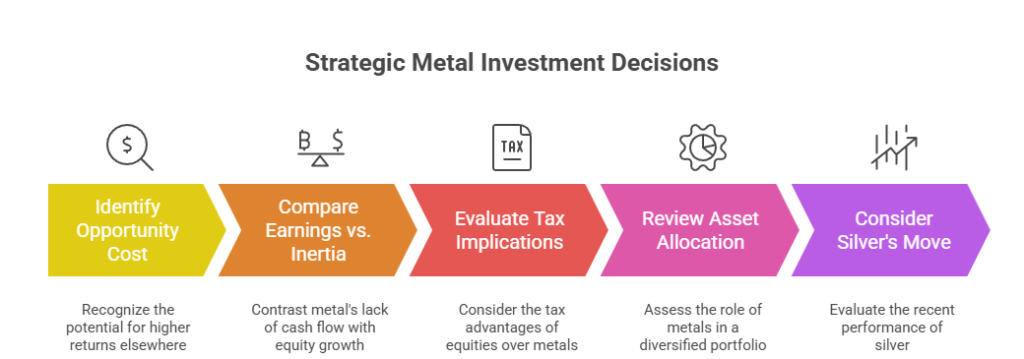
- The Tax Alpha:In the 2026 tax landscape, Indian equities offer a Rs1.25 Lakhannual exemption on Long-Term Capital Gains (LTCG). Physical gold and silver have no such exemption and require a longer holding period to qualify for lower tax rates.
At WhiteOak, we have historically viewed Gold through the lens of asset allocation. While we previously maintained only an arbitrage position in Silver, its recent explosive move warrants a closer look at how these “insurance” assets should function in an investor’s portfolio.
How We Manage This: The WhiteOak Capital Multi Asset Allocation Fund Approach
In MAAF, we treat gold and silver as tactical components within a broader mix of Equity and Debt.
Dynamic Rebalancing: Our objective is to generate long-term capital appreciation by investing across multiple asset classes
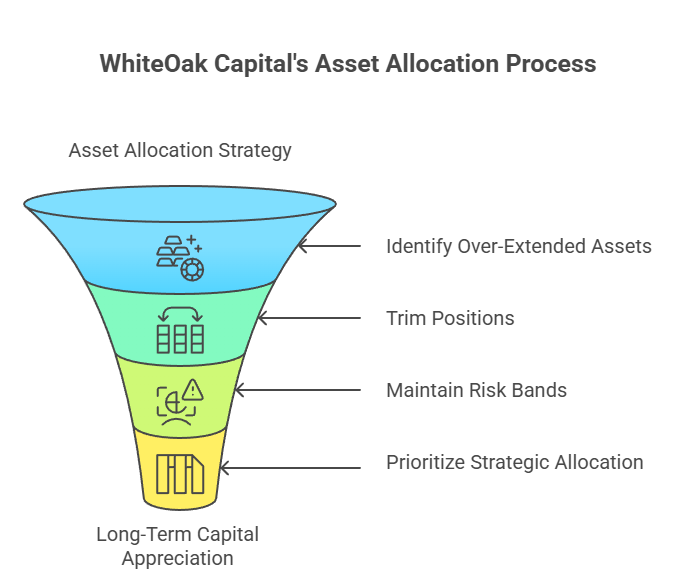
Current Stance: When metals “scream” as they are doing now, the MAAF framework allows us to systematically trim these positions to stay within risk appropriate bands, ensuring we aren’t exposed to a single, speculative or over-extended trade.
We may be early in trimming these positions, but staying true to our strategic allocation allows us to be nimble and prioritizes the integrity of our investment process.
The “Insurance” Framework: How much is enough?
Under normal market conditions, precious metals act as a hedge against inflation, market, and any other exogenous shock. The optimal allocation depends on an investor’s risk profile.
- Moderate Investor Profile: 8%-10% – mainly to balance resilience and inflation protection
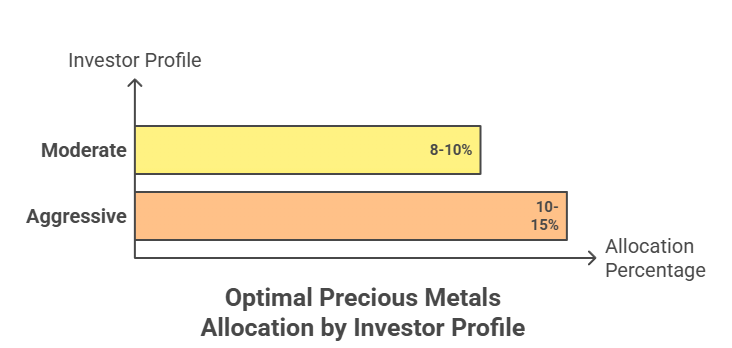
- Aggressive Investor Profile: 10%-15%: mainly tactical positioning to aid a high equity allocation
The Insurance has Worked: If an investor held these target allocations a year ago, the recent price surges mean that their portfolio is likely now overinsured, and that the allocation has likely drifted far beyond these desirable levels. This may be the optimum time to harvest the gains rather than pay for more insurance.
Strategic Reallocation: What to do Now
Harvest the “Scream”: Take profits on silver first, as its current valuation is the most over-extended relative to historical periods.
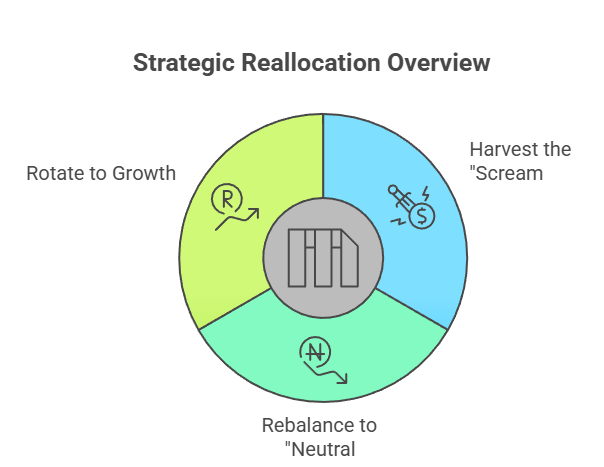
Rebalance to “Neutral”: Trim your precious metals back to a safe haven level in your total portfolio.
Rotate to Growth: Move harvested gains into diversified Indian equity funds or blue-chip stocks.
Final Thought: Gold and silver are essential insurance, but we don’t buy more insurance after the house has already been saved. The “screaming” in the silver market is the signal that the exit door is getting crowded. It may be prudent to move your capital to an asset that builds wealth, not one that simply waits for a disaster.


JB Insights
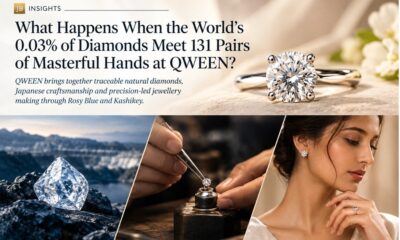
What Happens When The World’s 0.03% Of Diamonds Meet 131 Pairs Of Masterful Hands At QWEEN?
QWEEN Brings Together Traceable Natural Diamonds, Japanese Craftsmanship and Precision-Led Jewellery Making Through Rosy Blue and Kashikey.

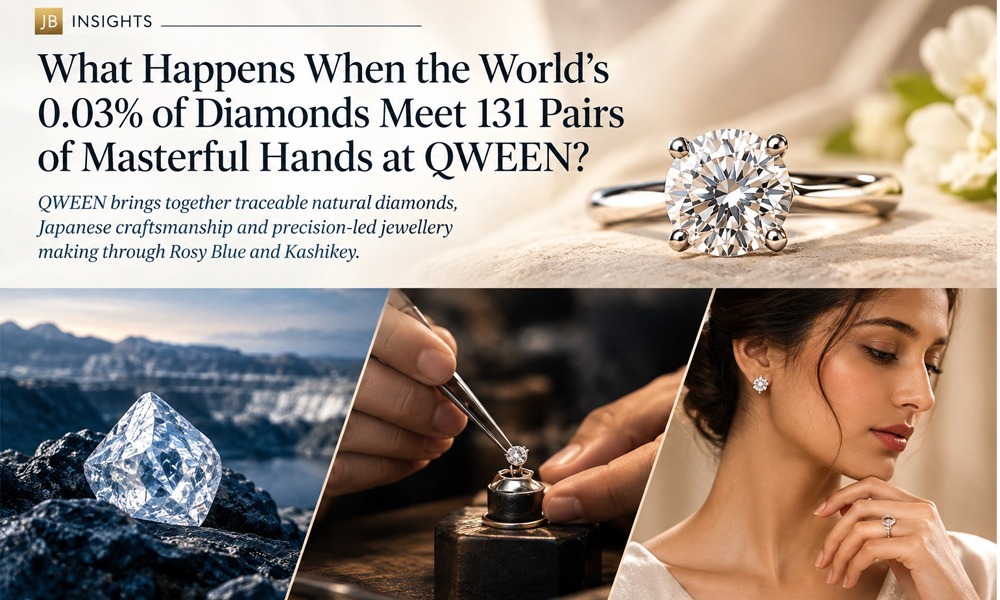
QWEEN, India’s first self-discovery, 100% natural experiential luxury jewellery brand, has detailed the strategic roles of Rosy Blue and Kashikey in powering its product proposition. Beyond being investors in the brand, Rosy Blue and Kashikey serve as QWEEN’s core supply-chain and craftsmanship partners, respectively, bringing together traceable access to 100% natural diamonds and nearly a century of Japanese craftsmanship expertise.
You know the diamond. But do you know its journey?
As QWEEN’s single strategic supply-chain partner, Rosy Blue brings over six decades of diamond expertise and sourcing capabilities to the brand. This partnership enables QWEEN’s Mine to Marvel™ initiative, allowing consumers to trace their diamonds back to their mine of origin.
At QWEEN, the story behind the stone is as important as the sparkle you see. And not every diamond makes it into a QWEEN. Only 0.03% of the world’s diamonds that enter QWEEN’s selection process meet its exacting standards.
Every QWEEN diamond is 100% natural and perfectly cut, meeting the Hearts & Arrows standard. At the QWEEN store, consumers can see that precision for themselves through specialised viewers.
“At Rosy Blue, we believe that trust must be established across the entire value chain. Our partnership with QWEEN brings together exceptional natural diamonds, greater traceability and consistent product standards, giving consumers greater visibility into the journey of their diamond and a clearer understanding of what makes it exceptional,” said Ms. Manali Jayant Parekh, Director, Rosy Blue.
But knowing the diamond is only half the story. What happens to it next matters just as much.
QWEEN’s strategic craftsmanship partner, Japanese luxury jewellery house Kashikey, brings nearly a century of jewellery-making expertise to the brand. Founded in 1928, Kashikey’s craftsmanship informs the construction, setting and finishing of QWEEN jewellery.
A QWEEN jewel is made by 131 pairs of masterful hands. From planning, cutting and polishing to setting and quality checks, every pair brings a decade or more of specialised expertise to the piece before it reaches the woman who wears it.
That attention to detail extends to the smallest elements of the jewellery. One example is QWEEN’s four-prong setting, which leaves more of the diamond visible than a conventional six-prong setting while keeping it securely held.
“For nearly a century, Kashikey has pursued beauty through precision, balance and attention to detail. Our partnership with QWEEN brings this approach to jewellery created for the modern Indian woman, where every element, from the setting to the finish, is considered to enhance the beauty of the diamond while preserving the integrity of the piece,” said Mr. Hisao Kato, Chairman, Kashikey Co. Ltd.
Amit Kumar, Co-founder and CEO, QWEEN said:
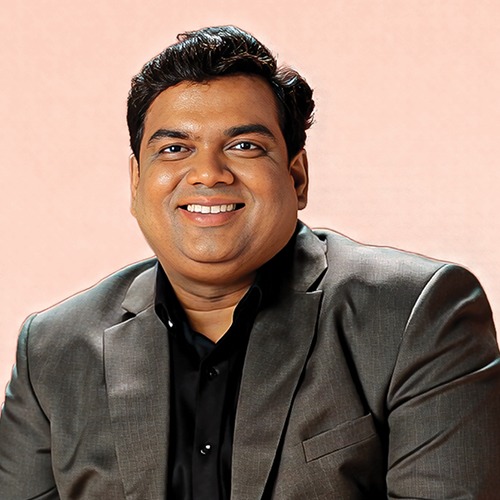
“For us, these partnerships go well beyond investment. Rosy Blue, as our single strategic supply-chain partner, gives us the ability to build traceability, consistency and rigorous selection standards into every QWEEN diamond, while Kashikey brings decades of craftsmanship and precision to how we turn those diamonds into jewellery. We wanted all of that to be part of the product itself, so women can see and understand what makes a QWEEN piece different.”
From knowing where the diamond came from to understanding how precisely it was cut and how carefully it was crafted, QWEEN is building a jewellery experience where trust is not just a promise. It is something you can see for yourself.
With Rosy Blue as its single strategic supply-chain partner and Kashikey as its strategic craftsmanship partner, QWEEN brings together diamond expertise, traceability and nearly a century of Japanese craftsmanship to set a new standard for the jewellery a woman chooses to wear.



PNG Jewellers Wins IACC Excellence In Service Award At IACE 2026

Dagina Maharashtra-Cha — Since 1832: PNGS Welcomes Ganeshotsav With Silver Rooted In Maharashtra’s Festive Heritage

India Has Emerged As The Most Important Startup Market In LGD Segment, Home To 70 Lab-Grown Diamond Companies

GJC CALLS 67% HIKE IN GOLD HALLMARKING CHARGES UNWARRANTED; SEEKS IMMEDIATE REVIEW
PNG Jewellers Wins IACC Excellence In Service Award At IACE 2026
Dagina Maharashtra-Cha — Since 1832: PNGS Welcomes Ganeshotsav With Silver Rooted In Maharashtra’s Festive Heritage
-
 National News5 hours ago
GJC CALLS 67% HIKE IN GOLD HALLMARKING CHARGES UNWARRANTED; SEEKS IMMEDIATE REVIEW
-
 National News3 hours ago
PNG Jewellers Wins IACC Excellence In Service Award At IACE 2026
-
 BrandBuzz4 hours ago
Dagina Maharashtra-Cha — Since 1832: PNGS Welcomes Ganeshotsav With Silver Rooted In Maharashtra’s Festive Heritage
-
 JB Insights5 hours ago
What Happens When The World’s 0.03% Of Diamonds Meet 131 Pairs Of Masterful Hands At QWEEN?
