
DiamondBuzz
Christie’s present The Golconda Blue:the largest fancy vivid blue diamond offered at auction

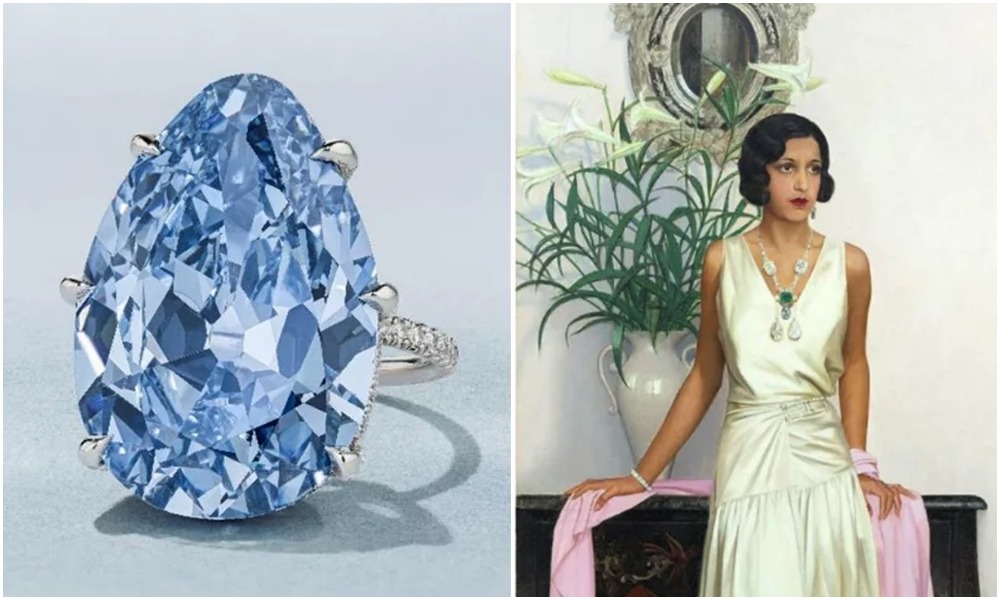
Christie’s is proud to present The Golconda Blue—the largest Fancy Vivid Blue Diamond ever to be offered at auction. Weighing an extraordinary 23.24 carats, this superb historic gemstone will headline Christie’s Magnificent Jewels sale, taking place live on 14 May 2025 at the Four Seasons Hotel des Bergues in Geneva, with an estimate of $35 – 50 million. The Golconda Blue, perfectly mounted in a ring by JAR, is a true masterpiece with its recently uncovered royal provenance, mesmerizing colour, and sensational size. It ranks among the rarest and most important diamonds ever discovered throughout history.
This exceptional pear-shaped Golconda diamond boasts a remarkable provenance rooted in Indian Royalty. Yeshwant Rao Holkar, the Maharaja of Indore and a member of the Holkar dynasty, was known—alongside his wife—for a lifestyle defined by elegance and cosmopolitan sophistication in the 1920s and ’30s. A Knight of the Order of the Indian Empire, the Maharaja spent much of his time abroad, cultivating a strong affinity for Western art, design, and jewellery.
In 1913, his father acquired the famed Indore Pear diamonds from Chaumet, marking the beginning of a long-standing relationship with the historic Parisian Maison. In 1923, during another visit to Chaumet, he commissioned a diamond bracelet set with his own 23-carat pear-shaped Golconda blue diamond.
Drawn to the firm’s avant-garde flare, Yeshwant Rao Holkar appointed Mauboussin as his official jeweler in 1933. Thereafter, Mauboussin reimagined much of the Maharaja’s collection and created the exceptional necklace including the Golconda Blue and the Indore Pears, worn by the Maharani of Indore memorialized in a portrait by Bernard Boutet de Monvel (illustrated on top of release).
Yeshwant Rao Holkar also collaborated with other iconic jewelers, including Harry Winston. In 1946, Mr. Winston purchased the Indore Pears from the Maharaja, and the following year, in January 1947, he acquired this 23-carat blue diamond. Winston later set it in a brooch alongside a matching 23-carat white diamond, which he sold to the Maharaja of Baroda. The brooch was subsequently reacquired by Mr. Winston and resold as a newly designed jewel to its current owner.
Now, over a century later, this legendary blue diamond comes to auction for the very first time, set as a striking contemporary ring by the celebrated Parisian designer JAR.
The legacy of Golconda diamonds begins with a reference found in a 4th-century Sanskrit manuscript. In 327 BC, Alexander the Great brought diamonds from India to Europe, sparking the West’s enduring fascination with these rare gems. By 1292 AD, Marco Polo famously chronicled the captivating beauty of Indian diamonds in his travel writings. Today, The Golconda Blue stands not only as a natural marvel but also as a storied jewel—its provenance bridging continents, dynasties, and centuries.




DiamondBuzz
Botswana Looks Beyond Rough Diamond Sales, Eyes U.S. Jewelry Market
The Duty Exemption By US Presents An Opportunity For Domestic Jewelry Manufacturers In Gaborone To Bypass Traditional Middle-Market Hubs and Establish A Direct Pipeline To American Consumers


Grappling with a painful downturn in global rough-diamond demand, Botswana is pivoting its economic strategy: expanding up the supply chain directly into American retail shelves while leveraging its resource wealth to fund conservation and diversification.
Speaking on the sidelines of New York Climate Week, Bogolo Joy Kenewendo, Botswana’s Minister of Minerals and Energy, highlighted the southern African nation’s plan to capitalize on a 0% import-tariff rate to the U.S. market. The duty exemption presents an opportunity for domestic jewelry manufacturers in Gaborone to bypass traditional middle-market hubs and establish a direct pipeline to American consumers.
shift The push into value-added manufacturing comes as the world’s top diamond producer by value navigates a broader structural Diamond revenues have long formed the bedrock of Botswana’s post-independence balance sheet, underwriting universal secondary education and tuition-free university funding. However, recent market volatility has underscored the vulnerabilities of a mono-sectoral economy.
Under the Botswana Economic Transformation Programme (BETP)—an initiative spearheaded directly by President Duma Boko and his vice president—the government is directing resources toward manufacturing, agriculture, and broader mining sectors to reduce its heavy reliance on rough diamond sales.
To support its luxury exports, Botswana is recalibrating its brand narrative around origin, environmental stewardship, and social impact. The country recently announced a five-year extension of the “Okavango Eternal” partnership alongside De Beers Group and the National Geographic Society. The initiative aims to protect the ecological integrity of the Okavango River Basin while tying diamond purchases to conservation efforts.
With De Beers currently facing an impending ownership change, officials remain optimistic that any capital restructuring could bring additional funds into Botswana to accelerate its domestic economic transition.



IAGES Brings Together Accredited Gold Industry Stakeholders At Trust Circle 2026

SENNES Shines At Milan Fashion Week With Designer Dhruv Kapoor, Taking Contemporary Indian Luxury To The Global Stage

GJEPC Export Conclave In Surat Covers FTAs, Gold Sourcing, Ecommerce and Branding and More
GJEPC Export Conclave In Surat Covers FTAs, Gold Sourcing, Ecommerce and Branding and More
SENNES Shines At Milan Fashion Week With Designer Dhruv Kapoor, Taking Contemporary Indian Luxury To The Global Stage
IAGES Brings Together Accredited Gold Industry Stakeholders At Trust Circle 2026
-
 National News12 hours ago
GJEPC Export Conclave In Surat Covers FTAs, Gold Sourcing, Ecommerce and Branding and More
-
 National News12 hours ago
SENNES Shines At Milan Fashion Week With Designer Dhruv Kapoor, Taking Contemporary Indian Luxury To The Global Stage
-
 National News11 hours ago
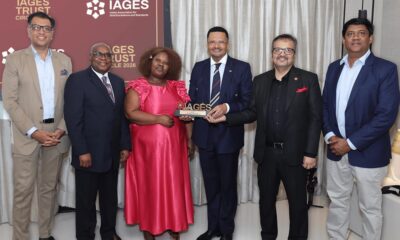
IAGES Brings Together Accredited Gold Industry Stakeholders At Trust Circle 2026
-

 DiamondBuzz13 hours ago
Botswana Looks Beyond Rough Diamond Sales, Eyes U.S. Jewelry Market
