
DiamondBuzz
Zero tariffs on Indian diamonds and gemstones will provide major boost

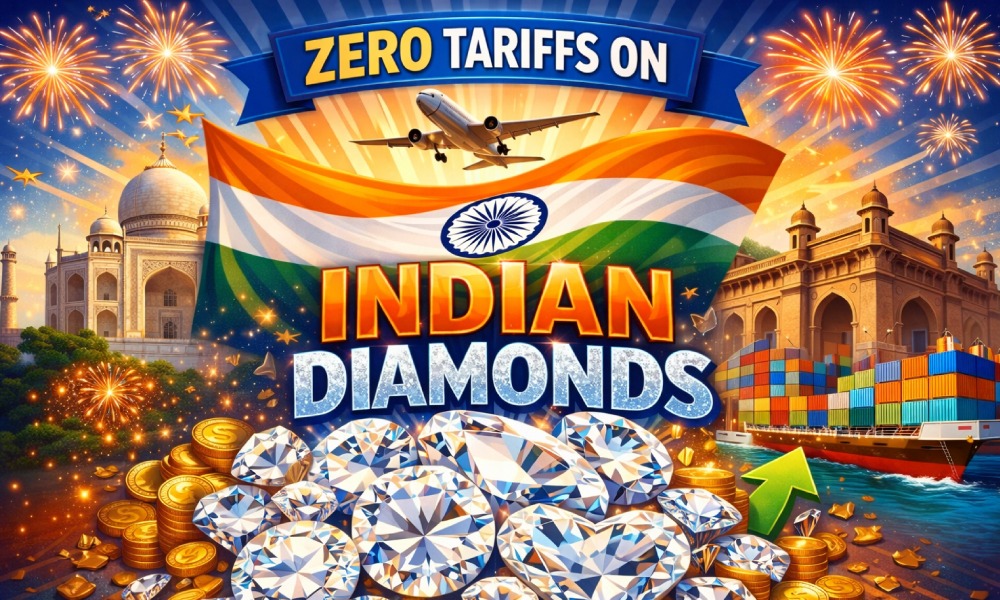
India and the United States have finalized an interim trade framework that significantly eases the pressure on Indian exporters. A wide list of Indian goods that were facing effective duties close to 50% in the US will now attract only 18%.Gems and jewellery clusters, especially in Gujarat and Maharashtra, employ millions. Zero tariffs in the US market make Indian diamonds and gemstones more competitive against rivals such as Belgium and the UAE.
After a tumultuous period where exports to key markets like the US plummeted by over 60% for cut and polished diamonds, this policy shift is set to restore India’s competitive edge. By removing financial barriers, the government has provided the necessary “booster dose” to revive Surat’s processing hubs, safeguard millions of livelihoods, and accelerate the mission of Aatmanirbhar Bharat.
1. The Crisis: A 60% Decline in Trade
India is the global leader in diamond processing, with 9 out of 10 diamonds in the world being cut and polished in Surat. However, the sector recently faced a “near-collapse” due to:
- Punitive Tariffs: Duties in the US—India’s largest market—surged from 0% to 50% in late 2025, making Indian exports unviable.
- Export Slump: The impact was immediate, with cut and polished diamond exports dropping from $3.6 billion to $1.4 billion (a decline exceeding 60%).
- Socio-Economic Strain: The downturn led to factory closures, wage cuts, and severe distress for the nearly 1 million artisans employed in the sector.
2. The Strategic Breakthrough
The waiver of tariffs is a result of high-level negotiations by the Ministry of Commerce and the Indian Government. Key highlights of the recent trade agreements include:
- India-US Trade Pact: Reciprocal tariffs on various goods have been capped or eliminated, with industry leaders optimistic that loose diamonds and colored gemstones will now enjoy zero-duty access under Annexure 3 of the reciprocal list.
- European Union FTA: Complementing the US deal, the India-EU FTA has granted zero-duty access for gems and jewellery, helping India diversify its market away from a single-country dependence.
3. Impact on the Sector: Reinstating the Spark
The removal of trade barriers is expected to catalyze a sharp revival in 2026:
- Restored Competitiveness: India now stands on a level playing field with competitors like Thailand and Vietnam.
- Liquidity & Margins: Lower tariffs ease the strain on working capital and improve margins for MSMEs, which comprise 80% of the industry.
- Revival of Rural Economies: The boost will help reopen units in the Saurashtra region, bringing stability to the artisan workforce.
4. Alignment with Aatmanirbhar Bharat
This move goes beyond mere trade statistics; it is a foundational step toward a self-reliant India:
- Value Addition: By processing rough diamonds and exporting high-value finished goods duty-free, India maximizes foreign exchange inflows.
- Global Hub Status: It reinforces the Surat Diamond Bourse and SEEPZ Mumbai as the world’s primary destination for jewellery manufacturing.
- MSME Empowerment: The removal of caps on courier exports and duty-free import of Lab-Grown Diamond (LGD) seeds further empowers local manufacturers to lead in the high-tech synthetic diamond market.


DiamondBuzz
Divine Solitaires Named ‘Best Diamond Jewellery Brand’ At JewelZ South India 2026
The Recognition Acknowledges The Brand’s Approach To Quality Assurance, Standardised Pricing and Transparency In The Natural Diamond Solitaire Category.

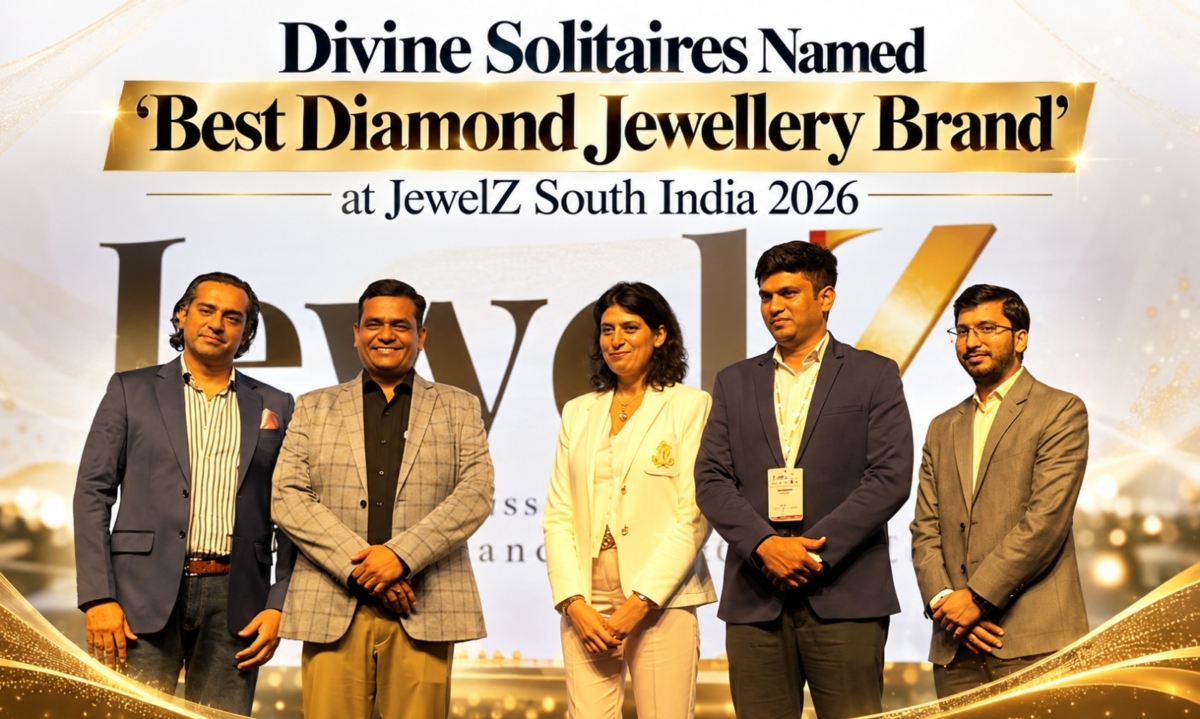
Hyderabad, 25 September 2026: Divine Solitaires, India’s natural diamond solitaire brand, has been honoured with the ‘Best Diamond Jewellery Brand’ award at JewelZ South India 2026, recognising its efforts to bring greater consistency, transparency and quality assurance to the natural diamond solitaire buying experience. The award was presented on 22 September at Novotel, HICC, Hyderabad.
The recognition comes as the natural diamond solitaire category evolves, with consumers increasingly seeking greater clarity around certification, quality and pricing when making high-value jewellery purchases. Divine Solitaires has built its proposition around addressing these expectations through its 123-parameter Quality Guarantee and Nationwide Standard & Transparent Pricing, which are applied uniformly across its retail network.
With a presence through 200+ partner jewellers across 100+ cities in India, the brand offers a portfolio of 3,000+ designs, alongside consumer-focused initiatives and long-term value programmes, including buyback and upgrade options.
Commenting on the recognition, Jignesh Mehta, Founder and Managing Director, Divine Solitaires, said:

“The way consumers buy diamonds is evolving. A solitaire is a significant purchase, and today’s buyer wants greater clarity on what they are buying, how quality is evaluated and how the price is determined. At Divine Solitaires, our endeavour has been to bring greater structure and consistency to this journey through clearly defined quality parameters and transparent pricing. This recognition at JewelZ South India is encouraging because it reflects the industry’s growing focus on building trust through greater accountability and standardisation.”
Adding to the brand’s presence at the event, Jignesh Mehta participated in the panel discussion “How the Jewellery Moguls are Crafting the New Jewellery Era”, moderated by Ritu Marya, Editor-in-Chief, Retailer Media. The session brought together senior industry leaders to discuss evolving consumer expectations, trust-building and changing retail models.
Mehta’s participation focused on the evolving natural diamond solitaire category, particularly the importance of consistent quality assurance, transparency and standardisation in building consumer confidence around high-value jewellery purchases.
The recognition reinforces Divine Solitaires’ focus on creating a more structured and transparent solitaire-buying ecosystem, as the category continues to evolve alongside changing consumer expectations.



Place Images Of Silver Jewellery Stalls and Silver Jewellery and Overhead Shots Of SSI

NSPL Season 2 Launched At SSI DELHI 3rd Edition Featuring SSI As Title Sponsor Season 2 Builds Upon The Inaugural Edition’s Success By Bringing Together Sports, Youth Engagement, and Trade Community Networking

Growth of the 925 Sterling Silver Gifting Segment
NSPL Season 2 Launched At SSI DELHI 3rd Edition Featuring SSI As Title Sponsor Season 2 Builds Upon The Inaugural Edition’s Success By Bringing Together Sports, Youth Engagement, and Trade Community Networking
Place Images Of Silver Jewellery Stalls and Silver Jewellery and Overhead Shots Of SSI
Growth of the 925 Sterling Silver Gifting Segment
-
 JB Exclusive20 minutes ago
NSPL Season 2 Launched At SSI DELHI 3rd Edition Featuring SSI As Title Sponsor Season 2 Builds Upon The Inaugural Edition’s Success By Bringing Together Sports, Youth Engagement, and Trade Community Networking
-
 Special Reports10 minutes ago
Place Images Of Silver Jewellery Stalls and Silver Jewellery and Overhead Shots Of SSI
-
 Special Reports2 days ago
Growth of the 925 Sterling Silver Gifting Segment
-
 ShowBuzz2 days ago
TRENDS @ SSI DELHI 3RD EDITION
