National News
GJEPC Chairman Takes Bold Stance On Recent Hike In Gold Import Duty and Agri Cess
Council Proposes Lower Caratage Jewellery, Revival Of Gold Monetisation Scheme, and Export Incentives While Cautioning Against The Long-Term Impact Of Higher Import Duties


The Gem & Jewellery Export Promotion Council (GJEPC) acknowledges the Government’s decision to raise gold import duty to 10% from 5% and Agri cess to 5% from 1%. As an industry, we remain committed to the spirit of ‘Nation First’ echoed by Honourable Prime Minister Shri Narendra Modi.
In response to his call, GJEPC convened a meeting yesterday with major retailers and manufacturers. We have written to the Prime Minister outlining proactive measures from our members to curb gold imports and bolster self-reliance:
• Promote sales of lower caratage jewellery (e.g., 14K and 9K) to reduce imports by 20-30%
• Encourage consumers to exchange old gold for new jewellery making, further decreasing import dependence
• Revamp the Gold Monetisation Scheme (GMS) to tap India’s 25,000 tonnes of grandfather stock
• Discourage investment in gold bars, billets, and coins, which account for 20-30% of total imports
• Provide special policy framework for gold jewellery exporters to earn precious foreign exchange amid economic challenges
We are submitting a detailed paper on revitalizing GMS for the Government’s consideration.
That said, GJEPC’s consistent position is that hiking import duties rarely curbs gold imports—it merely inflates prices. Despite gold prices doubling recently, imports have not declined proportionally. Such measures often fuel smuggling and escalate export costs.
Exporters now face Bank Guarantees of Rs. 28-30 lakhs per kg of duty-free gold from Nominated Agencies, severely blocking working capital and stifling exports.
The most severe impact of this policy will be felt by MSME manufacturers, who are the “backbone” of the industry, accounting for 80% of GJEPC’s membership, and who are currently facing a critical liquidity crunch.
GJEPC urges the Government to engage in dialogue for sustainable solutions that align fiscal goals with export growth.


National News
Kantilal Jewellers, Launches Flagship Showroom At Vastrapur, Ahmedabad
Marking Its First Expansion Outside Surat, The Massive Three-Story Space Is The Brand’s Largest Retail Destination To Date.
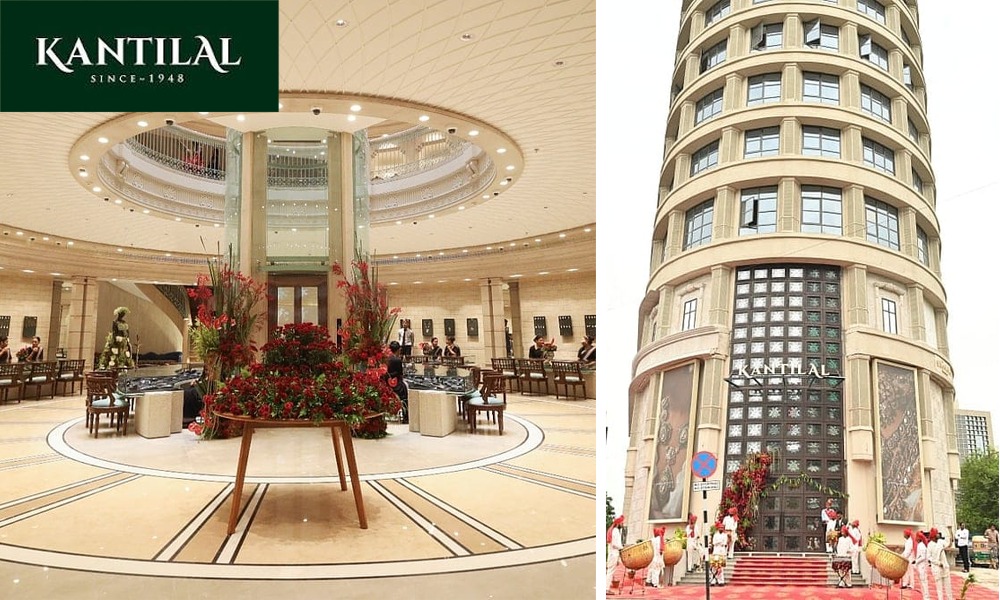
Surat-based Kantilal Jewellers, a legacy brand established in 1948, has expanded beyond its home base with the launch of a 28,000 sq. ft. flagship showroom at Keshavbaug Capital, Vastrapur, Ahmedabad.
Marking its first expansion outside Surat, the massive three-story space is the brand’s largest retail destination to date.
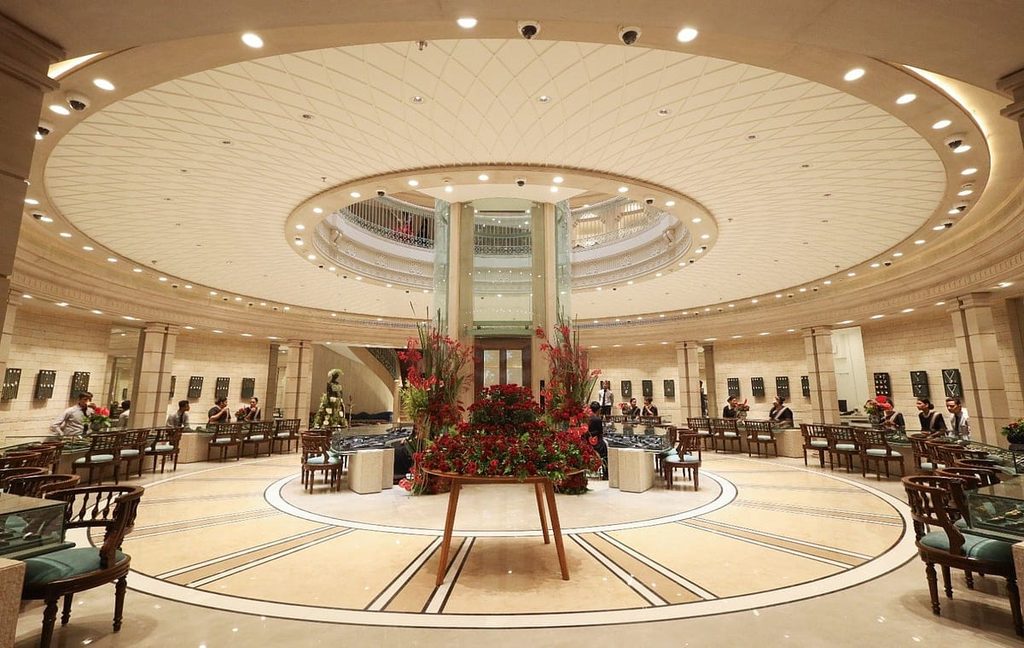
Palatial Architectural Concept: The store design takes inspiration from Jodhpur Palace, featuring Jharokha-style screens, marble passageways, domed skylights, chandelier lounges, and a central atrium linking all three levels.
Experiential Studio Retail: Departing from traditional counters, the showroom offers private studio spaces, VIP viewing areas, and dedicated experience centers.
Ambient Luxury: The shopping experience is elevated by live sitar and guitar performances alongside personalized consultation lounges.
Product Offering: The flagship showcases the brand’s signature gold, diamond, and bridal collections tailored for the Ahmedabad market.
Led by Director Jinay Choksi, this flagship rollout is a strategic move to establish a distinct, experiential luxury footprint across major Gujarat markets while preserving the heritage of the Kantilal brand.

-
 JB Insights8 hours ago
Devotion, Heritage & Diversification: The defining trends of SSI Delhi’s 3rd Edition
-
 JB Insights9 hours ago
Gold-plated silver jewellery is seeing explosive growth
-
 ShowBuzz23 hours ago
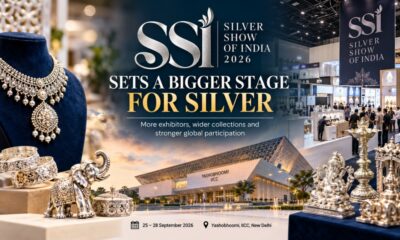
SSI 2026 SETS A BIGGER STAGE FOR SILVER
-

 ShowBuzz1 day ago
Silver Trends To Watch At SSI Delhi 2026