
International News
WGC Gold Market Commentary: Bonds a no go


A staggering 14% rally in January took gold above the US$5,000 mark, cementing the 5k number as a headline to match the first recorded annual 5,000 tonnes of total demand. The month closed at US$4,982/oz and scored 12 all-time highs. But it was not without drama with large intraday swings on the last two days of the month.
Our Gold Return Attribution Model (GRAM) showed an unusually large contribution from implied volatility (c.50% of January’s return), reflecting substantial option market activity. This variable currently sits in risk & uncertainty, although is likely more reflective here of momentum.
Global gold ETF flows provided plenty of support adding 120t in January to take holdings to a new record, valued at US$669bn. The flows were dominated by Asia (62t) and North America (43t) while Europe saw more modest inflows
Key Price Figures (January 2026)
The month was characterized by relentless momentum, scoring 12 all-time highs before ending with significant intraday volatility.
| Metric | Value (USD) | Peak Date |
| January Closing Price | US$4,982/oz | Jan 30, 2026 |
| All-Time Record High | US$5,307/oz | Jan 28, 2026 |
| Monthly Return | +14.1% | — |
Performance in Other Major Currencies (Jan Return):
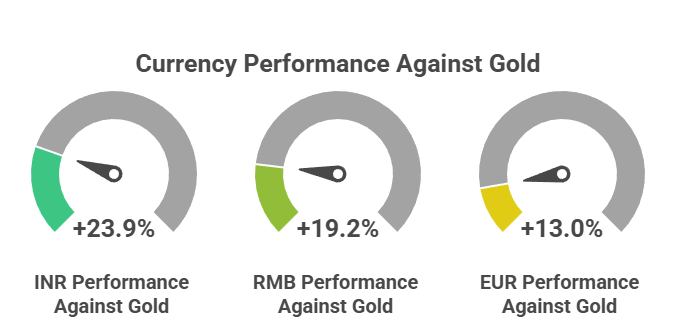
- INR: +23.9% (Record high: ₹176,306/10g)
- RMB: +19.2% (Record high: ¥1,248/g)
- EUR: +13.0% (Record high: €4,444/oz)
Major Market Drivers
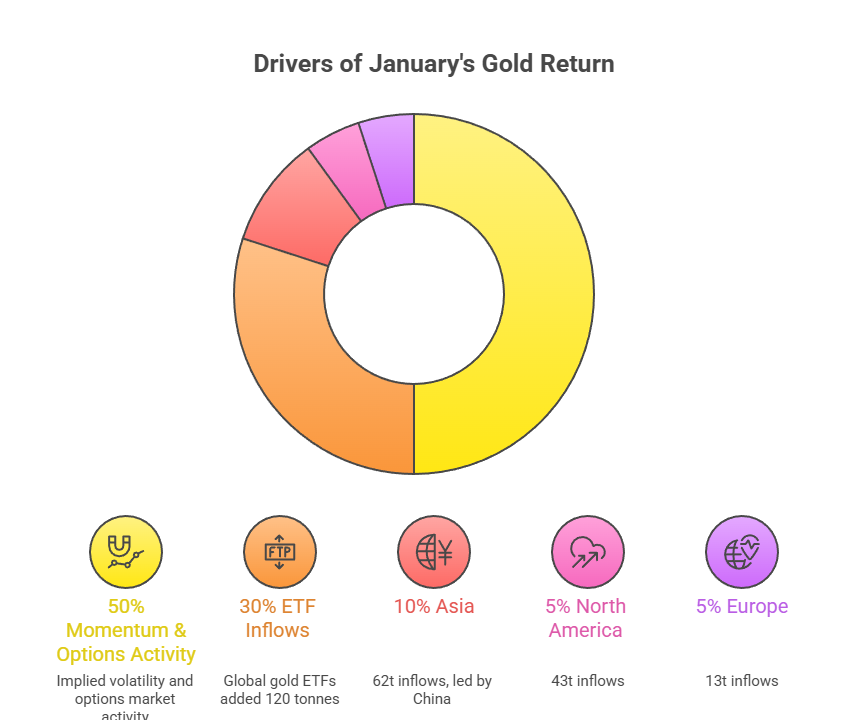
- Momentum & Options (GRAM Model): Approximately 50% of January’s return was attributed to implied volatility and massive options market activity rather than pure macro fundamentals.
- ETF Inflows: Global gold ETFs added 120 tonnes (valued at US$669bn), the strongest month on record.
- Asia: 62t (led by China)
- North America: 43t
- Europe: 13t
- The “Warsh Effect”: Late-month drama was fueled by the nomination of Kevin Warsh as the next Fed Chair. Markets perceive him as a “hawk” favoring a smaller Fed balance sheet, which triggered a sharp intraday correction from the $5,300 peaks.
Macro Outlook: The Inflation Resurgence
While geopolitics dominated January, the narrative is shifting toward resurgent US inflation risks for the remainder of 2026. Key triggers include:
- Tariff Pass-through: Lagged effects of trade policies hitting consumers.
- Fiscal Stimulus: Prospective $2,000 “tariff dividend” checks and ACA subsidies ahead of the US mid-term elections.
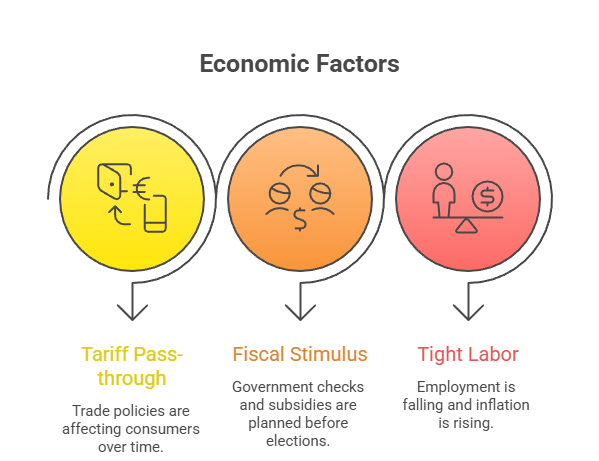
- Tight Labor: A falling breakeven employment rate and rising household inflation expectations.
Investment Implications
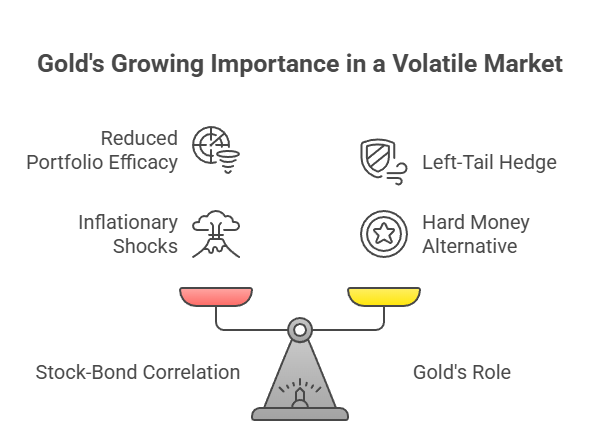
- Stock-Bond Correlation: Inflationary shocks are making stocks and bonds move in the same direction, reducing the efficacy of traditional 60/40 portfolios.
- Gold’s Role: Gold is increasingly viewed as a left-tail hedge and a “hard money” alternative as sovereign debt levels (reaching 30% of the $340T global sector debt) raise debasement fears.
The gold market is likely to “pause” after the January surge, but the combination of fiscal expansion and Fed leadership uncertainty suggests investment demand will remain a structural feature of 2026.
source :WGC




International News
Gold Prices On Track To Reach $4,900/oz By End 2026 :Goldman Sachs
Goldman’s $4,900/oz Forecast Assumes Central Bank Demand Averages 50 Tonnes Per Month In 2026 and 40 Tonnes Per Month In 2027

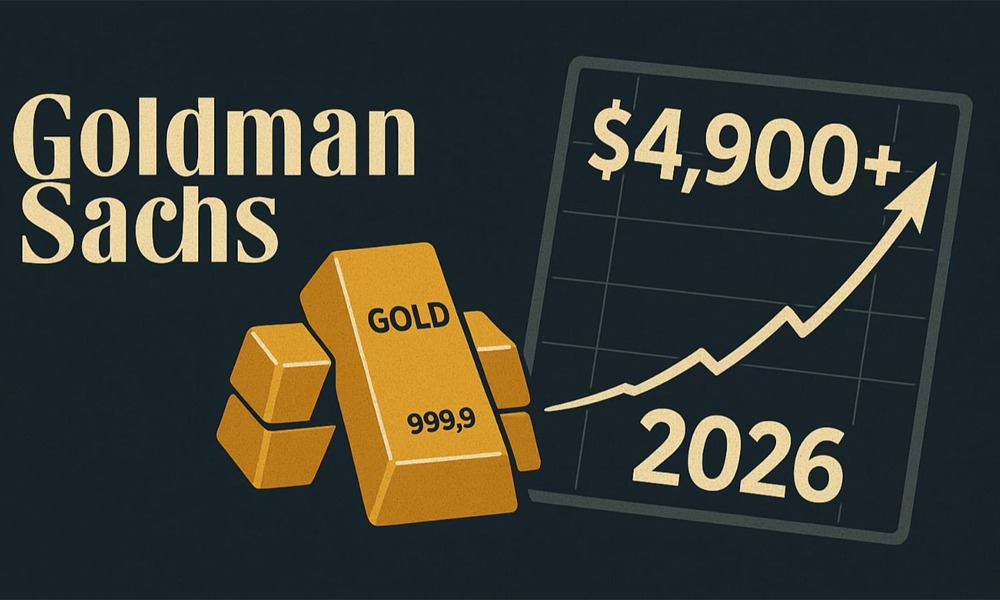
Gold prices are on track to reach $4,900 per ounce by the end of 2026, driven by aggressive central bank purchases—led by undisclosed buying from China—and recovering exchange-traded fund (ETF) demand, Goldman Sachs said in a research note.
The bank maintained its bullish base-case target for bullion while warning that positioning in options markets could amplify price volatility in both directions. Central banks accumulated an estimated 44 tonnes of gold in July, well above the pre-2022 monthly average of 17 tonnes, according to Goldman Sachs’ nowcast model. On a three-month seasonally adjusted basis, central bank buying stood at 91 tonnes per month.
China was the primary driver, with Goldman estimating the People’s Bank of China bought 35 tonnes in July—roughly 75% more than official public disclosures indicated.
To account for unreported sovereign purchases, Goldman’s model tracks physical bullion flows through London’s over-the-counter (OTC) market into custodian vaults. The Bank of England’s central bank holdings alone rose by 63 tonnes in July, exceeding outflows from the Federal Reserve Bank of New York.
Price Risks and Volatility
Goldman’s $4,900/oz forecast assumes central bank demand averages 50 tonnes per month in 2026 and 40 tonnes per month in 2027, alongside steady Federal Reserve policy and a rebound in private ETF inflows.
However, analysts noted that elevated demand for gold call options—used by investors to hedge against macroeconomic and geopolitical risks—creates mechanical upside and downside risks:
Bullish Case: Continued strong ETF inflows combined with existing call option positioning could force options dealers to buy underlying metal to hedge short exposure, pushing prices “well above” $4,900.
Bearish Case: If the Federal Reserve resumes interest rate hikes, unwinding hedge positions and triggering ETF outflows, gold could drop to $4,440/oz by end-2026. Goldman noted that ongoing central bank buying would limit further downside.
Goldman expects the Federal Reserve to remain on hold through 2026 as inflation cools, removing a key interest rate headwind for the non-yielding asset.


-

 Special Reports4 hours ago
Growth of the 925 Sterling Silver Gifting Segment
-

 ShowBuzz4 hours ago
TRENDS @ SSI DELHI 3RD EDITION
-

 JB Insights17 hours ago
Devotion, Heritage & Diversification: The defining trends of SSI Delhi’s 3rd Edition
-

 JB Insights17 hours ago
Gold-plated silver jewellery is seeing explosive growth
