
International News
The 2nd SEZ Gem and Jewellery Conclave
Conclave provided valuable insights in technology, branding, exports, SEZ policy

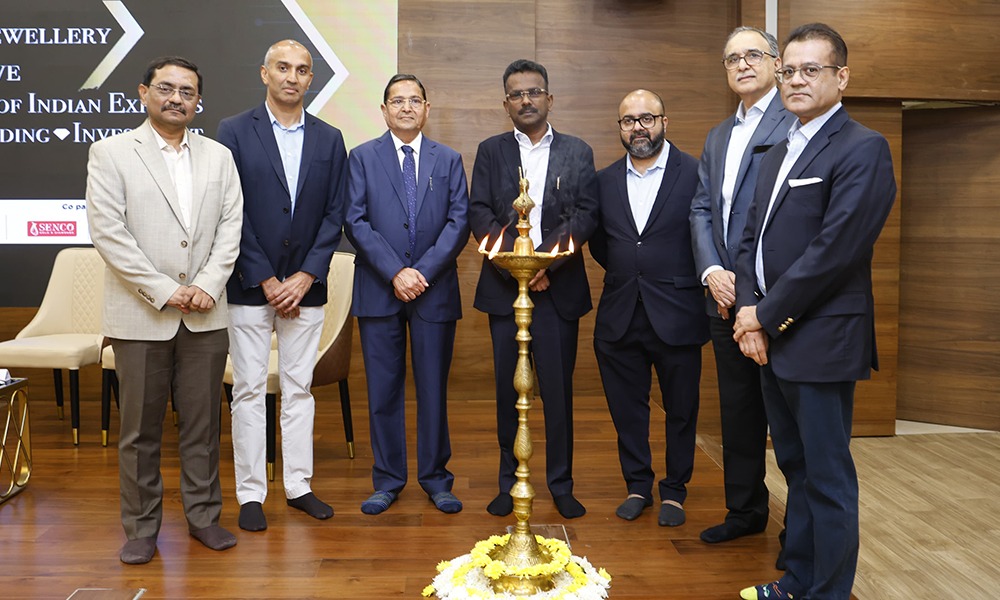
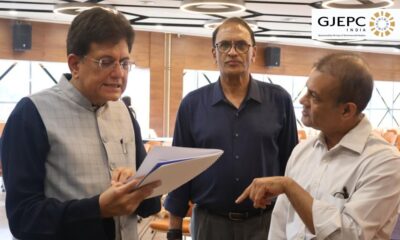
The Second SEZ Gem and Jewellery Conclave held at Bharatratnam Mega CFC in SEEPZ, Mumbai, brought together influential stakeholders from across the gem and jewellery sector to deliberate on industry growth, innovation, and policy advancements.The conclave provided valuable insights into the latest industry trends in technology, branding, exports.
The conclave was inaugurated by Dr P Anbalagan, IAS, Principal Secretary, Industries Department, Government of Maharashtra. Present at the inauguration were Kirit Bhansali, Chairman, GJEPC, Saunak Parikh, Vice Chairman, GJEPC, Suvankar Sen, MD, Senco Gold & Diamonds, Sabyasachi Ray, ED, GJEPC, Colin Shah, Head of the Working Group, Bharat Ratnam Mega CFC and Adil Kotwal, Director – SEEPZ GJ Manufacturers Association.
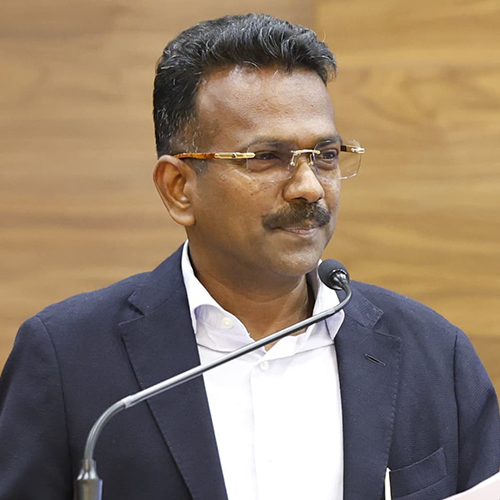
Dr. P Anbalagan in his inaugural address said “The Union and state governments aim to grow India’s economy from USD 3 trillion to USD 30 trillion, requiring double-digit growth across sectors, with Maharashtra as a key driver. As the state with the highest FDI, Maharashtra targets a USD 1 trillion economy in 4-5 years, needing 13-14% annual growth. We are looking at the GJ sector as generator of employment and employment.The employment intensive GJ sector will be cornerstone of Maharashtra becoming a $1 trillion economy.The GJ sector in Maharashtra is contributing 47 per cent of India’s GJ exports.”
Track 1 – Technology included: Platinum Group Metal Recycling , Dr Debashish Bhattacharya, Technical Director of Covalence, India, Casting, Stamping and Tubing in Platinum, Dr. Peter Hofmann, Chairman of INDUTHERM, Germany and Rakesh Jangid, Technical Director, Lagor India, 3D Printing of Precious Metal for Commercial Use-Dr Andrea Friso, R&D Head, Legor Italy ,Technology in Diamond Testing, Jayant Kulkarni , Partner ,SGL, Challenges in Identification of Lab Grown Diamonds by Deepa Srinivasa, Chief Gemmologist – Research & Development – GSI, India
Track 2 – Branding included: Redefining Businesses by Sachin Jain, Educator, LÉCOLE School of Jewellery Arts , Dubai, Revitalizing Diamond Desire by Amit Pratihari, Managing Director, De Beers.
Track 3 – Investments included: Booster to G&J Manufacturing by Sabyasachi Ray, Executive Director, GJEPC ,Draft Report of Common SoP for SEZs by Nishant, Partner, ELP.
With key decision-makers in attendance, the conclave promises to be an influential platform for shaping the future of the sector.





International News
Indian Consulate In New York Hosts India-USA Virtual Jewellery Exhibition; Facilitated By GJEPC
The Exhibition Brought Together 35 Indian Companies, Many Of Them Micro, Small and Medium Enterprises (MSMEs), Offering US Buyers An Opportunity To Explore Indian Jewellery Collections and Establish Direct Business Connections.

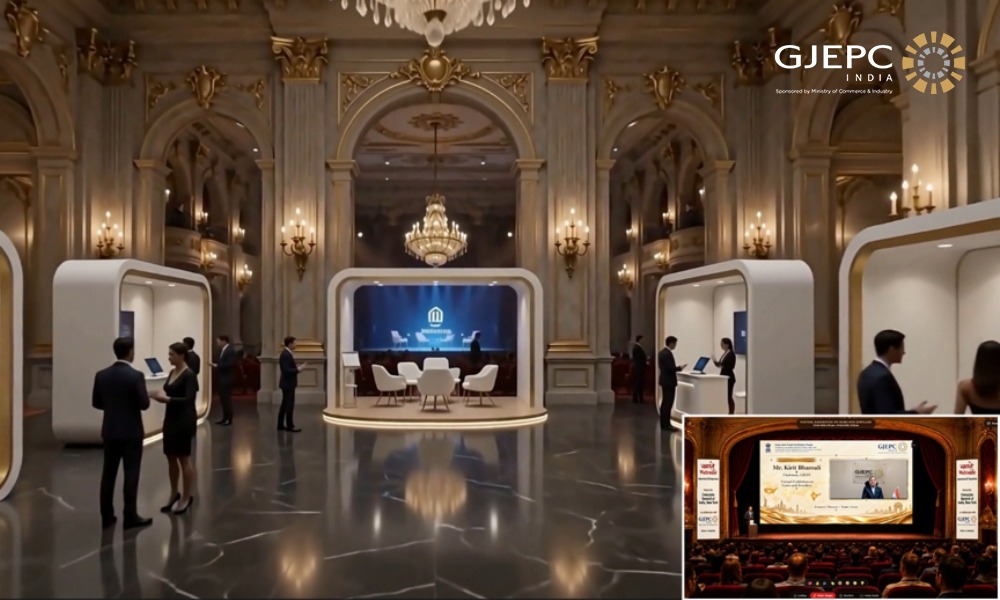
The Consulate General of India in New York, in collaboration with the Gem & Jewellery Export Promotion Council (GJEPC), organised the India-USA Virtual Exhibition on Gems & Jewellery on 23 October 2026, connecting Indian exporters with American buyers through a digital platform.
The inaugural ceremony featured welcome remarks by Ambassador HE . Binaya S. Pradhan, Consul General of India in New York, an inaugural address by Kirit Bhansali, Chairman, GJEPC, and closing remarks by Rajlakshmi Kadam, Consul (Trade), Consulate General of India, New York.
The exhibition brought together 35 Indian companies, many of them micro, small and medium enterprises (MSMEs), offering US buyers an opportunity to explore Indian jewellery collections and establish direct business connections. The event was designed to help exporters reach new customers and develop partnerships in one of India’s most important markets.
Addressing participants, Kirit Bhansali, Chairman, GJEPC, highlighted the importance of the US market, which accounted for around 30% of India’s gem and jewellery exports, worth nearly US$10 billion, in FY2024-25. He noted that tariff uncertainty had affected trade significantly, with India’s gem and jewellery exports to the US falling by more than 44% between April and December 2025.
However, trade has begun to recover. Between April and September 2026, India’s gem and jewellery exports to the US grew nearly 6% year-on-year to almost US$3 billion, compared with US$2.77 billion in the corresponding period of 2025.
Kirit Bhansali also referred to progress on the proposed India-US Bilateral Trade Agreement, expressing hope that it would provide greater clarity and predictability for exporters and buyers once its terms are finalised.
With the US holiday season approaching, followed by Valentine’s Day and retailers’ sourcing plans for 2027, he urged American buyers to explore India’s manufacturing capabilities across diamonds, coloured gemstones and gold jewellery. He also encouraged buyers to engage directly with participating MSMEs, highlighting their skills, flexibility and ability to meet varied sourcing requirements.



Gargi By P N Gadgil & Sons Invites Women To #GETNOTICED This Diwali In New Campaign With Mithila Palkar

IBJA, SAARTHI 360 Sign MoU To Launch ‘NextGen CEO: Leadership for the Future’

Jos Alukkas Unveils New Website For A Seamless Online Jewellery Shopping Experience

Dhanteras Shopping Guide 2026:Gold, Silver, Diamonds & Festive Jewellery Trends To Watch

The Solenne Collection: A Celebration Of Diwali By Bharti Bangur Fine Jewels

From Diya Puja To Diwali Soirées: Jewellery Designed To Go Beyond The Festive Season
-
 JB Insights4 days ago
Dhanteras Shopping Guide 2026:Gold, Silver, Diamonds & Festive Jewellery Trends To Watch
-
 BrandBuzz4 days ago
The Solenne Collection: A Celebration Of Diwali By Bharti Bangur Fine Jewels
-
 BrandBuzz4 days ago
From Diya Puja To Diwali Soirées: Jewellery Designed To Go Beyond The Festive Season
-
 National News4 days ago
Indriya, Aditya Birla Jewellery Unveiled India’s Largest Sustainable Jewellery Rangavalli
