

International News
Gold plunges by 20% and Silver by 45%. What next?- AUGMONT BULLION REPORT
3,563-carat ‘Star of Pure Land’ features rare six-ray asterism; valuations reportedly reach up to $400 million.

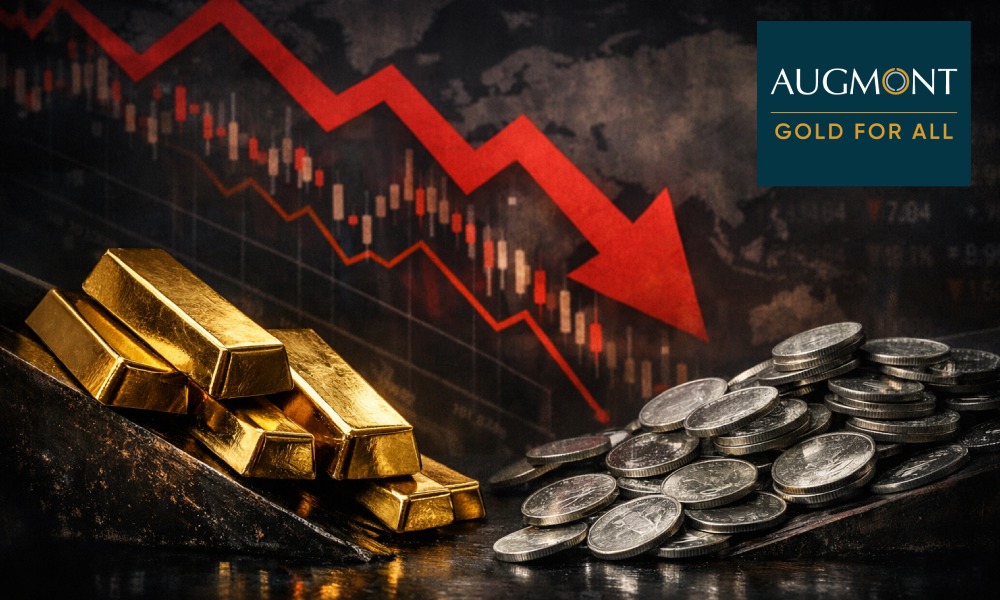
The precious metals market has seen extreme volatility. Gold has plunged nearly 20%, and silver has declined about 45% within just three days, wiping out most of the year-to-date gains. Such a sharp correction is rare and reflects the risks of crowded trades in fast-moving markets.
Over the past year, gold and silver surged to record highs, surprising even experienced market participants. The rally intensified in January as investors sought protection amid geopolitical uncertainty, concerns over currency debasement, and questions around the Federal Reserve’s independence. Strong speculative buying, particularly from China, further amplified the move.
Key factors behind the sharp correction:
- Overcrowded and overbought conditions
Market positioning had become stretched, with record speculative long positions, strong ETF inflows, increased retail participation, and overextended technical indicators. Silver was especially vulnerable due to thinner liquidity and higher leverage. Once prices turned, stop-loss selling and forced liquidation accelerated the decline, with no clear price floor initially visible.
- Nomination of a new Fed Chair
President Trump nominated former Federal Reserve Governor Kevin Warsh to succeed Jerome Powell. While rate cuts remain possible, Warsh is viewed as less dovish than markets had anticipated. His emphasis on inflation control and scepticism toward aggressive quantitative easing supported the US dollar, which weighed on gold prices.
- Disconnect between paper and physical markets.
A significant divergence has emerged between paper prices and physical availability, especially in silver. Several global mints-imposed sales limits or suspensions, the US Mint halted silver product sales, and delivery delays were reported across key markets, including India. Rising lease rates further point to tight physical supply, even as paper prices corrected sharply.
- Margin pressure at exchanges
Major exchanges, led by CME, raised margin requirements on gold and silver futures in response to heightened volatility. Higher margins increased the cost of holding leveraged positions, forcing liquidations. Historically, such margin hikes tend to reset market positioning rather than end long-term bull trends.
Overall, the recent sell-off reflects structural liquidity stress rather than a sudden deterioration in fundamentals. While paper-market prices declined sharply due to forced selling, elevated physical premiums signal ongoing tight supply and highlight the growing divide between financial trading and physical metal ownership.
Looking ahead, market focus will remain on geopolitical developments between the US and Iran, along with key US economic indicators, particularly the ISM Manufacturing PMI and Nonfarm Payrolls.
Historically, periods of strong momentum are often accompanied by sharp but temporary volatility. While recent price action has disrupted short-term technical charts, the long-term trend remains constructive. This suggests the current correction is likely a typical “shake-out” within an ongoing long-term bull market for precious metals.
Gold prices are expected to fall by 3-4% and take support around $4320–4300 (~ Rs 133,000-135,000) zone and stabilise at those levels. These dips should be used as a buying opportunity to accumulate atleast 50% of the investment amount for the long-term. On the upside, any rebound is likely to face immediate resistance near the $4,750–4,800 zone.
The precious metals market has seen extreme volatility. Gold has plunged nearly 20%, and silver has declined about 45% within just three days, wiping out most of the year-to-date gains. Such a sharp correction is rare and reflects the risks of crowded trades in fast-moving markets.
Over the past year, gold and silver surged to record highs, surprising even experienced market participants. The rally intensified in January as investors sought protection amid geopolitical uncertainty, concerns over currency debasement, and questions around the Federal Reserve’s independence. Strong speculative buying, particularly from China, further amplified the move.
Source: AUGMONT BULLION REPORT





International News
Gemfields revenue down 32% in 2025 revenue
Revenue plunges as ruby and emerald demand weakens amid operational disruptions
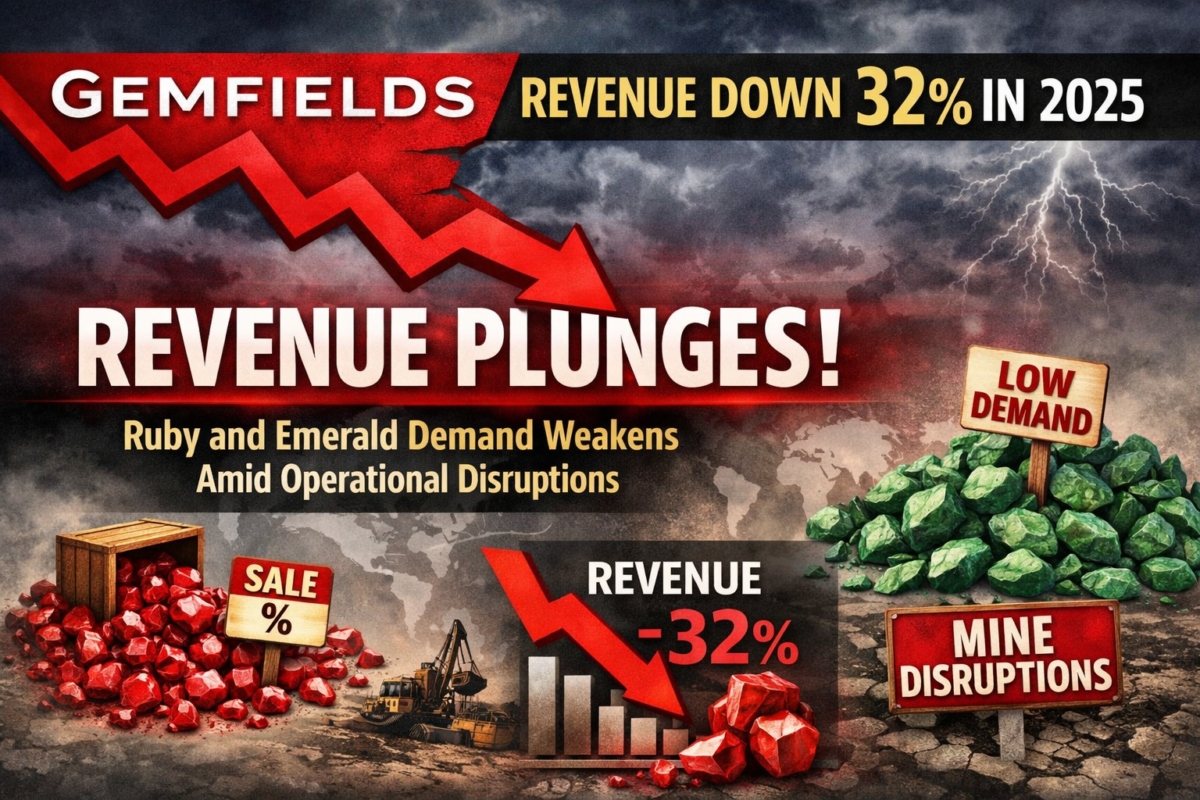
Colored precious stones miner Gemfields reported a 32% drop in 2025 revenue to $135.1 million as operational disruptions and weak demand for rubies and emeralds weighed on performance.
The company said EBITDA fell 85% to $6.2 million from $43.2 million, reflecting reduced production, fewer auctions and softer market conditions. Seven auctions generated $129 million during the year, as limited gemstone availability and uneven demand offset resilient pricing at the high end.
Operations at its Montepuez ruby mine in Mozambique were hit by persistently low recovery of premium rubies and rising illegal mining activity. Two police officers were killed in October when illegal miners stormed the site. The company also flagged delays to its new $70 million processing plant, with commissioning now expected to run well into the first half of 2026, constraining near-term output despite production beginning in September 2025.
On the plus side, Gemfields said it had cut group operating costs by 17%. It also sold the iconic Faberge brand for $50 million to reduce mounting debts and raise working capital for expansion projects.
At the Kagem emerald mine in Zambia, Gemfields suspended mining from January to May in response to weak auction results, softer global demand, particularly in China, and oversupply from a competing Zambian producer.



Indriya unveils ‘Orizon’ at Lakmē Fashion Week X FDCI, in partnership with Amit Aggarwal

Ashth Prive’s New Udaya collection Turns the Geometry of Rani ki Vav into Radiant High Jewellery

Lukson Launches ‘Glitch Glam’ – A Bold New Collection Inspired by the Electric Energy of EDM Nights

IIJS Bharat Tritiya 2026 Wraps Up Triumphant 4th Edition, Connecting 15,000 Buyers with India’s Top Jewellery Manufacturers

Bhima Jewellery’s Theni Showroom Relaunched By Actress Aishwarya Lekshmi

India’s Next Decade in Jewellery Exports: Scale, Discipline & Global Positioning
-
 ShowBuzz2 days ago
IIJS Bharat Tritiya 2026 Wraps Up Triumphant 4th Edition, Connecting 15,000 Buyers with India’s Top Jewellery Manufacturers
-
 GlamBuzz2 days ago
Bhima Jewellery’s Theni Showroom Relaunched By Actress Aishwarya Lekshmi
-
 By Invitation2 days ago
India’s Next Decade in Jewellery Exports: Scale, Discipline & Global Positioning
-

 New Premises21 hours ago
PNG Jewellers intensifies retail strength with launch of its New Store in Varanasi by Madhuri Dixit
