
International News
Gold plunges by 20% and Silver by 45%. What next?- AUGMONT BULLION REPORT
3,563-carat ‘Star of Pure Land’ features rare six-ray asterism; valuations reportedly reach up to $400 million.

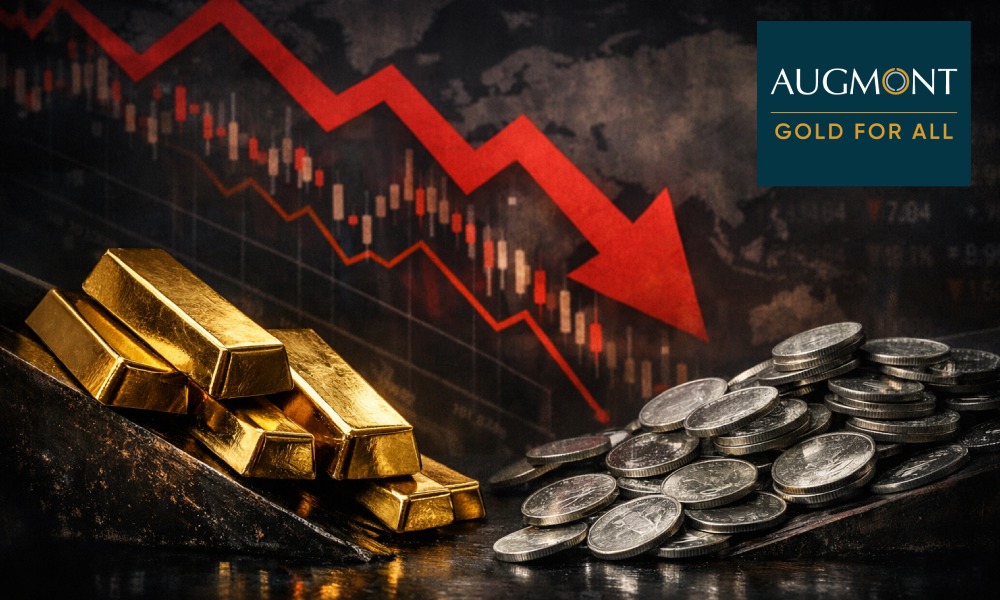
The precious metals market has seen extreme volatility. Gold has plunged nearly 20%, and silver has declined about 45% within just three days, wiping out most of the year-to-date gains. Such a sharp correction is rare and reflects the risks of crowded trades in fast-moving markets.
Over the past year, gold and silver surged to record highs, surprising even experienced market participants. The rally intensified in January as investors sought protection amid geopolitical uncertainty, concerns over currency debasement, and questions around the Federal Reserve’s independence. Strong speculative buying, particularly from China, further amplified the move.
Key factors behind the sharp correction:
- Overcrowded and overbought conditions
Market positioning had become stretched, with record speculative long positions, strong ETF inflows, increased retail participation, and overextended technical indicators. Silver was especially vulnerable due to thinner liquidity and higher leverage. Once prices turned, stop-loss selling and forced liquidation accelerated the decline, with no clear price floor initially visible.
- Nomination of a new Fed Chair
President Trump nominated former Federal Reserve Governor Kevin Warsh to succeed Jerome Powell. While rate cuts remain possible, Warsh is viewed as less dovish than markets had anticipated. His emphasis on inflation control and scepticism toward aggressive quantitative easing supported the US dollar, which weighed on gold prices.
- Disconnect between paper and physical markets.
A significant divergence has emerged between paper prices and physical availability, especially in silver. Several global mints-imposed sales limits or suspensions, the US Mint halted silver product sales, and delivery delays were reported across key markets, including India. Rising lease rates further point to tight physical supply, even as paper prices corrected sharply.
- Margin pressure at exchanges
Major exchanges, led by CME, raised margin requirements on gold and silver futures in response to heightened volatility. Higher margins increased the cost of holding leveraged positions, forcing liquidations. Historically, such margin hikes tend to reset market positioning rather than end long-term bull trends.
Overall, the recent sell-off reflects structural liquidity stress rather than a sudden deterioration in fundamentals. While paper-market prices declined sharply due to forced selling, elevated physical premiums signal ongoing tight supply and highlight the growing divide between financial trading and physical metal ownership.
Looking ahead, market focus will remain on geopolitical developments between the US and Iran, along with key US economic indicators, particularly the ISM Manufacturing PMI and Nonfarm Payrolls.
Historically, periods of strong momentum are often accompanied by sharp but temporary volatility. While recent price action has disrupted short-term technical charts, the long-term trend remains constructive. This suggests the current correction is likely a typical “shake-out” within an ongoing long-term bull market for precious metals.
Gold prices are expected to fall by 3-4% and take support around $4320–4300 (~ Rs 133,000-135,000) zone and stabilise at those levels. These dips should be used as a buying opportunity to accumulate atleast 50% of the investment amount for the long-term. On the upside, any rebound is likely to face immediate resistance near the $4,750–4,800 zone.
The precious metals market has seen extreme volatility. Gold has plunged nearly 20%, and silver has declined about 45% within just three days, wiping out most of the year-to-date gains. Such a sharp correction is rare and reflects the risks of crowded trades in fast-moving markets.
Over the past year, gold and silver surged to record highs, surprising even experienced market participants. The rally intensified in January as investors sought protection amid geopolitical uncertainty, concerns over currency debasement, and questions around the Federal Reserve’s independence. Strong speculative buying, particularly from China, further amplified the move.
Source: AUGMONT BULLION REPORT


International News
Gold Prices On Track To Reach $4,900/oz By End 2026 :Goldman Sachs
Goldman’s $4,900/oz Forecast Assumes Central Bank Demand Averages 50 Tonnes Per Month In 2026 and 40 Tonnes Per Month In 2027

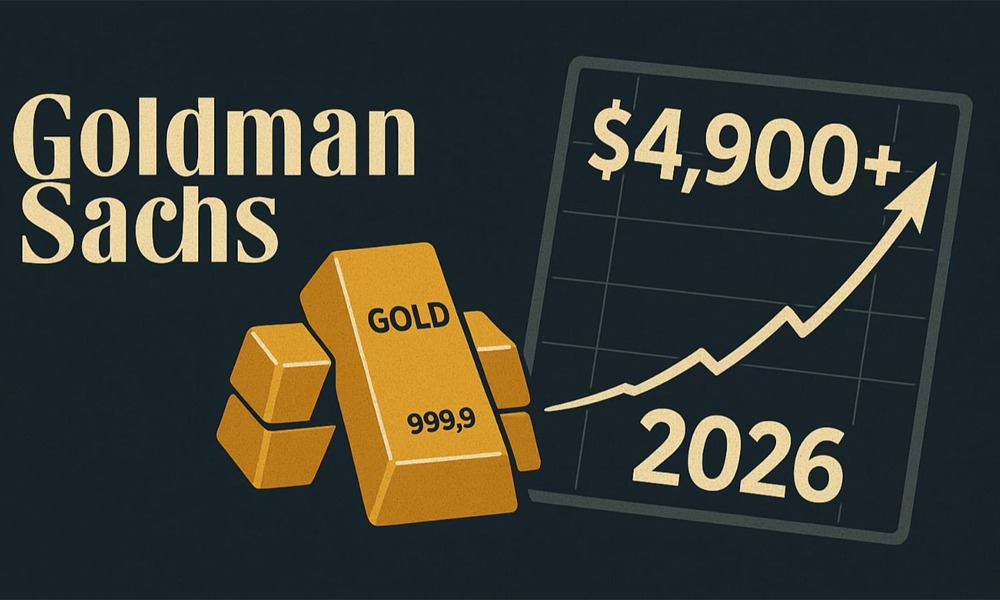
Gold prices are on track to reach $4,900 per ounce by the end of 2026, driven by aggressive central bank purchases—led by undisclosed buying from China—and recovering exchange-traded fund (ETF) demand, Goldman Sachs said in a research note.
The bank maintained its bullish base-case target for bullion while warning that positioning in options markets could amplify price volatility in both directions. Central banks accumulated an estimated 44 tonnes of gold in July, well above the pre-2022 monthly average of 17 tonnes, according to Goldman Sachs’ nowcast model. On a three-month seasonally adjusted basis, central bank buying stood at 91 tonnes per month.
China was the primary driver, with Goldman estimating the People’s Bank of China bought 35 tonnes in July—roughly 75% more than official public disclosures indicated.
To account for unreported sovereign purchases, Goldman’s model tracks physical bullion flows through London’s over-the-counter (OTC) market into custodian vaults. The Bank of England’s central bank holdings alone rose by 63 tonnes in July, exceeding outflows from the Federal Reserve Bank of New York.
Price Risks and Volatility
Goldman’s $4,900/oz forecast assumes central bank demand averages 50 tonnes per month in 2026 and 40 tonnes per month in 2027, alongside steady Federal Reserve policy and a rebound in private ETF inflows.
However, analysts noted that elevated demand for gold call options—used by investors to hedge against macroeconomic and geopolitical risks—creates mechanical upside and downside risks:
Bullish Case: Continued strong ETF inflows combined with existing call option positioning could force options dealers to buy underlying metal to hedge short exposure, pushing prices “well above” $4,900.
Bearish Case: If the Federal Reserve resumes interest rate hikes, unwinding hedge positions and triggering ETF outflows, gold could drop to $4,440/oz by end-2026. Goldman noted that ongoing central bank buying would limit further downside.
Goldman expects the Federal Reserve to remain on hold through 2026 as inflation cools, removing a key interest rate headwind for the non-yielding asset.



Place Images Of Silver Jewellery Stalls and Silver Jewellery and Overhead Shots Of SSI

NSPL Season 2 Launched At SSI DELHI 3rd Edition Featuring SSI As Title Sponsor Season 2 Builds Upon The Inaugural Edition’s Success By Bringing Together Sports, Youth Engagement, and Trade Community Networking

Growth of the 925 Sterling Silver Gifting Segment
NSPL Season 2 Launched At SSI DELHI 3rd Edition Featuring SSI As Title Sponsor Season 2 Builds Upon The Inaugural Edition’s Success By Bringing Together Sports, Youth Engagement, and Trade Community Networking
Place Images Of Silver Jewellery Stalls and Silver Jewellery and Overhead Shots Of SSI
Growth of the 925 Sterling Silver Gifting Segment
-
 JB Exclusive21 minutes ago
NSPL Season 2 Launched At SSI DELHI 3rd Edition Featuring SSI As Title Sponsor Season 2 Builds Upon The Inaugural Edition’s Success By Bringing Together Sports, Youth Engagement, and Trade Community Networking
-
 Special Reports10 minutes ago
Place Images Of Silver Jewellery Stalls and Silver Jewellery and Overhead Shots Of SSI
-
 Special Reports2 days ago
Growth of the 925 Sterling Silver Gifting Segment
-

 ShowBuzz2 days ago
TRENDS @ SSI DELHI 3RD EDITION
