

National News
GJ industry says Budget 2026 ensures stability; bolsters liquidity, exports, ease of doing business, and global competitiveness
Prominent voices from the gems and jewellery sector have welcomed the Union Budget 2026–27 as a growth-oriented blueprint that bolsters liquidity, exports, ease of doing business, and global competitiveness.


#JbExclusive
With no hikes in customs duties or GST, the budget underscores policy stability and strong support for MSMEs, reinforcing the industry’s role in driving employment and exports. Union Budget 2026 emphasizes stability, continuity, and capital expenditure amid global uncertainty.
Guided by the “three Kartavya” framework—growth, empowerment, and inclusivity—it prioritizes CapEx-led development, including seven new high-speed rail corridors. Tax reforms are minimal, focusing on predictability and fiscal discipline, with support for MSMEs through a Rs10,000 crore Growth Fund.

Kirit Bhansali, Chairman, GJEPC, spotlighted reforms like trust-based digital customs, SEZ-DTA concessional sales, no ₹10 lakh courier export cap, advance Bills of Entry, AEO duty deferment, MSME credit via TReDS, duty-free LGD imports till 2028, and a new National Institute of Design. “These strengthen liquidity, exports, design, and global edge,”
Rajesh Rokde, Chairman, GJC, called it a “stable, sensitive approach” with policy certainty, MSME support, ease-of-business measures, and tax reforms, recognizing the sector’s role in jobs and exports.

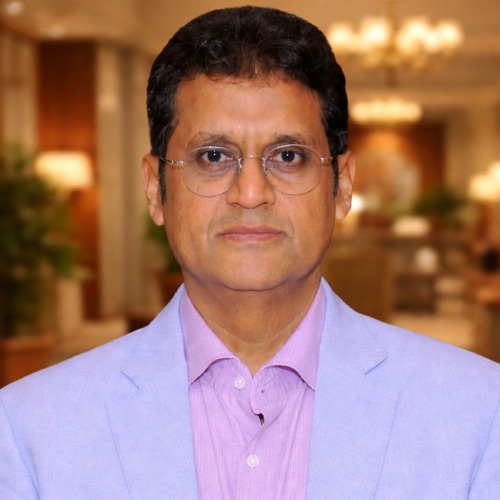
Avinash Gupta, Vice Chairman, GJC, added it aids sustainable growth via finance access and compliance simplification amid global uncertainties.
Prithviraj Kothari, President, IBJA, MD, RiddiSiddhi Bullions; noted the budget’s 7% growth focus on MSMEs and governance but highlighted unmet bullion expectations—no gold import duty cuts, GST reforms, or broad export incentives. Capital gains tax exemption on RBI Sovereign Gold Bonds applies only to original subscribers.
Operational improvements dominated the positive feedback:
- Trust-based customs processes and digital appraisals to reduce clearance delays
- SEZ-to-DTA sales at concessional duties, helping utilize idle capacity
- Increased courier export cap to Rs.10 lakh, benefiting MSMEs
- Duty-free imports of lab-grown and sawn diamonds extended until 2028
- Enhanced MSME financing (Rs.10,000 crore Growth Fund, extended duty deferment to 30 days)
- Capital gains tax exemption on Sovereign Gold Bonds (original subscribers only)
- Liquidity through TReDS
- AEO Benefits: The duty deferment period for Authorised Economic Operators (AEOs)— has been extended from 15 to 30 days.
These endorsements signal renewed optimism for the Rs.7 lakh crore gems and jewellery industry, which employs over 50 lakh people and accounts for 7% of India’s total exports. Industry stakeholders anticipate accelerated recovery and innovation in FY 2026–27.





National News
Foreign exchange reserves declined by $11.413 billion to $698.346 billion
Forex drop due to a sharp fall in gold reserves:RBI

As of March 28, 2026, the Reserve Bank of India’s latest data reveals a brutal $30.14 billion evaporation in forex reserves over just three weeks. The headline-grabber? A staggering $13.49 billion collapse in gold reserves in a single week.
While the official line points to “valuation effects,” the underlying reality is a cocktail of geopolitical warfare, a bleeding Rupee, and an RBI backed into a corner.
For years, gold was the “safe haven.” In March 2026, it became a weight. The drop to $117.19 billion wasn’t because the RBI sold the family silver—it’s because the global gold market just endured its worst weekly rout in four decades.
- The Paper Flush: As the US-Iran conflict escalated, institutional investors faced massive margin calls on their stock portfolios. They didn’t sell gold because they lost faith in it; they sold it because it was the only liquid asset left to cover their losses.
- The Yield Trap: With oil breaching $110, inflation fears have spiked. This has forced the US Fed to signal “higher for longer” rates, making non-yielding gold look like an expensive hobby compared to high-interest US Treasuries.
The Rupee isn’t just sliding; it’s in a freefall. Falling over 4% in March alone and nearly 10% for the fiscal year, the Indian unit is gasping at record lows near 94.81/$1.
The central bank is fighting a multi-front war:
- Crude Oil Shock: Brent crude at $110 is a direct tax on India’s dollar reserves.
- The Forward Book Time Bomb: The RBI’s net short dollar position in the forward market is estimated to have ballooned to $100 billion.
- Import Cover Erosion: Adjusting for these forward positions, India’s “real” import cover has shriveled from 11 months to just 9.4 months.
If West Asia remains a tinderbox, the buffer that felt “invincible” at $728 billion in February could look skeletal by 2027. Some analysts are already eyeing a drop to $636 billion as the new reality.The RBI is no longer just “managing volatility”; it is performing triage on a currency being pummeled by global m



Indriya unveils ‘Orizon’ at Lakmē Fashion Week X FDCI, in partnership with Amit Aggarwal

Ashth Prive’s New Udaya collection Turns the Geometry of Rani ki Vav into Radiant High Jewellery

Lukson Launches ‘Glitch Glam’ – A Bold New Collection Inspired by the Electric Energy of EDM Nights

IIJS Bharat Tritiya 2026 Wraps Up Triumphant 4th Edition, Connecting 15,000 Buyers with India’s Top Jewellery Manufacturers

Bhima Jewellery’s Theni Showroom Relaunched By Actress Aishwarya Lekshmi

India’s Next Decade in Jewellery Exports: Scale, Discipline & Global Positioning
-
 ShowBuzz2 days ago
IIJS Bharat Tritiya 2026 Wraps Up Triumphant 4th Edition, Connecting 15,000 Buyers with India’s Top Jewellery Manufacturers
-
 GlamBuzz2 days ago
Bhima Jewellery’s Theni Showroom Relaunched By Actress Aishwarya Lekshmi
-
 By Invitation1 day ago
India’s Next Decade in Jewellery Exports: Scale, Discipline & Global Positioning
-

 New Premises19 hours ago
PNG Jewellers intensifies retail strength with launch of its New Store in Varanasi by Madhuri Dixit
