
JB Insights
GGJS 2024 ends on a high note
Show featured 350+exhibitors across 800 stalls; 15000+ visitors attended the show

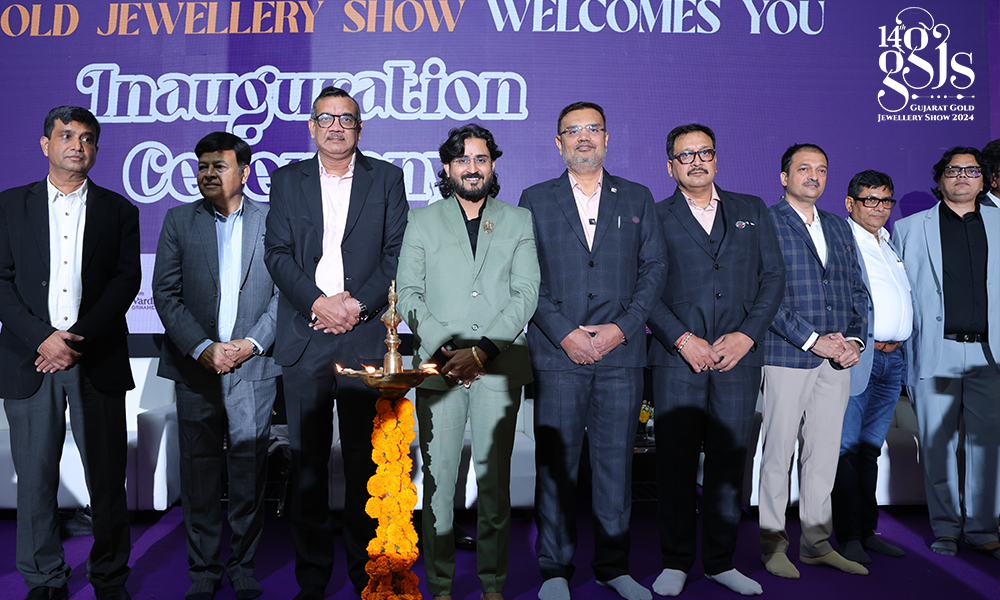


The 14th edition of GUJARAT GOLD JEWELLERY SHOW (GGJS 2024) ended sus ccessfully, once again confirming its position as a premium GJ trade show. GGJS 2024 featured 350+exhibitors across 800 stalls; 15000+ visitors attended the show.GGJS 2024 was inaugurated by Guest of Honour Dr Chetan Kumar Mehta, President – Jewellery Division – IBJA, President – JAB at the Helipad Exhibition Centre, Gandhinagar along with Hitesh Soni, President – GOWJA, Akshay Mehta, Vice President – GOWJA, Paresh Zarmarwala, Director – GGJS, Jignesh Patadia, Director – GGJS, Surendra Mehta, National Secretary -IBJA and dignitaries from the GJ industry.

Guest of Honour Dr Chetan Kumar Mehta, President – Jewellery Division – IBJA, President – JAB speaking at the GGJS 2024 Inauguration said, “GGJS is one of the premium jewellery shows.It is much awaited by the trade and industry. GGJS is a silent and vibrant show, that has created a great impact for the last 14 years. I applaud GGJS and GOWJA for the dedication in making this show a success.”

Paresh Jhurmarvala, Director – GGJS,speaking at the GGJS 2024 Inauguration said “ The positive impact of GGJS can be gauged by how exhibitors who started with single stall are now exhibiting across multiple stalls Also, they have seen their business grow manifold.Initially GGJS saw small retailers visiting the show.Today all major corporate retail chains are at GGJS.The show has grown from a Gujarat market show to a truly national jewellery show.”
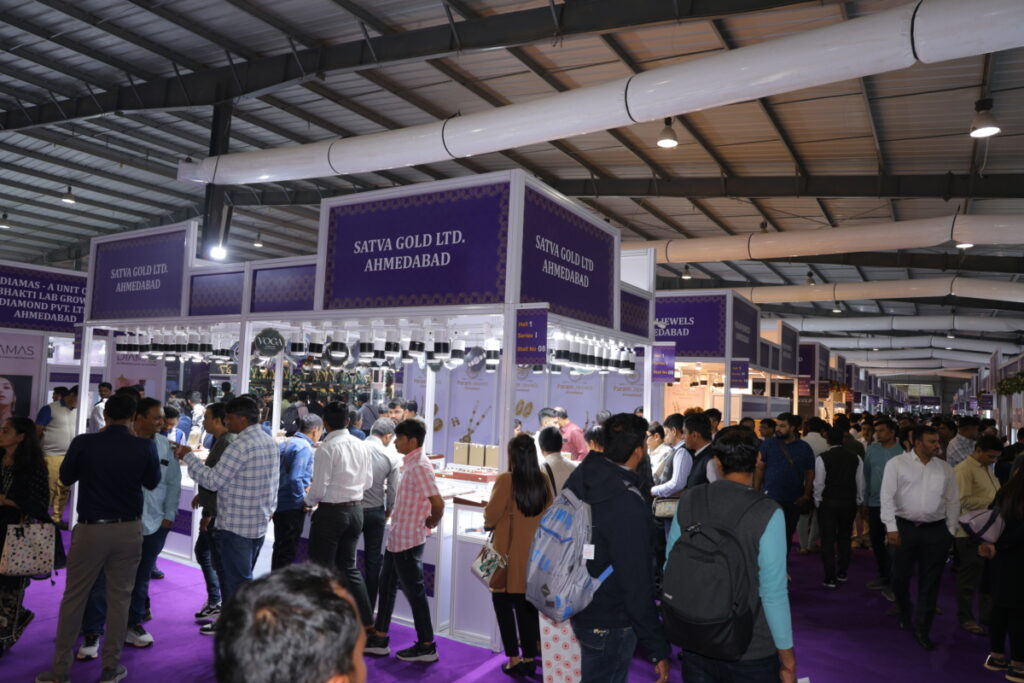
GGJS 2024 featured a wide array of segments including antique jewellery, plain gold jewellery, diamond jewellery,CZ casting jewellery, silver jewellery.The show also featured a machinery and allied section.GGJS saw brisk business across segments especially Kundan, bridal gold and lightweight.GGJS 2024 saw a healthy trade visitor turnout. Besides visitors from all over Gujarat and neighbouring states of Maharashtra, MP and Rajasthan, retailers from South India and Delhi were in attendance.Some exhibitors were of the opinion that there should have been more footfalls from Mumbai, Delhi and Rajasthan markets.


The added value at GGJS was provided by power packed panel discussions featuring the new generation of jewellers. New Generation joining the Jewellery Business and State of the Gold Jewellery Industry provided deep insights and learnings . The other highlight was Coffee with Dr Chetan Kumar Mehta in conversation with an icon, Ba Ramesh – Joint Managing Director of Thangamayil Jewellery.
GGJS is a pivotal event for the jewellery industry, especially in Gujarat, known for its rich heritage and craftsmanship. Its importance is multifaceted, benefiting artisans, businesses, and the industry at large. While GGJS features manufacturers from various regions, it underscores Gujarat’s unique contribution to the world of jewellery.

********
Coffee with Dr Chetan Kumar Mehta in conversation with Ba. Ramesh
Dr Chetan Kumar Mehta, CMD Laxmi Diamonds Bengaluru delved deep into the heart and mind of Ba Ramesh, Jt MD- Thangamayil Jewellery.And what we got was pure gold- the wisdom of Ba Ramesh who has seen the rollercoaster ride of life was a great learning, and an inspiration to all

Some of the gems that Ba Ramesh shared:
· A laser focus on work and business. Every breath and every heartbeat is directed towards work.
· Business is enjoyment – it is not work, it is not a task.It is a way of life.
· Develop the inner strength to handle bad times and let not fate defeat you.From 1980 to 1990, I moved from a lakhpati to crorepati to having net value of zero.And then established Thangamayil Jewellery, which will see a turnover of nearly Rs 4800 cr this year.
· Study the jewellery industry and understand its
· finer points, invest in technology, R&D, human resources, build your teams.These investments are critical for one’s growth.
· Look beyond just profit. Understand the concept of valuation.Work towards taking one’s company public and become a wealth creator.
· Do business ethically, respecting the laws of the country.Beyond business, be of service to humanity.






JB Insights
Gold Rate-Locking and Advance-Booking Ahead Of Dhanteras 2026
The Strategy Is To Mitigate The Impact Of Heightened Price Volatility and Recent Bullion Price Corrections On Consumer Sentiment

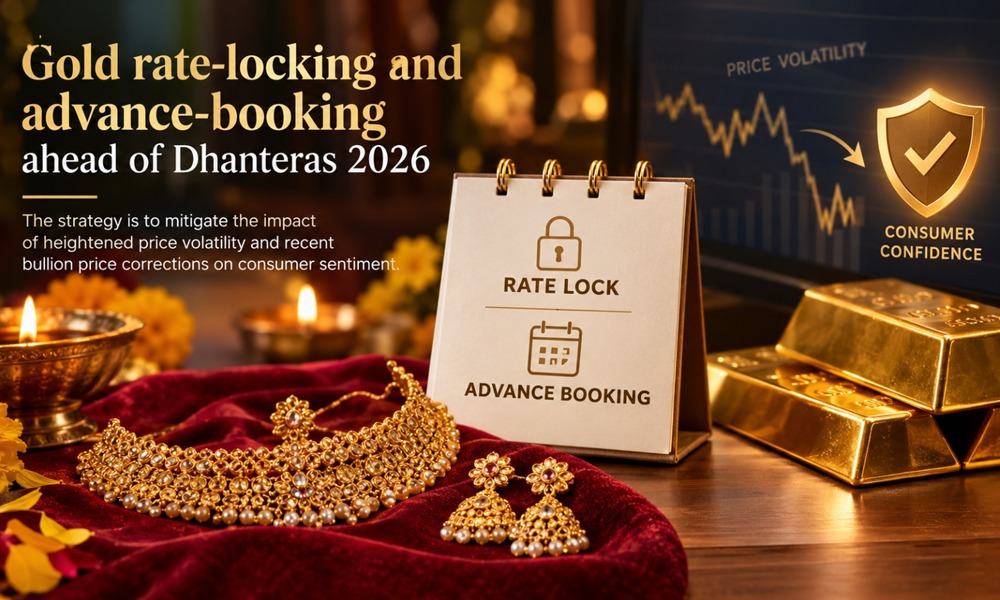
Ahead of Dhanteras on November 6, 2026, Indian jewellery retailers are aggressively leveraging advance-booking and gold rate-locking schemes to mitigate the impact of heightened price volatility and recent bullion price corrections on consumer sentiment.
Following subdued sales during Dussehra, retailers are banking on the dual convergence of Dhanteras and the upcoming wedding season to drive robust revenue recovery. Leading national and regional brands report optimistic projections, bolstered by strong interest in both heavy bridal pieces and budget-conscious solutions like lightweight jewellery and old-gold exchanges.
1. Market Context & Bullion Price Trends
Recent gold and silver trading ranges reflect elevated price levels driven by ongoing global geopolitical uncertainty, sustained central-bank purchases, and fluctuations in international currency markets.
- Gold Prices: Standard 10-gram rates are hovering between Rs 1.42 lakh and Rs 1.44 lakh.
- Silver Prices: Standard 1-kilogram rates range from Rs 1.95 lakh to Rs 1.96 lakh.
While high prices have created initial friction, recent price corrections have provided an entry window for consumers, encouraging advance commitments ahead of expected festive demand spikes.
Retail Outlook & Strategic Schemes
To capitalize on festive tailwinds and hedge consumers against potential price surges, major retailers—including Kalyan Jewellers, Joyalukkas, Senco Gold & Diamonds,—have deployed price-protection mechanisms.
Rate-Locking Mechanisms
Advance-booking schemes allow buyers to reserve jewellery by locking in current gold prices. If prices rise before final delivery, consumers pay the lower locked-in rate; if prices decline, consumers benefit from the lower market price at the time of final settlement.
Consumer Buying Patterns & Product Demand
Rising gold rates are bifurcating consumer preferences into two distinct buying trends:
High-Value Bridal & Heritage Segment
Wedding-related purchasing remains a resilient anchor for the market. Consumers continue to allocate budgets toward high-ticket items, including:
- Heavy Gold Pieces: Essential traditional bridal sets.
- Heritage & Polki Work: Intricate traditional craftsmanship.
- Diamond Jewellery: Increasingly favored in modern bridal trouseaus.
Budget Management & Value Optimization
To offset high unit costs for non-wedding or casual festive purchases, consumers are adjusting their buying strategies:
- Lightweight Jewellery: Lower overall grammage to fit fixed budget caps.
- Old-Gold Exchanges: Recycling existing family holdings into contemporary designs.
Key Insight: Senco Gold reported that old-gold exchanges now account for more than 50% of its overall business, underscoring exchange programs as the single most critical driver of sales enablement during high-price regimes.
Operational Outlook & Risks
The immediate business outlook for Indian jewellery retailers hinges on execution during the final days leading up to Dhanteras and the subsequent wedding peak:
- Conversion Metrics: The final festive revenue numbers will depend on the successful conversion rate of advance bookings into finalized, fulfilled sales.
- Margin Protection: While rate-locking drives volume, unhedged price movements pose minor margin risks for smaller retailers lacking robust bullion hedging practices.
- Inventory Management: Retailers must balance inventory stocks between high-margin bridal inventory and fast-moving, lightweight everyday wear.
Indian jewellery retailers are entering the Dhanteras 2026 period with high expectations, relying on structural price-protection tools to overcome earlier seasonal slumps. As advance bookings build momentum, old-gold recycling and rate-locking schemes are effectively bridging the gap between record-high bullion prices and strong consumer appetite for seasonal gold accumulation.



Gargi By P N Gadgil & Sons Invites Women To #GETNOTICED This Diwali In New Campaign With Mithila Palkar

IBJA, SAARTHI 360 Sign MoU To Launch ‘NextGen CEO: Leadership for the Future’

Jos Alukkas Unveils New Website For A Seamless Online Jewellery Shopping Experience

Dhanteras Shopping Guide 2026:Gold, Silver, Diamonds & Festive Jewellery Trends To Watch

The Solenne Collection: A Celebration Of Diwali By Bharti Bangur Fine Jewels

From Diya Puja To Diwali Soirées: Jewellery Designed To Go Beyond The Festive Season
-
 JB Insights4 days ago
Dhanteras Shopping Guide 2026:Gold, Silver, Diamonds & Festive Jewellery Trends To Watch
-
 BrandBuzz4 days ago
The Solenne Collection: A Celebration Of Diwali By Bharti Bangur Fine Jewels
-
 BrandBuzz4 days ago
From Diya Puja To Diwali Soirées: Jewellery Designed To Go Beyond The Festive Season
-
 National News4 days ago
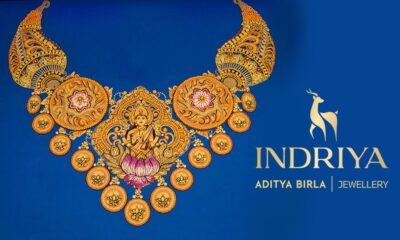
Indriya, Aditya Birla Jewellery Unveiled India’s Largest Sustainable Jewellery Rangavalli
