

Education
Generative AI is radically transforming jewellery designing

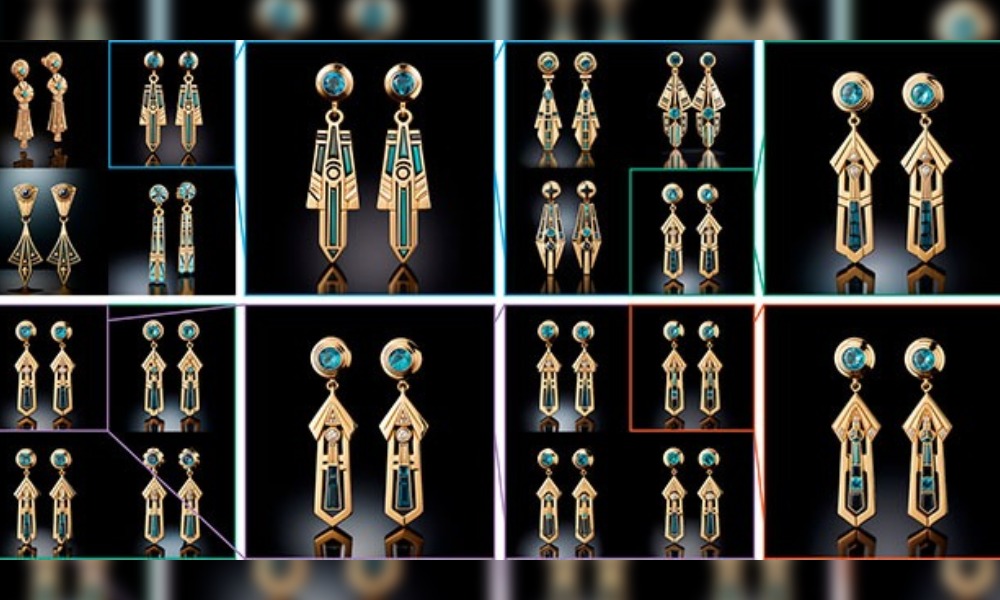
Generative Artificial Intelligence (AI) is transforming the traditionally manual field of jewelry design, introducing revolutionary tools alongside time-honored techniques. This paper explores the integration of generative AI in the design process, focusing on how programs like Midjourney, DALL.E, Stable Diffusion, Leonardo, and Firefly generate realistic jewelry images from text and image prompts. While these tools offer exciting possibilities for enhancing creativity, their use sparks significant ethical, legal, and regulatory debates.
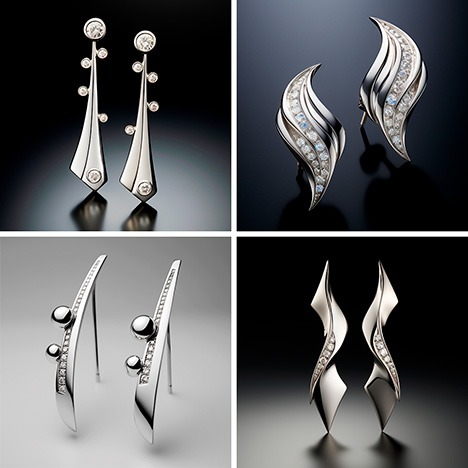
AI as a Creative Partner
The core appeal of generative AI is its potential to function as an ultra-fast brainstorming partner, a concept dubbed “AIdeation.” By simply inputting a text prompt—for example, blending ancient Egyptian and Art Deco styles—a program like Midjourney can rapidly generate numerous unique design iterations, serving as stepping stones for a designer. This capability leverages what is called “hallucination” in AI—the creation of genuinely original, non-collaged compositions. The technology, however, is not perfect; generated images often contain design irregularities or features that are impossible to manufacture, highlighting that AI is currently better for ideation than for final design perfection.
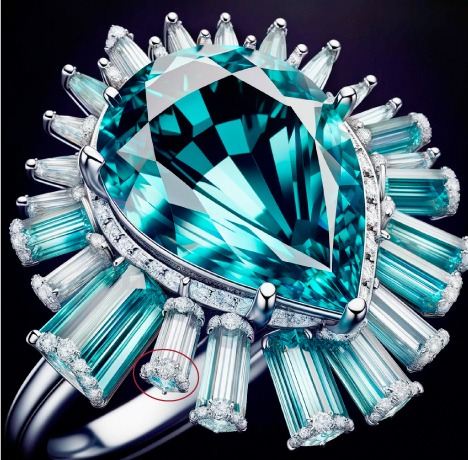
Technical Overview and Program Comparison
Generative AI operates through complex machine learning algorithms, processing massive datasets to find patterns. Specifically, most image creation models, like diffusion models, work by iteratively adding and then subtracting “noise” from a random starting image until a recognizable, prompted image resolves. The effectiveness of the output is heavily influenced by the text prompt, which acts as a “steering” mechanism for the AI. Advanced tools like outpainting (expanding an image), inpainting (replacing a section), upscaling (increasing resolution), and blending (combining images) offer designers focused control over the generated art.
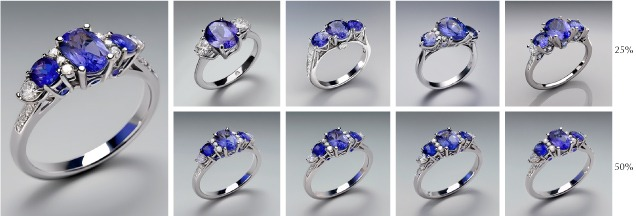
A comparative review of five popular programs shows varying strengths:
- Midjourney is highly popular for its detailed, creative, and realistic outputs, despite being accessed through the unfamiliar Discord interface.
- Stable Diffusion is an open-source, easily accessible option, though its images can be less artistic.
- DALL.E, integrated with ChatGPT, excels at conversational prompting but is slower.
- Leonardo.AI offers extensive control and the unique Realtime Canvas for live sketching.
- Adobe Firefly offers clear IP indemnification due to its training on licensed stock and public domain images, but its smaller dataset results in a lesser understanding of specific jewelry forms.
Ethical and Legal Challenges
The intersection of AI and art raises critical issues around authenticity, ownership, and copyright. The U.S. Copyright Office has clarified that works solely generated by an AI cannot be copyrighted as they lack human authorship, though a human’s significant modification of an AI-generated work may qualify. Furthermore, there are ethical concerns about the potential diminishment of manual craftsmanship and the risk of AI-generated designs infringing on existing intellectual property (IP) due to their training on copyrighted data. Companies like OpenAI are beginning to offer IP indemnification to address this. Ultimately, the industry must view AI as a tool to support human creators—enhancing their creative expression while retaining the paramount value of the designer’s skilled hands, material knowledge, and manufacturing expertise to bring the design to a tangible reality.


Education
Instappraise & NAJA Tie Up: Third Scholarship Unlocks appraisal Mastery For Global Pros
Renewed Partnership Boosts Access To NAJA Certification Pathways and Instappraise Tool

Instappraise, a jewellery appraisal software provider founded in 2019, has renewed and extended its educational partnership with the National Association of Jewellery Appraisers (NAJA), a US-based professional body established in 1981 that focuses on appraisal education, certification, and ethical standards, introducing a third scholarship to widen access to formal appraisal training and reinforce global standards.
The expanded programme now offers three distinct pathways. The first targets non-members with gemmological credentials, providing NAJA membership, access to Lessons 1-5 of the Appraisal Studies Course, and a one-year Instappraise software subscription, valued at $2,070. The second supports existing NAJA members pursuing certification, while the third enables certified members to advance to the Certified Master Appraiser designation, with benefits valued at $1,775.
The initiative responds to rising demand for structured education amid evolving valuation standards and regulatory expectations. Applicants must submit an essay, demonstrate recognised gemmological qualifications, and complete coursework within defined timelines to maintain academic rigour.
Instappraise’s appraisal platform is positioned to support NAJA and Uniform Standards of Professional Appraisal Practice (USPAP)-compliant reporting through structured documentation and workflow tools, while NAJA continues to anchor professional education and certification.
Applications close on 15 June 2026, with winners to be announced at NAJA’s 66th Annual ACEit Mid-Year Education Conference in August.



BlueStone-backed Ethera launches ‘Akshaya Tritiya Edit,’ designed for Life Beyond The Festival

Akoirah Unveils Diamond Draw Campaign Across Key Cities Ahead of Akshaya Tritiya

Vummidi Bangaru Jewellers Auspicious Akshaya Tritiya Campaign
Vummidi Bangaru Jewellers Auspicious Akshaya Tritiya Campaign
Akoirah Unveils Diamond Draw Campaign Across Key Cities Ahead of Akshaya Tritiya
BlueStone-backed Ethera launches ‘Akshaya Tritiya Edit,’ designed for Life Beyond The Festival
-
 BrandBuzz2 hours ago
Vummidi Bangaru Jewellers Auspicious Akshaya Tritiya Campaign
-
 BrandBuzz23 minutes ago
Akoirah Unveils Diamond Draw Campaign Across Key Cities Ahead of Akshaya Tritiya
-
 BrandBuzz14 minutes ago
BlueStone-backed Ethera launches ‘Akshaya Tritiya Edit,’ designed for Life Beyond The Festival
-

 National News16 hours ago
Bharat Diamond Bourse and Department Of Posts Sign MOU
