
International News
US Supreme Court ruling reshapes trade landscape for Indian GJ exports

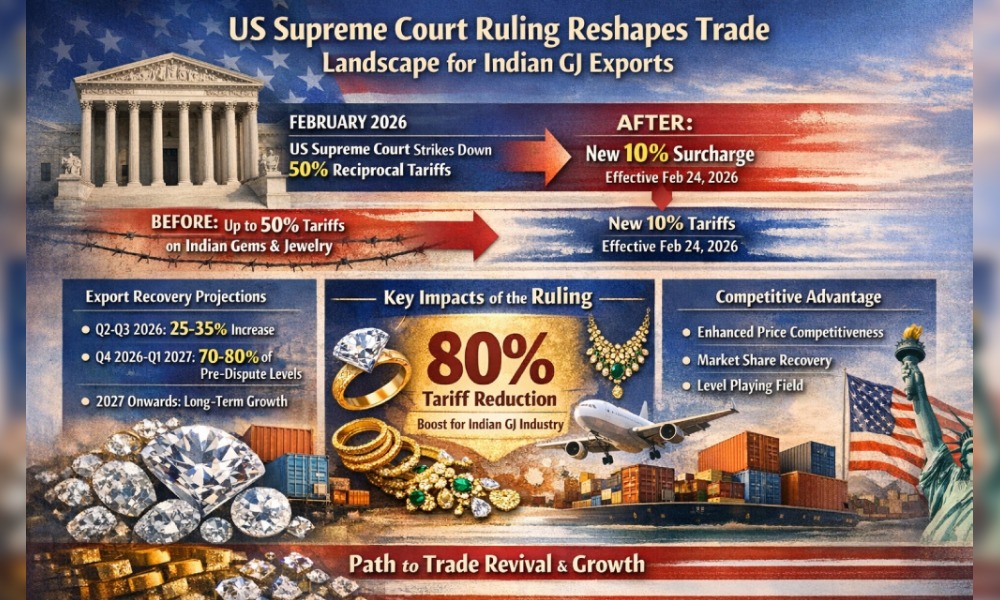
The US Supreme Court’s landmark ruling (February 2026) has fundamentally reshaped the trade landscape for Indian gems and jewellery exports to the United States. By striking down executive-imposed “reciprocal tariffs” that reached as high as 50%, the Court has provided significant relief to an industry severely impacted by escalating trade tensions.
The replacement of these punitive tariffs with a temporary 10% surcharge, effective February 24, 2026, represents a critical turning point for Indian exporters and the broader bilateral trade relationship.
Pre-Ruling Trade Environment
The Indian gems and jewellery industry, traditionally holding a dominant position in global markets, faced unprecedented challenges following the implementation of reciprocal tariffs. These measures, introduced amid broader trade disputes, created substantial barriers to entry in the US market — historically the largest destination for Indian jewellery exports.
Legal Framework of the Ruling
The Supreme Court’s decision appears to be grounded in constitutional considerations, likely challenging the executive branch’s authority to impose tariffs unilaterally or questioning the legal framework under which such measures were enacted.
While detailed legal interpretation remains under analysis, the ruling establishes important precedents for future trade policy implementation and limits executive overreach in tariff actions.
Detailed Impact Analysis
1. Tariff Structure Transformation
Before the Ruling
- Reciprocal tariffs: up to 50%
- Created an effective barrier to competitive pricing
- Resulted in a severe decline in export volumes
After the Ruling (Effective February 24, 2026)
- Temporary surcharge: 10%
- 80% reduction in tariff burden
- Establishes a more sustainable cost structure for exporters
2. Export Recovery Projections
The 74% decline in cut and polished diamond exports during the dispute highlights the severity of the previous tariff regime.
Industry projections indicate:
- Short-term recovery (Q2–Q3 2026): 25–35% increase in export volumes
- Medium-term stabilization (Q4 2026–Q1 2027): Recovery to 70–80% of pre-dispute levels
- Long-term outlook (2027 onwards): Potential market expansion opportunities
3. Competitive Positioning
Market Dynamics
- Level playing field: Indian exporters regain competitiveness against US domestic producers and third-country suppliers
- Improved price competitiveness: A 40-percentage-point tariff reduction enhances pricing flexibility
- Market share recovery: Opportunity to reclaim lost global positioning
Regional Economic Effects
Key Indian production and export hubs expected to benefit include:
- Kolkata — gem processing centre
- Surat — global diamond cutting hub
- Mumbai — manufacturing, trading, and export center
- Jaipur — traditional jewellery and coloured gemstone hub


International News
De Beers Assumes 100% Control Of Gahcho Kué Diamond Mine
A Global Slump In Diamond Demand Hit The Company Hard. Its Revenue Dropped 42% In 2025, and Average Diamond Prices Plummete

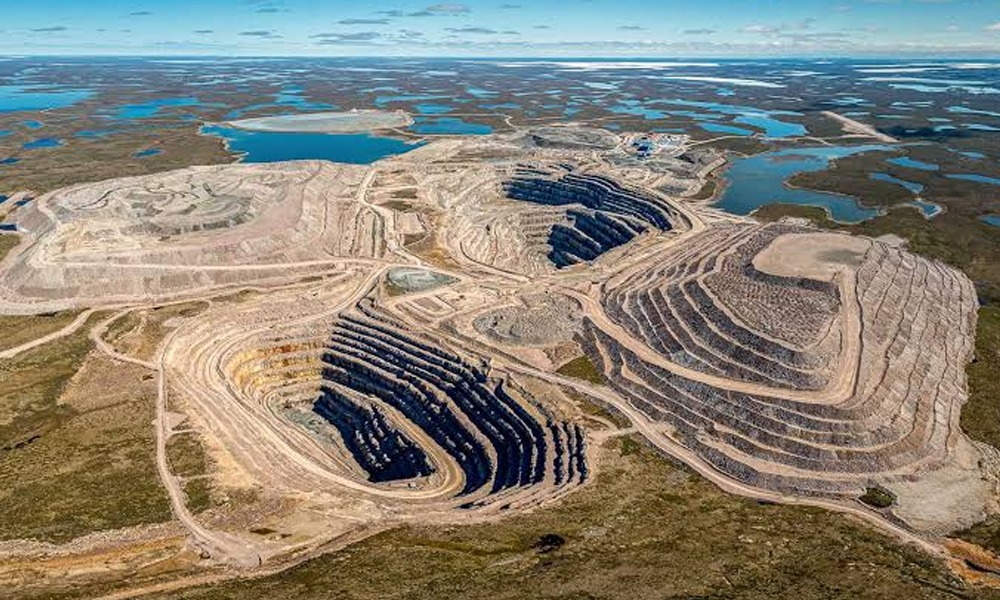
De Beers is taking 100% control of the Gahcho Kué diamond mine in Canada’s Northwest Territories. Its partner, Mountain Province Diamonds, was facing major financial trouble and agreed to hand over its 49% share in exchange for being cleared of all its debts to De Beers.
Here is why Mountain Province ran into trouble:
Falling Diamond Prices: A global slump in diamond demand hit the company hard. Its revenue dropped 42% in 2025, and average diamond prices plummeted—falling to just $36 per carat in the second quarter.
Massive Debt: Mountain Province was struggling to pay back tens of millions of dollars in short-term loans. Ratings agency S&P warning that the company was at high risk of defaulting on its debts.
Cost-Cutting and Emergency Funds: To stay afloat, the company paused expansion plans at the mine, delayed payments into environmental cleanup funds, and sold future diamond sales rights to major investor Dermot Desmond (an Irish billionaire) for quick cash.
Despite selling twice as many diamonds recently, prices were too low to cover their debts.
CEO Jonathan Comerford explained that trade tariffs and Middle East conflicts crushed diamond prices, leaving handing over their share of the mine as the best option to cancel liabilities and secure local jobs.



GJS 2026 Diwali Edition Concludes On A High Note With Record Sales

GJEPC Launches UNNATI: Powering Women In GJ Sector To Drive Industry Growth Towards Viksit Bharat

Divine Solitaires and SGL Launch The Know Your Diamond Zone At GJS Diwali Edition 2026
GJEPC Launches UNNATI: Powering Women In GJ Sector To Drive Industry Growth Towards Viksit Bharat

KEYA By Adbhut Brings Wearable Art and Indian Craftsmanship To Delhi Art Weekend 2026

Titan, Kalyan, Malabar, Senco and Indriya Lead 54 Champions Crowned At The First India International Jewellery Awards
-
 National News1 day ago
GJEPC Launches UNNATI: Powering Women In GJ Sector To Drive Industry Growth Towards Viksit Bharat
-
 National News1 day ago
KEYA By Adbhut Brings Wearable Art and Indian Craftsmanship To Delhi Art Weekend 2026
-
 National News1 day ago
Titan, Kalyan, Malabar, Senco and Indriya Lead 54 Champions Crowned At The First India International Jewellery Awards
-
 National News1 day ago
Divine Solitaires and SGL Launch The Know Your Diamond Zone At GJS Diwali Edition 2026
