
Education
Generative AI is radically transforming jewellery designing

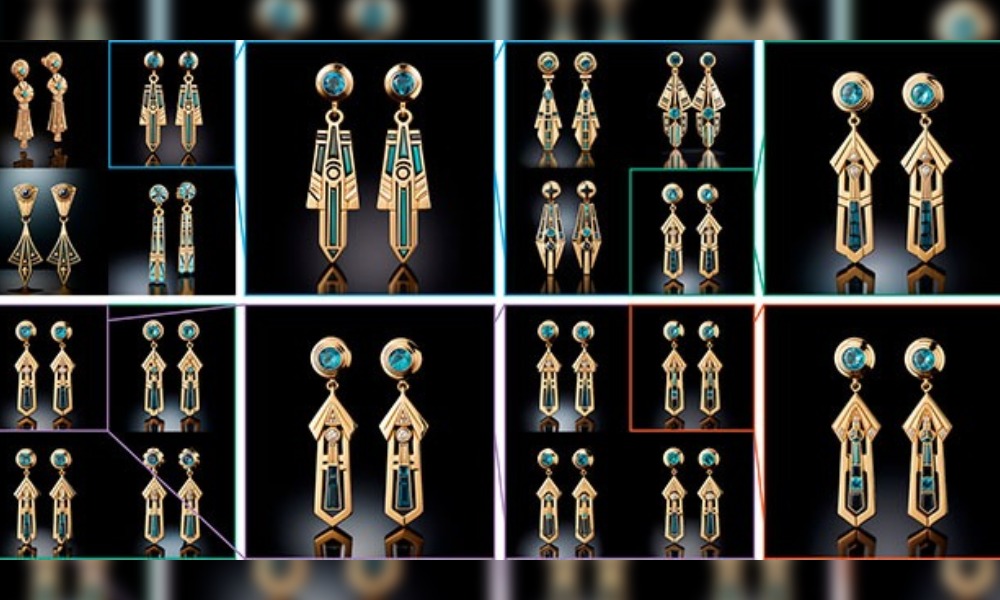
Generative Artificial Intelligence (AI) is transforming the traditionally manual field of jewelry design, introducing revolutionary tools alongside time-honored techniques. This paper explores the integration of generative AI in the design process, focusing on how programs like Midjourney, DALL.E, Stable Diffusion, Leonardo, and Firefly generate realistic jewelry images from text and image prompts. While these tools offer exciting possibilities for enhancing creativity, their use sparks significant ethical, legal, and regulatory debates.
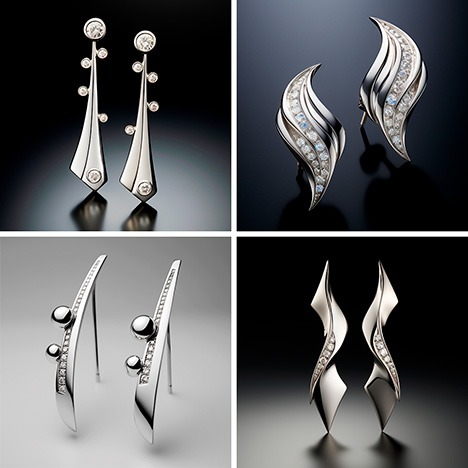
AI as a Creative Partner
The core appeal of generative AI is its potential to function as an ultra-fast brainstorming partner, a concept dubbed “AIdeation.” By simply inputting a text prompt—for example, blending ancient Egyptian and Art Deco styles—a program like Midjourney can rapidly generate numerous unique design iterations, serving as stepping stones for a designer. This capability leverages what is called “hallucination” in AI—the creation of genuinely original, non-collaged compositions. The technology, however, is not perfect; generated images often contain design irregularities or features that are impossible to manufacture, highlighting that AI is currently better for ideation than for final design perfection.
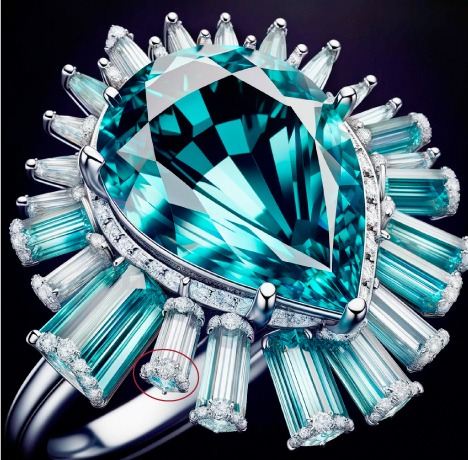
Technical Overview and Program Comparison
Generative AI operates through complex machine learning algorithms, processing massive datasets to find patterns. Specifically, most image creation models, like diffusion models, work by iteratively adding and then subtracting “noise” from a random starting image until a recognizable, prompted image resolves. The effectiveness of the output is heavily influenced by the text prompt, which acts as a “steering” mechanism for the AI. Advanced tools like outpainting (expanding an image), inpainting (replacing a section), upscaling (increasing resolution), and blending (combining images) offer designers focused control over the generated art.
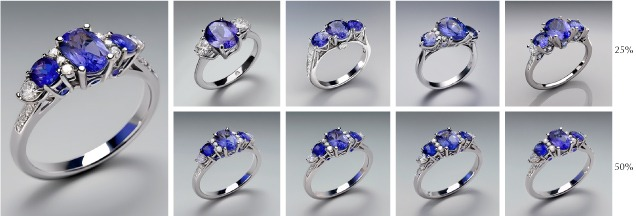
A comparative review of five popular programs shows varying strengths:
- Midjourney is highly popular for its detailed, creative, and realistic outputs, despite being accessed through the unfamiliar Discord interface.
- Stable Diffusion is an open-source, easily accessible option, though its images can be less artistic.
- DALL.E, integrated with ChatGPT, excels at conversational prompting but is slower.
- Leonardo.AI offers extensive control and the unique Realtime Canvas for live sketching.
- Adobe Firefly offers clear IP indemnification due to its training on licensed stock and public domain images, but its smaller dataset results in a lesser understanding of specific jewelry forms.
Ethical and Legal Challenges
The intersection of AI and art raises critical issues around authenticity, ownership, and copyright. The U.S. Copyright Office has clarified that works solely generated by an AI cannot be copyrighted as they lack human authorship, though a human’s significant modification of an AI-generated work may qualify. Furthermore, there are ethical concerns about the potential diminishment of manual craftsmanship and the risk of AI-generated designs infringing on existing intellectual property (IP) due to their training on copyrighted data. Companies like OpenAI are beginning to offer IP indemnification to address this. Ultimately, the industry must view AI as a tool to support human creators—enhancing their creative expression while retaining the paramount value of the designer’s skilled hands, material knowledge, and manufacturing expertise to bring the design to a tangible reality.



Education
GIA To Open London Campus In August, Enrolling Students For Classes Beginning In August 2026
Campus in London’s Canary Wharf Will Place GIA Students In One Of The World’s Most Influential Centers For Luxury and Business.

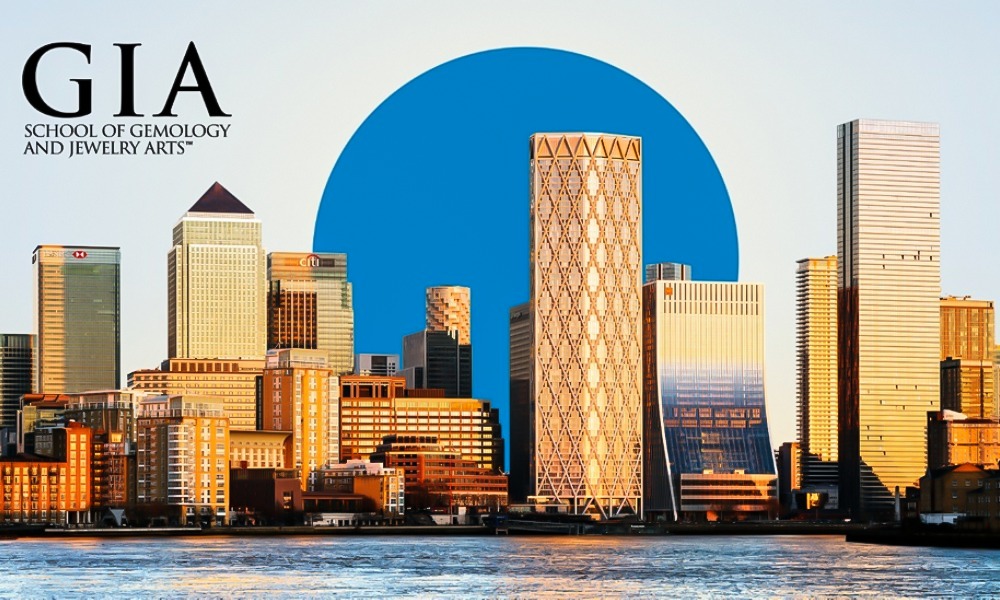
The soon-to-open GIA (Gemological Institute of America) campus in London is now enrolling students for classes beginning in August 2026. The new GIA School of Gemology and Jewelry Arts campus in London’s Canary Wharf will place GIA students in one of the world’s most influential centers for luxury and business.
The new London campus in the iconic and vibrant Canary Wharf district will offer increased capacity and, for the first time in London, the GIA Jewelry Design & Technology program. The campus will be conveniently located near transport, cultural and social attractions. Historically, enrolment at GIA’s London campus has included students from more than 50 countries with unique and diverse backgrounds.
GIA President and CEO, Pritesh Patel said:

“GIA takes great pride in providing premier education through our programs. Our new London campus will allow us to further advance our mission to ensure confidence in gems and jewelry by making education more globally accessible and offering the highest quality gem and jewelry education.”
GIA’s London school was established in 2002, providing education in gemmology and jewellery design. The school is accredited by the British Accreditation Council (BAC) and Independent Schools Inspectorate (ISI).



Kangana Ranaut Unveils PNG Jewellers New Showroom In Ayodhya~

GGJS 2026 Concludes With High-Volume Trade and Strategic Focus On Next-Gen Leadership

The Solitaire Festival Of India Concludes; Bumper Prize Winner At Ranka Jewellers Wins XUV 7XO
GGJS 2026 Concludes With High-Volume Trade and Strategic Focus On Next-Gen Leadership

ABARAN Commemorates The 125th Birth Anniversary Of Founder Shri Burde Sadananda Kamath With Special Gold Coin Launch

MCX Gold Silver Futures See Dip
-
 National News2 hours ago
GGJS 2026 Concludes With High-Volume Trade and Strategic Focus On Next-Gen Leadership
-
 National News7 hours ago
ABARAN Commemorates The 125th Birth Anniversary Of Founder Shri Burde Sadananda Kamath With Special Gold Coin Launch
-
 National News7 hours ago
MCX Gold Silver Futures See Dip
-
 National News1 hour ago
Kangana Ranaut Unveils PNG Jewellers New Showroom In Ayodhya~
