
DiamondBuzz
De Beers Jewellers rebranded as De Beers London

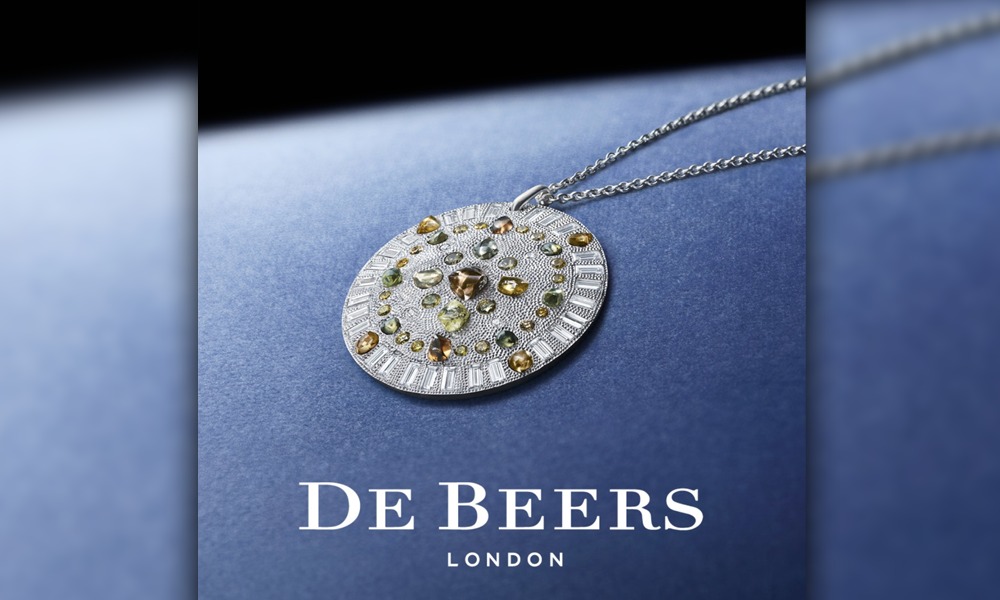
De Beers Jewellers has rebranded as De Beers London in a move designed to emphasize its links with one of the world’s fashion and luxury capitals.And is launching a new brand campaign, fronted by British fashion model, actress and mental health activist Adwoa Aboah
“De Beers Group has been the pioneering diamond expert since 1888, and De Beers London draws on this rich heritage through bold and elegant jewellery that’s inspired by the nature of Africa and transformed with London’s energy and artistic spirit,” the company said as it announced the rebranding.
Aboah, 32, who has has modeled for Calvin Klein, Fendi, DKNY, Alexander Wang, H&M, and Versace in the past, wears pieces from the Talisman collection – combining rough and polished diamonds – and the Enchanted Lotus collection in the new campaign for De Beers London.
De Beers Diamond Jewellers was established in 2001 as a 50:50 joint venture with LVMH, the French luxury goods company. It was renamed De Beers Jewellers in 2017 when De Beers Group acquired the LVMH share, and as of now it is known as De Beers London.
“Building value through scale with De Beers London is a key part of De Beers Group’s Origins strategy and this evolution will help us to reinforce our unique position as the only luxury jewellery house with direct access to natural diamonds at source, ” De Beers said. “As such, it is a pivotal step in our journey to build a strong portfolio of brands.








DiamondBuzz
GIA Examines Diamond Faceted To Resemble A Panther’s Face.
The 67.18-Carat Diamond, Originally 113 Carats, Was Carved Into A Panther’s Face and Includes Two Zambian Marquise Mixed-Cut Emeralds As Eyes.

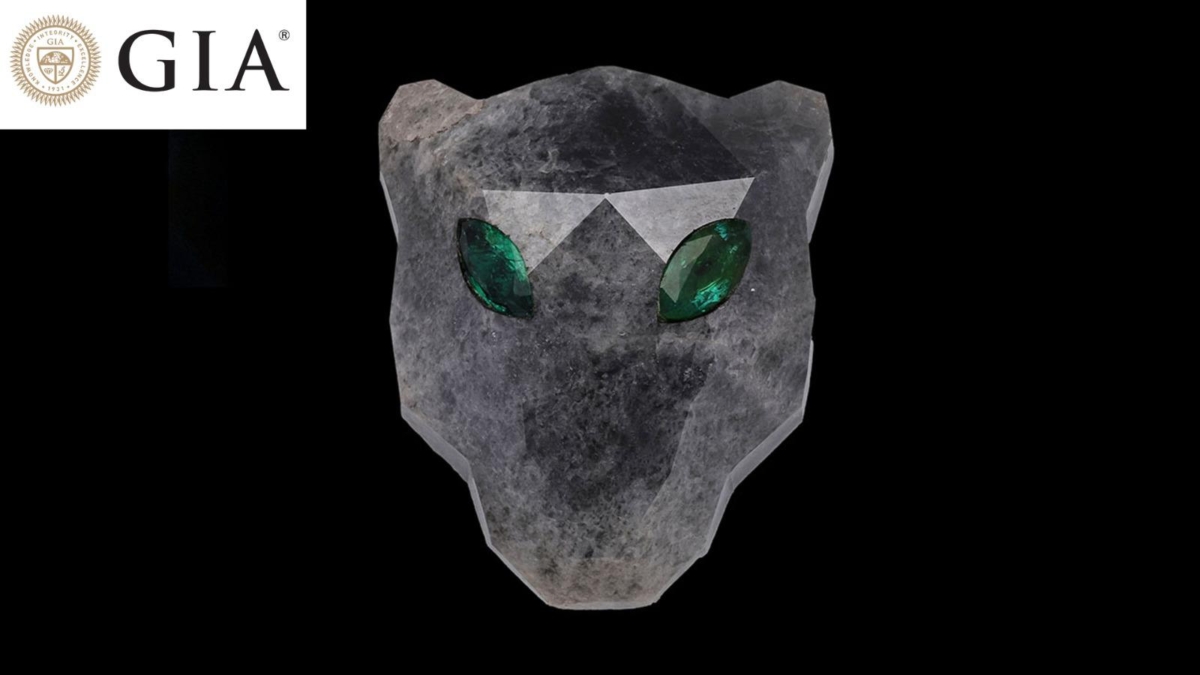
The Gemological Institute of America (GIA) recently examined a diamond the maker carved and faceted to resemble a panther’s face.
The 67.18-carat diamond, originally 113 carats, was carved into a panther’s face and includes two Zambian marquise mixed-cut emeralds as eyes.
GIA used Fourier-transform infrared absorption and photoluminescence spectroscopy to identify the diamond as type Ia.
The piece, titled Jade Fang, took nearly a year to complete and required advanced cutting techniques to navigate heavy inclusions and an unconventional design.



Tradition Meets Everyday Style: Mangalsutras For Karva Chauth From Candere By Kalyan Jewellers

So/Facet Raises ₹10 Crore Led By Sauce To Build The Diamond Brand That Young India Has Been Missing

Festive & Wedding Season Trade Outlook: Resilience, Innovation, and Growth

BHIMA Jewellery Receives Prestigious IAGES Accreditation
So/Facet Raises ₹10 Crore Led By Sauce To Build The Diamond Brand That Young India Has Been Missing

JGP Jewellers Opens Its 26th Store In Nipani, Marking Its Entry Into Karnataka
-
 National News18 hours ago
BHIMA Jewellery Receives Prestigious IAGES Accreditation
-
 National News17 hours ago
So/Facet Raises ₹10 Crore Led By Sauce To Build The Diamond Brand That Young India Has Been Missing
-
 New Premises22 hours ago
JGP Jewellers Opens Its 26th Store In Nipani, Marking Its Entry Into Karnataka
-
 JB Insights17 hours ago
Festive & Wedding Season Trade Outlook: Resilience, Innovation, and Growth
