
By Invitation
The Quiet Luxury of Carved Gemstones
By Ramit Kapur- MD, GSI India

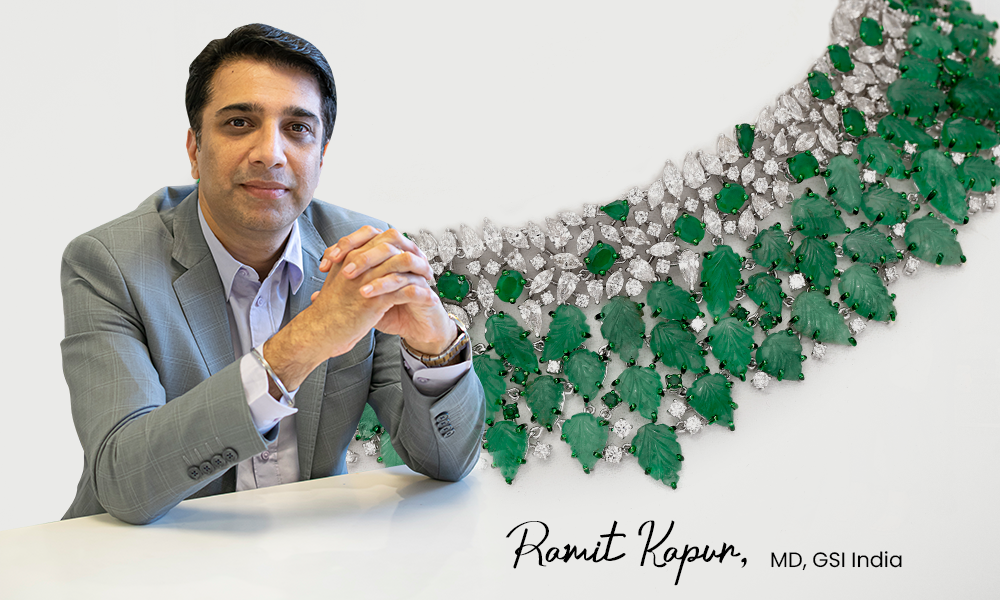
The world of gemstones is beyond their brilliance, color, transparency, and phenomena. When we think of carvings, we’re not just talking about gemstones used in jewellery. Carving today spans everything from trays and coasters we use every day to idols, vases, and other collectibles that become cherished pieces of art. It’s an often-overlooked art form that deserves recognition for the immense artistry and craftsmanship involved.
As someone deeply embedded in the industry and leading GSI India, I can confidently say that people won’t invest in a piece; no matter how precious the stone: if the carving isn’t done right. So, the first selling point centers around craftsmanship, of course followed by the authenticity and value of the gemstone used.
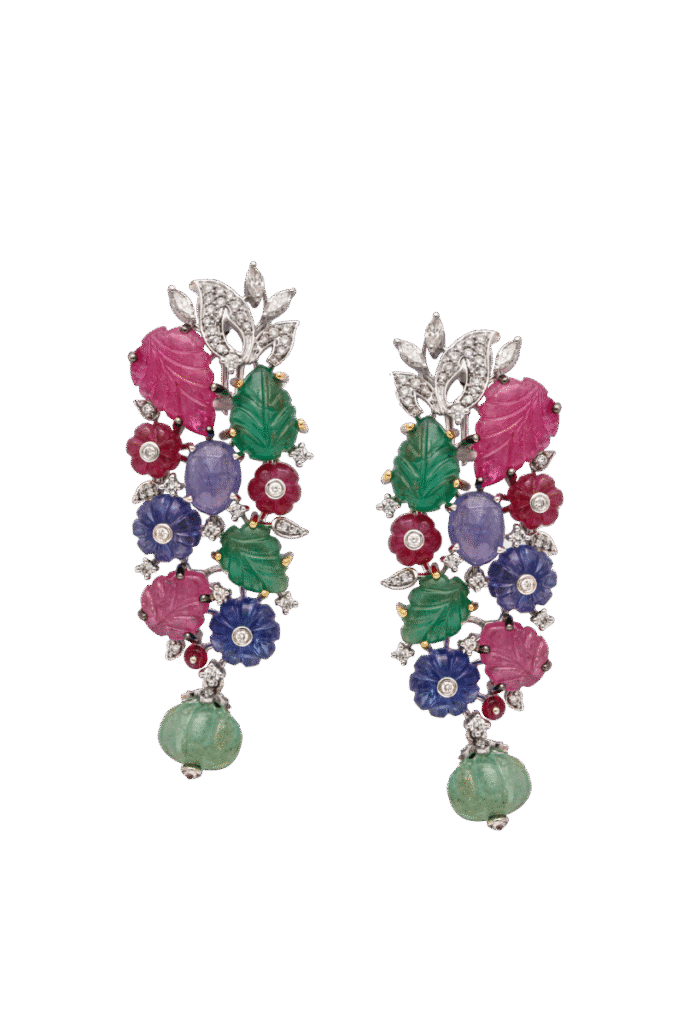
The quiet poetry of carved gemstones exists beyond the bounds of conventional jewellery design and often go unnoticed in mainstream narratives. Yet they carry some of the richest legacies, the most intimate expressions of craftsmanship, and a cultural gravity that no ideal cut or laser inscription can replicate. Today, as jewellery evolves into a medium of meaning and identity, carved gemstones are experiencing a powerful resurgence. Whether it’s a delicate floral motif on a tourmaline or a symbolic script etched into an emerald, these stones embody permanence with purpose.
For a generation that values intention over ornament, carvings offer exactly that: a wearable emotion, a personal artifact, and a story that transcends carat weight. At GSI, we celebrate jewellery in every form, especially those that carry soul, tradition, and storytelling in their very structure.
From Courts and Temples to Contemporary Studios
Gemstone carving isn’t a trend; it is a tradition. Long before modern jewellery, carved gems were speaking their own language: one of spirit, status, and storytelling. From temple idols to royal signets, they’ve carried meanings deeper than beauty.
Two classical techniques form the backbone of this craft: Intaglios, with designs engraved below the surface for wax seals, and Cameos, where raised motifs emerge in sculptural relief. Both require not just precision, but intuition, a dialogue between artist and stone.
Germany’s Idar-Oberstein remains a living museum of this legacy. Here, stones like agate and jasper are sculpted into heirlooms, passed down as both art and ancestry. Every piece is a story carved in silence.
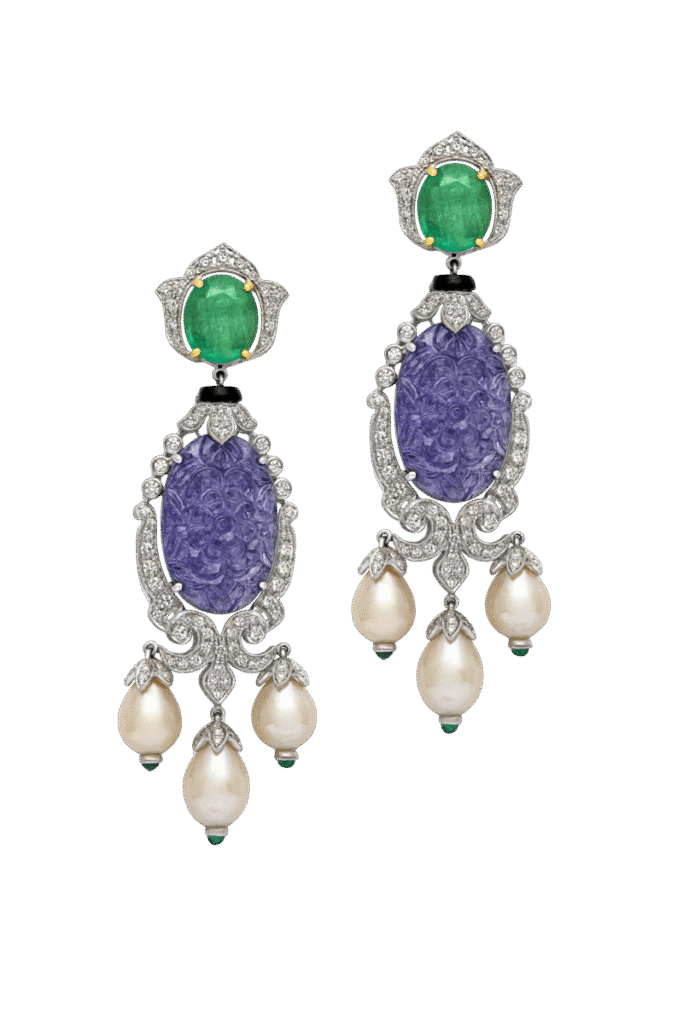
If Idar-Oberstein is Europe’s carving capital, Jaipur is India’s beating heart. Developed with Mughal patronage particularly by emperors Akbar, Jahangir, and Shah Jahan for their distinguished taste in art, it has since then grown into a global hub; transforming roughs into divine figures, florals, and high fashion commissions. Its edge? A rare blend of old-world mastery and new-world relevance.
And then, there’s Fabergé: the master of turning carving into couture. His works in quartz and chalcedony weren’t just intricate; they were emotional. A blossom. A bunny. A memory in mineral form.
Today, carving is everywhere; from bespoke jewels to vases, coasters, and collectibles. Artists across the world are reimagining tradition for the now. And in an age of instant everything, carved gemstones stand apart: timelessness you can touch, and craftsmanship that speaks with soul.
What the Eye Misses, the Lab Must Find
Carved stones pose a very unique gemological challenge. At our GSI labs, we encounter an extraordinary variety of carved gemstones; each one unique in form, scale, and sentiment. Some are delicately slivered into symbolic motifs, while others are grand in presence, demanding custom instrument setups and careful handling. Testing these pieces, especially when set in jewellery, requires precision, adaptability, and a deep understanding of gemstone behavior.
Carvings, by nature, are emotionally charged. They’re often adored not just for beauty, but for meaning. But emotion must be backed by authentication and the right certification; especially in today’s high-value, high-stakes market. Whether it’s identifying treatments, or distinguishing natural from imitations, our role is to bring clarity to complexity.
At GSI, we don’t just verify a gemstone; we translate its unspoken story. From the delicate depths of an intaglio to the elevated relief of a cameo, our certification doesn’t just protect value; it protects legacy.
Technology Has Unlocked New Possibilities
Modern lapidaries are now able to carve harder materials with precision that was once unthinkable. For a long time, artists chose softer, more affordable stones, to avoid breakage, and preserve weight. Using precious gems was simply too risky. But with time and technology, that’s changed. Today, gem material like sapphire, spinel, and topaz, once considered too delicate to sculpt, are being carved with remarkable precision. What was once unthinkable is now part of the craft’s evolving canvas.
But while tools evolve, the soul of carving stays rooted in intention, vision, and a deep respect for the stone’s natural voice. That interplay between human and mineral is what makes a carving come alive.
Today, luxury is no longer defined by price tags or perfection alone; it’s about meaning, craftsmanship, and cultural richness. Carved gemstones carry all of that, and more.
At GSI, we believe that true appreciation begins with understanding. Whether it’s a carved idol, a custom tray, or a fine piece of jewellery, the value of a gemstone lies in both its beauty and its authenticity. That’s why certification matters: not just for what a gem is, but for the story it tells.






By Invitation
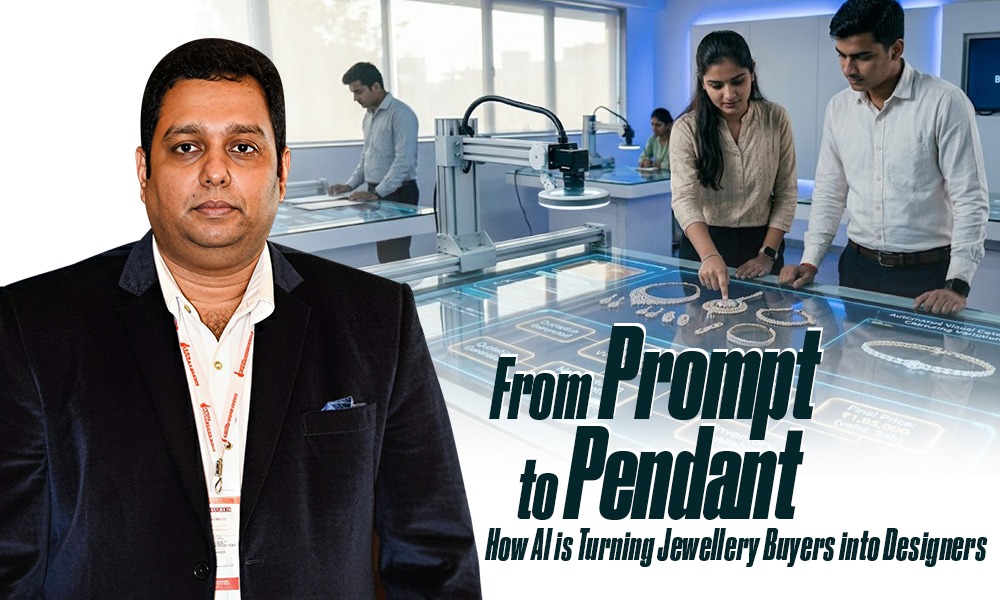
From Prompt To Pendant: How AI Is Turning Jewellery Buyers Into Designers
By Dr Sandip P. Dhurat

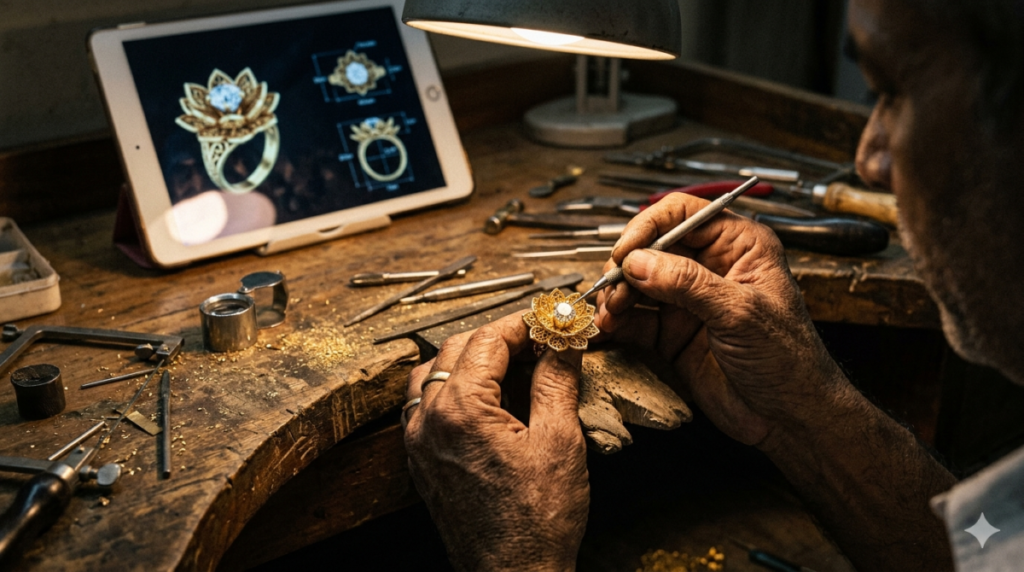
Not long ago, jewellery design was largely a one-way conversation. Consumers browsed catalogues, visited stores, or selected pieces from showcases. If they wanted something custom-made, they relied on the jeweller’s sketches, imagination, and expertise.
Today, a new collaborator has entered the room: Artificial Intelligence.
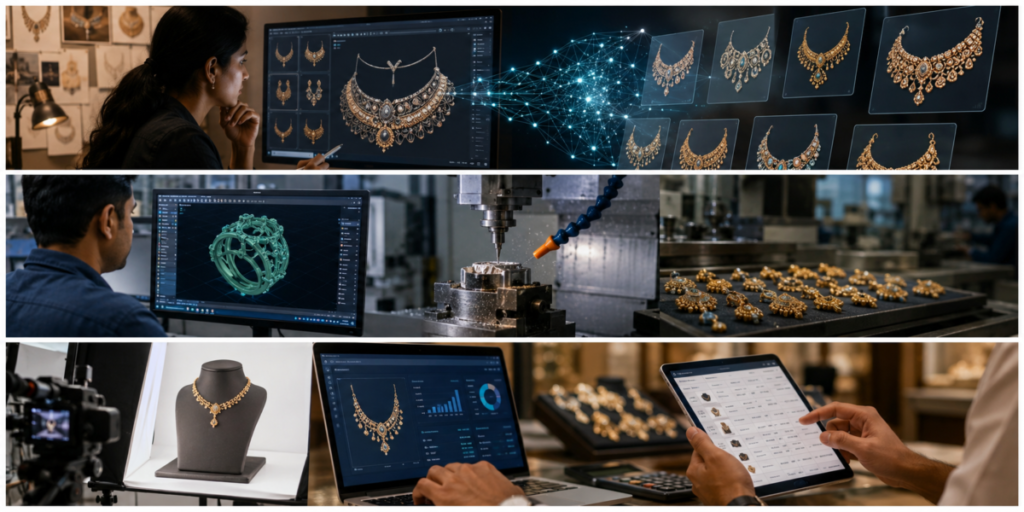
Across age groups, consumers are experimenting with AI-powered image generators and design applications to create jewellery concepts that reflect their personal tastes. A few words typed into a prompt—”an emerald engagement ring inspired by lotus petals” or “a contemporary mangalsutra with geometric motifs”—can generate multiple design possibilities within seconds.
What happens next is perhaps the most interesting part of the story.Instead of ordering these pieces online, many consumers are taking their AI-generated designs to the one person they trust most: their family jeweller.
The new wave of customisation
For decades, customization in jewellery was often limited to engraving names, changing gemstones, or making minor design alterations. AI is expanding that possibility dramatically.
Consumers are no longer arriving at jewellery stores with vague ideas. They are walking in with detailed visual references generated on their smartphones. Some have experimented with dozens of versions before settling on a favourite. Others blend elements from different designs to create something entirely unique.
In a sense, AI is democratizing the design process. It allows consumers to participate creatively, even if they have no formal design background.
For younger buyers especially, this level of involvement is appealing. They want jewellery that feels personal, expressive, and different from what everyone else is wearing. AI gives them a playground where they can explore possibilities before making a purchase.
Role of traditional family jeweller
If AI can generate designs so easily, does that diminish the role of the jeweller?Quite the opposite.
While AI can create attractive images, it cannot determine whether a design is structurally sound, comfortable to wear, practical to manufacture, or durable enough for daily use. A ring that looks spectacular on a screen may be impossible to cast. A delicate bracelet generated by AI may not withstand regular wear.
This is where the expertise of the jeweller becomes invaluable.
Family jewellers are increasingly acting as interpreters between digital imagination and physical reality. They assess AI-generated concepts, refine proportions, suggest technical modifications, and ensure that the final piece balances aesthetics with craftsmanship.
Many jewellers describe the process as similar to working with a client-provided sketch—except the sketch is now more sophisticated and visually detailed.
The trust factor remains unchanged. Consumers may discover designs through AI, but they still want someone they know to guide the process and stand behind the finished product.
New collaboration trend
The relationship between customer and jeweller is evolving from buyer-and-seller to co-creators.
Consider a young couple designing an engagement ring. Instead of selecting from existing collections, they use AI to explore various combinations of settings, gemstones, and motifs. They then sit down with their jeweller to discuss feasibility, budget, stone availability, and craftsmanship.
The final piece is neither entirely AI-designed nor solely jeweller-designed. It is the outcome of a collaborative journey.
This shift creates opportunities for jewellers to engage customers more deeply. Conversations become richer because customers arrive with visual ideas rather than abstract descriptions.
In many cases, the design process becomes part of the emotional value of the jewellery itself.
The opportunity
The trend presents several advantages for jewellers willing to embrace it.
First, AI-generated concepts can serve as conversation starters. Instead of spending significant time understanding a customer’s vision from scratch, jewellers can begin with a visual reference and refine it together.
Second, it can increase demand for bespoke jewellery. Consumers who might never have considered custom design are discovering how accessible it has become.
Third, it opens the door to a new generation of buyers who value individuality over mass-produced designs.
Rather than competing with AI, jewellers can position themselves as the experts who transform digital concepts into heirloom-worthy creations.
Despite all the excitement around AI, jewellery remains an intensely human product.
A necklace gifted on a wedding day, a ring marking an engagement, or a bracelet passed down through generations carries emotions that no algorithm can replicate. AI may help generate ideas, but it cannot understand family traditions, cultural significance, sentimental stories, or the subtle nuances of personal taste.
Consumers are discovering designs through technology, but they are still seeking reassurance, expertise, and craftsmanship from people they trust.
Perhaps that is the real story behind this trend.
AI is not replacing the jeweller. It is empowering consumers to participate in the creative process while making the jeweller’s role even more valuable. The screen may provide the inspiration, but it is the skilled hand of the jeweller that transforms a digital concept into a treasured piece of jewellery.
In the years ahead, the most successful jewellers may not be those who resist AI, but those who embrace it as another tool in the ongoing art of personalization—where technology sparks the idea, and craftsmanship gives it life.


-
 National News22 minutes ago
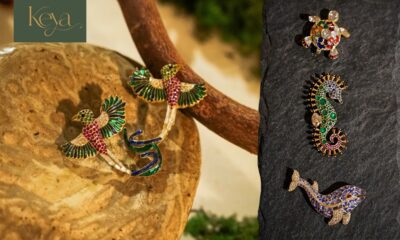
KEYA By Adbhut Brings Wearable Art and Indian Craftsmanship To Delhi Art Weekend 2026
-

 International News2 hours ago
De Beers Assumes 100% Control Of Gahcho Kué Diamond Mine
-

 National News2 hours ago
Keemti Jewels Unveils Second Lagship Store In Mumbai At Borivali-West
-

 New Premises5 hours ago
Malabar Gold & Diamonds Opens Its Second-Biggest Showroom In Goa
