
By Invitation
How seasonal discounts are decisive factors in increasing Jewellery sales
By Shivaram A

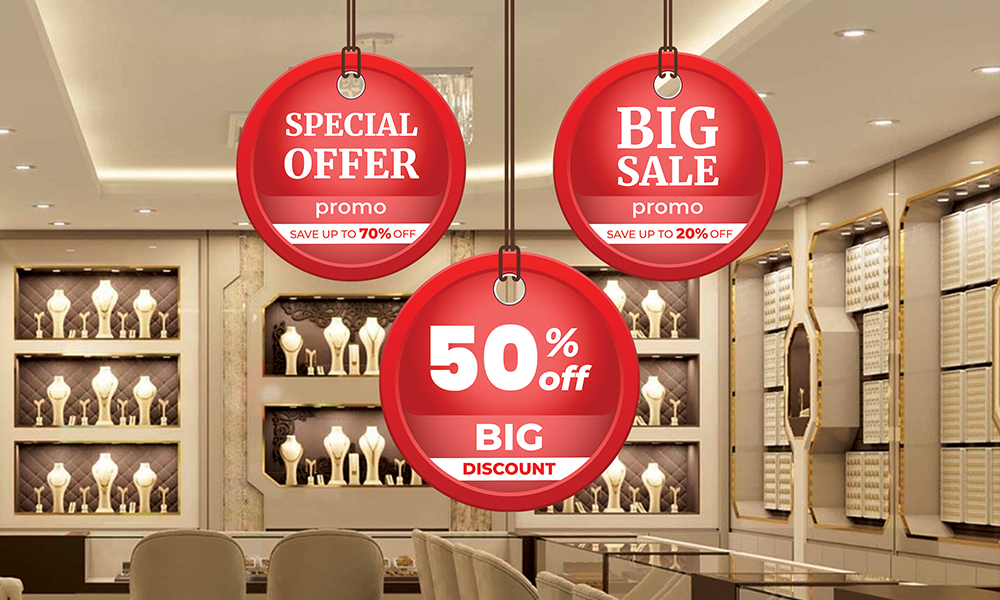
Festivals and auspicious occasions are intricately woven into the tapestry of Indian culture and the Indian jewellery trade. Every second month comes up a festival or auspicious occasion and with it comes a downpour of discounts and deals. The Indian customer is ready to lap up the discount offers like milk and honey! So, like other retail businesses, the jewellery retail industry too, depends on seasonal offers and discounts to increase the sales.
Why do seasonal discounts and offers matter?
● The Indian calendar is dotted with festivals and occasions every month. Such festivities are normally associated with jewellery purchase to augur good fortune to the family. To attract customers, offering special festival discounts have become the norm.
● During festivals like Diwali or Pongal, the government employees get their bonus which is a bulk amount used often for investment in gold. To lure the customers to invest heavily in gold purchase, higher discounts are offered.
● Certain auspicious days like Dhanteras or Akshaya Tritiya are specifically linked with gold purchase as families buy gold on these days and worship God with gold coins.
● Occasions like Valentine’s Day, Father’s Day and Mother’s Day are being highlighted recently to push sales further with special offers.
● Certain festivals like Varalakshmi Pooja, Karva Chauth or Vijayadashami have become occasions for women to buy new jewellery. With gold being such a high-priced commodity, frequent purchases are not easy for an average customer. Thus, the only option for a retailer is to offer such discounts and offers during festivals to boost sales.
How to boost jewellery sales using seasonal discounts and offers
- Read your customers Assess the footfall of customers during festive seasons. This
may vary from one shop to another shop in another location depending onthe type of customers you cater to- For example. middleclass customers find it convenient to purchase gold during Diwali, New Year or Akshaya Tritiya. For theaffluent, every day is an occasion.
● The locality your store is in- If your store is located in a North Indian niche, you can expect customers during Dhanteras. In a South Indian locality, Akshaya Tritiya, Onam, Uganda, Pongal, Diwali or Dussehra are the best for buying gold. In a Muslim dominated area, sales are bound to shoot only during weddings. Christians normally purchase gold for their engagements and weddings or during Christmas. Make a list of the days or occasions where you had maximum sales. Some festivals may attract crowds to your store but how many actually bought and why? Analyse.
How seasonal discounts are decisive factors in increasing Jewellery sales
1. Offer a seasonal discount only if it is worth it.
During a festival, every jeweller in town is offering a discount and the competition is intense. Do not just join the competition blindly and offer heavy discounts. Instead, evaluate whether giving a discount of this size has worked for you earlier. If not, you can test-market by offering this discount moderately for a few days and judge the outcome. Offer a seasonal discount only if you think it is worth the trouble. or if you are desperate to liquidate stock.
2. Be different in your discounts
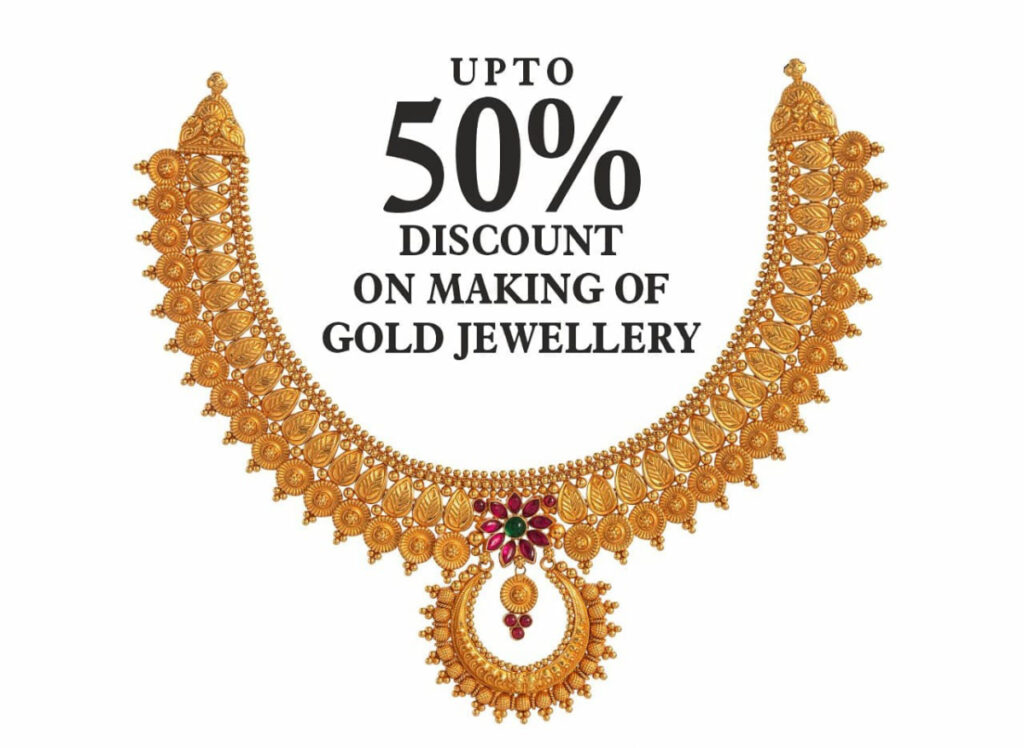
10% off on making charges, zero wastage- all this has become common phrases during festive time. Try something different.
● Tanishq offered a 20% discount on making charges with an additional 5% with State Bank debit and credit cards
● GRT offered silver items free for the weight of gold etc.
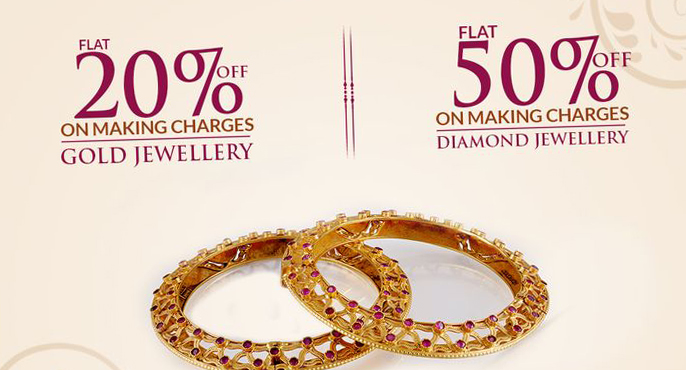
● PC Jewellers has cleverly coined its discount deal as “20% off on diamond jewellery” and “20% off on making charges of gold jewellery”. Here the 20% looms large and draws the customer to the store.
● Durga Jewellers of Bangalore goes a step further with its ‘Buy 1, get 2 ” offer on Solitaire jewellery.
3. Make an impact with the discount offer
Evolve print or social media campaigns based on this discountoffer and spread the word around. Intimate your customers of this offer by email, SMS, voice call, WhatsApp or FB messages. Make sure that your discounts make an impact on the customer and draw her to your store. Kamdhenu Jewellers of Chennai has marketed this ad across Facebook and received good response.
4. Special discounts as a mark of loyalty or regular purchase.
Discount depends on your discretion. Turn it into a favourable asset. Yes, it is possible if you offer discounts to
● Loyal customers who have been purchasing jewellery from you for ages, from generation to generation.
● Customers who have brought in many referrals through friends and relatives.
● Frequent shoppers who make small but regular purchases. This not only enhances your customer loyalty but also assures of more purchases in the future years.
The How, When and Why of discounts
It is not just the discount that matters. It is the How, When and Why that matter.
1. How– How do you present your discount? A 20% off on diamond jewellery sounds lame but a Celerio car or an LCD TV sounds huge. The price of both may be equal but, to the customer, yes, the physical representation as a car has great bearing like in this ad.
2. When -When to offer the discount? Offer discounts when your competitors are not even close. Make a difference in the timing of the discount to render it exclusive.
3. Why –Why are you offering the discount? Convey the reason for the discount to the customer- as a
● Festive gift
● Profit-sharing measure
● Mark of the customer’s loyalty.
This will increase the respect and trust among your regular customers. Dishing out discounts, anyone can do. But offering well thought out discounts is the key to successful jewellery retailing.






By Invitation
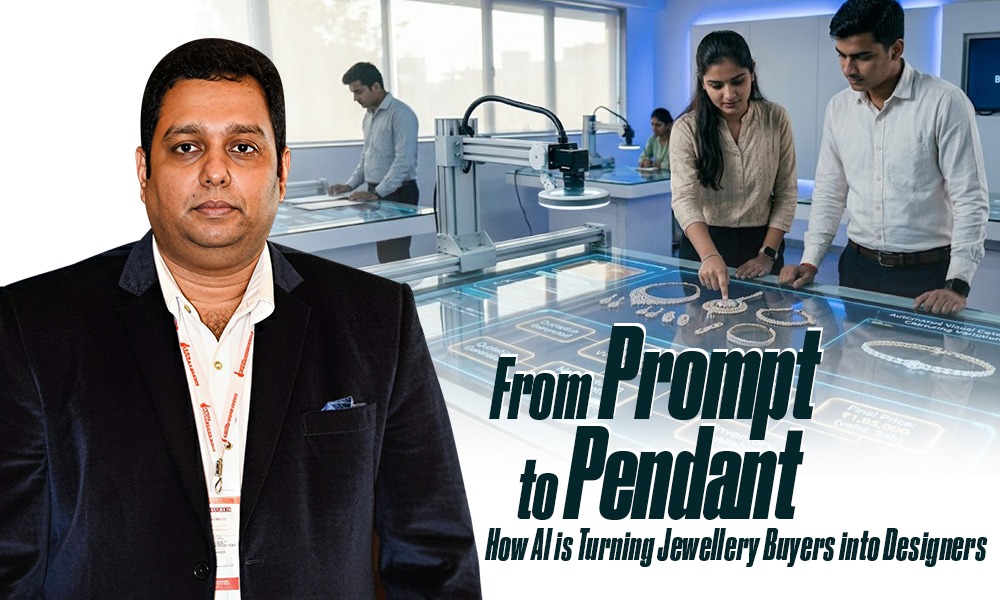
From Prompt To Pendant: How AI Is Turning Jewellery Buyers Into Designers
By Dr Sandip P. Dhurat

Not long ago, jewellery design was largely a one-way conversation. Consumers browsed catalogues, visited stores, or selected pieces from showcases. If they wanted something custom-made, they relied on the jeweller’s sketches, imagination, and expertise.
Today, a new collaborator has entered the room: Artificial Intelligence.
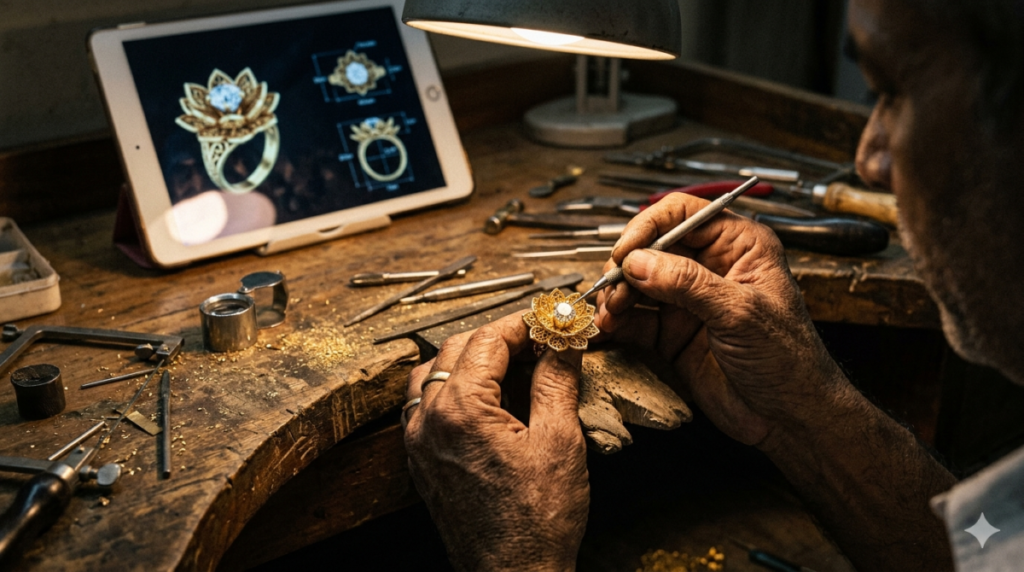
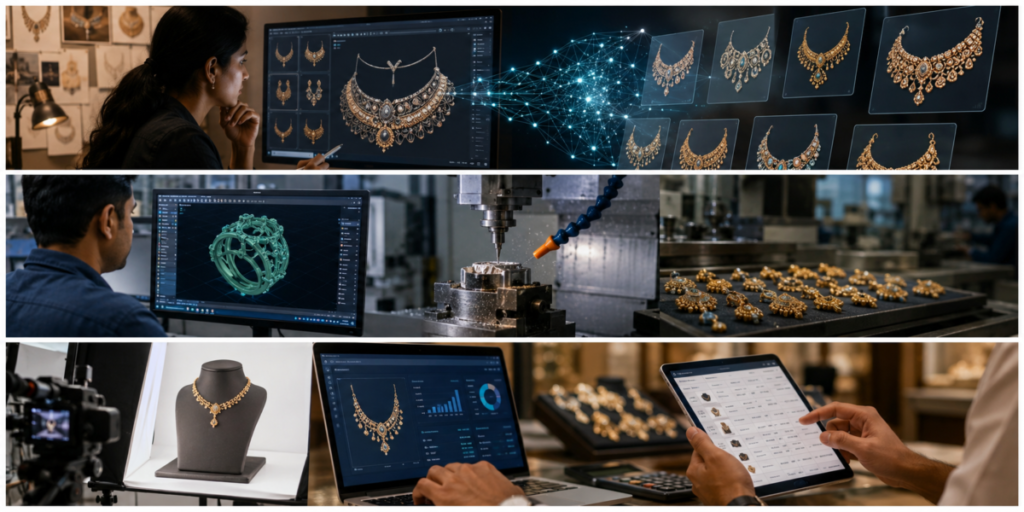
Across age groups, consumers are experimenting with AI-powered image generators and design applications to create jewellery concepts that reflect their personal tastes. A few words typed into a prompt—”an emerald engagement ring inspired by lotus petals” or “a contemporary mangalsutra with geometric motifs”—can generate multiple design possibilities within seconds.
What happens next is perhaps the most interesting part of the story.Instead of ordering these pieces online, many consumers are taking their AI-generated designs to the one person they trust most: their family jeweller.
The new wave of customisation
For decades, customization in jewellery was often limited to engraving names, changing gemstones, or making minor design alterations. AI is expanding that possibility dramatically.
Consumers are no longer arriving at jewellery stores with vague ideas. They are walking in with detailed visual references generated on their smartphones. Some have experimented with dozens of versions before settling on a favourite. Others blend elements from different designs to create something entirely unique.
In a sense, AI is democratizing the design process. It allows consumers to participate creatively, even if they have no formal design background.
For younger buyers especially, this level of involvement is appealing. They want jewellery that feels personal, expressive, and different from what everyone else is wearing. AI gives them a playground where they can explore possibilities before making a purchase.
Role of traditional family jeweller
If AI can generate designs so easily, does that diminish the role of the jeweller?Quite the opposite.
While AI can create attractive images, it cannot determine whether a design is structurally sound, comfortable to wear, practical to manufacture, or durable enough for daily use. A ring that looks spectacular on a screen may be impossible to cast. A delicate bracelet generated by AI may not withstand regular wear.
This is where the expertise of the jeweller becomes invaluable.
Family jewellers are increasingly acting as interpreters between digital imagination and physical reality. They assess AI-generated concepts, refine proportions, suggest technical modifications, and ensure that the final piece balances aesthetics with craftsmanship.
Many jewellers describe the process as similar to working with a client-provided sketch—except the sketch is now more sophisticated and visually detailed.
The trust factor remains unchanged. Consumers may discover designs through AI, but they still want someone they know to guide the process and stand behind the finished product.
New collaboration trend
The relationship between customer and jeweller is evolving from buyer-and-seller to co-creators.
Consider a young couple designing an engagement ring. Instead of selecting from existing collections, they use AI to explore various combinations of settings, gemstones, and motifs. They then sit down with their jeweller to discuss feasibility, budget, stone availability, and craftsmanship.
The final piece is neither entirely AI-designed nor solely jeweller-designed. It is the outcome of a collaborative journey.
This shift creates opportunities for jewellers to engage customers more deeply. Conversations become richer because customers arrive with visual ideas rather than abstract descriptions.
In many cases, the design process becomes part of the emotional value of the jewellery itself.
The opportunity
The trend presents several advantages for jewellers willing to embrace it.
First, AI-generated concepts can serve as conversation starters. Instead of spending significant time understanding a customer’s vision from scratch, jewellers can begin with a visual reference and refine it together.
Second, it can increase demand for bespoke jewellery. Consumers who might never have considered custom design are discovering how accessible it has become.
Third, it opens the door to a new generation of buyers who value individuality over mass-produced designs.
Rather than competing with AI, jewellers can position themselves as the experts who transform digital concepts into heirloom-worthy creations.
Despite all the excitement around AI, jewellery remains an intensely human product.
A necklace gifted on a wedding day, a ring marking an engagement, or a bracelet passed down through generations carries emotions that no algorithm can replicate. AI may help generate ideas, but it cannot understand family traditions, cultural significance, sentimental stories, or the subtle nuances of personal taste.
Consumers are discovering designs through technology, but they are still seeking reassurance, expertise, and craftsmanship from people they trust.
Perhaps that is the real story behind this trend.
AI is not replacing the jeweller. It is empowering consumers to participate in the creative process while making the jeweller’s role even more valuable. The screen may provide the inspiration, but it is the skilled hand of the jeweller that transforms a digital concept into a treasured piece of jewellery.
In the years ahead, the most successful jewellers may not be those who resist AI, but those who embrace it as another tool in the ongoing art of personalization—where technology sparks the idea, and craftsmanship gives it life.



Belgian Prime Minister Bart De Wever opens expanded HRD Antwerp laboratory in Mumbai

Verlas Introduces the ‘Alyssa’ Collection in India, Bringing Modern Luxe Floral-Inspired Design to Lab-Grown Diamond Jewelry Crafted in Fine Gold

Gold rebounds,Silver reclaims Rs 2.33 lakh mark

Limelight Lab Grown Diamonds Inaugurates Showroom In Kalyan, Its 8th Exclusive Store MMR
Verlas Introduces the ‘Alyssa’ Collection in India, Bringing Modern Luxe Floral-Inspired Design to Lab-Grown Diamond Jewelry Crafted in Fine Gold
Belgian Prime Minister Bart De Wever opens expanded HRD Antwerp laboratory in Mumbai
-
 National News3 days ago
Limelight Lab Grown Diamonds Inaugurates Showroom In Kalyan, Its 8th Exclusive Store MMR
-
 BrandBuzz2 days ago
Verlas Introduces the ‘Alyssa’ Collection in India, Bringing Modern Luxe Floral-Inspired Design to Lab-Grown Diamond Jewelry Crafted in Fine Gold
-
 DiamondBuzz2 days ago
Belgian Prime Minister Bart De Wever opens expanded HRD Antwerp laboratory in Mumbai
-

 National News2 days ago
Value Addition Drives August Jewellery Exports as Studded Gold Jewellery Rises 51.22% to US$642.85 Million
