JB Insights
‘Thanga Magan Joy’: Tamil Edition of Dr. Joy Alukkas’ Autobiography Launched in Chennai
Global jewellery icon Dr. Joy Alukkas launches Tamil edition of his autobiography, “Thanga Magan Joy”, at ITC Grand Chola, Chennai — a heartfelt tribute to the people, culture, and roots that shaped his extraordinary journey.

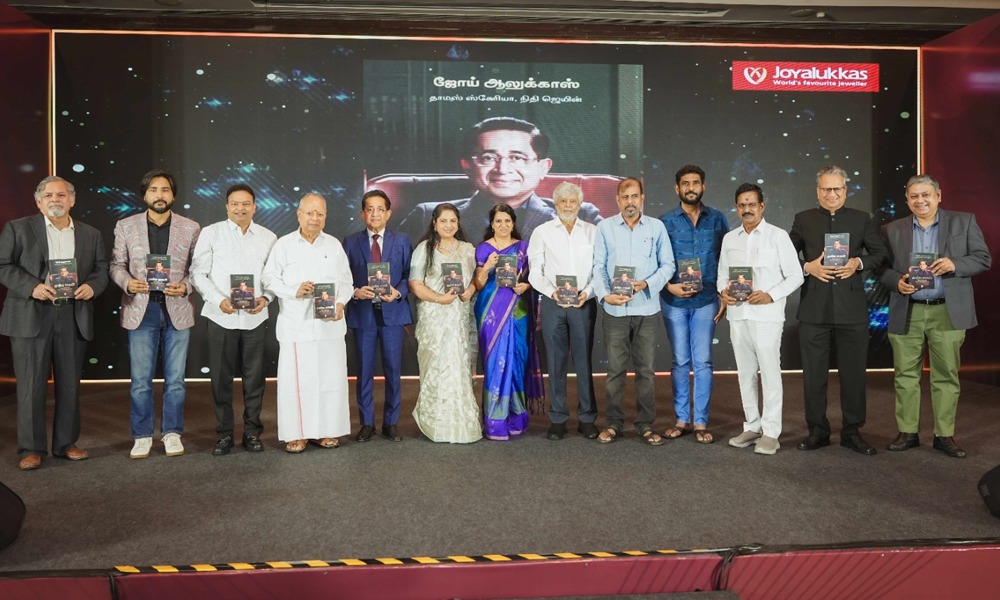
Global business icon and Chairman of the Joyalukkas Group, Dr. Joy Alukkas, launched the Tamil edition of his autobiography Spreading Joy, titled “Thanga Magan Joy”. The book, launched at ITC Grand Chola (Chennai), is a heartfelt tribute to the people and place that have played a vital role in his journey.
‘Thanga Magan Joy’ chronicles the awe-inspiring journey of Dr. Joy Alukkas from his modest beginnings in Kerala to leading one of the world’s largest and most trusted jewellery retail empires. It is a story of vision, resilience, and relentless pursuit, now retold in Tamil to honour and connect with the people of Tamil Nadu whose unwavering support and shared values have played a pivotal role in the Joyalukkas success story. The launch marked a significant moment in bringing this inspiring narrative closer to the hearts of Tamil-speaking readers across generations.

Speaking at the launch, Dr. Joy Alukkas shared his thoughts with characteristic sincerity and purpose, “The response to Spreading Joy has been humbling and deeply meaningful. I am grateful to every well-wisher, customer, and partner who believed in our dream and walked this path with us. The faith people placed in Joyalukkas over the years built more than a business, it built a bond. With the Tamil edition, Thanga Magan Joy, I hope to give back a part of that joy and reach the hearts and homes of Tamil Nadu, a land that has always embraced us with open arms. If this story can spark hope in even one dreamer, it will have served its purpose.”
The launch event was a grand and glamorous celebration of ambition, resilience, and cultural connection. Eminent personalities from the realms of business, cinema, and literature graced the occasion, making it an evening filled with insight, inspiration, and meaningful conversations. The event not only commemorated the release of the Tamil edition but also highlighted the shared journey between brand Joyalukkas and the people of Tamil Nadu.
Thanga Magan Joy is now available at leading bookstores across the state and on major online platforms from 2nd August 2025. Readers can explore a story that will motivate them and inspire them to be ambitious and keep persevering.








JB Insights
CIBIL Score Plays A Key Role In Festive Financing
A Consumer’s CIBIL Score and Report Play A Decisive Role In Determining Loan Eligibility, Interest Rates, and Overall Borrowing Terms During High-Spending Seasons.


Gold in India is more than just a precious metal; it represents tradition, emotion, and long-term financial security. As major celebrations such as Dhanteras, Diwali, and the upcoming wedding season approach, consumer demand for gold reaches its annual peak.
However, with gold prices rising due to both global macroeconomic pressures and heightened domestic demand, an increasing number of buyers are turning to credit options—specifically gold loans and personal loans—to finance their festive purchases.
In light of these market dynamics, maintaining awareness of one’s financial profile is critical.
A consumer’s CIBIL Score and Report play a decisive role in determining loan eligibility, interest rates, and overall borrowing terms during high-spending seasons.
The Mechanics Behind Festive Gold Price Surges
Gold prices do not move in isolation. The seasonal increase in retail price is driven by a combination of key domestic and international factors:
Global Economic Uncertainty: International market volatility frequently drives capital into gold as a traditional safe-haven asset.
Macroeconomic Indicators: Currency fluctuations and persistent inflation impact local procurement costs.
Domestic Seasonal Demand: Concentrated buying during auspicious cultural dates creates short-term supply-demand imbalances, further driving up retail costs.
The Strategic Role of Your CIBIL Score in Festive Financing
When household budgets face pressure during peak shopping periods, credit-based financing offers immediate liquidity. Whether securing an uncollateralized personal loan or a loan against existing gold holdings, financial institutions rely heavily on credit risk assessments.
The CIBIL Score—a 3-digit numerical summary ranging from 300 to 900—serves as the primary benchmark for creditworthiness:
Approval Probability: A high CIBIL Score significantly increases the likelihood of quick loan sanctioning.
Cost of Capital: Lenders offer competitive, lower interest rates to high-scoring applicants, reducing total borrowing costs.
Flexible Repayment Structure: Favorable credit profiles grant borrowers stronger leverage to negotiate manageable tenure options.
Best Practices for Smart Festive Borrowing
To enjoy festive celebrations without compromising long-term financial stability, consumers are advised to adopt responsible borrowing strategies:
Check Credit Reports Early: Review your CIBIL Report prior to applying for financing to resolve any discrepancies or evaluate your standing.
Borrow Within Limits: Limit loan amounts strictly to what can be comfortably serviced within monthly household budgets.
Maintain Timely Repayments: Ensure all equated monthly installments (EMIs) are paid on time to avoid negative marks on your credit profile.
By pairing festive financial planning with active credit monitoring, consumers can meet their cultural commitments while preserving robust financial health for the future.



Festive Dressing, But Make It QWEEN: 10 Jewellery Pieces To Add To Your Festive Wardrobe

WGC Report-Digital Gold: Unlocking a $700bn Opportunity

Malabar Gold & Diamonds Unveils ‘SWAYE’, A Natural Diamond Collection Inspired By Spiral Forms and Modern Elegance

Limelight Lab Grown Diamonds Crosses 100 Stores Milestone This Dussehra: Targets 200 In 2027
Malabar Gold & Diamonds Unveils ‘SWAYE’, A Natural Diamond Collection Inspired By Spiral Forms and Modern Elegance
Festive Dressing, But Make It QWEEN: 10 Jewellery Pieces To Add To Your Festive Wardrobe
-
 National News3 days ago
Limelight Lab Grown Diamonds Crosses 100 Stores Milestone This Dussehra: Targets 200 In 2027
-
 BrandBuzz18 hours ago
Malabar Gold & Diamonds Unveils ‘SWAYE’, A Natural Diamond Collection Inspired By Spiral Forms and Modern Elegance
-
 National News14 hours ago
Festive Dressing, But Make It QWEEN: 10 Jewellery Pieces To Add To Your Festive Wardrobe
-
 International News15 hours ago
WGC Report-Digital Gold: Unlocking a $700bn Opportunity