JB Insights
Tanishq unveils “Diamond Expertise Centres” with De Beers to elevate consumer confidence in natural diamonds
Tanishq is setting a new benchmark in diamond retail with the launch of its Diamond Expertise Centres Tanishq stores will feature advanced in-store diamond evaluation facilities, enabling customers to verify the authenticity, quality, and performance of the diamonds they purchase.

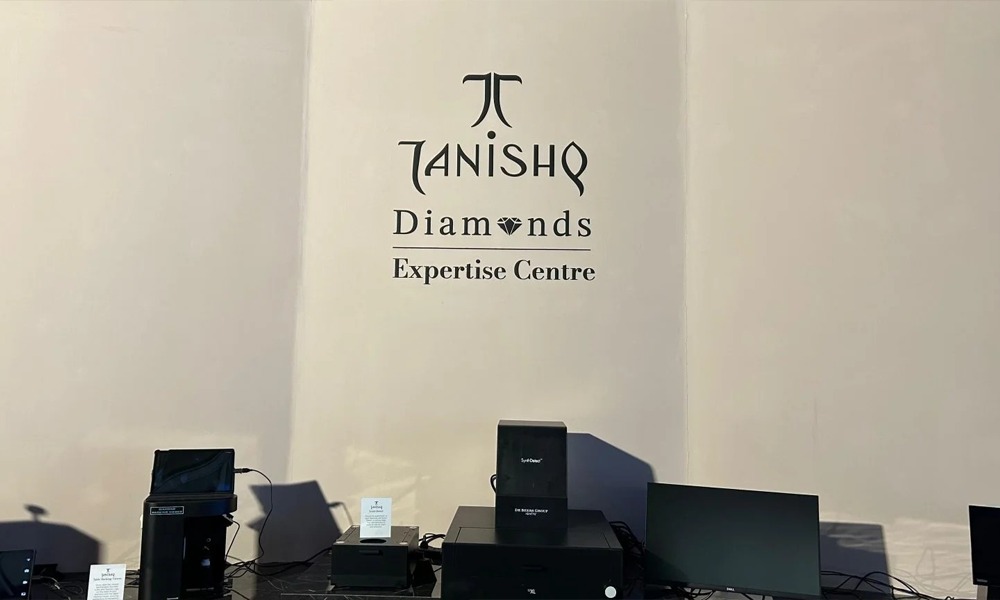
Tanishq, India’s leading jewellery retailer and part of the Titan Company Limited, is setting a new benchmark in diamond retail with the launch of its Diamond Expertise Centres, a first-of-its-kind initiative in the country. This move is part of the brand’s strategic partnership with De Beers, aimed at promoting transparency, education, and trust in the natural diamond segment.
Under this initiative, select Tanishq stores will feature advanced in-store diamond evaluation facilities, enabling customers to verify the authenticity, quality, and performance of the diamonds they purchase. These expertise centres will incorporate cutting-edge gemological equipment, including the De Beers SynthDetect machine — an industry-leading device capable of detecting whether a diamond is natural or lab-grown, applicable to both loose and mounted stones.
In addition to authenticity verification, customers can also assess other critical aspects of diamond quality. The Lightscope tool will allow them to measure light performance, while additional instruments will analyse inclusions, craftsmanship, and even laser inscriptions on stones. By translating complex gemological data into clear, visual insights, Tanishq aims to simplify the buying process and empower customers with greater understanding and confidence in their purchase.
The first three Diamond Expertise Centres have been launched in Bengaluru, with plans to expand to 200 outlets within 2025, and eventually roll out across Tanishq’s entire network of over 500 stores nationwide.

“Our aim is to set a new standard in natural diamond retail — one that goes beyond traditional display and transforms the buying journey into a transparent, educational, and truly immersive experience,” said Ajoy Chawla, CEO Jewellery Division, Titan Company Ltd.
Amit Pratihari, Managing Director, De Beers India said, “Choosing a natural diamond is a deeply personal, emotional experience. Today we embark on a transformative chapter in jewellery retail – one that mirrors the essence of natural diamonds: Real, Rare, Responsible. At the De Beers Group, we are committed to empowering Tanishq stores with world-class diamond expertise, ensuring Indian consumers receive a premier in-store experience with cutting-edge technology to authenticate every natural diamond, fostering trust and transparency.”
The initiative is the latest milestone in Tanishq’s collaboration with De Beers, announced in August 2024. The partnership combines Tanishq’s vast retail reach with De Beers’ unparalleled expertise in diamond sourcing, grading, and proprietary verification technology. With India now recognised as the world’s second-largest diamond market, the two companies are positioning themselves to lead the shift towards higher consumer awareness and preference for natural diamonds.
By integrating state-of-the-art verification technology into the retail experience, Tanishq is not only reinforcing its commitment to trust and transparency but also redefining how Indian consumers engage with diamond jewellery — transforming it from a purchase based solely on aesthetics to one informed by knowledge, assurance, and authenticity.








JB Insights
CIBIL Score Plays A Key Role In Festive Financing
A Consumer’s CIBIL Score and Report Play A Decisive Role In Determining Loan Eligibility, Interest Rates, and Overall Borrowing Terms During High-Spending Seasons.


Gold in India is more than just a precious metal; it represents tradition, emotion, and long-term financial security. As major celebrations such as Dhanteras, Diwali, and the upcoming wedding season approach, consumer demand for gold reaches its annual peak.
However, with gold prices rising due to both global macroeconomic pressures and heightened domestic demand, an increasing number of buyers are turning to credit options—specifically gold loans and personal loans—to finance their festive purchases.
In light of these market dynamics, maintaining awareness of one’s financial profile is critical.
A consumer’s CIBIL Score and Report play a decisive role in determining loan eligibility, interest rates, and overall borrowing terms during high-spending seasons.
The Mechanics Behind Festive Gold Price Surges
Gold prices do not move in isolation. The seasonal increase in retail price is driven by a combination of key domestic and international factors:
Global Economic Uncertainty: International market volatility frequently drives capital into gold as a traditional safe-haven asset.
Macroeconomic Indicators: Currency fluctuations and persistent inflation impact local procurement costs.
Domestic Seasonal Demand: Concentrated buying during auspicious cultural dates creates short-term supply-demand imbalances, further driving up retail costs.
The Strategic Role of Your CIBIL Score in Festive Financing
When household budgets face pressure during peak shopping periods, credit-based financing offers immediate liquidity. Whether securing an uncollateralized personal loan or a loan against existing gold holdings, financial institutions rely heavily on credit risk assessments.
The CIBIL Score—a 3-digit numerical summary ranging from 300 to 900—serves as the primary benchmark for creditworthiness:
Approval Probability: A high CIBIL Score significantly increases the likelihood of quick loan sanctioning.
Cost of Capital: Lenders offer competitive, lower interest rates to high-scoring applicants, reducing total borrowing costs.
Flexible Repayment Structure: Favorable credit profiles grant borrowers stronger leverage to negotiate manageable tenure options.
Best Practices for Smart Festive Borrowing
To enjoy festive celebrations without compromising long-term financial stability, consumers are advised to adopt responsible borrowing strategies:
Check Credit Reports Early: Review your CIBIL Report prior to applying for financing to resolve any discrepancies or evaluate your standing.
Borrow Within Limits: Limit loan amounts strictly to what can be comfortably serviced within monthly household budgets.
Maintain Timely Repayments: Ensure all equated monthly installments (EMIs) are paid on time to avoid negative marks on your credit profile.
By pairing festive financial planning with active credit monitoring, consumers can meet their cultural commitments while preserving robust financial health for the future.



Belgian Consul General H. E. Mr. Pierre Stverlynck Graces BDB Annual Day

Limelight Lab Grown Diamonds Crosses 100 Stores Milestone This Dussehra: Targets 200 In 2027

Joyalukkas Opens Its 2nd Bengaluru Showroom in Jayanagar

US Holiday Shopping Expected To Top $1 Trillion For The First Time: NRF
Belgian Consul General H. E. Mr. Pierre Stverlynck Graces BDB Annual Day
Limelight Lab Grown Diamonds Crosses 100 Stores Milestone This Dussehra: Targets 200 In 2027
-
 International News1 day ago
US Holiday Shopping Expected To Top $1 Trillion For The First Time: NRF
-
 National News19 hours ago
Belgian Consul General H. E. Mr. Pierre Stverlynck Graces BDB Annual Day
-
 National News20 hours ago
Limelight Lab Grown Diamonds Crosses 100 Stores Milestone This Dussehra: Targets 200 In 2027
-
 New Premises21 hours ago
Joyalukkas Opens Its 2nd Bengaluru Showroom in Jayanagar