
JB Insights
India’s ₹361 Lakh Crore Gold Reserve Lies Idle; PM Modi Calls For Recycling To Cut Imports
With An Estimated 32,000 Tonnes Of Gold Sitting Unused In Homes and Temples, The Government Sees A Massive Opportunity To Reduce Imports, Strengthen The Economy, and Build A More Sustainable Gold Ecosystem.


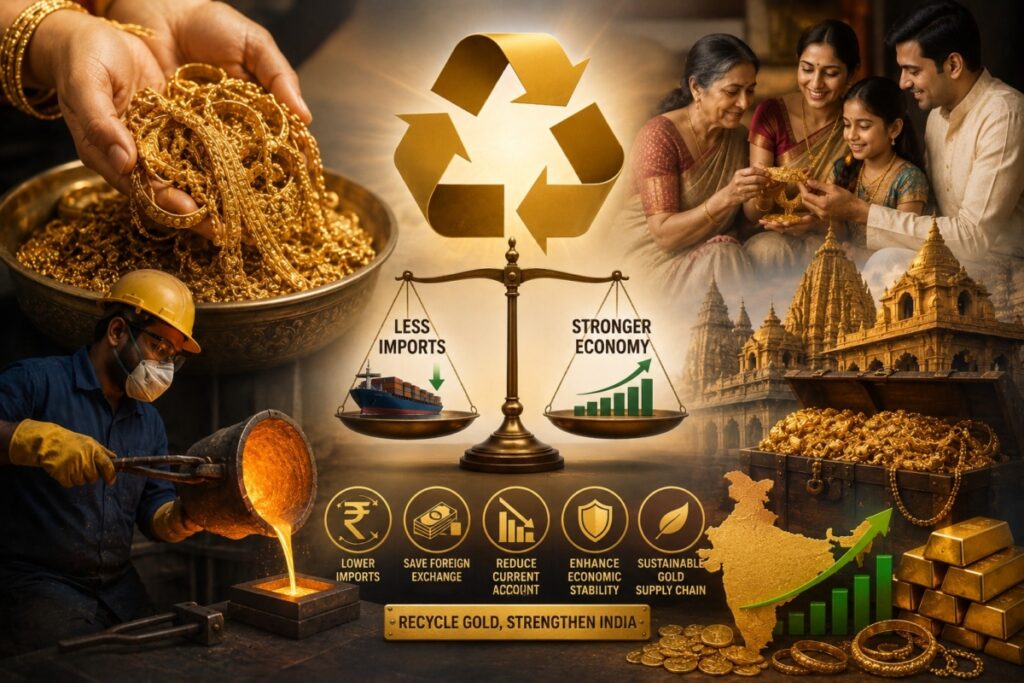
India is sitting on one of the world’s largest untapped gold reserves, with 30,000–32,000 tonnes of gold held by households and temple trusts across the country. Valued at nearly $3.8 trillion (around Rs. 361 lakh crore), much of this gold remains locked away in cupboards, lockers, and vaults, generating little economic value.
Highlighting the importance of this dormant asset, Prime Minister Narendra Modi recently encouraged citizens to consider recycling idle gold rather than relying solely on newly imported supplies. The initiative aims to bring existing gold back into circulation and make better use of resources already available within the country.
The appeal comes at a time when India continues to depend heavily on imported gold to meet domestic demand. During 2025-26, the country spent approximately $72.4 billion (Rs. 6.88 lakh crore) on gold imports, making the precious metal one of the largest contributors to the import bill.

According to experts, increasing gold recycling could deliver significant economic benefits. Every gram of recycled gold reduces the need for an equivalent amount of imports, helping ease pressure on foreign exchange reserves while also supporting efforts to narrow the country’s current account deficit.
Even a small shift could have a substantial impact. Industry estimates suggest that if just 1% of the gold held by households and temples is recycled each year, India’s gold imports could decline by approximately 25% to 30%.
The vast stockpile of idle gold is rooted in India’s longstanding cultural and financial relationship with the metal. For generations, gold has served as a store of wealth, a safeguard during emergencies, and a symbol of family security and prosperity. As a result, many families continue to hold jewellery that is rarely used but seldom sold.
Viewed from a broader perspective, the government sees this dormant gold stock as a valuable domestic resource. Bringing a greater share of it into the formal economy could help reduce dependence on imports, enhance economic stability, and create a more sustainable gold supply chain for the future.


JB Insights
CIBIL Score Plays A Key Role In Festive Financing
A Consumer’s CIBIL Score and Report Play A Decisive Role In Determining Loan Eligibility, Interest Rates, and Overall Borrowing Terms During High-Spending Seasons.

Gold in India is more than just a precious metal; it represents tradition, emotion, and long-term financial security. As major celebrations such as Dhanteras, Diwali, and the upcoming wedding season approach, consumer demand for gold reaches its annual peak.
However, with gold prices rising due to both global macroeconomic pressures and heightened domestic demand, an increasing number of buyers are turning to credit options—specifically gold loans and personal loans—to finance their festive purchases.
In light of these market dynamics, maintaining awareness of one’s financial profile is critical.
A consumer’s CIBIL Score and Report play a decisive role in determining loan eligibility, interest rates, and overall borrowing terms during high-spending seasons.
The Mechanics Behind Festive Gold Price Surges
Gold prices do not move in isolation. The seasonal increase in retail price is driven by a combination of key domestic and international factors:
Global Economic Uncertainty: International market volatility frequently drives capital into gold as a traditional safe-haven asset.
Macroeconomic Indicators: Currency fluctuations and persistent inflation impact local procurement costs.
Domestic Seasonal Demand: Concentrated buying during auspicious cultural dates creates short-term supply-demand imbalances, further driving up retail costs.
The Strategic Role of Your CIBIL Score in Festive Financing
When household budgets face pressure during peak shopping periods, credit-based financing offers immediate liquidity. Whether securing an uncollateralized personal loan or a loan against existing gold holdings, financial institutions rely heavily on credit risk assessments.
The CIBIL Score—a 3-digit numerical summary ranging from 300 to 900—serves as the primary benchmark for creditworthiness:
Approval Probability: A high CIBIL Score significantly increases the likelihood of quick loan sanctioning.
Cost of Capital: Lenders offer competitive, lower interest rates to high-scoring applicants, reducing total borrowing costs.
Flexible Repayment Structure: Favorable credit profiles grant borrowers stronger leverage to negotiate manageable tenure options.
Best Practices for Smart Festive Borrowing
To enjoy festive celebrations without compromising long-term financial stability, consumers are advised to adopt responsible borrowing strategies:
Check Credit Reports Early: Review your CIBIL Report prior to applying for financing to resolve any discrepancies or evaluate your standing.
Borrow Within Limits: Limit loan amounts strictly to what can be comfortably serviced within monthly household budgets.
Maintain Timely Repayments: Ensure all equated monthly installments (EMIs) are paid on time to avoid negative marks on your credit profile.
By pairing festive financial planning with active credit monitoring, consumers can meet their cultural commitments while preserving robust financial health for the future.


-

 TechBuzz19 hours ago
K. Srinivasan Unveils Doit Coimbatore Experience Centre
-

 GlamBuzz20 hours ago
Kalyan Jewellers’ Navratri Celebrations Bring Stars From All Industries To Thrissur
-

 National News19 hours ago
IFSCA Notifies India Good Delivery Gold Framework
-

 National News20 hours ago
World Gold Council Unveils Immersive Gold Experience At Phoenix Palladium, Lower Parel, Mumbai
