
DiamondBuzz
RJC Introduces New Laboratory Grown Materials Standard


The Responsible Jewellery Council (RJC) has unveiled its new Laboratory Grown Materials Standard (LGMS), marking a significant step towards ethical and sustainable practices in the growing sector of laboratory-grown diamonds and coloured gemstones. As the jewellery and watch industry evolves, this new standard sets a clear benchmark for responsible sourcing and production in these emerging markets.
With consumers becoming increasingly conscientious, laboratory-grown diamonds and gemstones are gaining popularity, offering a more ethical and sustainable alternative to mined stones. The LGMS establishes comprehensive guidelines for RJC members working with these materials, ensuring that every product is crafted with care for both people and the planet.

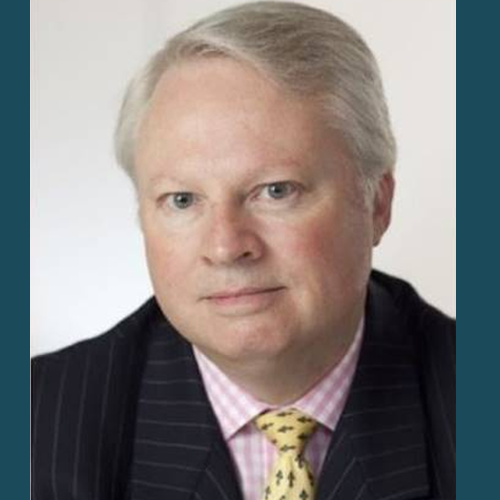
Dave Meleski, Chairman of the Responsible Jewellery Council, stated,
“Our mission at RJC is to promote responsible business practices across the jewellery sector—from the mine or laboratory to the retail space. With the LGMS, we’re not just establishing a standard, we’re creating a vision for a future where elegance and ethics coexist. We believe that whether a diamond is mined or lab-grown, it can be celebrated without compromising our core values.”
The LGMS covers all facets of responsible business conduct, including legal compliance, management systems, due diligence, human rights, labour rights, health and safety, environmental management, appraisal and grading, and disclosure.
John Hall, interim Executive Director of the RJC, added,
“Our goal is to create an environment of trust where both buyers and sellers can engage with confidence. By implementing the LGMS, we ensure that best practices are upheld from the laboratory to the consumer.”
To support this mission, the LGMS places a strong emphasis on robust company management systems to guarantee responsible and transparent supply chains. Each RJC member must document and implement technical requirements that impact all stages of the process. This helps to mitigate risks, improve working conditions, benefit local communities, and maintain the integrity of every lab-grown gemstone. Transparency throughout the supply chain is key to fostering trust, ensuring that consumers can make well-informed purchasing decisions.
For the first year following its launch, the LGMS will be voluntary for existing RJC members. After this initial phase, it will become mandatory for all members working with laboratory-grown materials. This gradual transition will give members the time and resources they need to meet these essential standards.
In addition, the RJC will offer optional training, educational modules, and simplified auditing processes, making it easier for members to comply with both the LGMS and the existing Code of Practices (COP).
With the introduction of the LGMS, the RJC is making responsible luxury the standard, not the exception, in the watch and jewellery industry. Through its LGMS, COP, and COC, the RJC reaffirms its role as the leading authority in setting industry standards.







DiamondBuzz
GIA Examines Diamond Faceted To Resemble A Panther’s Face.
The 67.18-Carat Diamond, Originally 113 Carats, Was Carved Into A Panther’s Face and Includes Two Zambian Marquise Mixed-Cut Emeralds As Eyes.

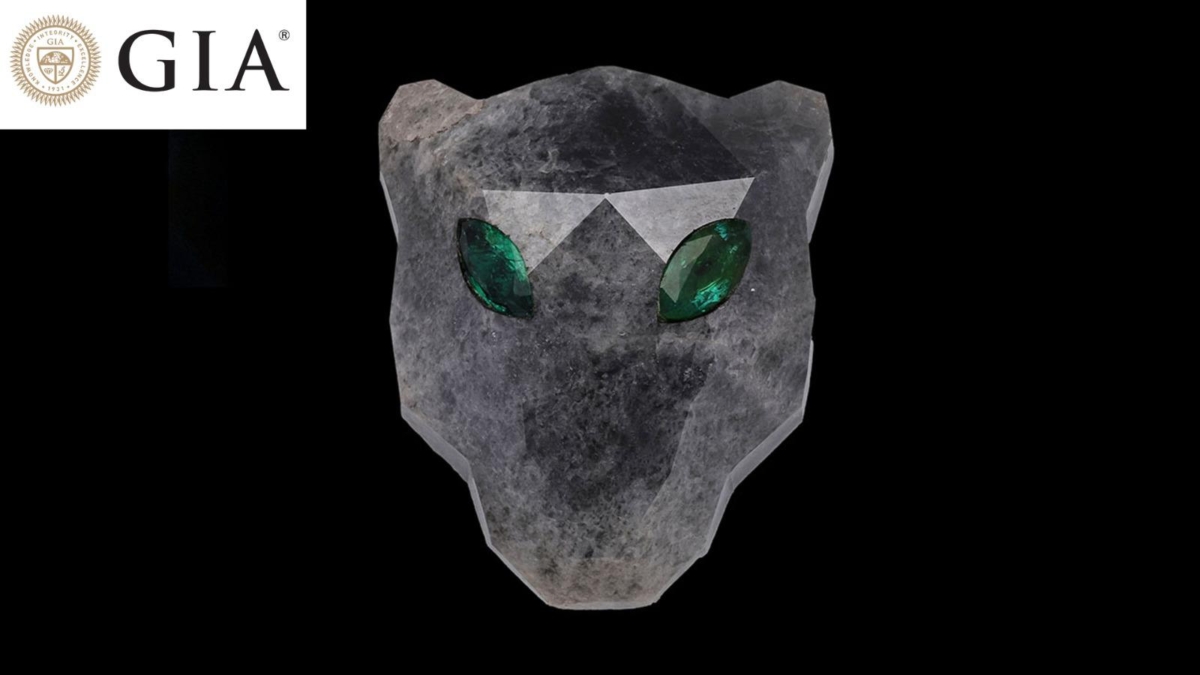
The Gemological Institute of America (GIA) recently examined a diamond the maker carved and faceted to resemble a panther’s face.
The 67.18-carat diamond, originally 113 carats, was carved into a panther’s face and includes two Zambian marquise mixed-cut emeralds as eyes.
GIA used Fourier-transform infrared absorption and photoluminescence spectroscopy to identify the diamond as type Ia.
The piece, titled Jade Fang, took nearly a year to complete and required advanced cutting techniques to navigate heavy inclusions and an unconventional design.



Tradition Meets Everyday Style: Mangalsutras For Karva Chauth From Candere By Kalyan Jewellers

So/Facet Raises ₹10 Crore Led By Sauce To Build The Diamond Brand That Young India Has Been Missing

Festive & Wedding Season Trade Outlook: Resilience, Innovation, and Growth

BHIMA Jewellery Receives Prestigious IAGES Accreditation
So/Facet Raises ₹10 Crore Led By Sauce To Build The Diamond Brand That Young India Has Been Missing

JGP Jewellers Opens Its 26th Store In Nipani, Marking Its Entry Into Karnataka
-
 National News20 hours ago
BHIMA Jewellery Receives Prestigious IAGES Accreditation
-
 National News18 hours ago
So/Facet Raises ₹10 Crore Led By Sauce To Build The Diamond Brand That Young India Has Been Missing
-
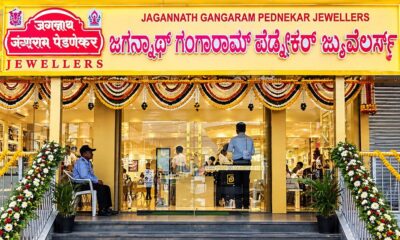 New Premises1 day ago
JGP Jewellers Opens Its 26th Store In Nipani, Marking Its Entry Into Karnataka
-
 JB Insights19 hours ago
Festive & Wedding Season Trade Outlook: Resilience, Innovation, and Growth
