

DiamondBuzz
Lab grown Lonsdaleite: Chinese scientists create hexagonal diamond harder than natural diamonds

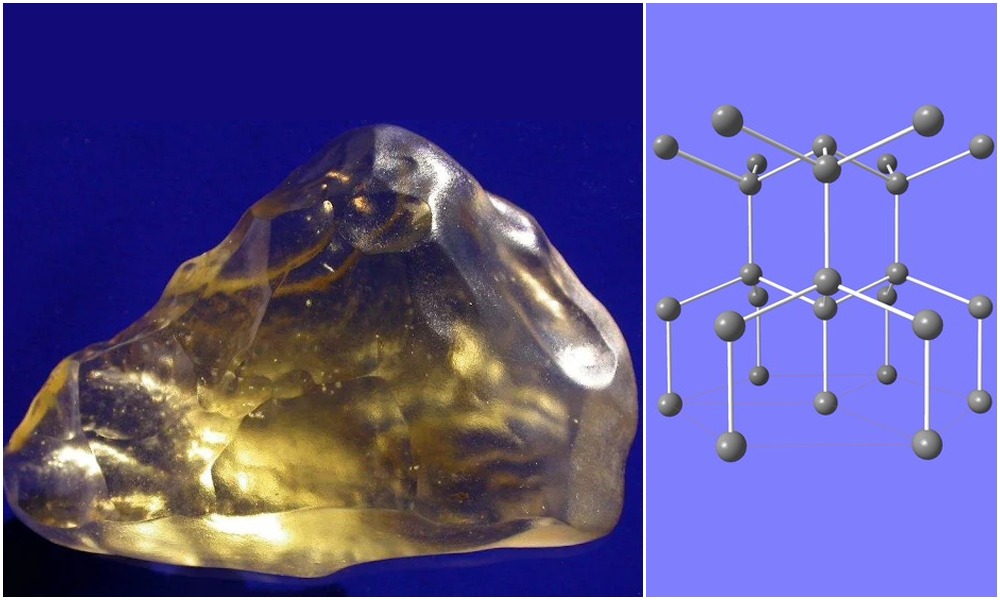
A groundbreaking discovery by Chinese scientists has led to the creation of an artificial diamond that surpasses natural diamonds in strength and heat resistance. Lonsdaleite is an allotrope of carbon that has a hexagonal crystal structure, rather than the cubic lattice of conventional diamond. It was first identified in 1967 from the Canyon Diablo meteorite, in Arizona, USA, regarded as one of the best-preserved meteorite craters on Earth. It was named after crystallographer Professor Dame Kathleen Lonsdale.
This new form, known as hexagonal diamond or lonsdaleite, has long been theorized to be harder than traditional diamonds but has remained difficult to synthesize in the lab. Recent advancements in material science have now made it possible, opening up exciting possibilities for industrial and commercial applications.
Scientists at Jilin University in China have successfully created an artificial diamond that surpasses natural ones in hardness and heat resistance. By heating compressed graphite under precise conditions, they have produced high-quality hexagonal diamonds, a structure known as lonsdaleite. This rare form, typically found in meteorite impact sites, has long been difficult to replicate in laboratories. The newly developed material exhibits remarkable structural integrity, promising advancements in various industries. A team from Jilin University and Sun Yat-sen University say their lab-grown version is at least 40 per cent harder and far more durable than a natural diamond.
“Our findings offer valuable insights regarding the graphite-to-diamond conversion under elevated pressure and temperature, providing opportunities for the fabrication and applications of this unique material,” they say in the journal Nature Materials.Their lab grown Lonsdaleite is likely to be used in a new generation of superconductors.







DiamondBuzz
Alrosa Plans To Expand Diamond Production Through Severalmaz
Outlines An Expansionary Roadmap and Diversification Strategy Amid Market Volatility

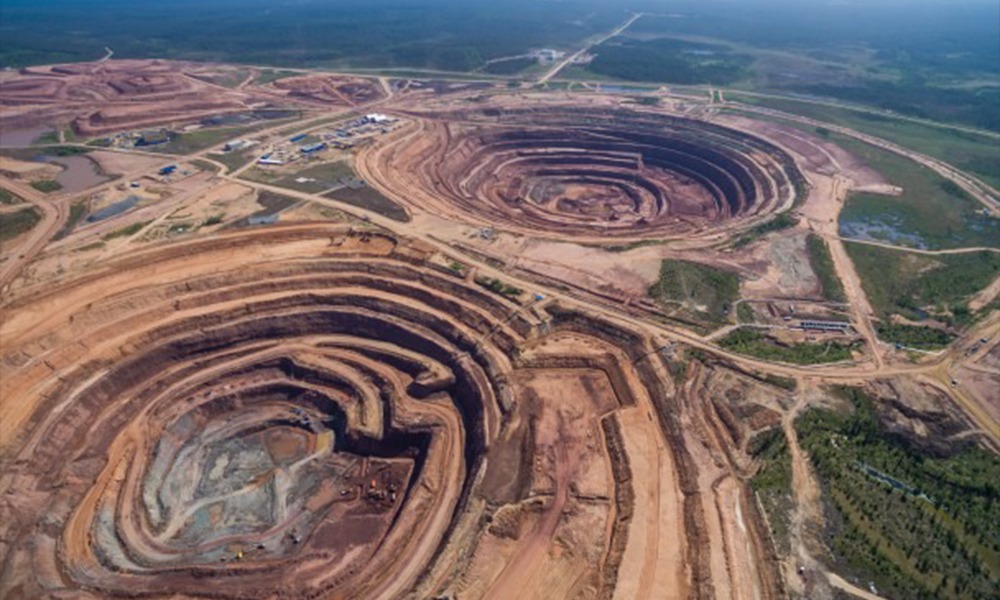
Alrosa has confirmed a strategic pivot toward aggressive capacity expansion via its wholly-owned subsidiary, Severalmaz. Currently contributing approximately 10% to the Group’s aggregate output, Severalmaz is slated to become a primary engine for long-term value creation.
Despite prevailing macroeconomic headwinds and a softening in global demand for natural stones, Alrosa reported that the Lomonosov deposit maintained a stable production baseline, yielding an annualized run-rate of approximately 3.5 million carats through FY24 and FY25.
Key Strategic Pillars:
- Operational Resilience: CEO Pavel Marinychev emphasized that Severalmaz serves as a systemically important entity within the Arkhangelsk regional economy, providing a “solid foundation” for the Group’s multi-decade development cycle.
- CAPEX & Exploration: The firm is committed to significant capital expenditure directed toward greenfield exploration and the modernization of existing mining infrastructure to drive operational alpha and safety.
- Portfolio Diversification: To hedge against cyclical diamond market downturns, Alrosa is actively de-risking its balance sheet by diversifying into gold mining and offloading approximately 30% of its inventory to Gokhran to ensure consistent liquidity flows.
- R&D Synergies: The roadmap includes deep integration with regional scientific-industrial hubs to optimize extraction efficiencies and future-proof the production pipeline.



Akshaya Tritiya 2026: Industry Outlook and Expectations from India’s Jewellery Trade

Zaveri Bazaar Cluster Development Proposal Addresses Parking, Traffic Mobility, Safety, and Security For Citizens and Traders

Indian bullion Market Experienced A Notable Recovery, Trimming Losses Triggered After The Ceasefire Headlines
Zaveri Bazaar Cluster Development Proposal Addresses Parking, Traffic Mobility, Safety, and Security For Citizens and Traders
Indian bullion Market Experienced A Notable Recovery, Trimming Losses Triggered After The Ceasefire Headlines
Akshaya Tritiya 2026: Industry Outlook and Expectations from India’s Jewellery Trade
-
 National News16 hours ago
Zaveri Bazaar Cluster Development Proposal Addresses Parking, Traffic Mobility, Safety, and Security For Citizens and Traders
-
 National News16 hours ago
Indian bullion Market Experienced A Notable Recovery, Trimming Losses Triggered After The Ceasefire Headlines
-
 JB Insights15 hours ago
Akshaya Tritiya 2026: Industry Outlook and Expectations from India’s Jewellery Trade
-

 BrandBuzz19 hours ago
Vummidi Bangaru Jewellers Auspicious Akshaya Tritiya Campaign
