
JB Insights
Isha Ambani Turns Heads At Met Gala 2026 With Heirloom Diamonds and A Celebration Of Indian Craftsmanship
Her 200-Carat Diamond Necklace and Intricately Crafted Couture Looks Redefine Red Carpet Glamour With Art, Heritage, and Statement Jewellery At The Met Gala 2026.

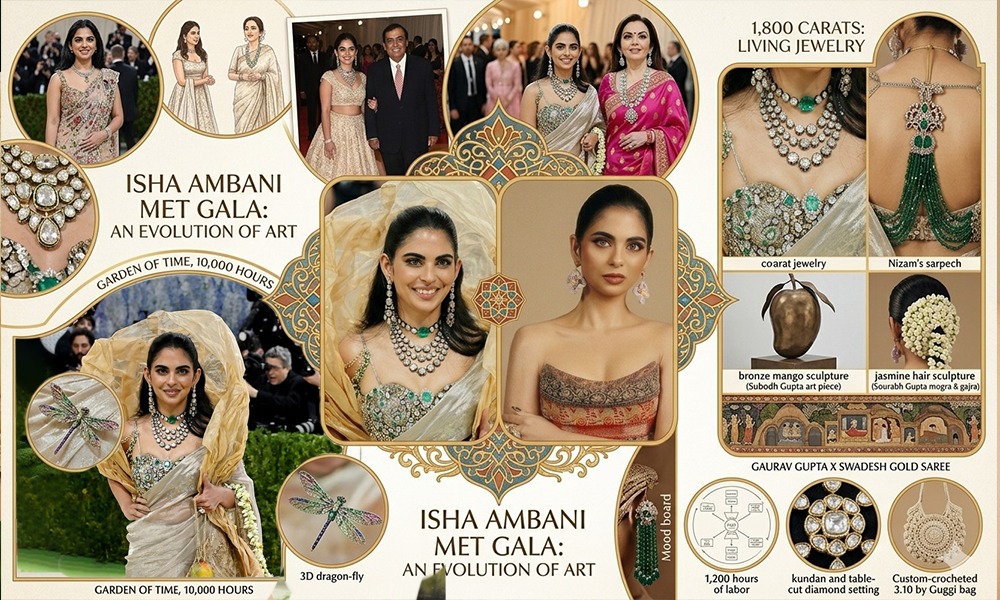
Day 1 – A Tribute to India in 26 States
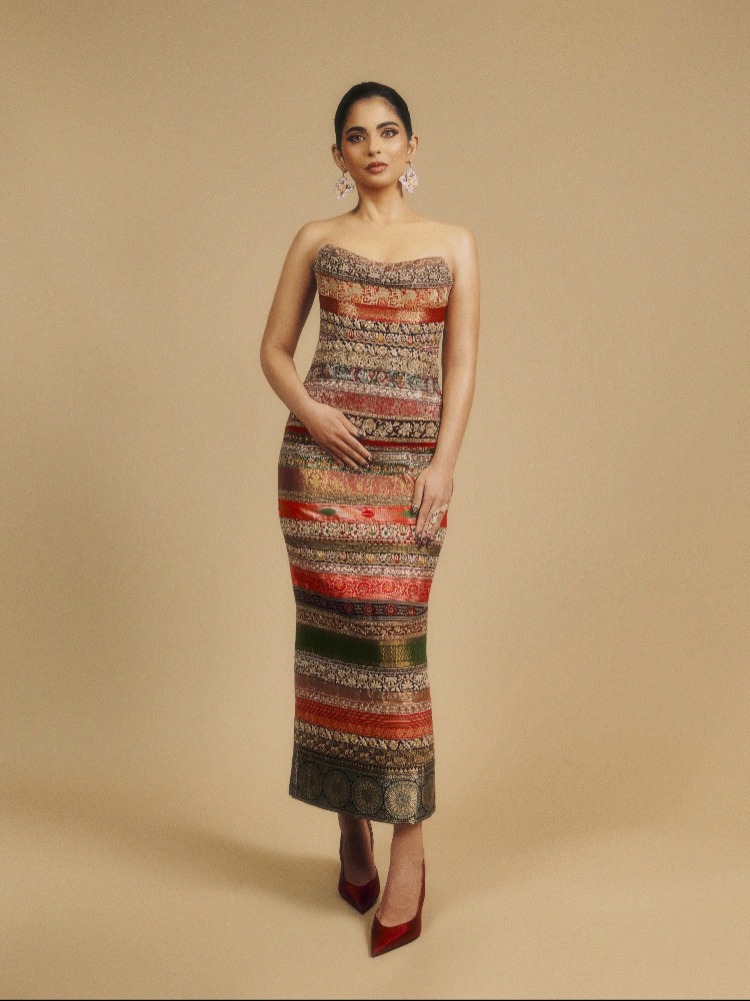
Isha Ambani began her Met Gala 2026 appearances with a look that celebrated the diversity of India’s 26 states, turning the red carpet into a canvas of cultural storytelling. Her ensemble brought together elements inspired by regional textiles, crafts, and traditional artistry, reflecting the richness and unity of Indian heritage. Each detail was thoughtfully curated to represent different parts of the country, making the look not just fashion-forward but deeply symbolic. The styling highlighted intricate craftsmanship, vibrant textiles, and cultural motifs, setting the tone for her presence at this year’s theme, “Fashion is Art.”
Day 2- Jewellery Spotlight
Isha Ambani made a powerful statement at the 2026 Met Gala, marking her sixth appearance at fashion’s biggest night. Embracing the theme “Fashion is Art,” she delivered what is arguably her most extraordinary look to date—an ode to Indian heritage, craftsmanship, and couture at its finest.
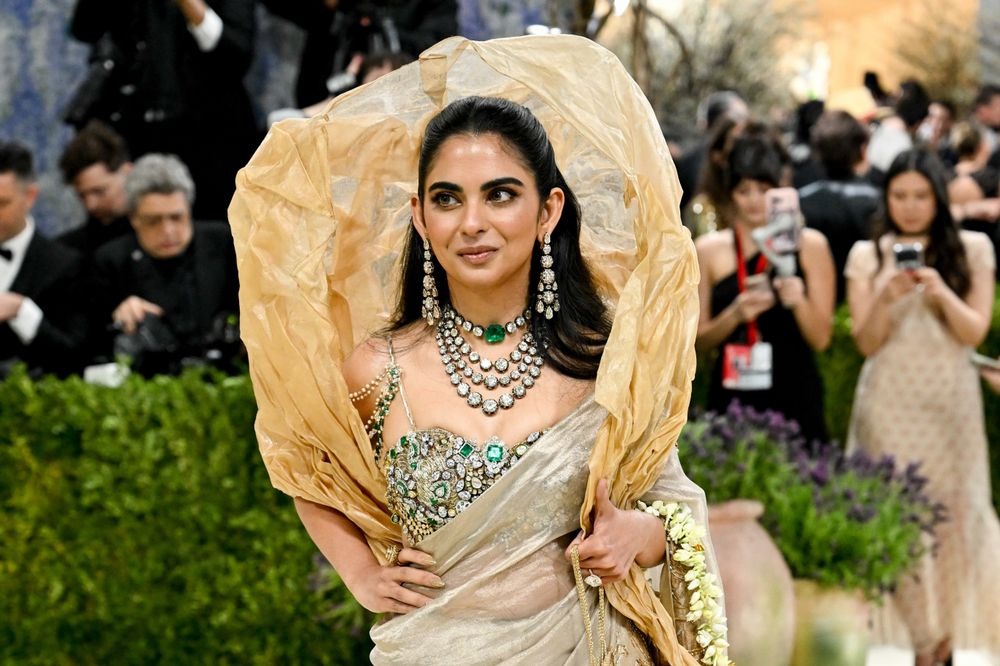
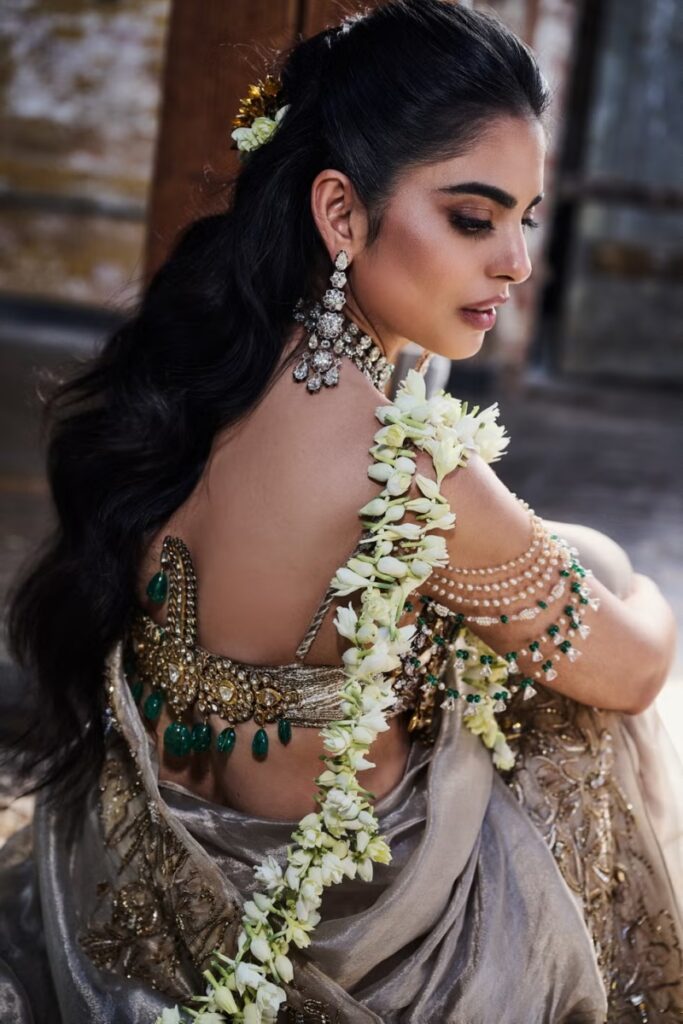
At the heart of Isha Ambani’s ensemble was a breathtaking heirloom necklace from Nita Ambani’s personal collection. Featuring old-cut diamonds accumulated over the years, the piece totalled over 200 carats and was anchored by a striking 50-carat emerald at its centre. The jewellery not only elevated the look but also added a layer of legacy and timeless elegance, making it one of the most talked-about diamond moments on the red carpet.
The Look
Complementing the jewels was a custom couture saree by Gaurav Gupta, styled by Anaita Shroff Adajania. More than just attire, the saree was a work of art—crafted over 1,200 hours by more than 50 artisans. It featured hand-woven pure gold threads, pichwai-inspired hand-painted motifs, and intricate layers of Zardozi, Aari, and relief embroidery, drawing inspiration from ancient Indian frescoes. Adding a contemporary artistic touch, she carried a mango-shaped sculptural bag by Subodh Gupta, tying the look back to the evening’s theme.
From heirloom diamonds to couture craftsmanship, Isha Ambani’s Met Gala 2026 appearance was a seamless blend of jewellery, art, and heritage—setting a new benchmark for red carpet excellence while celebrating India’s rich cultural legacy on a global stage.


JB Insights
What Happens When The World’s 0.03% Of Diamonds Meet 131 Pairs Of Masterful Hands At QWEEN?
QWEEN Brings Together Traceable Natural Diamonds, Japanese Craftsmanship and Precision-Led Jewellery Making Through Rosy Blue and Kashikey.
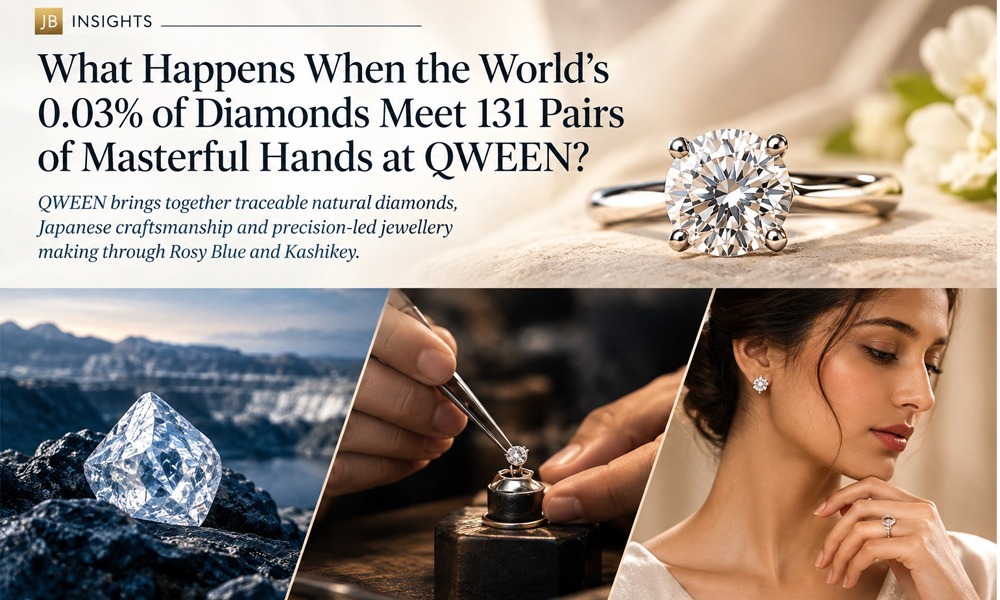
QWEEN, India’s first self-discovery, 100% natural experiential luxury jewellery brand, has detailed the strategic roles of Rosy Blue and Kashikey in powering its product proposition. Beyond being investors in the brand, Rosy Blue and Kashikey serve as QWEEN’s core supply-chain and craftsmanship partners, respectively, bringing together traceable access to 100% natural diamonds and nearly a century of Japanese craftsmanship expertise.
You know the diamond. But do you know its journey?
As QWEEN’s single strategic supply-chain partner, Rosy Blue brings over six decades of diamond expertise and sourcing capabilities to the brand. This partnership enables QWEEN’s Mine to Marvel™ initiative, allowing consumers to trace their diamonds back to their mine of origin.
At QWEEN, the story behind the stone is as important as the sparkle you see. And not every diamond makes it into a QWEEN. Only 0.03% of the world’s diamonds that enter QWEEN’s selection process meet its exacting standards.
Every QWEEN diamond is 100% natural and perfectly cut, meeting the Hearts & Arrows standard. At the QWEEN store, consumers can see that precision for themselves through specialised viewers.
“At Rosy Blue, we believe that trust must be established across the entire value chain. Our partnership with QWEEN brings together exceptional natural diamonds, greater traceability and consistent product standards, giving consumers greater visibility into the journey of their diamond and a clearer understanding of what makes it exceptional,” said Ms. Manali Jayant Parekh, Director, Rosy Blue.
But knowing the diamond is only half the story. What happens to it next matters just as much.
QWEEN’s strategic craftsmanship partner, Japanese luxury jewellery house Kashikey, brings nearly a century of jewellery-making expertise to the brand. Founded in 1928, Kashikey’s craftsmanship informs the construction, setting and finishing of QWEEN jewellery.
A QWEEN jewel is made by 131 pairs of masterful hands. From planning, cutting and polishing to setting and quality checks, every pair brings a decade or more of specialised expertise to the piece before it reaches the woman who wears it.
That attention to detail extends to the smallest elements of the jewellery. One example is QWEEN’s four-prong setting, which leaves more of the diamond visible than a conventional six-prong setting while keeping it securely held.
“For nearly a century, Kashikey has pursued beauty through precision, balance and attention to detail. Our partnership with QWEEN brings this approach to jewellery created for the modern Indian woman, where every element, from the setting to the finish, is considered to enhance the beauty of the diamond while preserving the integrity of the piece,” said Mr. Hisao Kato, Chairman, Kashikey Co. Ltd.
Amit Kumar, Co-founder and CEO, QWEEN said:
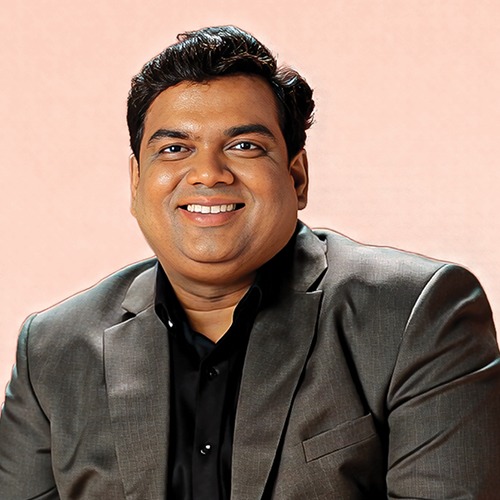
“For us, these partnerships go well beyond investment. Rosy Blue, as our single strategic supply-chain partner, gives us the ability to build traceability, consistency and rigorous selection standards into every QWEEN diamond, while Kashikey brings decades of craftsmanship and precision to how we turn those diamonds into jewellery. We wanted all of that to be part of the product itself, so women can see and understand what makes a QWEEN piece different.”
From knowing where the diamond came from to understanding how precisely it was cut and how carefully it was crafted, QWEEN is building a jewellery experience where trust is not just a promise. It is something you can see for yourself.
With Rosy Blue as its single strategic supply-chain partner and Kashikey as its strategic craftsmanship partner, QWEEN brings together diamond expertise, traceability and nearly a century of Japanese craftsmanship to set a new standard for the jewellery a woman chooses to wear.



Tiffany & Co. Unveils The Final Installment Blue Book 2026: Hidden Garden – Autumn Phase

KISNA Launches Vienna Collection Ahead Of The Wedding Season, Expanding Its Premium Natural Diamond Jewellery Portfolio

MDR For UPI: Credit Card Bill Payments and Jewellery Purchases Remain Free For Consumers
KISNA Launches Vienna Collection Ahead Of The Wedding Season, Expanding Its Premium Natural Diamond Jewellery Portfolio
Tiffany & Co. Unveils The Final Installment Blue Book 2026: Hidden Garden – Autumn Phase

Mavitrra Launches Ganpati-Inspired Fine Jewellery Collection For Ganesh Chaturthi, Blending Tradition With Contemporary Design
-
 BrandBuzz20 hours ago
KISNA Launches Vienna Collection Ahead Of The Wedding Season, Expanding Its Premium Natural Diamond Jewellery Portfolio
-
 International News20 hours ago
Tiffany & Co. Unveils The Final Installment Blue Book 2026: Hidden Garden – Autumn Phase
-
 National News24 hours ago
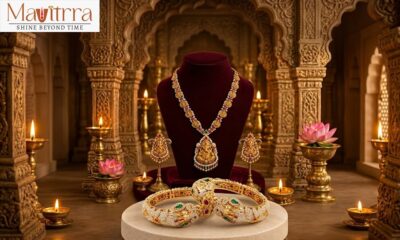
Mavitrra Launches Ganpati-Inspired Fine Jewellery Collection For Ganesh Chaturthi, Blending Tradition With Contemporary Design
-
 National News22 hours ago
MDR For UPI: Credit Card Bill Payments and Jewellery Purchases Remain Free For Consumers
