
JB Insights
PM Modi’s Appeal Sparks Wider Conversation Around Responsible Gold Consumption
Industry Voices Discuss Sustainability, Smarter Gold Utilisation, and Evolving Consumer Behaviour Amid Economic Uncertainty

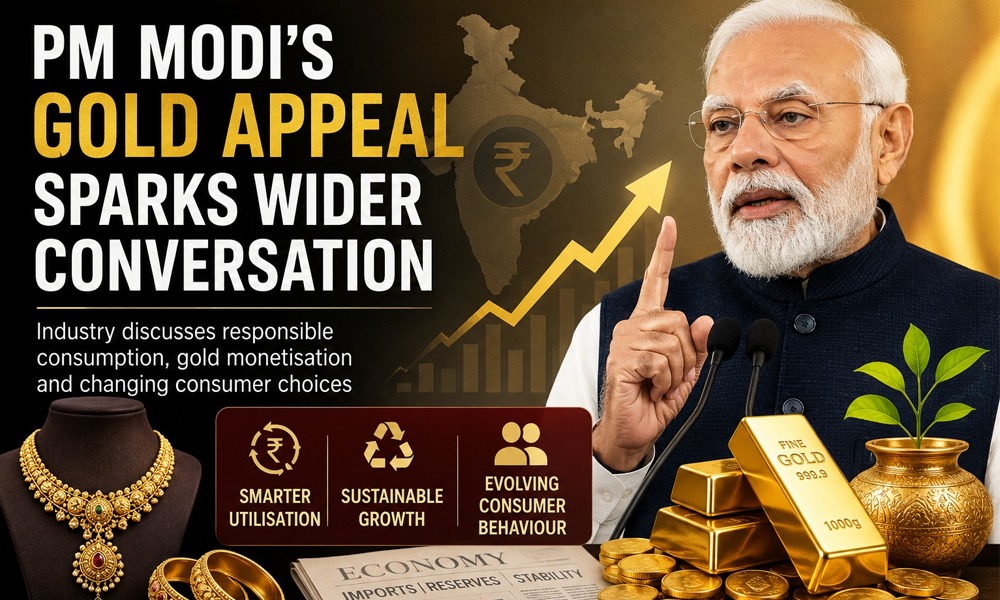
Prime Minister Narendra Modi’s recent remarks encouraging mindful spending and responsible gold consumption have triggered widespread discussions across India’s jewellery industry. The comments come at a time of heightened global economic uncertainty, rising crude oil prices, and increasing pressure on import-dependent sectors.
With gold continuing to remain one of India’s most culturally significant assets as well as a major import commodity, industry stakeholders are now exploring ways to balance consumer sentiment, economic stability, and long-term sustainability.
Leaders from across the gems and jewellery sector have largely viewed the remarks as an opportunity to encourage more efficient utilisation of existing gold resources, while also adapting to changing consumer preferences.
Prithviraj Kothari, Managing Director at RiddiSiddhi Bullions Ltd., President of India Bullion and Jewellers Association Ltd. and Chairman at Jain International Trade Organisation:
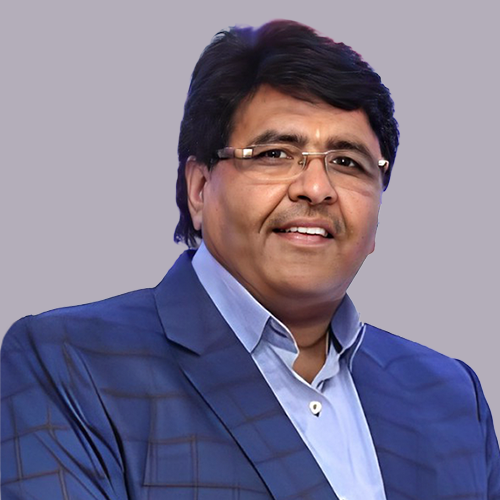
“The impact will be psychological, not structural. India’s 10–12 million annual weddings embed gold demand that is pre-committed and culturally non-negotiable — Akshaya Tritiya, Dhanteras, and wedding-season buying will not simply stop on a PM’s appeal. The PM’s words, however, may nudge discretionary buyers toward lighter jewellery, digital gold, and ETFs — formats that don’t trigger import demand. In FY26, India imported nearly $72 billion worth of gold — a record high. Global cues — Iran-US tensions, crude oil, and the dollar — will dominate price direction. The appeal is a signal of macro seriousness, not a market-moving policy lever.”
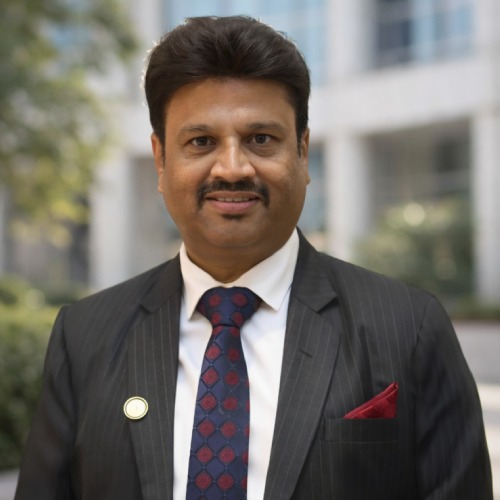
Rajesh Rokde, Chairman, All India Gem and Jewellery Domestic Council (GJC), said:
“India’s economic strength must always come before individual preferences. The Hon’ble Prime Minister’s appeal reflects larger concerns around imports and foreign exchange reserves. At the same time, India already possesses thousands of tonnes of idle household gold. The solution may not lie only in reducing demand, but also in unlocking the immense value of existing gold through a transparent and regulated Gold Monetisation Scheme.”
According to GJC, a revitalised and jeweller-integrated Gold Monetisation Scheme (GMS) could help:
- Mobilise idle household gold
- Reduce import dependence
- Strengthen the formal economy
- Improve transparency and traceability
- Convert dormant gold into productive national capital
Avinash Gupta, Vice Chairman, GJC, added:
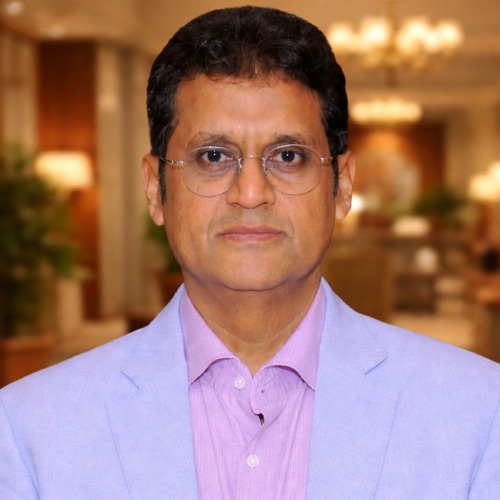
“Gold has always been emotionally and culturally connected to Indian households. Respecting the Prime Minister’s vision for national interest, the industry believes that a robust and regulated Gold Monetisation Scheme can become a long-term solution for India. The answer lies not only in consuming less gold, but in utilising existing gold more efficiently, transparently and productively.”
Industry experts also highlighted how evolving consumer choices are already reshaping jewellery buying patterns, particularly among younger generations seeking lighter, versatile, and value-conscious options.
Suvankar Sen, MD & CEO, Senco Gold & Diamonds, noted:
“The sharp decline in gold imports for jewellery consumption reflects both changing consumer behaviour and industry adaptation. With nearly 20,000 tonnes of gold lying idle within the Indian economy, there is a strong need for the Government and industry stakeholders to work together to mobilise this dormant asset.”
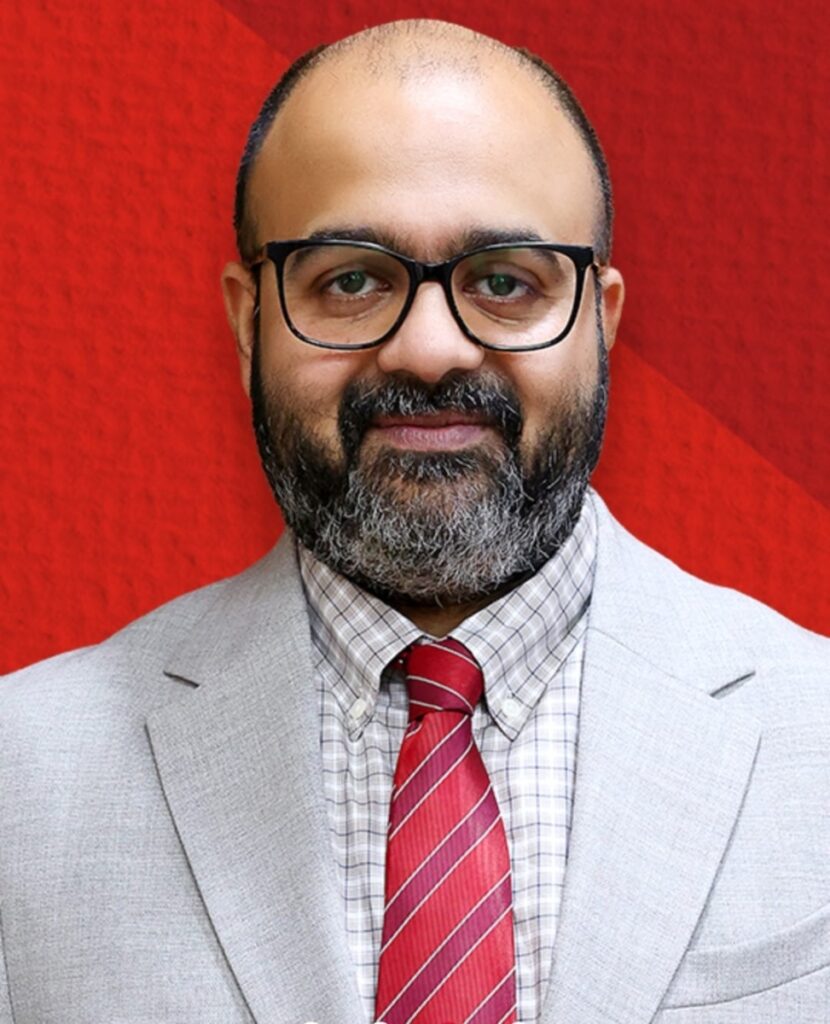
He further added that the industry is adapting through lower-weight and lower-carat jewellery products to maintain affordability and accessibility for consumers.
Meanwhile, Visshnupriya Singh, CEO, Svariya, pointed toward the growing demand for demi-fine jewellery among millennials and Gen Z consumers.

“Prime Minister Narendra Modi’s remarks on mindful gold buying have sparked an important shift toward smarter and more practical consumer choices. While gold will always hold cultural and emotional value in India, millennials and Gen Z are increasingly choosing jewellery that balances elegance, versatility, and affordability.”
She added:
“This growing preference is driving demand for demi-fine jewellery, where consumers can enjoy premium design and craftsmanship without making heavy investment purchases. At Svariya, we believe modern luxury today is defined by individuality, everyday wearability, and smart style choices.”
Despite ongoing discussions around consumption patterns and imports, industry observers believe gold’s emotional and cultural relevance in India — especially during weddings, festivals, and family celebrations — remains deeply rooted. At the same time, the conversation has opened new avenues around responsible consumption, sustainable growth, gold recycling, and smarter utilisation of existing resources within the Indian jewellery ecosystem.


JB Insights
The New Jewellery Shopper: Why Trust Is Becoming The New Retail Currency
As Shoppers Arrive More Informed and Digitally Connected, Jewellery Retailers Are Shifting From Product-Led Selling To Trust-Led Experiences, Where Transparency, Personalisation and Confident Decision-Making Shape The Path To Purchase.
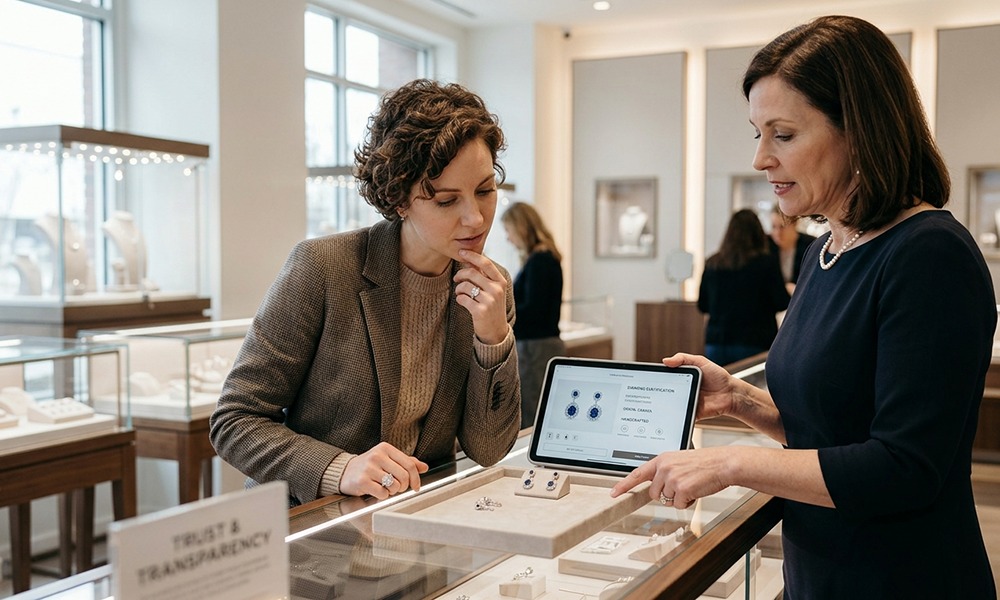
As jewellery consumers become more informed and value-conscious, retailers are discovering that the path from interest to purchase is increasingly shaped by trust, transparency and the quality of the buying experience.
There was a time when a customer walked into a jewellery showroom with a fairly simple expectation: find something beautiful, understand the price and make a purchase.
That equation is changing
The modern jewellery shopper may enter the store only after days or even weeks of digital research. Designs have already been compared, prices explored, brands evaluated and customer reviews considered. By the time the customer meets a salesperson, much of the discovery process may already have taken place online.
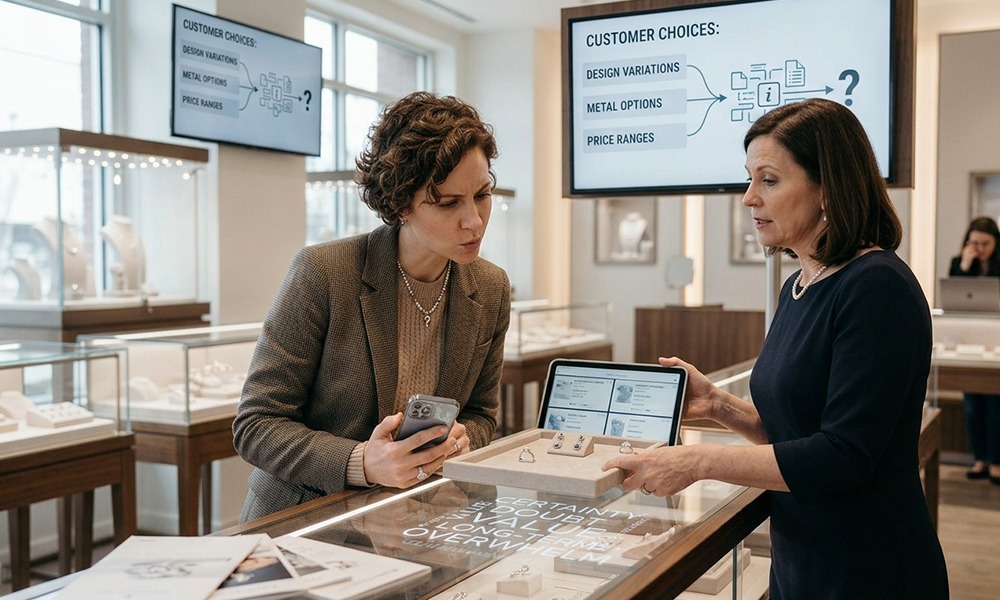
What remains is the more difficult part — making the customer feel certain.
This shift is quietly changing the dynamics of jewellery retail. The competitive advantage is no longer determined only by inventory, location or design assortment. Increasingly, it lies in how effectively a retailer can remove doubt and create confidence during the buying journey.
A Customer Who Arrives Informed
The jewellery customer of today is far more exposed to information than previous generations. Social media, brand websites, digital catalogues and online communities have made it easier to compare designs, materials, prices and brands before making a showroom visit.
But information does not always create certainty.
In fact, having too many choices and too much information can sometimes make the final decision more difficult. A customer may know exactly what they like but still hesitate over whether it represents the right value, the right style or the right long-term choice.
That gap between information and confidence is where the modern jewellery retailer increasingly has to operate.
The Retail Conversation Is Changing
The traditional sales conversation often begins with the product: its weight, design, stones, craftsmanship and price.
The emerging approach begins with the customer.
Why is the jewellery being purchased? Where will it be worn? What style does the customer normally choose? Is versatility important? What level of investment feels comfortable?
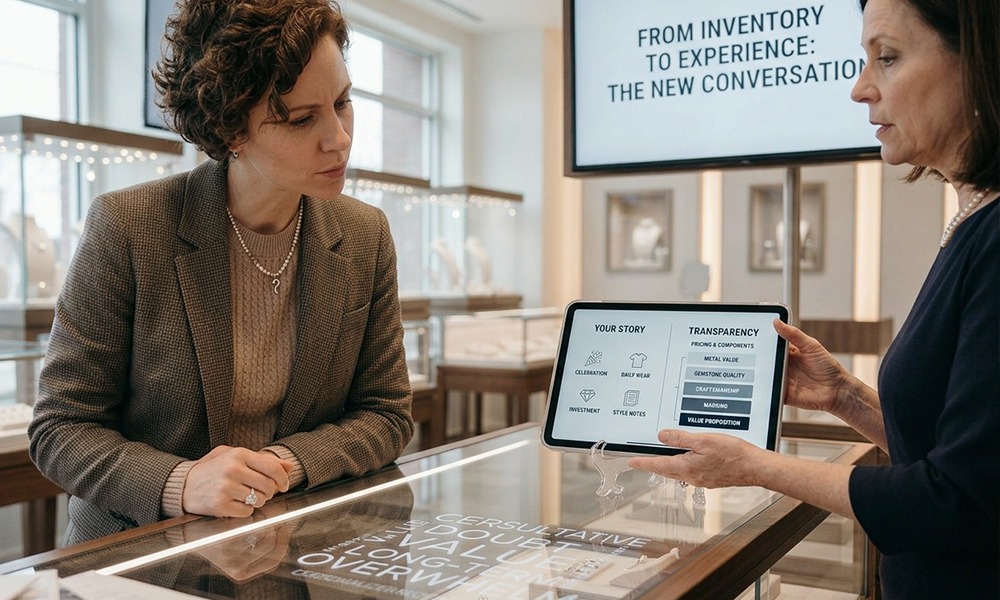
These questions can transform the interaction from a product presentation into a consultative buying experience.
For retailers, this requires sales teams to do more than know their inventory. They need to understand how to listen, curate and recommend.
Trust Has Become Part of the Product
A beautifully designed piece can attract attention, but uncertainty can stop the transaction.
Questions around making charges, gemstone valuation, diamond quality, exchange policies and long-term usability can influence the final decision.
This is why transparency is increasingly becoming a retail differentiator.
When the customer understands the components behind the price and the value attached to the product, the conversation becomes less about defending the price and more about explaining the value proposition.
The Digital Storefront Comes First
For many consumers, the first interaction with a jewellery brand does not happen inside a showroom.
It happens on a smartphone.
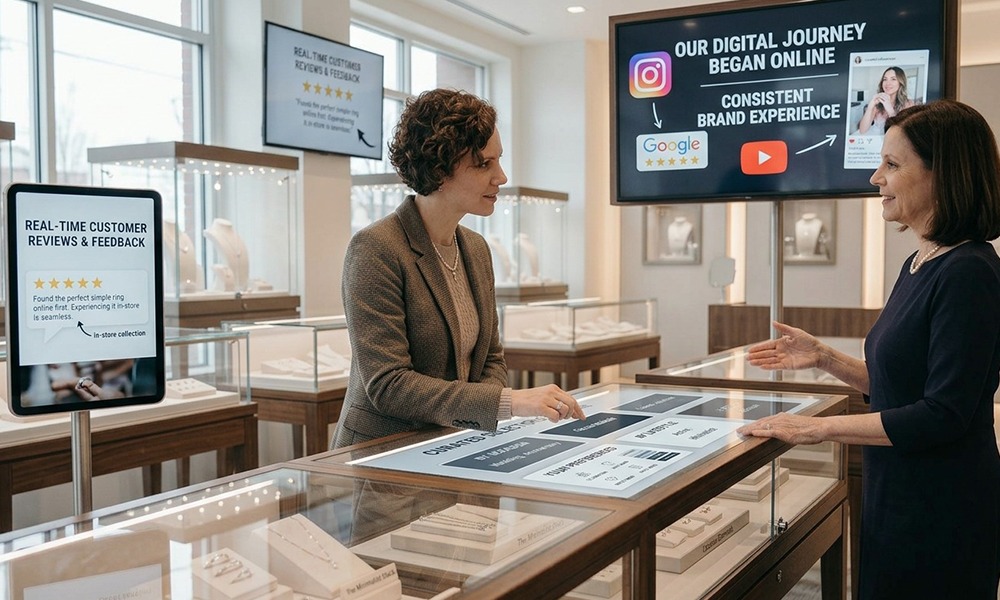
Instagram posts, websites, search results, influencer content, reviews and digital campaigns collectively create the first impression. By the time the customer walks into a store, the brand may already have been evaluated against several competitors.
This makes the digital presence an extension of the physical retail experience.
A retailer that promises premium craftsmanship offline but communicates inconsistently online creates a gap in customer confidence.
More Choice Does Not Always Mean More Conversion
Jewellery retailers have traditionally used extensive collections as a way of demonstrating scale and choice.
Yet an overwhelming assortment can create another problem: decision fatigue.
Curated selections based on occasions, lifestyles, price ranges and design preferences can help customers navigate the assortment more comfortably.
The role of the retailer is therefore gradually shifting from showing everything to showing what matters.
The Conversation Continues After the Customer Leaves
One of the most significant opportunities in jewellery retail may begin after the showroom visit.
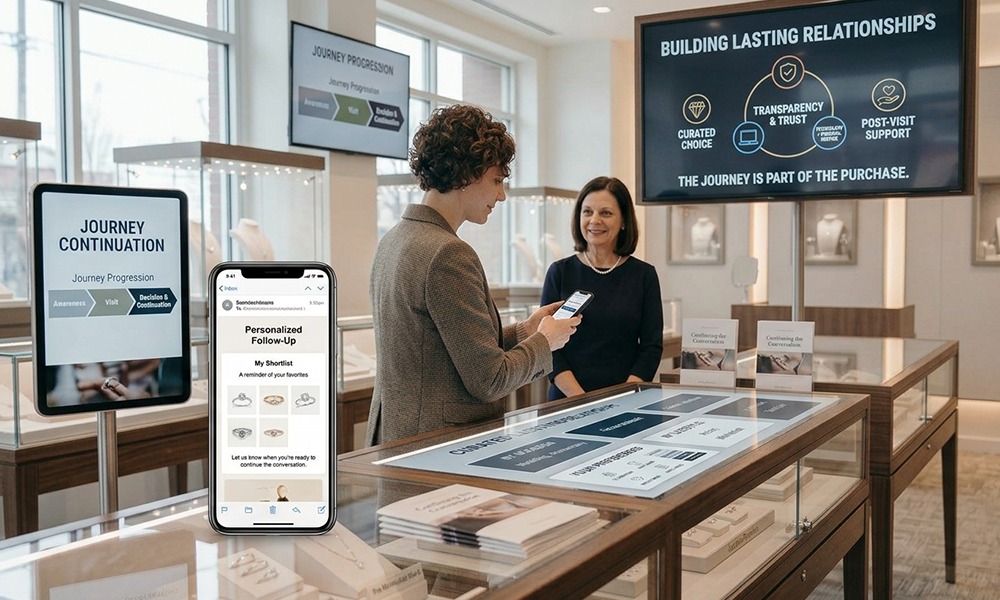
A customer who leaves without purchasing is not necessarily a lost customer. They may still be comparing options, discussing the purchase with family or simply taking time to decide.
A personalised follow-up featuring shortlisted designs, availability information, new arrivals or relevant styling suggestions can keep the conversation alive without turning it into aggressive selling.
The objective is simple: remain relevant while the customer is still making the decision.
Retail’s Next Competitive Advantage
The jewellery industry is entering an environment where customers can access more information than ever before. This makes the role of the retailer more important — not less.
The winning retail experience will increasingly depend on the ability to combine product expertise with transparency, technology with human interaction, and choice with curation.
Jewellery will always be emotional. But the journey towards owning it is becoming increasingly rational. In that journey, trust may become one of the most valuable assets a jewellery retailer can build.


-

 ShowBuzz52 minutes ago
Silver Show Of India- Delhi 3rd Edition Unveiled At Yashobhoomi, Delhi
-

 ShowBuzz27 minutes ago
Silver Trends To Watch At SSI Delhi 2026
-

 ShowBuzz4 hours ago
GJIIF 2026 Sets New Benchmarks As India’s Biggest-Ever Jewellery Trade Show Opens In Chennai
-

 DiamondBuzz4 hours ago
Divine Solitaires Named ‘Best Diamond Jewellery Brand’ At JewelZ South India 2026
