JB Insights
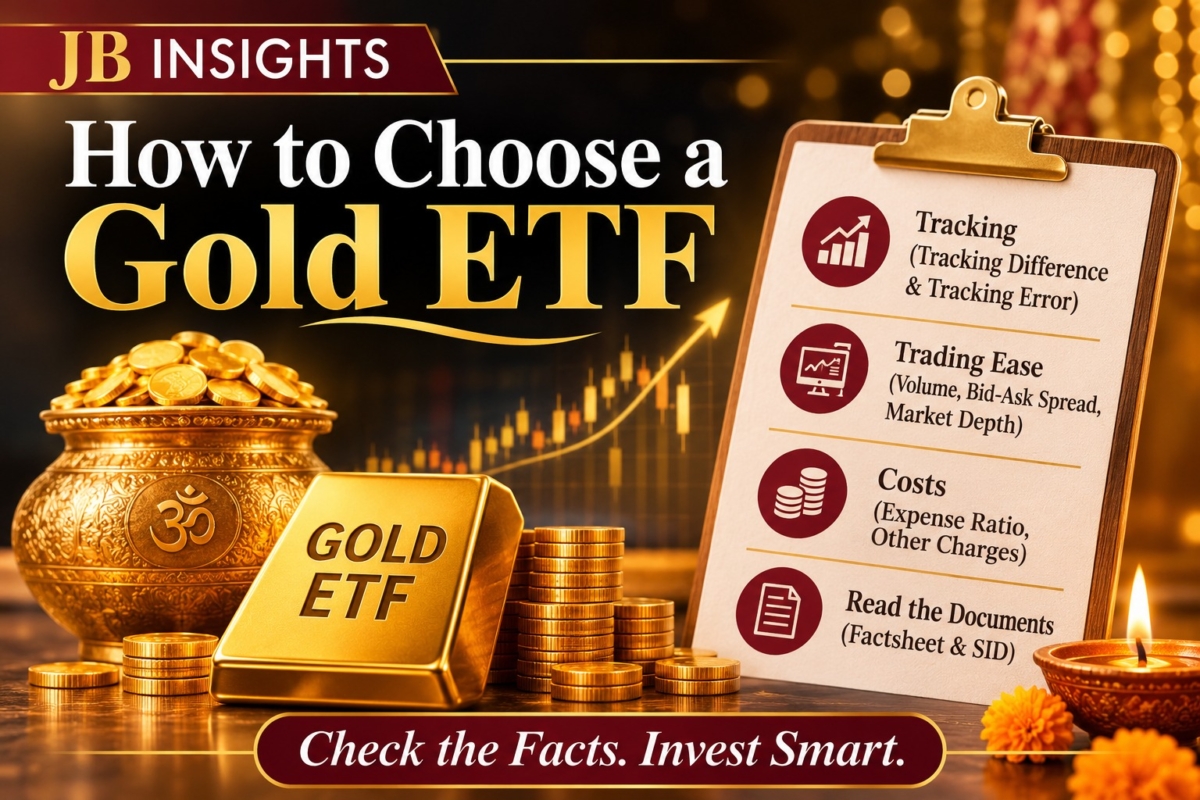
How To Choose A Gold ETF
Choosing A Gold ETF Before Dhanteras Takes More Than Looking At Recent Returns Or Fund Size. Tracking, Trading Ease, Costs and Disclosures Tell You How A Fund Really Works. Check The Latest Information, Because Gold Prices and Muhurat Trading Outcomes Can Change.

Gold ETFs look alike because they all follow the price of gold in India. But they are not the same. Their costs, trading activity and how closely they follow gold can differ. Before Dhanteras and Muhurat trading, compare the facts and read the latest documents instead of trusting advertising.
Why returns can differ from gold prices
A Gold ETF aims to match the Indian price of physical gold. Your returns may still be a little different. Fund charges, cash kept aside, transaction costs and the timing of gold purchases can all create a gap.
An ETF also trades on the stock exchange at its own market price. This can be higher or lower than its NAV (the actual value of the fund’s holdings per unit). So don’t judge a fund only by its recent returns. Understand how it works.
1. Check how closely the fund follows gold
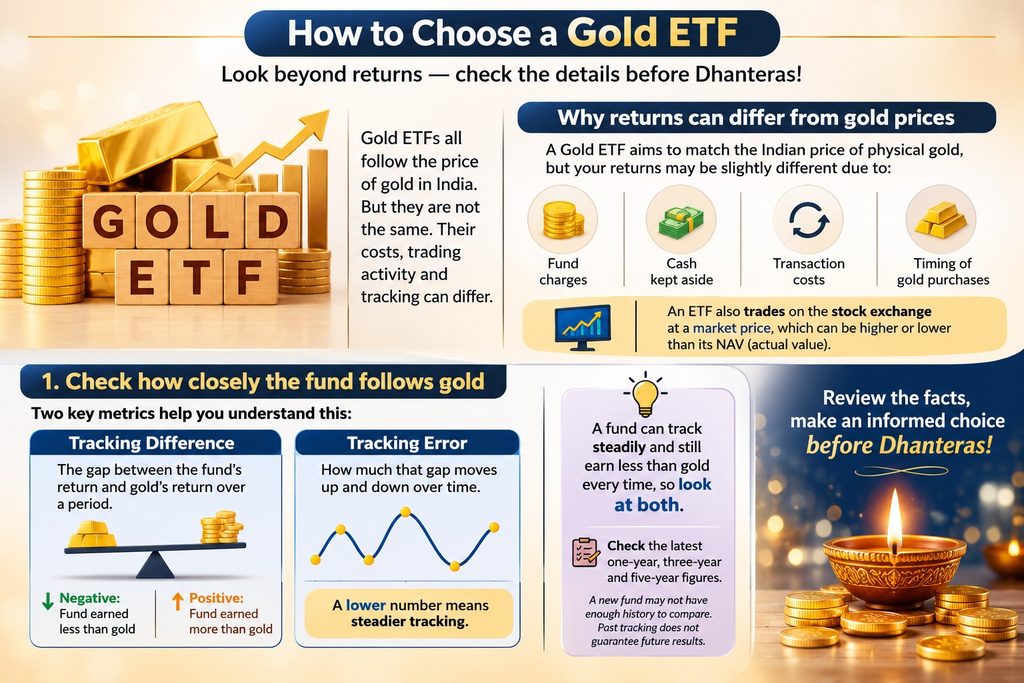
Two terms tell you this:
- Tracking difference: the gap between the fund’s return and gold’s return over a period. A negative number means the fund earned less than gold. A positive number means it earned more.
- Tracking error: how much that gap moves up and down over time. A lower number means steadier tracking.
A fund can track steadily and still earn less than gold every time, so look at both. Check the one-year, three-year and five-year figures where available. A new fund may not have enough history to compare. Past tracking does not guarantee future results.
2. Check how easily you can buy and sell
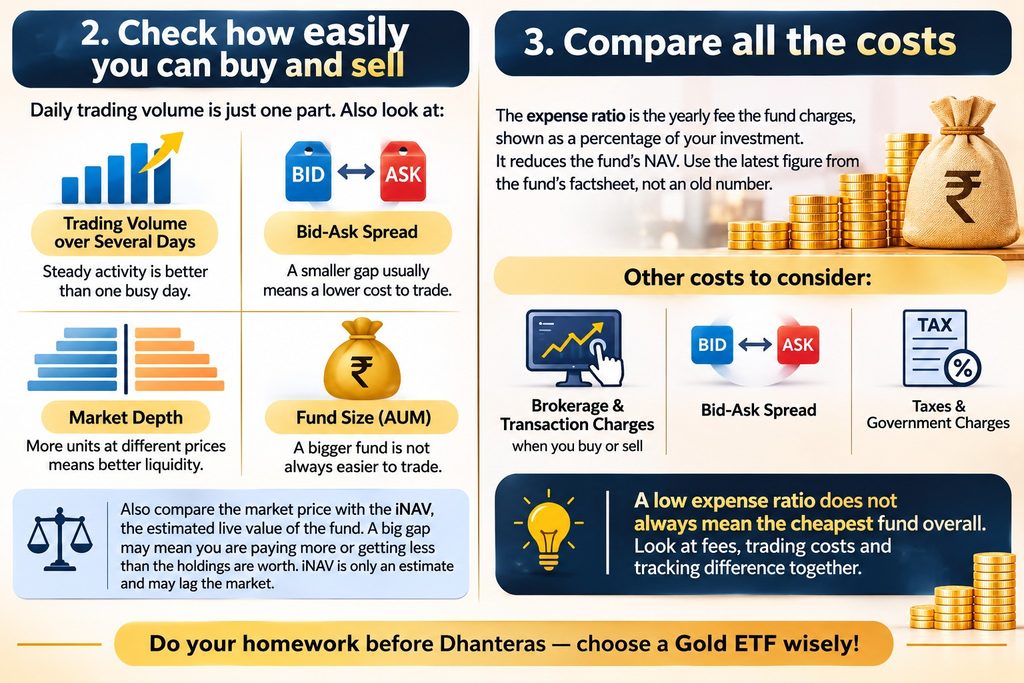
Daily trading volume helps, but it is not enough. Also look at:
- Trading volume over several days: steady activity is more useful than one busy day.
- Bid-ask spread: the gap between what buyers offer and what sellers ask. A smaller gap usually means a lower cost to trade.
- Market depth: how many units are available at different prices. If few units are available, a large order may not get a good price.
- Fund size (AUM): a bigger fund is not always easier to trade.
You can also compare the market price with the iNAV, which is the estimated live value of the fund. A big gap may mean you are paying more or getting less than the holdings are worth. iNAV is only an estimate and may lag the market.
3. Compare all the costs
The expense ratio is the yearly fee the fund charges, shown as a percentage of your investment. It reduces the fund’s NAV. Use the latest figure from the fund’s factsheet, not an old number from a comparison article.
Other costs also matter:
- Brokerage and transaction charges when you buy or sell
- The bid-ask spread
- Taxes and government charges
A low expense ratio does not always mean the cheapest fund overall. Look at fees, trading costs and tracking difference together.
4. Read the fund’s documents
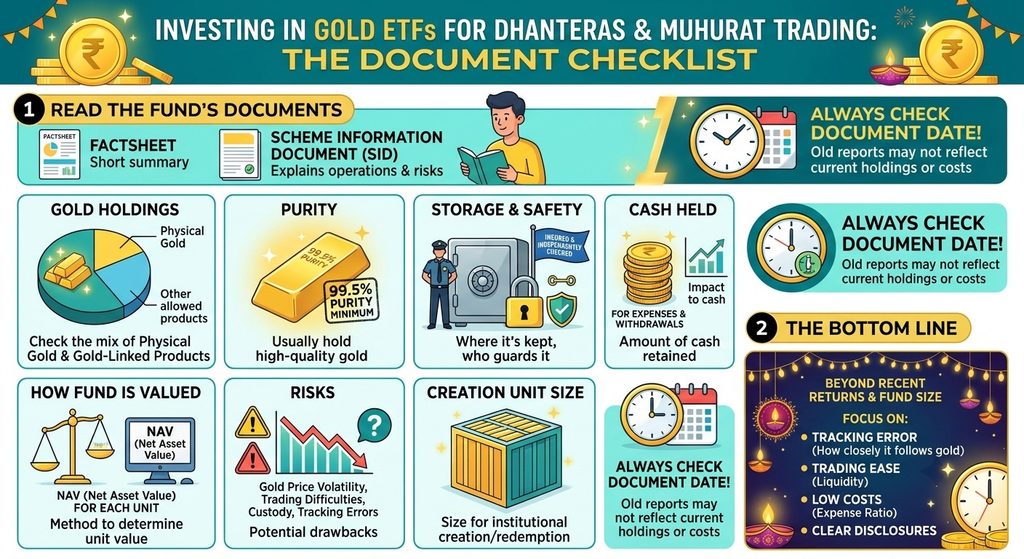
The factsheet is a short summary of holdings, costs and performance. The Scheme Information Document (SID) explains how the fund works and what the risks are. Look for:
- Gold holdings: how much is physical gold and how much is in other allowed gold-linked products.
- Purity: gold ETFs usually hold gold of at least 99.5% purity.
- Storage and safety: where the gold is kept, who looks after it, and whether it is insured and checked independently.
- Cash held: some cash is kept for expenses and withdrawals, which can affect how closely the fund follows gold.
- How the fund is valued: how it works out the NAV for each unit.
- Risks: gold price changes, trading difficulty, custody and tracking differences.
- Creation unit size: the block of units that large institutions use to create or redeem units directly with the fund.
Always check the date on the document. Old factsheets may not show current holdings or costs.
The bottom line
Choosing a Gold ETF before Dhanteras takes more than looking at recent returns or fund size. Tracking, trading ease, costs and disclosures tell you how a fund really works. Check the latest information, because gold prices and Muhurat trading outcomes can change.
This is general information, not investment advice
JEWELBUZZ is not responsible , liable for any investment decision that results in loss . take advice from qualified investment advisor






JB Insights
Broad-Based Inflation, Precious Metal Costs Are Curbing Jewellery Purchases
Persistent Inflation and Rising Living Costs Are Reducing Households’ Spending Power

Broad-based inflation and high precious metal costs are curbing new gold and jewellery purchases across India, shifting how consumers and retailers approach the festive and wedding season.
Key Trends in India’s Jewellery Market
• Squeezed Disposable Incomes: Persistent inflation and rising living costs are reducing households’ spending power, leading buyers to either postpone purchases or opt for lighter, smaller jewellery pieces.
• Surge in Old Gold Exchanges: Rather than buying fresh gold with new capital, a growing number of consumers are trading in their old family gold to purchase new items. For some jewellers, old gold exchanges now make up a significant share of transactions.
• Jewellers Delaying Wholesale Purchases: Major chains and regional jewellers have slowed down bulk gold acquisitions ahead of peak demand windows like Dhanteras and Diwali, betting that domestic prices will ease further.
• Price and Duty Pressures: Even though gold prices recently saw a short-term correction (with 24-carat gold hovering around ₹1,42,000–₹1,43,000 per 10 grams), an increased import duty of 15% and added making charges/GST keep final retail bills high.
• Rural Demand Headwinds: Weaker rural demand—affected by monsoon disruptions—has further dampened volume growth for physical ornaments, though investment demand via gold ETFs remains relatively resilient.



-

 JB Insights2 weeks ago
Dhanteras Shopping Guide 2026:Gold, Silver, Diamonds & Festive Jewellery Trends To Watch
-
 BrandBuzz2 weeks ago
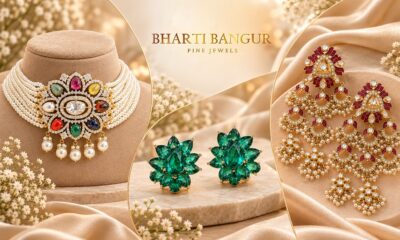
The Solenne Collection: A Celebration Of Diwali By Bharti Bangur Fine Jewels
-

 BrandBuzz2 weeks ago
From Diya Puja To Diwali Soirées: Jewellery Designed To Go Beyond The Festive Season
-

 National News2 weeks ago
Indriya, Aditya Birla Jewellery Unveiled India’s Largest Sustainable Jewellery Rangavalli