

JB Insights
India Emerges as Global Leader in Silver Jewellery Growth in 2024
Driven by rising industrial demand, policy support, and a preference for high-purity designs, India takes center stage in the global silver market, according to the World Silver Survey 2025.


India has solidified its position as a global powerhouse in silver jewellery fabrication in 2024, playing a pivotal role in the metal’s record-breaking industrial and consumer demand, as per the latest World Silver Survey 2025 by the Silver Institute
Global industrial demand for silver reached an all-time high of 680.5 million ounces (Moz), fueled by the expanding green economy and rapid growth in AI-related technologies. India stood out with a 4% rise in industrial silver demand, second only to China, underscoring its growing importance in the global silver landscape.
Jewellery fabrication—India’s traditional stronghold—also saw robust growth. Global silver jewellery demand increased by 3% to 208.7 Moz, with India contributing the majority of that rise. This surge was attributed to a combination of factors, including a cut in silver import duty, a resilient rural economy, and a rising consumer preference for high-purity silver pieces.
In a notable contrast to global trends, India also posted a 21% jump in demand for silver coins and bars, even as worldwide demand declined. This was largely driven by bullish investor sentiment and favorable import policies that encouraged safe-haven buying.
However, the silverware segment saw a 2% decline, falling to a three-year low of 54.2 Moz, primarily due to softened demand in India’s gifting segment, where elevated silver prices dampened consumer enthusiasm.
On the supply side, global silver mine production edged up slightly by less than 1% to 819.7 Moz, yet the market remained in a structural deficit for the fourth consecutive year, with a shortfall of 148.9 Moz.
The report also warns that geopolitical tensions and potential U.S. tariffs could impact silver demand in 2025. However, strong safe-haven investment interest may help cushion any potential declines. Despite global uncertainties, silver prices rose 21% in 2024 and continue to maintain strength heading into the new year.








JB Insights
Gold Loans Fuel MSME Expansion
Industry Seminar Focuses On E-Commerce Growth, Logistics Solutions and Global Shipping Opportunities For The Gem and Jewellery Sector

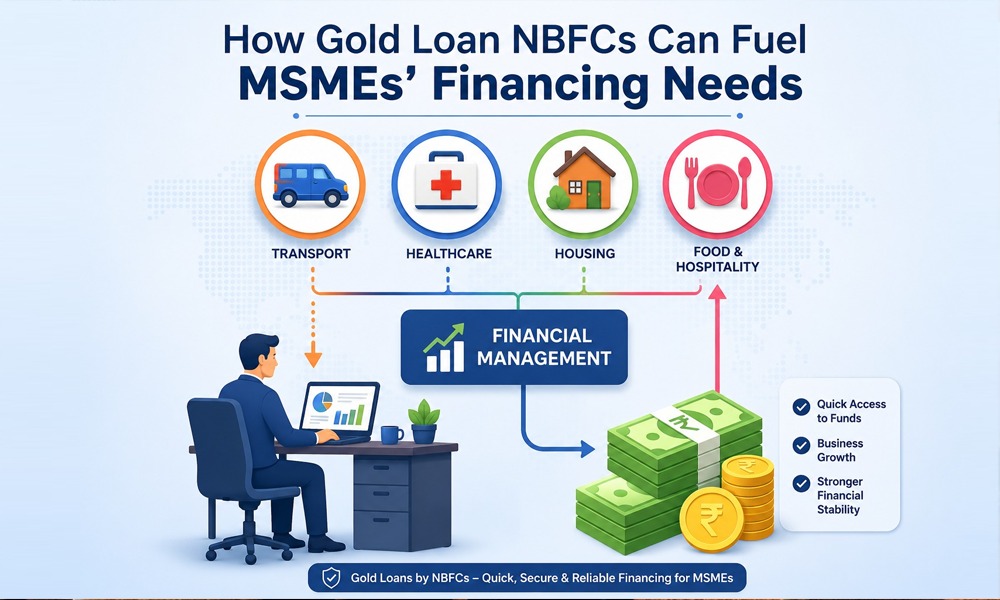
Across India, gold loans are rapidly shifting from purely personal-finance products into a go-to source of working capital and business-expansion funding for MSMEs, with non-bank lenders such as Muthoot Finance playing a central role in this transition. Record-high gold prices and easier documentation, combined with short-term tenures and relatively quick disbursal, are making gold-loan collateral attractive for small manufacturers, traders, and services-sector entrepreneurs who struggle to access traditional bank credit.
Gold loans have become a key contributor to India’s consumption-loan growth, with originations surging amid slowing personal-loan and credit-card growth and elevated gold prices improving collateral coverage.
Rating agencies and brokers note that high gold prices not only allow larger loans against the same jewellery but also help maintain asset quality, as borrowers are more incentivised to repay rather than forfeit precious metal.
Why MSMEs are turning to gold loans
- Many MSME borrowers use family-held gold as collateral to finance working-capital gaps, inventory purchases, machinery upgrades, or local-market expansion, especially where cash-flow cycles are irregular or credit history is thin.
- Gold loans typically offer lower interest and faster processing than unsecured personal loans or credit cards, and the presence of a tangible asset (gold) makes lenders more comfortable with shorter-tenor, higher-ticket loans.
Role of organised lenders like Muthoot Finance
- Muthoot Finance and other large NBFCs explicitly position gold loans as flexible, short-term credit for “business-related” needs, including trade, small-scale manufacturing, and micro-retail, and have reported that a significant share of new disbursements go to self-employed professionals and small business-owners.
- Digital-first interfaces, branch-network expansion into semi-urban and Tier-2/3 towns, and features such as missed-call status checks and mobile-based payment reminders help MSME-type borrowers manage repayments without frequent visits to branches.
Regulatory and risk-management angle
- Regulators and rating agencies note that channeling gold-loan funds toward productive MSME activity can improve asset quality, as business cash flows often support repayment better than purely consumption-driven loans.
- At the same time, tighter supervision on re-pledging and stricter documentation—from April 2026 onward—are pushing MSME borrowers toward organised players, reducing reliance on informal pawn-shop-style lending and improving transparency in SME-oriented gold-loan portfolios.
Market-level impact
- With the organised gold-loan market expected to breach ₹15 lakh crore by March 2026, MSME-oriented lending is emerging as one of the key growth segments, particularly for NBFCs that combine branch-level trust with digital ease.
- This trend is encouraging gold-loan houses to design quasi-MSME packages—such as higher ticket-sizes, flexible moratoriums around festival seasons, and payment-tracking tools—while keeping the underlying product clearly tagged as a secured gold-loan.


-

 National News5 hours ago
GJEPC & DHL Host E-Commerce & Export Logistics Seminar In Delhi
-

 International News5 hours ago
Gold and Silver Under Pressure: Inflation Shock, Fed Repricing, and Critical Support Zones AUGMONT BULLION REPORT
-

 JB Insights4 hours ago
Gold Loans Fuel MSME Expansion
-
 National News2 days ago
Kirit Bhansali Has Been Appointed As The Nominee Director On The IAGES Board, Effective 11 May 2026
