
ShowBuzz
India diamond sector hit by Trump tariffs tsunami: Threatening livelihoods, export volumes, and India’s global dominance

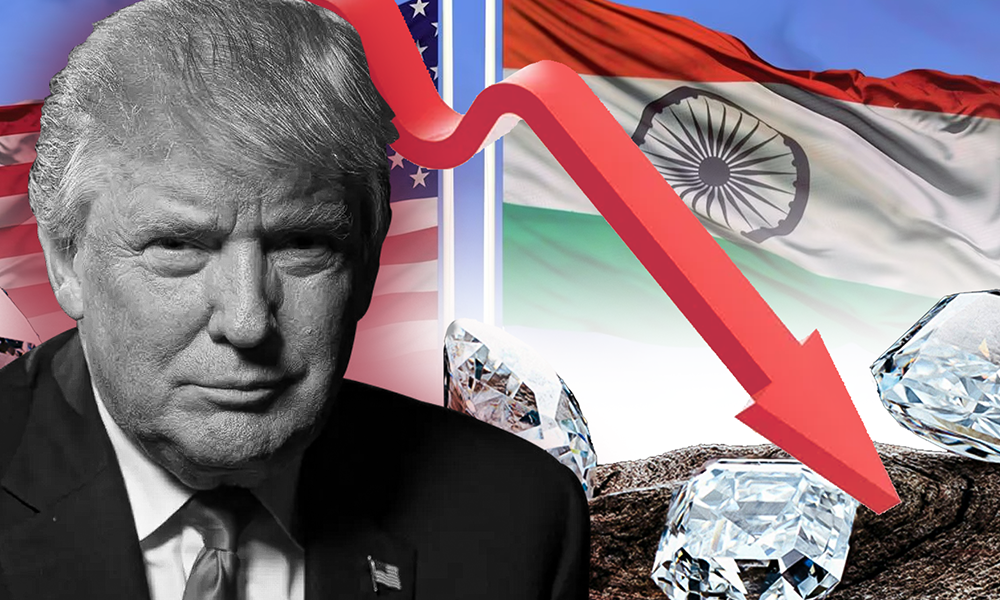
The imposition of a steep 26% tariff on Indian diamond exports to the United States, announced under former U.S. President Donald Trump’s “reciprocal trade” strategy, has delivered a fresh blow to Surat’s already embattled diamond industry. Just as the sector was showing tentative signs of recovery from prolonged recessionary trends, this abrupt policy shift has thrown global trade dynamics into disarray—threatening livelihoods, export volumes, and India’s global dominance in the gems and jewellery market.
As the global hub for diamond cutting and polishing, Surat processes over 90% of the world’s diamonds, with the U.S. being its largest consumer market. Of the $32.85 billion worth of gems and jewellery exported from India in FY 2023-24, over 30% went to the U.S., amounting to nearly $10 billion. A significant portion of these exports—ranging from cut and polished natural diamonds to lab-grown alternatives—will now be subjected to high tariffs that fundamentally alter their market competitiveness.
Previously, exports to the U.S. incurred zero tariffs. With natural diamonds now taxed at 26% and lab-grown diamonds at 29%, the sudden surge in costs threatens to erode already razor-thin margins, as acknowledged by Babu Vaghani, President of the Lab Grown Diamond Association (LGDA). Exporters may be forced to raise prices or absorb the additional costs, both of which are unsustainable.
The impact is not merely hypothetical. As Dinesh Navadiya of the GJEPC (Gem & Jewellery Export Promotion Council) noted, while demand for diamonds in the U.S. is culturally entrenched, a steep price rise is likely to delay purchases in the short term. Projections that India’s exports to the U.S. would reach $11.58 billion in FY 2024-25 now appear overly optimistic.
The profit margin for exporters often hovers around 25–30%. With tariffs nearly equalling the margin, companies are facing a critical inflection point: either pull back from U.S. markets or find ways to offset the cost elsewhere. According to Laljibhai Patel, head of Dharmanandan Diamonds, this new cost burden, combined with existing logistics and insurance expenses (6%), makes Indian goods substantially less competitive than those from untaxed geographies.
Ironically, the tariff also disrupts one of the few bright spots in India’s jewellery export landscape—lab-grown diamonds (LGDs). With their appeal rooted in affordability, sustainability, and innovation, LGDs were driving diversification in export profiles and attracting younger global consumers. Now, with a 29% duty, even this emergent segment faces severe headwinds.
Surat, already a leading global centre for LGD production and export, was banking on this segment to anchor future growth. The tariff threatens to derail momentum just as the sector was scaling operations, investing in technology (e.g., CVD), and securing global buyers.
Industry Reaction: A State of Suspended Activity
The fallout has been swift– buying activity has halted in both the U.S. and Surat. Rough diamond purchases have stalled as exporters and traders enter a “wait-and-watch” mode, uncertain of how long the tariff will last or whether any diplomatic resolution is forthcoming.
While some remain hopeful that the strong diplomatic relationship between India and the U.S.—especially between Trump and Prime Minister Narendra Modi—could facilitate a rollback or exemption, policy clarity is urgently needed.
Broader Implications and Strategic Considerations
This development also raises larger questions about India’s trade resilience and diversification strategy:
- Can India reduce its overreliance on the U.S. by diversifying its jewellery export markets to Europe, the Middle East, or Southeast Asia?
- Will this tariff act as a catalyst for greater domestic demand or intra-Asian trade in diamonds and jewellery?
- Should India now accelerate investment in branding, design, and retail innovation to justify premium pricing abroad?
In the immediate term, the industry needs governmental intervention—be it through bilateral negotiations, export incentives, or subsidies for MSMEs in the diamond supply chain—to stay competitive.
Conclusion: A Wake-Up Call for the Industry
Trump’s tariff policy may have been designed with strategic trade balancing in mind, but its unintended consequence is the destabilisation of a crucial export sector in India. Surat’s diamond industry, already walking a tightrope, now finds itself in urgent need of policy support, market reorientation, and adaptive innovation.
Despite high gold prices, demand remains steady in Asian countries like India. Similarly, diamonds are culturally important in the US, but a sudden price rise due to tariffs is expected to reduce short-term purchases. In 2023-24, India’s gem and jewellery exports to the US totalled $9.95 billion (~₹86, 157.79 crore). However, the hope that this figure would rise to $11.58 billion (~₹1 lakh crore) in 2024-25 now seems bleak. That said, there remains a possibility of market stabilisation in the future.
-Dinesh Navadiya, regional chairman of the Gem and Jewellery Export Promotion Council (GJEPC)







ShowBuzz
GIA Board Of Governors In India To Discuss Industry Priorities and Expand Grading Services Scope
GJEPC Proposed Building On The Traditional 4Cs Framework With Greater Emphasis On Rarity, Traceability, Provenance and Exclusivity To Help Consumers Better Understand The Characteristics and Story Of Natural Diamonds

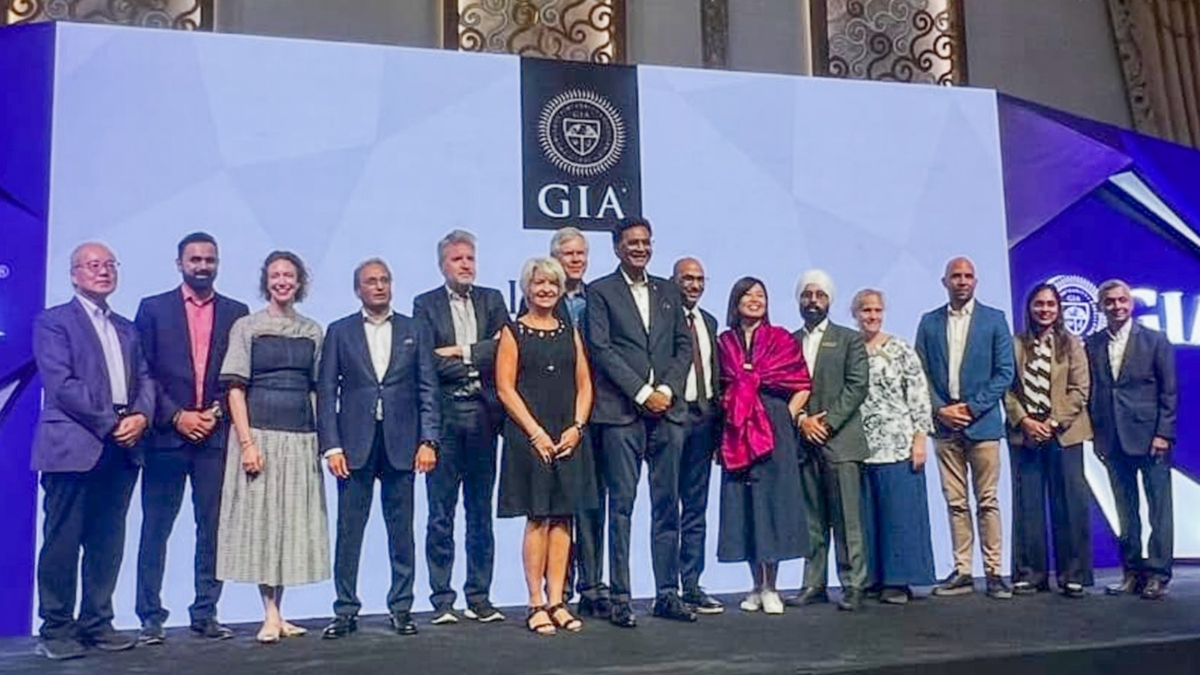
The GIA Board of Governors delegation, led by Pritesh Patel, President and Chief Executive Officer of GIA met dignitaries and senior leadership of the Indian GJ leadership at an event titled INDIA IN BRILLIANCE . Amit Pratihari, MD-GIA India was present at the event.The highlight was a fireside chat with Ajoy Chawla, MD Titan Co Ltd , Pritesh Patel and Amit Pratihari.
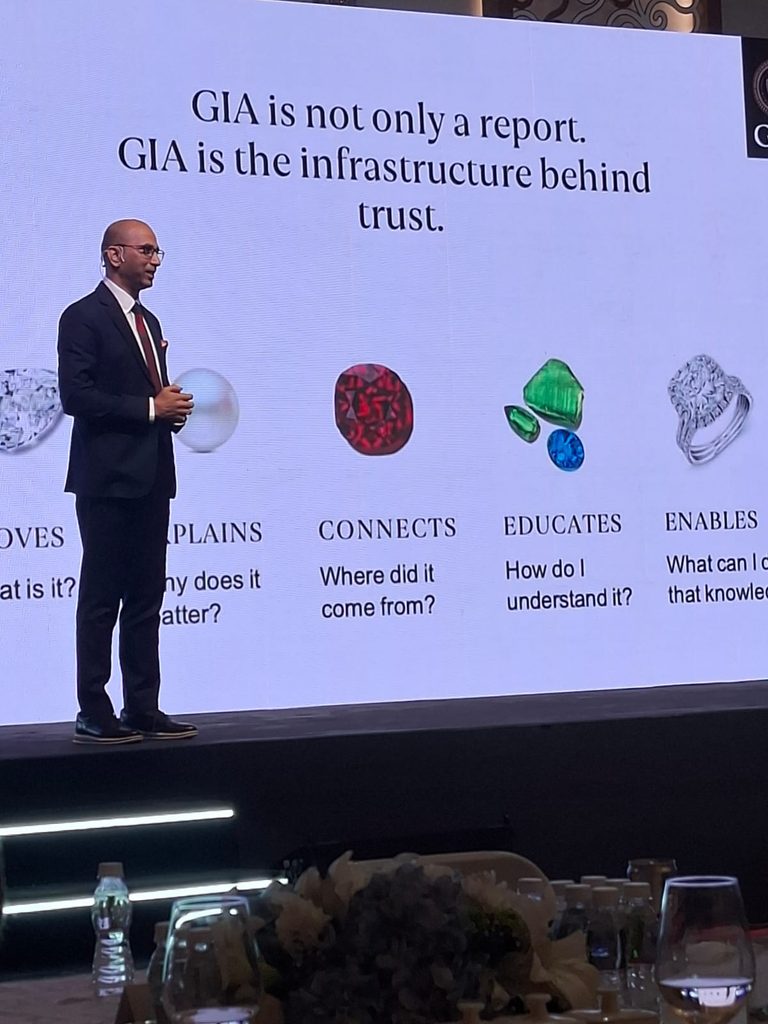
Earlier GJEPC welcomed the GIA Board of Governors delegation, led by Pritesh Patel, to its Mumbai head office on 14 October 2026 for discussions on industry priorities, certification services and opportunities to strengthen India’s position in the global gem and jewellery trade.
GJEPC recommended setting up a GIA verification service within Bharat Diamond Bourse (BDB), with a defined timeline, to make diamond verification more accessible and help deter fraudulent cases and fake laser inscriptions.
GJEPC urged GIA to extend grading services in India to diamonds of all sizes, including stones above 3.99 carats, as well as fancy-colour diamonds. The Council highlighted the delays and logistical challenges involved in sending such stones overseas for grading.
GJEPC proposed building on the traditional 4Cs framework with greater emphasis on rarity, traceability, provenance and exclusivity to help consumers better understand the characteristics and story of natural diamonds.



Belgian Consul General H. E. Mr. Pierre Stverlynck Graces BDB Annual Day

Limelight Lab Grown Diamonds Crosses 100 Stores Milestone This Dussehra: Targets 200 In 2027

Joyalukkas Opens Its 2nd Bengaluru Showroom in Jayanagar

US Holiday Shopping Expected To Top $1 Trillion For The First Time: NRF
Belgian Consul General H. E. Mr. Pierre Stverlynck Graces BDB Annual Day
Limelight Lab Grown Diamonds Crosses 100 Stores Milestone This Dussehra: Targets 200 In 2027
-
 International News17 hours ago
US Holiday Shopping Expected To Top $1 Trillion For The First Time: NRF
-
 National News11 hours ago
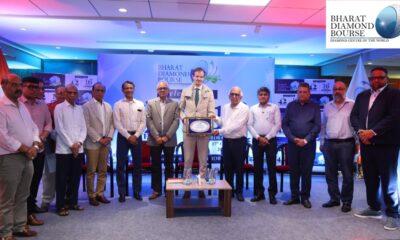
Belgian Consul General H. E. Mr. Pierre Stverlynck Graces BDB Annual Day
-
 National News12 hours ago
Limelight Lab Grown Diamonds Crosses 100 Stores Milestone This Dussehra: Targets 200 In 2027
-
 New Premises12 hours ago
Joyalukkas Opens Its 2nd Bengaluru Showroom in Jayanagar
