
Education
WGC-IIGJ Talks Explore Roadmap For Gold Innovation & Global Reach
Visit Explored Collaboration On Talent Development Alongside Innovation-Led Initiatives

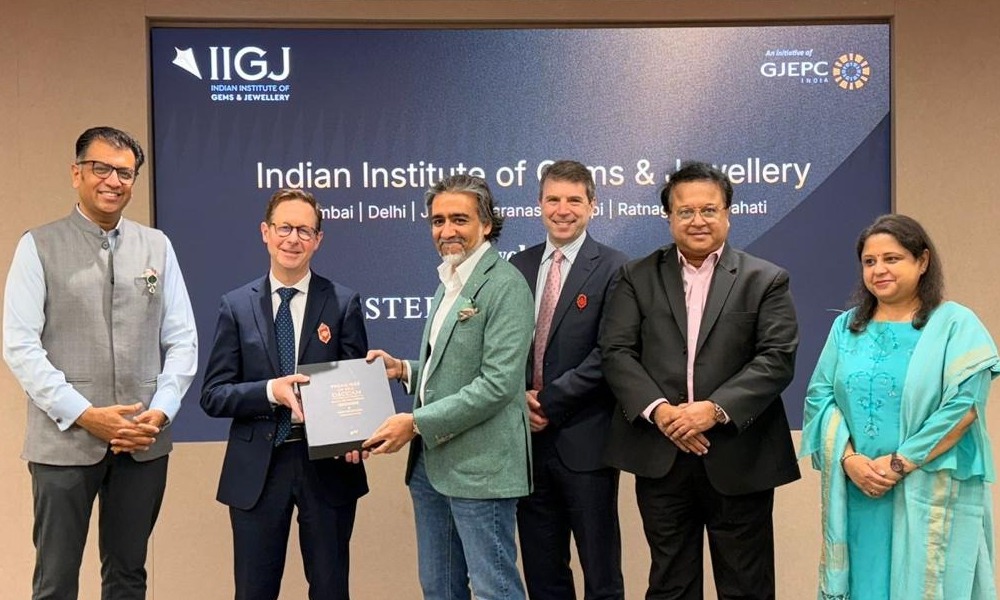
Senior leadership from the World Gold Council’s London head office visited the Indian Institute of Gems & Jewellery (IIGJ), Mumbai, on 21 April 2026, with a clear focus on advancing gold jewellery innovation through design, technology and new product concepts. The visit explored collaboration on talent development alongside innovation-led initiatives, with the delegation also interacting with students exhibiting their final-year ‘Glimpz’ projects.
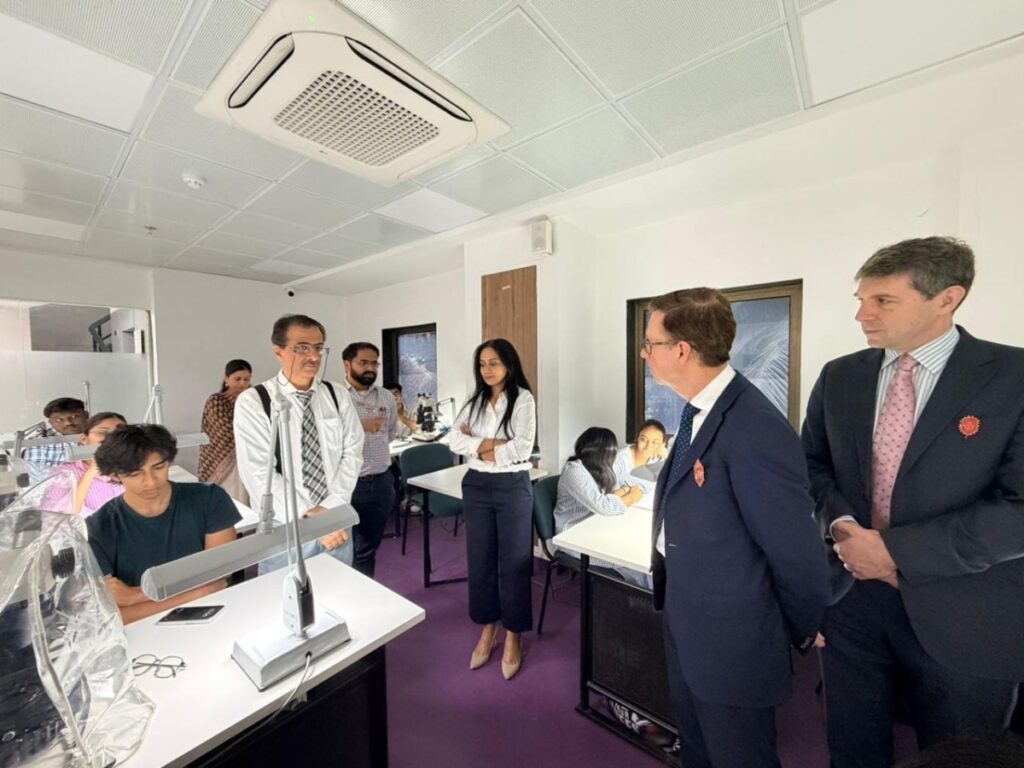
The WGC delegation included Nigel Ruth, COO, and Terry Heymann, Chief Strategy Officer, along with Sachin Jain, Regional CEO, India; Rakhi Khanna, Global Head of Corporate Communications; and Arti Saxena, Director and Head of Marketing, India. They were received by Milan Chokshi, Chairman, IIGJ; Debasish Biswas, CEO, IIGJ; and Dolly Choudhary, Director – Promotions, Marketing & Business Development, GJEPC.
In his opening remarks, Ruth emphasised that the focus remains on keeping jewellery relevant for younger consumers, noting that there is no better place than India to understand this dynamic. He added that the intent was to listen and learn from the market. Echoing this sentiment, Heymann expressed his enthusiasm about being back in India, highlighting that the future of the sector lies with the youth. He acknowledged India’s potential to lead the way and conveyed a keen interest in gaining a deeper understanding of the work being done and engaging with it in a meaningful manner.
Sachin Jain said:

“I was genuinely blown away by the creativity of the students, not just the products they created, but the confidence and conviction with which they presented their ideas. That level of belief comes from strong training and discipline. As a team, we felt it was important for us to be part of this journey, to understand what you are building here and explore how we can support it in a meaningful, long-term way.”
Milan Chokshi added:
“India has immense potential in every sense. This is where you can truly influence and shape the future of the jewellery industry. As the industry undergoes structural change in design, retail and consumer behaviour, institutes like ours must drive that reset. The opportunity lies in harnessing this talent, channelling its enthusiasm, and creating meaningful impact.”

Discussions focused on integrating gold into curricula, design hackathons, artisan upskilling, and building global-facing jewellery narratives. GJEPC highlighted opportunities to scale Indian craftsmanship globally through platforms like The Artisan Awards and innovation-led initiatives.


Education
GIA To Open London Campus In August, Enrolling Students For Classes Beginning In August 2026
Campus in London’s Canary Wharf Will Place GIA Students In One Of The World’s Most Influential Centers For Luxury and Business.

The soon-to-open GIA (Gemological Institute of America) campus in London is now enrolling students for classes beginning in August 2026. The new GIA School of Gemology and Jewelry Arts campus in London’s Canary Wharf will place GIA students in one of the world’s most influential centers for luxury and business.
The new London campus in the iconic and vibrant Canary Wharf district will offer increased capacity and, for the first time in London, the GIA Jewelry Design & Technology program. The campus will be conveniently located near transport, cultural and social attractions. Historically, enrolment at GIA’s London campus has included students from more than 50 countries with unique and diverse backgrounds.
GIA President and CEO, Pritesh Patel said:

“GIA takes great pride in providing premier education through our programs. Our new London campus will allow us to further advance our mission to ensure confidence in gems and jewelry by making education more globally accessible and offering the highest quality gem and jewelry education.”
GIA’s London school was established in 2002, providing education in gemmology and jewellery design. The school is accredited by the British Accreditation Council (BAC) and Independent Schools Inspectorate (ISI).



Belgian Consul General H. E. Mr. Pierre Stverlynck Graces BDB Annual Day

Limelight Lab Grown Diamonds Crosses 100 Stores Milestone This Dussehra: Targets 200 In 2027

Joyalukkas Opens Its 2nd Bengaluru Showroom in Jayanagar

US Holiday Shopping Expected To Top $1 Trillion For The First Time: NRF
Belgian Consul General H. E. Mr. Pierre Stverlynck Graces BDB Annual Day
Limelight Lab Grown Diamonds Crosses 100 Stores Milestone This Dussehra: Targets 200 In 2027
-
 International News17 hours ago
US Holiday Shopping Expected To Top $1 Trillion For The First Time: NRF
-
 National News11 hours ago
Belgian Consul General H. E. Mr. Pierre Stverlynck Graces BDB Annual Day
-
 National News12 hours ago
Limelight Lab Grown Diamonds Crosses 100 Stores Milestone This Dussehra: Targets 200 In 2027
-
 New Premises13 hours ago
Joyalukkas Opens Its 2nd Bengaluru Showroom in Jayanagar
