
International News
Precious Metals at the Crossroads – Geopolitics, Inflation, and Key Technical Levels AUGMONT BULLION REPORT
Crisis Disrupting Energy Supplies, Pushing Inflation Risks Higher, Increasing The Probability Of Central Bank Interest Rate Hikes


Safe-Haven Dynamics – Gold and Silver prices are consolidating as investors assess the possibility of U.S.-Iran diplomatic talks and the uncertain future of the current ceasefire. Both nations are scheduled for peace negotiations in Islamabad this week. However, the ceasefire came under threat on Monday following the seizure of a cargo vessel, raising doubts about whether talks will proceed as planned.
- Geopolitical Developments– The ongoing Middle East conflict has caused a significant disruption to energy supplies, pushing inflation risks higher and increasing the probability of central bank interest rate hikes — both of which create headwinds for gold prices. Adding to the uncertainty, President Donald Trump indicated he will not extend the truce if no agreement is reached before its deadline, and has stated that the Strait of Hormuz will stay closed until a deal is finalized.
- Macro-economic Signals – Markets are closely watching for clarity on whether the Islamabad talks will proceed, and if so, whether they result in a ceasefire extension or a broader peace agreement. Gold’s price direction will continue to be driven by Middle East outcomes and their downstream effects on energy costs and inflation expectations.
Technical Triggers
- Gold is trading in the range of $4750 (~ Rs 152,500) and $4850 (~Rs 155,000) from past few days. Either side breakout or breakdown will give 3-4% directional move.
- Silver is trading in the range of $78 (~ Rs 248,000) and $81 (~Rs 257,000) from past few days. Either side breakout or breakdown from this band will give 3-4% price swing.
Support and Resistance
| International Gold Support Level International Gold Resistance Level Domestic Gold Support Level Domestic Gold Resistance Level | : $4600/oz : $5000/oz : Rs 153,000/10 gm : Rs 160,000/10 gm |
| International Silver Support Level International Silver Resistance Level Domestic Silver Support Level Domestic Silver Resistance Level | : $75/oz : $82/oz : Rs 235,000/kg : Rs 260,000/kg |


International News
US Holiday Shopping Expected To Top $1 Trillion For The First Time: NRF
While Overall Buying Power Remains High, Ongoing Inflation and Rising Household Costs Mean Some Families Will Have To Watch Their Spending More Carefully Than Others
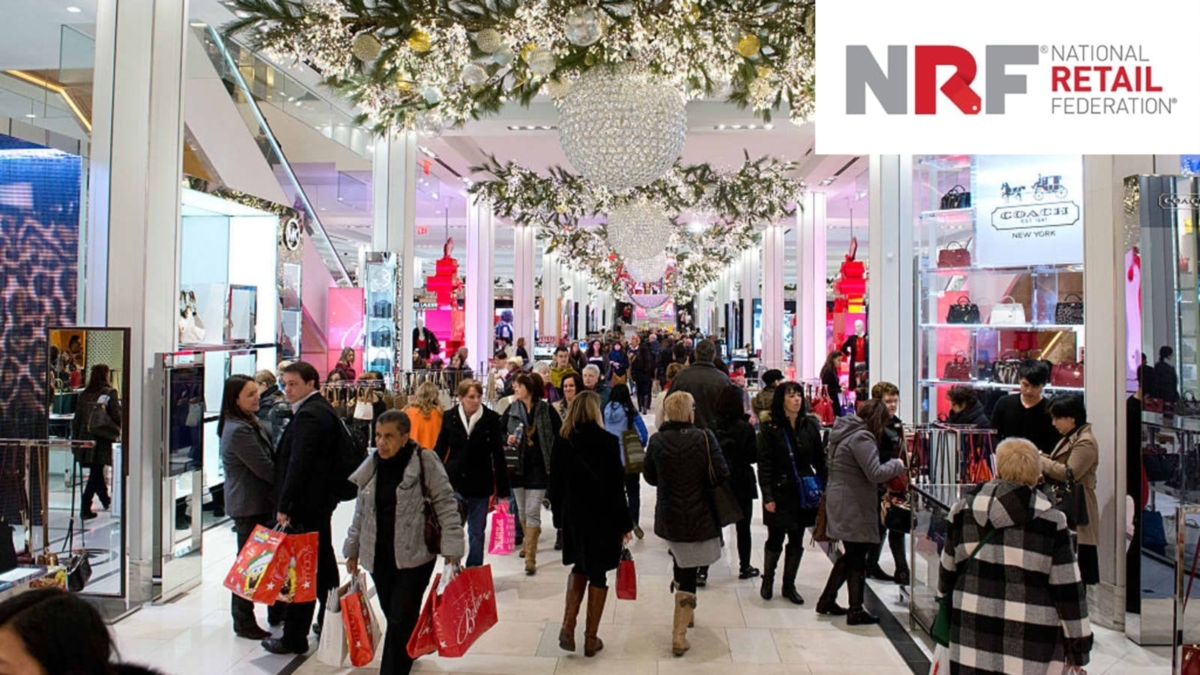
The National Retail Federation (NRF) predicts Americans will spend $1.01 trillion on holiday shopping in November and December. That is a 4.2% jump from $972 billion last year.
NRF said its forecast was based on economic modeling that incorporates consumer spending, employment, wages and historical retail sales data. It excludes automobile, gasoline and restaurant sales
Extra Hiring: To handle the surge in shoppers, stores plan to hire 325,000 to 375,000 temporary holiday workers.
Mixed Budget Impact: Higher gas prices and inflation could still strain some family budgets, affecting low- and high-income shoppers differently.
Retailers expect a strong shopping season because people continue to make holiday spending a priority.
Store owners are ready to attract shoppers by offering competitive prices, deals, and choices for every budget.
While overall buying power remains high, ongoing inflation and rising household costs mean some families will have to watch their spending more carefully than others.



Belgian Consul General H. E. Mr. Pierre Stverlynck Graces BDB Annual Day

Limelight Lab Grown Diamonds Crosses 100 Stores Milestone This Dussehra: Targets 200 In 2027

Joyalukkas Opens Its 2nd Bengaluru Showroom in Jayanagar

US Holiday Shopping Expected To Top $1 Trillion For The First Time: NRF
Belgian Consul General H. E. Mr. Pierre Stverlynck Graces BDB Annual Day
Limelight Lab Grown Diamonds Crosses 100 Stores Milestone This Dussehra: Targets 200 In 2027
-
 International News23 hours ago
US Holiday Shopping Expected To Top $1 Trillion For The First Time: NRF
-
 National News17 hours ago
Belgian Consul General H. E. Mr. Pierre Stverlynck Graces BDB Annual Day
-
 National News18 hours ago
Limelight Lab Grown Diamonds Crosses 100 Stores Milestone This Dussehra: Targets 200 In 2027
-
 New Premises18 hours ago
Joyalukkas Opens Its 2nd Bengaluru Showroom in Jayanagar
