
News
IGJS Jaipur 2025 opens;welcomes over 180 international buyers from 28 countries


Amid the evolving global trade landscape, the Gem & Jewellery Export Promotion Council (GJEPC) inaugurated the International Gem & Jewellery Show (IGJS) Jaipur 2025 today, reinforcing India’s commitment to strengthening its gem and jewellery industry as it navigates the recent announcement of a 27% reciprocal tariff by the US administration on Indian exports.
The 4th edition of IGJS Jaipur, organized by GJEPC, is being held from 3rd to 5th April 2025 at Novotel, Jaipur Exhibition and Convention Centre (JECC), Jaipur. SECURE is the logistics partner for IGJS 2025. The show serves as a premier B2B platform for fostering trade collaborations and expanding India’s footprint in key global markets.
The event was inaugurated by esteemed dignitaries, including Retired Major General Anuj Mathur; Mrs. Shilpi R Purohit, Joint Commissioner, District Industries Centre, Government of Rajasthan; Mr. Gaurav Joshi, Joint Director & HOO, MSME – Development Institute, Ministry of MSME Jaipur; Mr. Shaunak Parikh, Vice Chairman, GJEPC; Mr. Yogendra Garg, Regional Chairman (Rajasthan), GJEPC; Mr. D.P. Khandelwal, Convener, Coloured Gemstone Panel, GJEPC; Mr. Krishna Behari Goyal, Convener, Silver Panel, GJEPC; Mr. Arvind Gupta, Convener, SEZ Panel, GJEPC; and Mr. Siddhartha H, COO, GJEPC.
Over 50 companies exhibiting at 62 booths, presented a stunning collection of loose gemstones, dazzling diamonds, gemstone-studded masterpieces, and exquisite silver jewellery.

Talking about the show, Shaunak Parikh, Vice Chairman, GJEPC, said, “IGJS Jaipur 2025 offers an unparalleled platform to strengthen partnerships and expand global connections. This year, we are proud to host over 50 companies across 62 booths, welcoming more than 180 international buyers from 28 countries, including the USA, UK, Europe, Oceania, MENA, Russia, and the CIS regions. As a premier business-to-business show, IGJS Jaipur fosters collaboration, drives trade, and unlocks new opportunities in the world of fine jewellery.
Jaipur has long been renowned for its exceptional craftsmanship, and IGJS Jaipur 2025 continues to be the go-to destination for international buyers seeking high-quality jewellery from India. The event showcases the finest gemstone and jewellery collections from leading manufacturers, reinforcing Jaipur’s position as a global hub for innovation and excellence in jewellery.”
On this occasion, Shaunak also addressed concerns regarding the recently imposed 27% tariff by the US administration on India which will have a significant impact gem and jewellery exports. He reiterated GJEPC’s stance, urging the US to uphold the spirit of the longstanding trade partnership between India and the USA, built on mutual respect and shared economic interests.
“The tariff presents both challenges and opportunities. In the short term, we anticipate difficulties in sustaining India’s current export volume of USD 10 billion to the US market. In the long term, this could reshape global supply chains,” said Parikh. He further added, “We urge the Government of India to progress the Bilateral Trade Agreement between India and the US, as it would be crucial in navigating the tariff issues and securing long term interest of the sector.”
GJEPC is actively engaging with stakeholders to address the potential risks and explore solutions that ensure continued access to the US market. The Council remains committed to working with the Government of India to progress discussions on trade negotiations that protect the industry’s growth trajectory.
Talking about the Jaipur gem and Jewellery sector Shaunak Parikh said, “GJEPC is committed to taking Jaipur’s gem and jewellery industry to the next level, ensuring its growth as a global hub. GJEPC is also working closely with the government to establish a Special Notified Zone (SNZ) in Jaipur, allowing direct sourcing of rough gemstones from miners, replicating the successful models of SNZs in Bharat Diamond Bourse and Surat Diamond Bourse. Additionally, Initiatives like the India Rough Gemstone Sourcing Show (IRGSS)—scheduled from 11th to 30th April 2025—are crucial in maintaining a steady supply of rough gemstones for manufacturers. These strategic efforts will further strengthen Jaipur’s position as a leading centre for gemstone manufacturing and jewellery exports.”
Yogendra Garg, Regional Chairman (Rajasthan), GJEPC, said, “Gem Bourse in Jaipur, developed by GJEPC in collaboration with the Jewellers Association, Jaipur, and with the visionary support of the Rajasthan Government. Spread across 43,828 square meters, this world-class facility will not only boost exports but also create 60,000 jobs, transforming Jaipur into a global hub for gems and jewellery.”

By bringing together global buyers and Indian exporters, IGJS Jaipur plays a pivotal role in strengthening India’s position as a trusted sourcing hub, even as the industry navigates complex trade dynamics. GJEPC remains optimistic that initiatives like IGJS will bolster trade relations and open new avenues for growth in emerging markets.

Jeremy Keight, GJEPC Coordinator, Asia Pacific, Oceania, UK, Africa, US & Europe, said: “We’re in an ever-changing jewellery industry where designs and demands evolve, and that only happens through collaboration between the buyers and the suppliers. I encourage you to be open with exhibitors, explore possibilities, and dive into design—that’s how we grow as an industry.”
Ali Pastorini, GJEPC Coordinator, Latin America, commented, “I’m proud to bring delegations to this high-quality event. In these challenging times, unity is crucial, and this is a prime opportunity for buyers and sellers to connect and do great business. We must keep pushing forward. India’s exports must not depend solely on the USA—explore untapped markets like Latin America to open new doors. Visitors, take advantage of the incredible companies here; I visited factories yesterday, and you won’t be disappointed.”

Exhibitors were bustling with activity right from the inaugural day of the show. Jinesh Mehta, Founder of Kaamya Jewels, a high-design jewellery brand, remarked that they had been so engaged with clients that they hadn’t even found time for a lunch break.







National News
IBJA, SAARTHI 360 Sign MoU To Launch ‘NextGen CEO: Leadership for the Future’
Executive Education Initiative To Equip The Next Generation Of Jewellery Manufacturers With The Leadership Capabilities, Strategic Perspective and Decision-Making Skills Required To Lead Family Businesses.

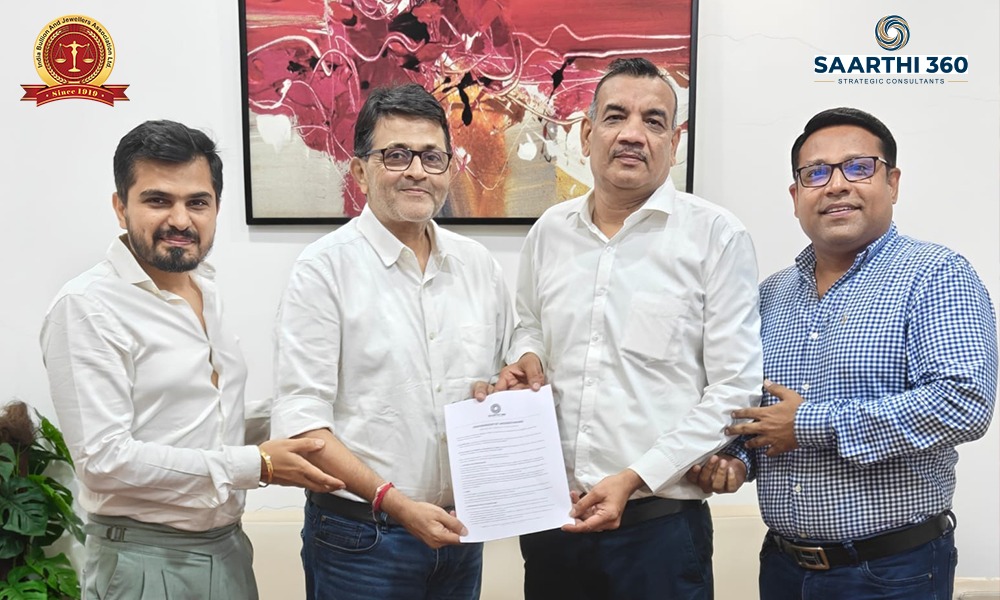
The India Bullion and Jewellers Association (IBJA) and SAARTHI 360 have signed a Memorandum of Understanding (MoU) to launch ‘NextGen CEO: Leadership for the Future’, an executive education programme designed to prepare the next generation of jewellery manufacturers for CEO and senior leadership roles in family-owned businesses.
The programme will help emerging leaders move beyond day-to-day operations by strengthening their strategic thinking, leadership judgement and managerial capabilities to improve organisational performance and support sustainable growth.
Building the Next Generation of Jewellery Business Leaders
Centred on ‘NextGen CEO — Becoming the CEO of a Family Jewellery Business’, the programme addresses leadership succession and executive decision-making in family-owned jewellery enterprises.
- Understanding the CEO’s role: Defining a CEO’s responsibilities and expectations in a jewellery business.
- Clarifying leadership and governance roles: Distinguishing among an owner, promoter, director, managing director and CEO.
- Strategic leadership versus daily operations: Moving from routine management to long-term business direction and priorities.
- Decision-making and strategic thinking: Applying structured frameworks to complex business situations.
- Managing stakeholders: Navigating relationships with family members, shareholders, employees and other stakeholders.
- Performance measurement: Using a CEO dashboard to monitor performance and support informed decisions.
- The first 100 days as CEO: Establishing priorities for the transition into executive leadership.
- Second-generation leadership challenges: Addressing succession, authority, accountability and organisational change.
- Ethics and integrity: Building trust through responsible leadership, sound governance and ethical decision-making.
Surendra Mehta, National Secretary, IBJA, said:
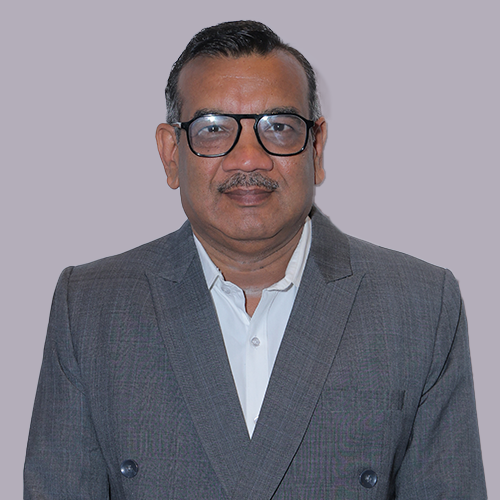
“Family-owned jewellery businesses play a significant role in India’s gems and jewellery industry. As these businesses grow and prepare for generational transitions, developing capable and confident future leaders becomes increasingly important. Through this initiative, we aim to help the next generation build the clarity, discipline and leadership capabilities needed to take their businesses forward while preserving the strengths of their family legacy.”
Binit Bhatt, Partner, SAARTHI 360, said:
“Becoming a CEO is about much more than inheriting a title. It requires a fundamental shift in mindset—from managing day-to-day operations to setting direction, making informed decisions, building accountability and earning the confidence of family members, employees and other stakeholders. The NextGen CEO programme is designed to equip emerging leaders with practical frameworks and perspectives that they can apply to the realities of their own businesses.”
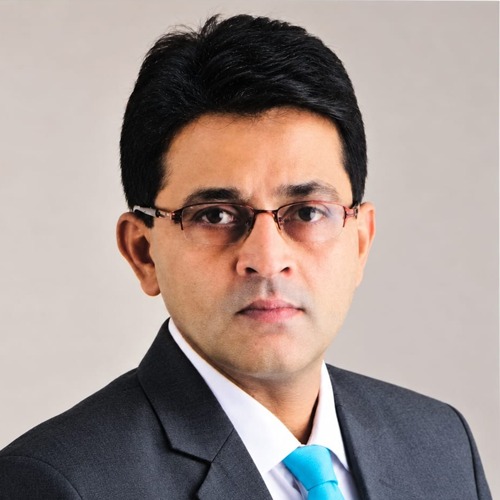
Hitesh Khandelwal, Partner, SAARTHI 360, said:
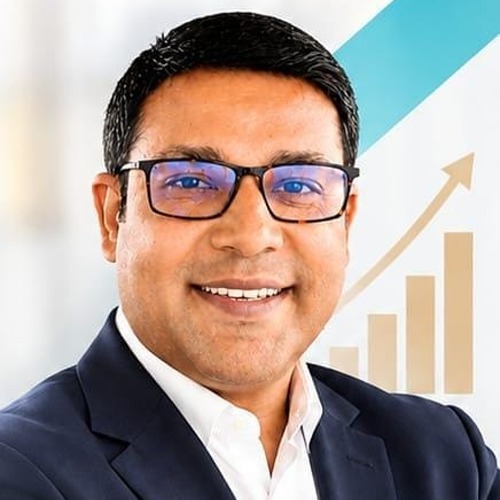
“Jewellery businesses are navigating an important generational transition, where preserving a strong legacy must go hand in hand with professional management and strategic thinking. Through NextGen CEO, we aim to help emerging leaders develop the confidence, capabilities and business perspective required to lead effectively, drive sustainable growth and prepare their organisations for the future.”



Gargi By P N Gadgil & Sons Invites Women To #GETNOTICED This Diwali In New Campaign With Mithila Palkar

IBJA, SAARTHI 360 Sign MoU To Launch ‘NextGen CEO: Leadership for the Future’

Jos Alukkas Unveils New Website For A Seamless Online Jewellery Shopping Experience

Dhanteras Shopping Guide 2026:Gold, Silver, Diamonds & Festive Jewellery Trends To Watch

The Solenne Collection: A Celebration Of Diwali By Bharti Bangur Fine Jewels

From Diya Puja To Diwali Soirées: Jewellery Designed To Go Beyond The Festive Season
-
 JB Insights4 days ago
Dhanteras Shopping Guide 2026:Gold, Silver, Diamonds & Festive Jewellery Trends To Watch
-
 BrandBuzz4 days ago
The Solenne Collection: A Celebration Of Diwali By Bharti Bangur Fine Jewels
-
 BrandBuzz4 days ago
From Diya Puja To Diwali Soirées: Jewellery Designed To Go Beyond The Festive Season
-
 National News4 days ago
Indriya, Aditya Birla Jewellery Unveiled India’s Largest Sustainable Jewellery Rangavalli
