
National News
Hastmilap Secures Patent For Prismix Cut Diamond Technique
The Technique Is Developed To Redefine The Visual Performance Of Structured Diamonds. 2 Baguette Diamonds Are Precisely Oriented In Mirror-Image Opposition, Facing Each Other Across A Central Axis To Create A Unified Form That Is Entirely New.

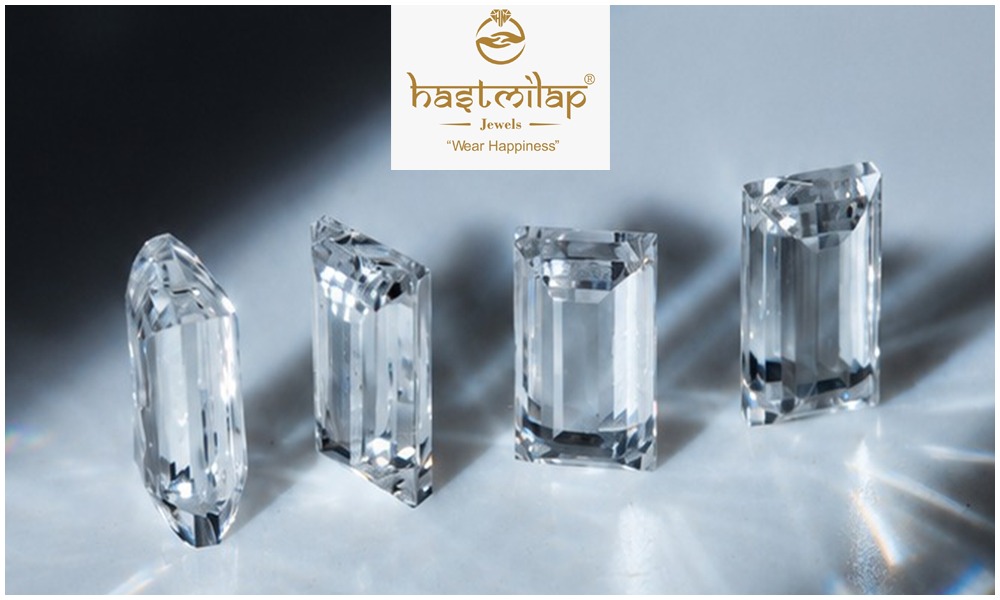
Surat-based Hastmilap Pvt. Ltd., one of India’s leading integrated Jewellery manufacturers, has been granted a patent for its proprietary Prismix Cut Technique, an original diamond-cutting innovation. The patented technique is developed to redefine the visual performance of structured diamonds.
The technique is built on a principle that is simple in concept yet demanding in execution. Two baguette diamonds are precisely oriented in mirror-image opposition, facing each other across a central axis to create a unified form that is entirely new. While preserving the clean geometry and disciplined elegance of the classic step cut, this innovative configuration delivers a distinctly enhanced visual presence.
The technique treats both diamonds as active table-facing surfaces. Light entering the cut is received, refracted, and reflected from two directions simultaneously. Its 38 facets work not in isolation but in harmony, passing light across the mirror axis and amplifying brilliance throughout the combined form.
The result is a continuous, bilateral glow that captures light from multiple angles, holds it longer, and returns it with remarkable clarity, depth, and brilliance. The technique demonstrates how thoughtful design and precision engineering can transform the way a diamond performs.
Designed for applications across fine Jewellery, the technique is particularly suited for necklaces, bracelets, bangles, rings, earrings and other contemporary Jewellery where linear and geometric designs are celebrated. By combining visual brilliance with design versatility, the innovation opens new creative possibilities for Jewellery designers while offering consumers a distinctive diamond experience.
The innovation traces its origins to a bespoke client requirement where conventional baguette diamonds were unable to achieve the desired visual impact in a structured Jewellery design. Rather than modifying the Jewellery around the limitation, Vishal Dholiya questioned whether the diamond itself could be reimagined. Through continuous research, repeated trials, and careful observation, that pursuit evolved into the Prismix Cut, an innovation that reflects Hastmilap’s commitment to solving design challenges through original thinking.
Commenting on the achievement, Vishal Dholiya, Founder & Managing Director, Hastmilap Pvt. Ltd., said :

“The Prismix Cut began with a simple question, could we rethink the diamond instead of compromising on the design? That curiosity led us on a journey of exploration, and today, receiving a patent for the Prismix Cut Technique is a proud milestone for our entire team. This innovation represents our belief that craftsmanship should never stop evolving. I dedicate this achievement to the artisans of Surat, whose skill and dedication have shaped the global diamond industry for generations. It is my hope that the Prismix Cut will stand as a symbol of Indian innovation and inspire the industry to continue pushing the boundaries of what is possible.”
For decades, Surat has been recognized as the city that cuts and polishes the majority of the world’s diamonds. With the Prismix Cut Technique, Hastmilap seeks to add another dimension to that legacy, one where innovation originates alongside craftsmanship. The technique reinforces the company’s vision of contributing original intellectual property to the global Jewellery industry while showcasing India’s capability to lead not only in manufacturing excellence but also in product innovation. The technique represents a significant milestone not only for the company but also for Surat’s legacy as the world’s diamond capital.




National News
NPCI Defers Rollout Of UPI Merchant Discount Rate Until After Diwali
Given Typical Retail Margins Of 2%–6% On Bullion and Plain Gold Jewellery, Absorbing A 0.4% Fee—Or Up To ₹300 Per Large Transaction—Would Have Directly Eaten Into Festive Profitability. The Deferral Keeps Bottom Lines Protected Through Dhanteras and Diwali.

The National Payments Corporation of India’s (NPCI) UPI and Services Steering Committee has deferred the implementation of Merchant Discount Rates (MDR) on select person-to-merchant (P2M) UPI transactions until immediately after Diwali.
The move aims to protect consumer sentiment and keep operational costs steady for businesses during the peak festive shopping season. A specific implementation date will be announced separately.
Key Highlights
- Festive Relief for Retail: The deferment ensures merchants face no additional payment processing costs during peak festive demand, helping avoid disruptions to consumer spending.
- The Approved MDR Structure:
- Applies only to eligible P2M transactions above Rs 2,000 at a rate of 0.4%.
- Capped at Rs 300 for high-value transactions of Rs 75,000 and above.
- Everyday low-value payments and small merchants remain fully exempt, preserving zero-cost digital transactions for general consumers.
- Timeline Adjustment: Originally notified on September 15 for an October 15 rollout, the framework will now take effect post-Diwali, giving banks, payment aggregators, and merchants additional runway to align their systems and communicate terms clearly.
Jewellery purchase values routinely exceed the Rs 2,000 threshold and frequently touch or surpass the Rs 75,000 cap. Given typical retail margins of 2%–6% on bullion and plain gold jewellery, absorbing a 0.4% fee—or up to Rs 300 per large transaction—would have directly eaten into festive profitability. The deferral keeps bottom lines protected through Dhanteras and Diwali.
Introducing transaction fees just as footfall surges would have forced retailers to decide whether to absorb the cost or pass it on to buyers (via checkout surcharges or selective discounts). Avoiding this choice prevents awkward billing counter negotiations and cart abandonment during rush hours.



NPCI Defers Rollout Of UPI Merchant Discount Rate Until After Diwali

Mutual Engagement Ring-Wearing On The Rise, Insurance Lagging: Jewelers Mutual Group 2026 Engagement Ring Study

GJEPC Partners With The Leela To Offer Exclusive Hospitality Benefits To Members
-
 National News7 hours ago
GJEPC Partners With The Leela To Offer Exclusive Hospitality Benefits To Members
-

 JB Insights7 hours ago
CIBIL Score Plays A Key Role In Festive Financing
-

 DiamondBuzz8 hours ago
Richemont and Signet Jewelers Could Join Global Diamond Consortium In Bid For De Beers
-

 National News7 hours ago
MCX Gold, Silver Surge Ahead On US Inflation Data, Crude Price Dip
