
International News
Gold Rush in Reverse: Dubai’s NRIs are cashing out as Middle East crisis deepens
Unbranded jewellers are absorbing upward of 100 seller visits per day, purchases at approximately 1kg daily.


The escalation of the Israel-Iran conflict has triggered a measurable behavioral shift among Indian expatriates in Dubai’s gold market. Rather than holding gold as a long-term store of value, a growing segment of NRI investors is liquidating positions — a response that reveals how geopolitical stress reshapes asset allocation decisions in real time.
Scale and Velocity of Selling Pressure
On-the-ground data from Dubai Gold Souk retailers points to sustained selling momentum. Unbranded jewellers are absorbing upward of 100 seller visits per day, with aggregate purchases running at approximately one kilogram daily. The sellers span both retail jewellery holders and those liquidating gold bars — a sign that the liquidation cuts across asset classes within the gold category, not just ornamental holdings.
Structural Drivers Behind the Sell-Off

Three converging factors are accelerating the trend. First, capital mobility: unlike equities or bank deposits, physical gold cannot be digitally transferred, and cross-border transport faces hard regulatory limits — duty-free allowances cap at 40g for women and 20g for men, with a 5% levy on quantities up to one kilogram. In a flight-to-liquidity scenario, cash simply moves faster. Second, currency dynamics: the rupee’s slide to 25.02 against the dirham (from 24.85 days prior) is improving the remittance calculus, incentivizing NRIs to convert gold proceeds and repatriate funds to India. Third, USD appreciation is drawing the more affluent segment toward parking sale proceeds in offshore USD-denominated accounts rather than repatriating.
Pricing and Discount Behavior

The selling pressure is exacting a cost. Unbranded stores are bidding at a 4–5% discount to spot, with buy prices running at AED 583–589 per gram against a market rate of AED 613.25 per gram for 24K gold. Some retailers are offering structured discounts — AED 3 per 10g and AED 5 per 50g. Branded players such as Tanishq, Malabar, and Joyalukkas have maintained price discipline, transacting only at prevailing market rates and limiting buybacks to their own merchandise.
Risk Management on the Buy Side
Jewellers absorbing this supply are not holding unhedged inventory. Given price volatility, most are simultaneously offsetting positions in the futures market — a rational response to the dual risk of further price correction and logistical constraints on physical gold movement.
Strategic Takeaway
This episode illustrates a well-documented pattern: in periods of acute geopolitical uncertainty, gold’s liquidity advantage over real estate or private holdings makes it the first asset sold, not the last. For NRI wealth managers and advisors, the key insight is that gold holdings in high-tension geographies require an explicit contingency liquidation strategy — one that accounts for discount risk, currency timing, and cross-border regulatory constraints before a crisis materializes.


International News
Fluorescent Diamonds: GIA to Introduce Clearer Guidance
According to GIA, around 25% to 35% of all diamonds show some level of fluorescence. Greater transparency about this significant segment of the market could help improve confidence among both consumers and the jewellery trade.

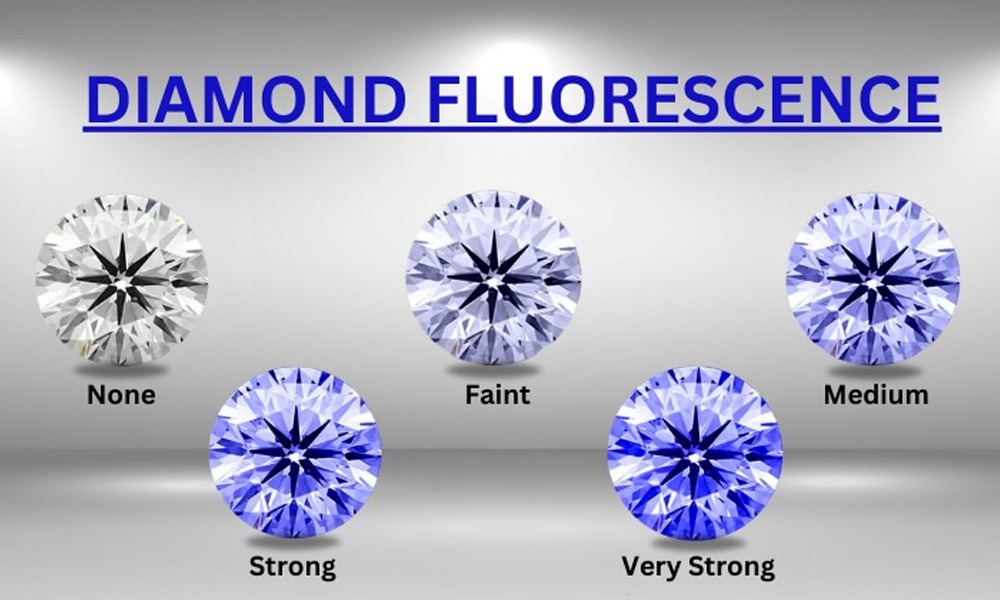
Later this year, the Gemological Institute of America (GIA) will introduce new wording in its diamond grading reports to reduce confusion about fluorescent diamonds. The update, expected in the fourth quarter, is one of the most important steps taken by a grading laboratory to explain this feature more clearly to both the jewellery trade and consumers.
Rapaport Intelligence Report explores what this change could mean for the diamond market. Fluorescence has had a long and complicated history. In the past, fluorescent diamonds often sold at premium prices. However, attitudes changed during the diamond boom of the 1970s and again after a grading controversy in South Korea in the early 1990s. Although later gemological research helped improve confidence in fluorescent diamonds, many buyers still view them negatively, and they often sell at discounted prices.
The report also looks at how these discounts have changed over the past six years through both strong and weak market conditions. In addition, the report explains two key questions: how fluorescence affects a diamond’s appearance and whether it influences its color grade. It also considers whether GIA’s new report comments could change how buyers view fluorescent diamonds.
The report revisits a long-debated issue—does fluorescence really affect a diamond’s beauty, or are today’s concerns mainly based on old perceptions that continue to influence buying decisions?
According to GIA, around 25% to 35% of all diamonds show some level of fluorescence. Greater transparency about this significant segment of the market could help improve confidence among both consumers and the jewellery trade.



Regal Jewellers appoints Vijay Sethupathi and Simran as brand ambassadors for Tamil Nadu

Fluorescent Diamonds: GIA to Introduce Clearer Guidance

India’s Consul General to Dubai, Shri V V Reddy, Interacts with BDB Committee
Fluorescent Diamonds: GIA to Introduce Clearer Guidance
Regal Jewellers appoints Vijay Sethupathi and Simran as brand ambassadors for Tamil Nadu
India’s Consul General to Dubai, Shri V V Reddy, Interacts with BDB Committee
-
 International News15 hours ago
Fluorescent Diamonds: GIA to Introduce Clearer Guidance
-
 GlamBuzz15 hours ago
Regal Jewellers appoints Vijay Sethupathi and Simran as brand ambassadors for Tamil Nadu
-
 National News15 hours ago
India’s Consul General to Dubai, Shri V V Reddy, Interacts with BDB Committee
-

 National News16 hours ago
Shankesh Jewellers Ltd. Unveils New Corporate Office at Kalbadevi Road, Mumbai
