
DiamondBuzz
Diamonds shine brightest at Hong Kong Trade Shows
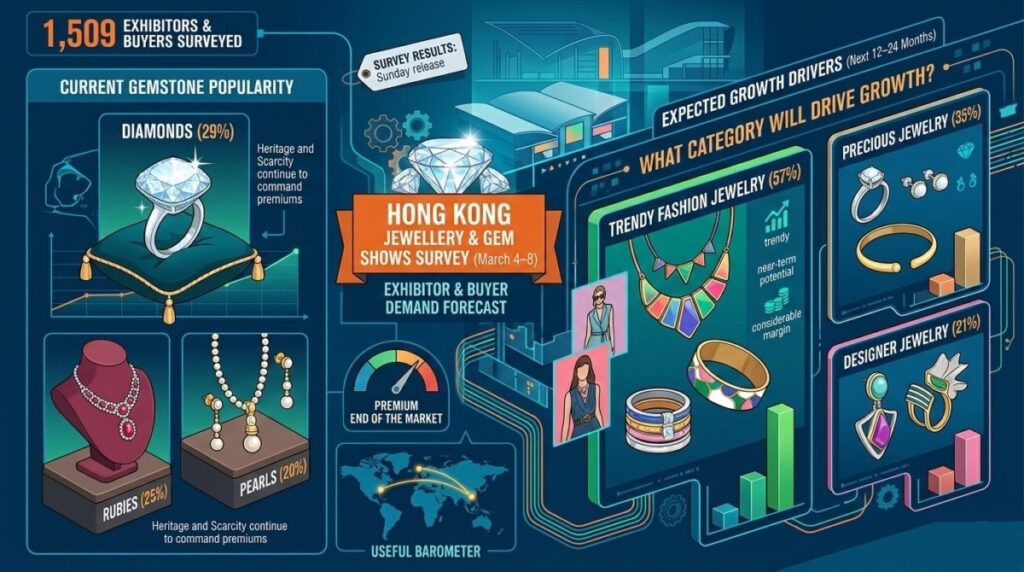
Diamonds led all gemstones in popularity at 29%, with rubies second at 25% and pearls third at 20%

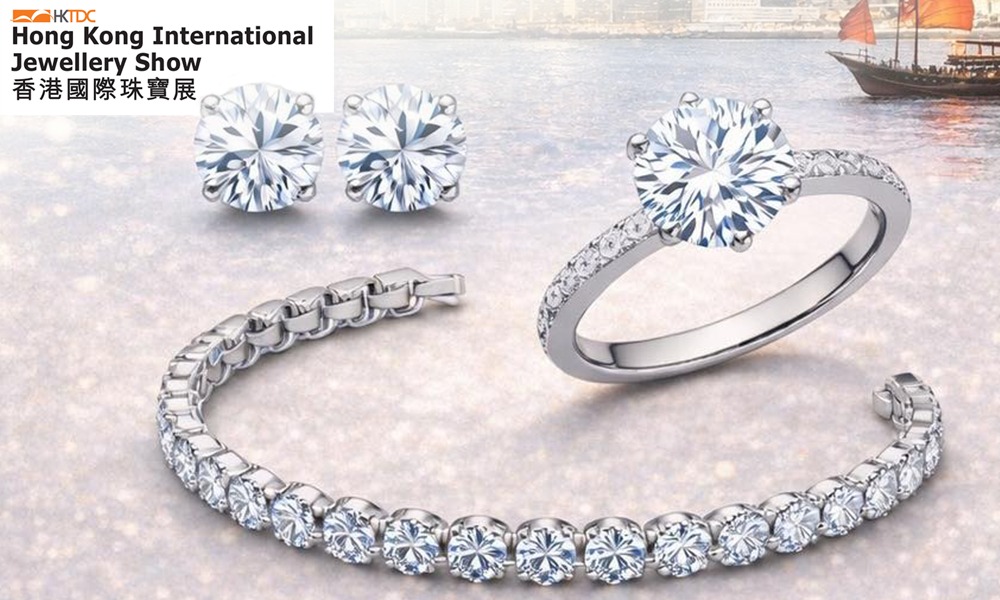
Diamonds retained their crown as the jewelry industry’s most coveted stone at this year’s Hong Kong trade shows, but the broader market narrative that emerged from the events was one of measured confidence rather than exuberance — a reflection of an industry navigating uncertain global economic currents.
The Hong Kong Trade Development Council, which organizes the Hong Kong International Jewellery Show and the companion Diamond, Gem & Pearl Show, surveyed 1,509 exhibitors and buyers across the two events, held March 4–8. The results, released Sunday, offer a useful barometer of where the trade believes demand is heading.
Diamonds led all gemstones in popularity at 29%, with rubies second at 25% and pearls third at 20% — a ranking that broadly tracks with the premium end of the market, where heritage and scarcity continue to command premiums. Yet the more telling signal may lie in what category exhibitors expect to drive growth: trendy fashion jewelry, cited by 57% of respondents as having the strongest near-term potential, outpaced precious jewelry at 35% and designer jewelry at 21% by a considerable margin.
That gap matters. Fashion jewelry — typically lower price points, faster turnover, more accessible to younger consumers — suggests the industry is hedging, cultivating a broader customer base even as it maintains its traditional focus on high-value stones and metals. Yellow gold reinforced that theme, cited by 40% as the most popular precious metal, benefiting in part from sustained investor and consumer interest in gold as both adornment and store of value.
The Hong Kong government’s budget, released earlier this year, may lend additional support. Authorities outlined plans to strengthen the city’s position as an international gold-trading hub — a policy signal the HKTDC noted could add momentum to the local jewelry market at a time when the city is working to reassert its role as a premier commercial gateway.
On the demand side, respondents identified Korea, ASEAN countries, mainland China, Taiwan and Australia as markets with meaningful growth potential over the next two years — a geographic spread that underscores Asia’s continued centrality to the global jewelry trade even as Western luxury demand has shown signs of softening.
The mood among survey participants was cautious rather than buoyant. Nearly half — 49% — expected overall industry sales to hold steady, while 44% anticipated improvement over the next one to two years. That combination speaks to an industry that has absorbed recent shocks but is not yet prepared to declare a clear recovery. With roughly 80,000 buyers attending the two shows in total, the events themselves suggest the trade remains active and engaged, even if dealmakers are keeping their expectations grounded.


DiamondBuzz
De Beers Group Sets Out Portfolio and Organisational Actions to Support Long-Term Value Creation
Company outlines strategic cost optimisation, portfolio streamlining and operational changes to strengthen resilience while positioning for long-term growth in the natural diamond industry.

De Beers Group is advancing delivery of its business streamlining by setting out a number of planned portfolio and organisational changes to ensure an efficient cost base that strengthens resilience in the near-term while enhancing future competitiveness and retaining optionality as industry conditions improve.
Since 2024, De Beers has been streamlining its business in line with its Origins strategy to reduce costs, divest non-core assets and prioritise investment in activities that create the most value. Significant progress has been made, with more than $100 million of annual overhead costs removed from the business, the sale or closure of a number of non-core assets and significant capital and cost reconfigurations to asset expansion projects.
Simultaneously, De Beers has reinvested in natural diamond category marketing to support the industry’s efforts to grow natural diamond demand, launching new large-scale campaigns and collaborating with key stakeholders across the value chain to foster industry-wide investment. Global consumer demand for natural diamond jewellery returned to growth in 2025, while natural diamond sales increased across US independent jewellers in 2025 and into Q1 2026, led by higher value diamonds and those promoted by De Beers’ Desert Diamonds marketing campaign.
On the supply side, global rough diamond production is now decreasing, with several producers closing mines during 2026. Whilst the increasing rarity of diamonds and the emerging signs of improvement in consumer demand are likely to support longer-term value creation, rough diamond trading conditions are expected to remain challenging in the near-term due to cyclical and industry-specific factors.
Consistent with recent actions to improve business resilience, De Beers intends to pause production at the Venetia mine in South Africa for two years to reduce costs while also rephasing capital expenditure on its underground project. This will involve critical infrastructure investment to enhance the capacity and efficiency of the mine, with the intention to support future production growth as business and industry conditions improve.
De Beers is engaging with stakeholders in accordance with relevant requirements and the company’s values as it moves through this process, and will both support impacted employees and continue to invest in its community and Social and Labour Plan commitments.
This proposed action at Venetia Mine follows the decision earlier this year to pause the Tuzo Phase 3 expansion project at the Gahcho Kué Mine in Canada.
In parallel, De Beers plans to reconfigure its global operating model to refocus and prioritise resources on the core operational businesses and reduce its central corporate cost base.
Al Cook, CEO of De Beers Group, said:

“In line with our commitment to focus and streamline our business, we are making a number of changes to De Beers to ensure greater business resilience in the near-term, while supporting long-term value creation. We recognise the protracted challenging conditions as the diamond industry evolves, though we are encouraged by signs of consumer demand growth in the US and beyond, particularly in higher quality diamonds.
Global rough diamond supply is falling, bringing more support to the market. The changes we are making to our business are focused on underpinning our efficiency now and into the future, favourably positioning De Beers in its leadership role.”
De Beers Group will maintain current production levels through its other operations, and previous production guidance remains unchanged.



Regal Jewellers appoints Vijay Sethupathi and Simran as brand ambassadors for Tamil Nadu

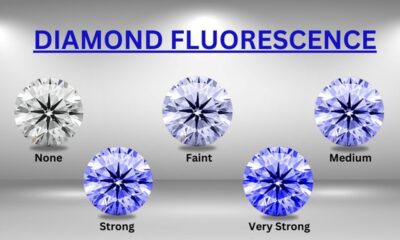
Fluorescent Diamonds: GIA to Introduce Clearer Guidance

India’s Consul General to Dubai, Shri V V Reddy, Interacts with BDB Committee
Fluorescent Diamonds: GIA to Introduce Clearer Guidance
Regal Jewellers appoints Vijay Sethupathi and Simran as brand ambassadors for Tamil Nadu
India’s Consul General to Dubai, Shri V V Reddy, Interacts with BDB Committee
-
 International News12 hours ago
Fluorescent Diamonds: GIA to Introduce Clearer Guidance
-
 GlamBuzz12 hours ago
Regal Jewellers appoints Vijay Sethupathi and Simran as brand ambassadors for Tamil Nadu
-
 National News13 hours ago
India’s Consul General to Dubai, Shri V V Reddy, Interacts with BDB Committee
-

 National News13 hours ago
Shankesh Jewellers Ltd. Unveils New Corporate Office at Kalbadevi Road, Mumbai
