
National News
Gold price surges past Rs 1 Lakh/ 10 gm


In a landmark moment for the Indian bullion market, gold prices have surged past the Rs 1 lakh mark per 10 grams, reinforcing the precious metal’s status as a safe-haven investment during times of economic uncertainty. On Friday, Mumbai’s renowned Zaveri Bazaar witnessed an unprecedented rise in the price of 24-carat gold, which now stands at Rs 1,01,000 per 10 grams—marking the highest ever recorded in India’s history.
This significant increase is largely attributed to a confluence of international and domestic factors. Market experts suggest that rising global gold prices, coupled with expectations of potential interest rate cuts in the United States and Europe, have played a pivotal role in boosting demand. Additionally, a weakening US dollar and ongoing geopolitical tensions, particularly in the Middle East, have further cemented gold’s appeal among investors seeking stability in volatile times.
While this surge may be welcomed by investors, it poses a financial challenge for everyday consumers, especially during the current wedding season. As gold becomes increasingly expensive, middle-class buyers may find it harder to afford new jewellery. In fact, several gold traders have reported a noticeable dip in demand for newly crafted ornaments, with many customers choosing instead to liquidate existing gold assets to take advantage of the high prices.
Looking ahead, the trajectory of gold prices remains uncertain. If global instability continues and investor demand holds strong, experts believe that prices could climb even higher. On the other hand, some analysts foresee a potential cooling-off period, citing the likelihood of profit booking by investors who may now choose to capitalize on the recent surge.
In conclusion, the current rally in gold prices underscores the metal’s enduring significance in global and domestic markets. Whether this trend will persist or see a temporary pullback remains to be seen, but for now, gold continues to shine brightly as both an investment and a symbol of security.







National News
IBJA, SAARTHI 360 Sign MoU To Launch ‘NextGen CEO: Leadership for the Future’
Executive Education Initiative To Equip The Next Generation Of Jewellery Manufacturers With The Leadership Capabilities, Strategic Perspective and Decision-Making Skills Required To Lead Family Businesses.

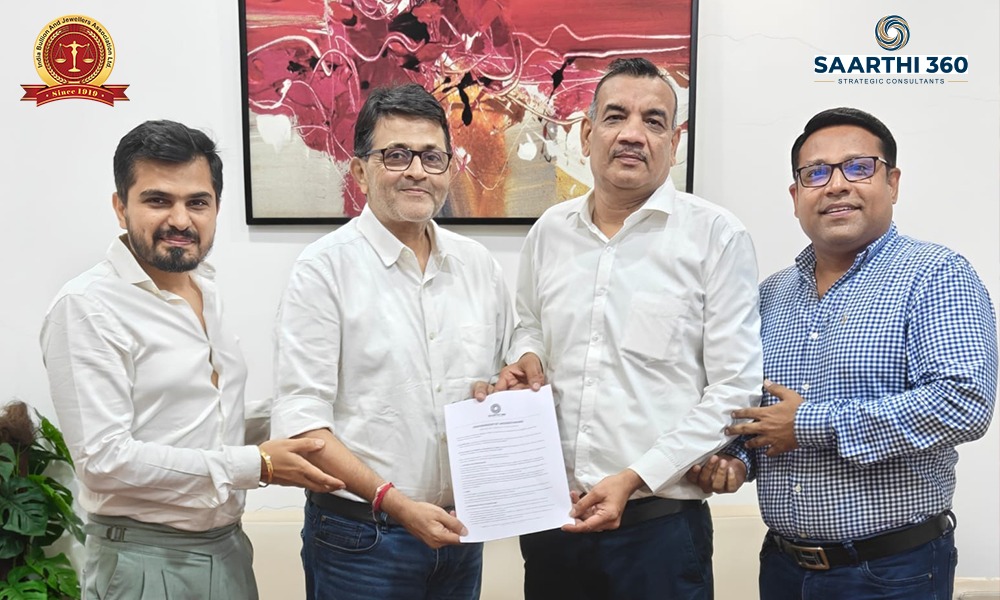
The India Bullion and Jewellers Association (IBJA) and SAARTHI 360 have signed a Memorandum of Understanding (MoU) to launch ‘NextGen CEO: Leadership for the Future’, an executive education programme designed to prepare the next generation of jewellery manufacturers for CEO and senior leadership roles in family-owned businesses.
The programme will help emerging leaders move beyond day-to-day operations by strengthening their strategic thinking, leadership judgement and managerial capabilities to improve organisational performance and support sustainable growth.
Building the Next Generation of Jewellery Business Leaders
Centred on ‘NextGen CEO — Becoming the CEO of a Family Jewellery Business’, the programme addresses leadership succession and executive decision-making in family-owned jewellery enterprises.
- Understanding the CEO’s role: Defining a CEO’s responsibilities and expectations in a jewellery business.
- Clarifying leadership and governance roles: Distinguishing among an owner, promoter, director, managing director and CEO.
- Strategic leadership versus daily operations: Moving from routine management to long-term business direction and priorities.
- Decision-making and strategic thinking: Applying structured frameworks to complex business situations.
- Managing stakeholders: Navigating relationships with family members, shareholders, employees and other stakeholders.
- Performance measurement: Using a CEO dashboard to monitor performance and support informed decisions.
- The first 100 days as CEO: Establishing priorities for the transition into executive leadership.
- Second-generation leadership challenges: Addressing succession, authority, accountability and organisational change.
- Ethics and integrity: Building trust through responsible leadership, sound governance and ethical decision-making.
Surendra Mehta, National Secretary, IBJA, said:
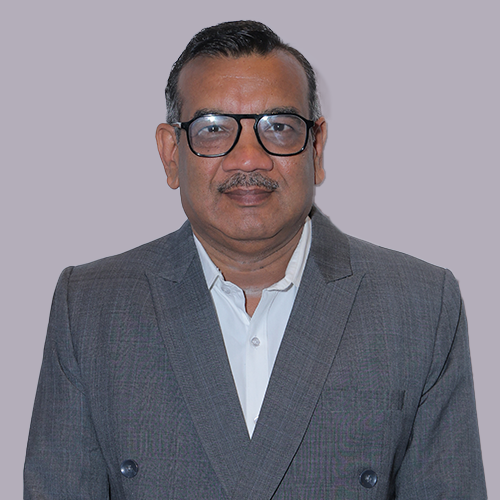
“Family-owned jewellery businesses play a significant role in India’s gems and jewellery industry. As these businesses grow and prepare for generational transitions, developing capable and confident future leaders becomes increasingly important. Through this initiative, we aim to help the next generation build the clarity, discipline and leadership capabilities needed to take their businesses forward while preserving the strengths of their family legacy.”
Binit Bhatt, Partner, SAARTHI 360, said:
“Becoming a CEO is about much more than inheriting a title. It requires a fundamental shift in mindset—from managing day-to-day operations to setting direction, making informed decisions, building accountability and earning the confidence of family members, employees and other stakeholders. The NextGen CEO programme is designed to equip emerging leaders with practical frameworks and perspectives that they can apply to the realities of their own businesses.”
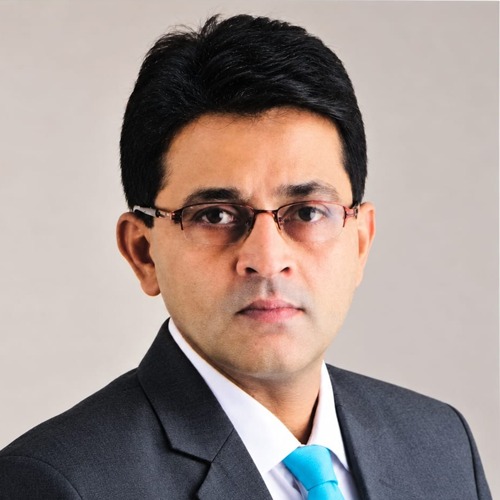
Hitesh Khandelwal, Partner, SAARTHI 360, said:
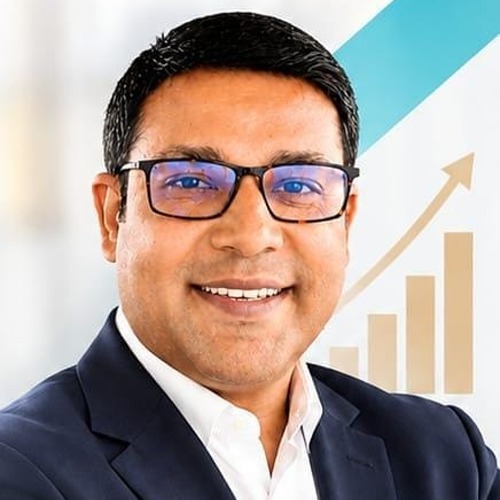
“Jewellery businesses are navigating an important generational transition, where preserving a strong legacy must go hand in hand with professional management and strategic thinking. Through NextGen CEO, we aim to help emerging leaders develop the confidence, capabilities and business perspective required to lead effectively, drive sustainable growth and prepare their organisations for the future.”



Gargi By P N Gadgil & Sons Invites Women To #GETNOTICED This Diwali In New Campaign With Mithila Palkar

IBJA, SAARTHI 360 Sign MoU To Launch ‘NextGen CEO: Leadership for the Future’

Jos Alukkas Unveils New Website For A Seamless Online Jewellery Shopping Experience

Dhanteras Shopping Guide 2026:Gold, Silver, Diamonds & Festive Jewellery Trends To Watch

The Solenne Collection: A Celebration Of Diwali By Bharti Bangur Fine Jewels

From Diya Puja To Diwali Soirées: Jewellery Designed To Go Beyond The Festive Season
-
 JB Insights4 days ago
Dhanteras Shopping Guide 2026:Gold, Silver, Diamonds & Festive Jewellery Trends To Watch
-
 BrandBuzz5 days ago
The Solenne Collection: A Celebration Of Diwali By Bharti Bangur Fine Jewels
-
 BrandBuzz5 days ago
From Diya Puja To Diwali Soirées: Jewellery Designed To Go Beyond The Festive Season
-
 National News5 days ago
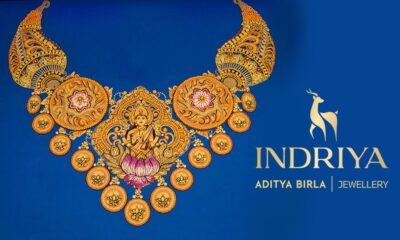
Indriya, Aditya Birla Jewellery Unveiled India’s Largest Sustainable Jewellery Rangavalli
