International News
Gold price consolidation above $3,200 amid mixed us inflation data

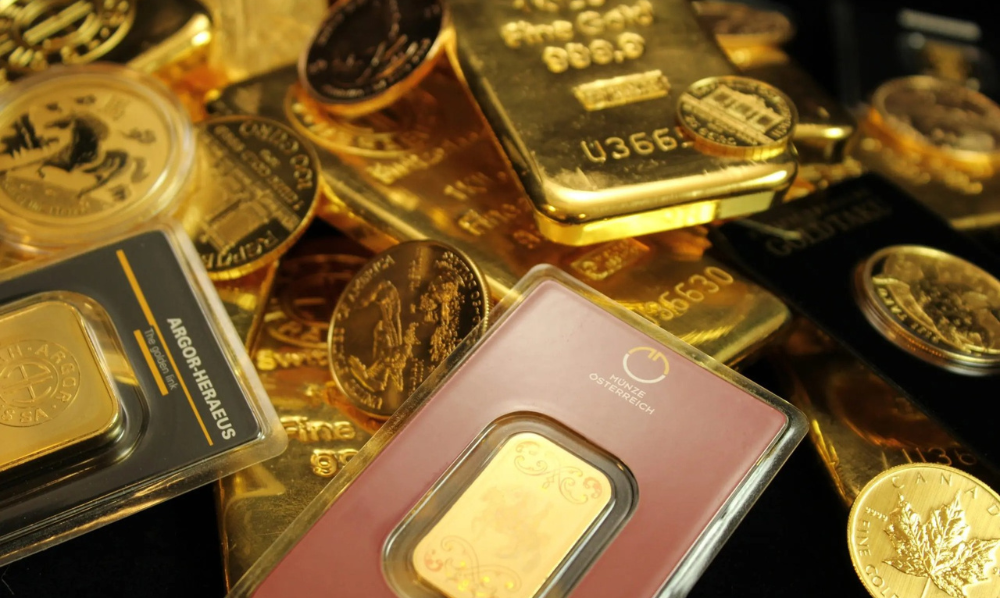
Gold is consolidating above the $3,200 level following the release of softer-than-expected US inflation data. While US Treasury yields are building bullish momentum, the US Dollar Index (DXY) has hit resistance and is trending lower. The interplay between inflation expectations, central bank policy, and geopolitical factors continues to shape gold’s near-term outlook.
Key Developments
1. Gold Price Action and Inflation Data
- Gold prices rebounded after a sharp drop, trading around $3,250 following the release of US CPI data for April, which came in below expectations (headline CPI rose 0.2% MoM vs. 0.3% expected; core CPI also up 0.2% MoM vs. 0.3% expected)
- The softer inflation print has eased pressure on the US dollar, supporting gold’s consolidation above $3,200, but high Treasury yields and improved risk sentiment have capped further gains.
2. US Treasury Yields and Dollar Index
- US 10-year Treasury yields edged higher, reaching 4.489%, reflecting persistent expectations of a restrictive Federal Reserve stance despite softer inflation1.
- The US Dollar Index (DXY) hit resistance at 101.90 and has continued lower, as market participants anticipate at least two Fed rate cuts in 2025, reaffirmed by the latest inflation data and Fed projections
3. Market Sentiment and Geopolitics
- Optimism over a US-China trade truce has improved risk appetite, reducing safe-haven demand for gold and contributing to its consolidation rather than a breakout
- Geopolitical risks and ongoing central bank gold purchases (notably by China, Poland, and the Czech Republic) are providing a floor for gold prices, limiting downside risk
4. Central Bank Activity
- The People’s Bank of China added 2 tonnes to its gold reserves in April, marking the sixth consecutive month of accumulation. Poland and the Czech Republic also increased their reserves, signaling sustained central bank demand.
Outlook
- Support and Resistance: Gold is holding key support above $3,200, with resistance seen near $3,300. The market remains sensitive to upcoming US PPI and retail sales data, which could provide further direction
- Fed Policy: Markets are pricing in two rate cuts by the Fed in 2025. Should inflation remain subdued, this could support further upside for gold, especially if Treasury yields stabilize or decline
- Geopolitical and Policy Risks: Any escalation in geopolitical tensions or renewed concerns over US fiscal policy could drive additional safe-haven flows into gold, potentially pushing prices higher
Analyst outlook
Goldman Sachs forecasts gold could rise another 8% in 2025, reaching $3,100 per ounce, with upside risks potentially pushing prices as high as $3,300 if central bank demand and policy uncertainty persist J.P. Morgan projects an average price of $3,675 per ounce by Q4 2025, with the potential to hit $4,000 in 2026, citing gold’s role as a safe haven amid declining confidence in US assets and the dollar








International News
WGC Report-Digital Gold: Unlocking a $700bn Opportunity
Yes—Digital Gold Could Become The Next Major Growth Market For Gold, But Only If The Industry Solves Trust, Access, Utility and Cost.


The World Gold Council (WGC) and Boston Consulting Group estimate that digital gold could unlock up to US$700 billion in latent demand over the long term, although this is a potential-demand estimate rather than a five-year forecast.
What “digital gold” means
The report defines digital gold as two related product categories: vaulted digital gold (digitally represented claims on allocated physical gold) and tokenised gold (blockchain-based tokens backed by physical gold). Together, they currently account for roughly US$45–55 billion, less than 1% of the global gold market, which the WGC values at about US$13 trillion.
Momentum is nonetheless visible. Tokenised gold has grown about fivefold since late 2024 to around US$6 billion, while cumulative spot trading volumes exceeded US$90 billion in Q1 2026—more than during all of 2025.
The $700bn opportunity
The headline figure represents the additional demand that could emerge if the main barriers to adoption were removed at scale. Nearly nine in ten surveyed retail investors said they would consider digital gold under the right conditions, based on a survey of more than 12,000 investors and interviews with 20 industry experts.
The global digital-gold market—currently valued at US $ 45–55 billion—is positioned for significant expansion. In their base-case outlook, the market is projected to grow at an annual rate of approximately 27%, reaching US $ 160–170 billion by 2031. Under a bull-case scenario, market valuation could climb even higher, reaching US $ 270–280 billion over the same period. Furthermore, if key adoption barriers such as regulatory clarity, pricing, and platform trust are fully addressed, the long-term latent demand for digital gold could unlock up to US700 billion.
Genuinely new gold demand by 2031. About US$95 billion, net of displacement
The crucial distinction is that US$700bn is not a market-size prediction for 2031. It is the theoretical upside if trust, distribution, product usefulness and pricing improve sufficiently; the base case is far more conservative.
Four barriers to adoption
Trust is the decisive barrier. Nearly four in five investors prioritise trusting the provider, and they want proof that products are safe, legitimate, transparently backed and redeemable for physical gold; clearer regulation and consumer protection are also central.
Access matters because familiar distribution channels dramatically increase uptake. In markets such as China, India and Indonesia, where digital gold is embedded in super-apps, payment platforms and banking apps, penetration is up to seven times higher than in markets without such channels.
Utility could transform gold from a passive store of value into a usable financial asset. The most attractive new feature is yield generation through lending or collateral use, followed by payments functionality.
Cost remains a prerequisite. Digital gold must be price-competitive with physical bullion and gold ETFs; an uncompetitive price is the second most common barrier cited by investors.
Why it may create new demand
The report argues that digital gold is more likely to expand the gold market than merely shift investors from ETFs, coins or bars. About 65% of latent demand comes from people who do not yet own gold, and 52% of current digital-gold investors held no gold before their first digital purchase.
This makes digital gold a potential on-ramp: among those first-time digital-gold buyers, 92% subsequently bought other forms of gold. Even after allowing for some switching between gold formats, the base case implies around US$95 billion of genuinely new demand by 2031.
Who will drive growth
Younger investors are the immediate growth engine. Awareness reaches 50% among 25–34-year-olds, versus 23% among those aged 55 and older, and younger cohorts are twice as likely to say they would invest if entry barriers were addressed.
This aligns with the broader tokenisation of finance. As blockchain-based investment products become more mainstream, gold’s physical backing may give it a credibility advantage over purely digital assets—provided issuers can demonstrate custody, redemption rights and regulatory compliance.
Could it be the next major gold growth market?
Potentially, yes—but conditionally. The case for digital gold is strong because it combines gold’s established safe-haven and store-of-value role with digital accessibility, fractional ownership, faster transferability and possible new financial uses. The WGC’s own base case implies a market roughly three times its current size by 2031.
However, digital gold will remain a niche if providers cannot deliver:
- Transparent, auditable proof that tokens are fully backed by physical gold.
- Simple, legally robust redemption into physical gold or cash.
- Clear regulation and investor protections.
- Distribution through mainstream banking, payments and investment apps.
- Fees competitive with ETFs and physical bullion.
- Useful features such as collateral, lending or payments—without compromising safety.
Assessment
Digital gold is best viewed as a high-potential distribution and product innovation, not an automatic replacement for physical gold or ETFs. Its biggest contribution may be bringing first-time, younger and digitally native investors into gold, then encouraging them to hold other gold formats as their allocations mature.
If the industry establishes trusted infrastructure and interoperable standards, the US$700bn latent-demand estimate becomes a plausible long-run ceiling. If not, the market may still grow, but likely toward the report’s bear-case trajectory of roughly US$70–80 billion by 2031, driven mainly by wealth growth rather than conversion of untapped demand.



Tradition Meets Everyday Style: Mangalsutras For Karva Chauth From Candere By Kalyan Jewellers

So/Facet Raises ₹10 Crore Led By Sauce To Build The Diamond Brand That Young India Has Been Missing

Festive & Wedding Season Trade Outlook: Resilience, Innovation, and Growth

BHIMA Jewellery Receives Prestigious IAGES Accreditation

JGP Jewellers Opens Its 26th Store In Nipani, Marking Its Entry Into Karnataka
So/Facet Raises ₹10 Crore Led By Sauce To Build The Diamond Brand That Young India Has Been Missing
-
 National News7 hours ago
BHIMA Jewellery Receives Prestigious IAGES Accreditation
-
 New Premises11 hours ago
JGP Jewellers Opens Its 26th Store In Nipani, Marking Its Entry Into Karnataka
-
 National News5 hours ago
So/Facet Raises ₹10 Crore Led By Sauce To Build The Diamond Brand That Young India Has Been Missing
-
 JB Insights6 hours ago
Festive & Wedding Season Trade Outlook: Resilience, Innovation, and Growth