
DiamondBuzz
Rio Tinto shuts Diavik mine operations after 23 years
Diavik has been an inspired collaboration between a mining company and Indigenous partners

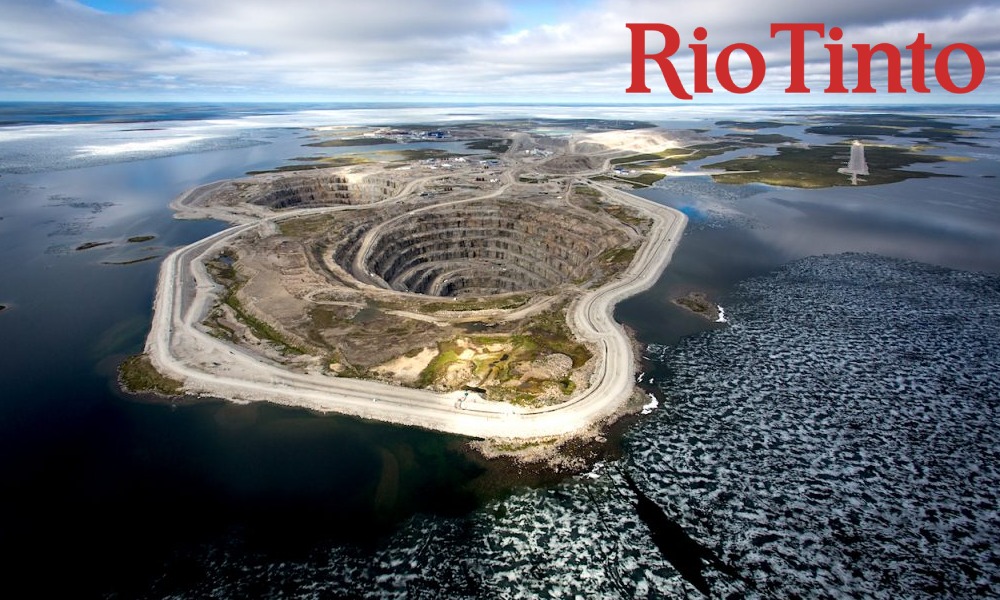
After 23 years of operations and more than 150 million carats of rough diamonds produced before exhausting its economic reserves, Rio Tinto’s Diavik diamond mine in the Northwest Territories of Canada has celebrated its final day of production.
Rio Tinto Iron & Titanium and Diamonds MD Sophie Bergeron said: “Forty years ago there were very few people who believed there were diamonds in Canada – even fewer could have foreseen how the Diavik story would unfold. To arrive at this milestone has required vision, courage and determination to overcome significant challenges to mine diamonds beneath a frozen lake in one of the world’s most remote and pristine ecosystems.”
“Today, Diavik’s influence stretches into many spheres and over many continents and I am very proud to acknowledge all those people who have contributed to the discovery and development of the mine and the production and marketing of some of the finest diamonds the world has ever seen.”
Diavik mine, comprising four pipes, was discovered in 1991, beneath Lac de Gras, 220 kilometres south of the Arctic Circle. Mining began in 2003 and utilising both open pit and underground mining methods, has produced predominantly white gem quality diamonds and a small proportion of rare yellow diamonds.
Indigenous Government Organisations, government representatives and other stakeholders attended a celebration at the mine, signalling the formal completion of production at Diavik.
Diavik has been an inspired collaboration between a modern mining company and Indigenous partners with an enduring legacy of socioeconomic benefits for the North. RT looks forward to continuing to respectfully reclaim the land in line with our commitments to, and in partnership with, the Government of the Northwest Territories and Indigenous partners.
Planning for Diavik’s closure has been ongoing, commencing before the mine even began production, with closure goals covering safety, land use, landforms, water, biodiversity, community capacity and resource development. Closure activities will extend to 2029, followed by a period of post-closure monitoring.
The final production of Diavik rough diamonds will be polished and sold through 2026 and beyond by Rio Tinto’s international network of customers, including its long-standing Select Diamantaires.


DiamondBuzz
Botswana Looks Beyond Rough Diamond Sales, Eyes U.S. Jewelry Market
The Duty Exemption By US Presents An Opportunity For Domestic Jewelry Manufacturers In Gaborone To Bypass Traditional Middle-Market Hubs and Establish A Direct Pipeline To American Consumers


Grappling with a painful downturn in global rough-diamond demand, Botswana is pivoting its economic strategy: expanding up the supply chain directly into American retail shelves while leveraging its resource wealth to fund conservation and diversification.
Speaking on the sidelines of New York Climate Week, Bogolo Joy Kenewendo, Botswana’s Minister of Minerals and Energy, highlighted the southern African nation’s plan to capitalize on a 0% import-tariff rate to the U.S. market. The duty exemption presents an opportunity for domestic jewelry manufacturers in Gaborone to bypass traditional middle-market hubs and establish a direct pipeline to American consumers.
shift The push into value-added manufacturing comes as the world’s top diamond producer by value navigates a broader structural Diamond revenues have long formed the bedrock of Botswana’s post-independence balance sheet, underwriting universal secondary education and tuition-free university funding. However, recent market volatility has underscored the vulnerabilities of a mono-sectoral economy.
Under the Botswana Economic Transformation Programme (BETP)—an initiative spearheaded directly by President Duma Boko and his vice president—the government is directing resources toward manufacturing, agriculture, and broader mining sectors to reduce its heavy reliance on rough diamond sales.
To support its luxury exports, Botswana is recalibrating its brand narrative around origin, environmental stewardship, and social impact. The country recently announced a five-year extension of the “Okavango Eternal” partnership alongside De Beers Group and the National Geographic Society. The initiative aims to protect the ecological integrity of the Okavango River Basin while tying diamond purchases to conservation efforts.
With De Beers currently facing an impending ownership change, officials remain optimistic that any capital restructuring could bring additional funds into Botswana to accelerate its domestic economic transition.



GJS 2026 Diwali Edition Concludes On A High Note With Record Sales

GJEPC Launches UNNATI: Powering Women In GJ Sector To Drive Industry Growth Towards Viksit Bharat

Divine Solitaires and SGL Launch The Know Your Diamond Zone At GJS Diwali Edition 2026
GJEPC Launches UNNATI: Powering Women In GJ Sector To Drive Industry Growth Towards Viksit Bharat

KEYA By Adbhut Brings Wearable Art and Indian Craftsmanship To Delhi Art Weekend 2026
Divine Solitaires and SGL Launch The Know Your Diamond Zone At GJS Diwali Edition 2026
-
 National News13 hours ago
GJEPC Launches UNNATI: Powering Women In GJ Sector To Drive Industry Growth Towards Viksit Bharat
-
 National News15 hours ago
KEYA By Adbhut Brings Wearable Art and Indian Craftsmanship To Delhi Art Weekend 2026
-
 National News14 hours ago
Divine Solitaires and SGL Launch The Know Your Diamond Zone At GJS Diwali Edition 2026
-

 National News17 hours ago
Titan, Kalyan, Malabar, Senco and Indriya Lead 54 Champions Crowned At The First India International Jewellery Awards
