
JB Insights
GJC successfully concludes the 7th edition of the Indian Gem and Jewellery Show (GJS April) 2025


The All India Gem and Jewellery Domestic Council (GJC) proudly concluded the 7th edition of its flagship event, the India Gem and Jewellery Show (GJS), held from 4th to 7th April, 2025 at the prestigious Jio World Convention Centre, Mumbai. Branded as #HamaraApnaShow, GJS April 2025 which brought together industry leaders, renowned jewellers, and stakeholders from across the globe to celebrate and showcase the best of India’s gems and jewellery sector.
The grand opening ceremony of GJS April 2025 event was inaugurated by Pankaj Bhoyar, Hon’ble Union Minister of Consumer Affairs, Food & Public Distribution, and Minister of New and Renewable Energy, as the Chief Guest. His presence marked the greater significance of the gems and jewellery industry in the region which contributes significantly to the state economy.
Several distinguished guests and dignitaries were present on the occasion, including Guests of Honour Varghese Alukkas, Managing Director, Jos Alukkas Group; Paul Alukkas, Managing Director, Jos Alukkas Group; and Mallika Manoj Grandhi, Chairperson and Managing Director, Manoj Vaibhav Gems ‘N’ Jewellers Ltd, among others. Special Guests included Aksha Mohit Kamboj, National Vice President, IBJA, and Rajiv Jain, Secretary, JJS. GJC officials present on the occasion were Rajesh Rokde, Chairman, GJC; Avinash Gupta, Vice Chairman, GJC; and Saiyam Mehra, Convener, GJS.
The GJS April 2025 show was timed strategically to support jewellery demand ahead of Akshaya Tritiya and following Gudi Padwa, coinciding with the wedding season. The show hosted over 600 exhibitors across 700+ booths, attracted 15,000 visitors, and accommodated more than 2,500 room-nights for hosted buyers. Retailers benefitted from a streamlined process to procure jewellery from a wide range of manufacturers and wholesalers, all under one roof.
Pralhad Joshi, Hon’ble Union Minister of Consumer Affairs, Food & Public Distribution, and Minister of New and Renewable Energy, announced the launch of the National Hackathon — a joint initiative by the Bureau of Indian Standards (BIS) and the All India Gem and Jewellery Domestic Council (GJC). The National Hackathon aims to create a dynamic platform that invites bright, young minds to develop scalable, cost-effective technological solutions for the jewellery industry.
As part of GJS 2025, the Mindspeak Sessions brought together industry leaders, innovators, and policy influencers for a series of high-impact discussions. From navigating global trends to leveraging new-age technologies, these sessions offered game-changing insights that are shaping the future of the jewellery business
In a proud moment for the industry, Bhima Jewellers marked its 100-year milestone with the launch of a commemorative book chronicling its remarkable journey. The publication celebrates a century of craftsmanship, trust, and excellence, and stands as a testament to the legacy of one of India’s most iconic jewellery brands.
Capping off the festivities, the much-awaited GJC Nite provided a glamorous platform for industry stakeholders to unwind, connect, and celebrate their shared passion for excellence. From strategic networking to entertainment and camaraderie, GJC Nite truly reflected the vibrant spirit of the Indian gem and jewellery industry.
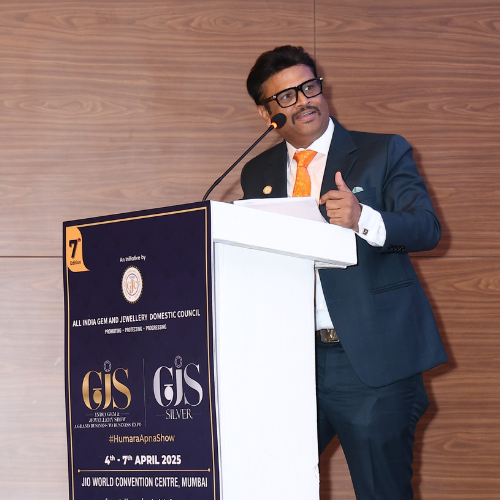
Rajesh Rokde, Chairman, GJC, stated, “GJS has once again demonstrated the immense potential of India’s gems and jewellery sector on the regional stage. With every edition, we aim to strengthen the industry’s growth trajectory by fostering innovation, trade collaborations, and skill development. We are delighted with the overwhelming response to GJS 2025 and are committed to making the next edition even more impactful.”
Avinash Gupta, Vice Chairman, GJC, remarked, “As India continues to be a leader in the global gems and jewellery market, GJS serves as a vital catalyst for innovation, sustainability, and business excellence. GJC looks forward to welcoming participants to the 8th edition of GJS, promising an even grander showcase of India’s rich heritage and modern advancements.”

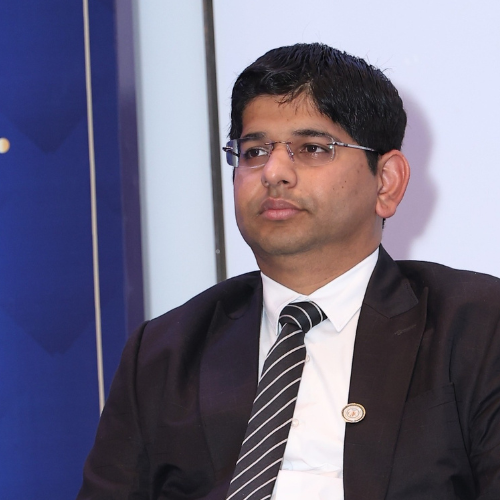
Saiyam Mehra, Convenor, GJS, said “The GJS April 2025 Show offers an excellent platform for jewellery manufacturers, traders, wholesalers, retailers, artisans, and others in the value chain to connect with emerging talents and creative minds. The GJS April 2025 Show, the 7th edition of #HamaraApnaShow, will be a premier platform for sourcing new designs and trends, catering to jewellers of all sizes. Highlights include a state-of-the-art showcase of innovative jewellery, the Gala Evening GJC Nite featuring a fashion show with top creations and celebrities, and a Mind Speak seminar.”
GJC is organising the next edition of GJS (Diwali) edition from 16th – 19th September, 2025.








JB Insights
Gold Rate-Locking and Advance-Booking Ahead Of Dhanteras 2026
The Strategy Is To Mitigate The Impact Of Heightened Price Volatility and Recent Bullion Price Corrections On Consumer Sentiment


Ahead of Dhanteras on November 6, 2026, Indian jewellery retailers are aggressively leveraging advance-booking and gold rate-locking schemes to mitigate the impact of heightened price volatility and recent bullion price corrections on consumer sentiment.
Following subdued sales during Dussehra, retailers are banking on the dual convergence of Dhanteras and the upcoming wedding season to drive robust revenue recovery. Leading national and regional brands report optimistic projections, bolstered by strong interest in both heavy bridal pieces and budget-conscious solutions like lightweight jewellery and old-gold exchanges.
1. Market Context & Bullion Price Trends
Recent gold and silver trading ranges reflect elevated price levels driven by ongoing global geopolitical uncertainty, sustained central-bank purchases, and fluctuations in international currency markets.
- Gold Prices: Standard 10-gram rates are hovering between Rs 1.42 lakh and Rs 1.44 lakh.
- Silver Prices: Standard 1-kilogram rates range from Rs 1.95 lakh to Rs 1.96 lakh.
While high prices have created initial friction, recent price corrections have provided an entry window for consumers, encouraging advance commitments ahead of expected festive demand spikes.
Retail Outlook & Strategic Schemes
To capitalize on festive tailwinds and hedge consumers against potential price surges, major retailers—including Kalyan Jewellers, Joyalukkas, Senco Gold & Diamonds,—have deployed price-protection mechanisms.
Rate-Locking Mechanisms
Advance-booking schemes allow buyers to reserve jewellery by locking in current gold prices. If prices rise before final delivery, consumers pay the lower locked-in rate; if prices decline, consumers benefit from the lower market price at the time of final settlement.
Consumer Buying Patterns & Product Demand
Rising gold rates are bifurcating consumer preferences into two distinct buying trends:
High-Value Bridal & Heritage Segment
Wedding-related purchasing remains a resilient anchor for the market. Consumers continue to allocate budgets toward high-ticket items, including:
- Heavy Gold Pieces: Essential traditional bridal sets.
- Heritage & Polki Work: Intricate traditional craftsmanship.
- Diamond Jewellery: Increasingly favored in modern bridal trouseaus.
Budget Management & Value Optimization
To offset high unit costs for non-wedding or casual festive purchases, consumers are adjusting their buying strategies:
- Lightweight Jewellery: Lower overall grammage to fit fixed budget caps.
- Old-Gold Exchanges: Recycling existing family holdings into contemporary designs.
Key Insight: Senco Gold reported that old-gold exchanges now account for more than 50% of its overall business, underscoring exchange programs as the single most critical driver of sales enablement during high-price regimes.
Operational Outlook & Risks
The immediate business outlook for Indian jewellery retailers hinges on execution during the final days leading up to Dhanteras and the subsequent wedding peak:
- Conversion Metrics: The final festive revenue numbers will depend on the successful conversion rate of advance bookings into finalized, fulfilled sales.
- Margin Protection: While rate-locking drives volume, unhedged price movements pose minor margin risks for smaller retailers lacking robust bullion hedging practices.
- Inventory Management: Retailers must balance inventory stocks between high-margin bridal inventory and fast-moving, lightweight everyday wear.
Indian jewellery retailers are entering the Dhanteras 2026 period with high expectations, relying on structural price-protection tools to overcome earlier seasonal slumps. As advance bookings build momentum, old-gold recycling and rate-locking schemes are effectively bridging the gap between record-high bullion prices and strong consumer appetite for seasonal gold accumulation.



Gold Rate-Locking and Advance-Booking Ahead Of Dhanteras 2026

888.88-Carat Infinity Diamond Unveiled At Dubai Diamond Conference 2026

LGD Industry Launched Diamond Producers Council

Dhanteras Shopping Guide 2026:Gold, Silver, Diamonds & Festive Jewellery Trends To Watch

The Solenne Collection: A Celebration Of Diwali By Bharti Bangur Fine Jewels

From Diya Puja To Diwali Soirées: Jewellery Designed To Go Beyond The Festive Season
-
 JB Insights4 days ago
Dhanteras Shopping Guide 2026:Gold, Silver, Diamonds & Festive Jewellery Trends To Watch
-
 BrandBuzz4 days ago
The Solenne Collection: A Celebration Of Diwali By Bharti Bangur Fine Jewels
-
 BrandBuzz4 days ago
From Diya Puja To Diwali Soirées: Jewellery Designed To Go Beyond The Festive Season
-
 National News4 days ago
Indriya, Aditya Birla Jewellery Unveiled India’s Largest Sustainable Jewellery Rangavalli
