
DiamondBuzz
CRISIL RATINGS: Diamond Exports dip ~10% this fiscal as tariffs take effect


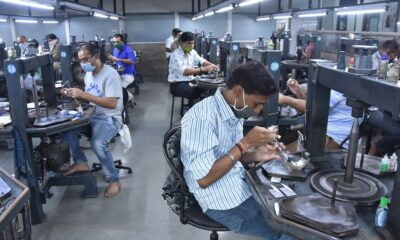
The 10% additional tariff levied by the US, which accounts for nearly a third of Indian natural diamond exports, will exacerbate the impact on Indian diamantaires from already-subdued demand and intensifying competition from lab-grown diamonds (LGDs), which closely resemble natural diamonds and cost much less. In the milieu, export revenues of diamantaires will decline ~8-10% in fiscal 2026.
That said, calibrated inventory management across the value chain will support realisations, thus helping reduce the decline in export revenues, and limit the erosion of operating margins, helping contain the players’ financial leverage and credit metrics.
A Crisil Ratings analysis of 43 diamantaires, accounting for nearly one-fourth of the industry revenues, indicates as much.
In fiscal 2025, the export volumes of natural diamonds remained constrained by lower demand from China and competition from LGD in the US. Although polishers pushed sales in the fourth quarter to avoid tariffs and price erosion was limited, revenues from natural diamond exports fell 17% to ~$13.3 billion.

Says Rahul Guha, Senior Director, Crisil Ratings, “This fiscal, realisations on natural diamonds are poised to rebound 3-4% amid limited inventory across the value chain as diamantaires are aligning their rough purchases with visibility in sales of polished diamonds. Additionally, production cuts by miners will curtail price erosion. This contrasts with LGD, whose prices may reduce from a tenth of the price of natural diamonds last fiscal to a twelfth in the current fiscal, resulting in a wider price gap between natural diamonds and LGD.”
The rising price gap, in turn, could shave a further 12-14% off natural diamond export volumes, marking a third consecutive year of weak demand after an aggregate degrowth of 32% in the last two fiscals. That will make it difficult for the natural diamond polishers to pass on any tariff-led price hikes to customers. For the record, India will remain the primary port of call for polishing diamonds.
Says Himank Sharma, Director, Crisil Ratings, “Natural diamond polishers, traditionally operating at thin margins of 4-5%, will have limited ability to absorb the tariff-induced price rise. As a result, miners and retailers may need to step in to absorb some of the price shocks. Consequently, we believe the operating margins of polishers may dip 20-30 basis points to 4.3-4.5% this fiscal.”

Credit profiles of diamantaires might witness some working capital respite as weak demand will lead to a further 5-7% cut in inventory levels across the value chain (after a 10-15% decline last fiscal). This will limit the need for debt-funded working capital, although receivables from export customers will remain monitorable amid tepid demand, geopolitical issues and global uncertainties.
As a result, diamantaires’ financial leverage – total outside liabilities to adjusted networth – and interest coverage will remain rangebound at ~0.8 time and ~2.5 times, respectively, this fiscal.
All said, slowing demand for natural diamonds in key geographies, intensifying competition from LGDs, potential revisions in tariffs and rising geopolitical tensions will bear watching.



DiamondBuzz
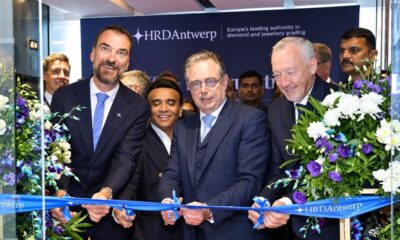
Belgian Prime Minister Bart De Wever opens expanded HRD Antwerp laboratory in Mumbai
HRD Antwerp is increasing its research capacity in Mumbai by 30%. The official opening, which takes place as part of a two-day visit by Prime Minister Bart De Wever to India, marks an important next step in the growth of HRD Antwerp in India
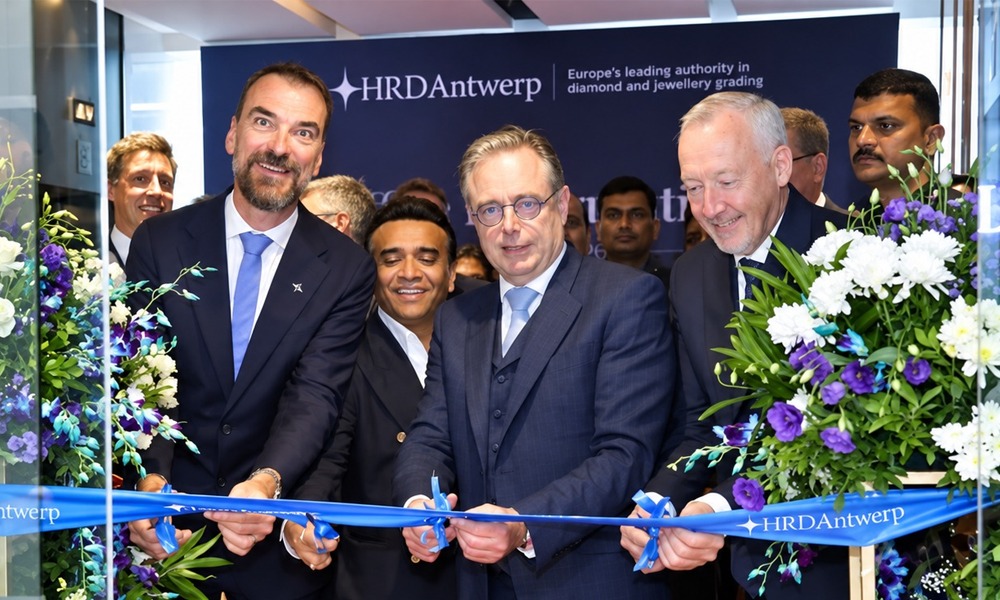
In the presence of Belgian Prime Minister Bart De Wever, HRD Antwerp, Europe’s leading authority in diamond and jewellery grading and a subsidiary of the Antwerp World Diamond Centre (AWDC), officially opened its renovated and significantly expanded laboratory in the Bandra Kurla Complex (BKC) in Mumbai, India. Thanks to the expansion, HRD Antwerp is increasing its research capacity in Mumbai by 30%. The official opening, which takes place as part of a two-day visit by Prime Minister Bart De Wever to India, marks an important next step in the growth of HRD Antwerp in India, one of the world’s leading centres for the trade and cutting of natural diamonds.
For HRD Antwerp, a grading report is not an administrative document but a guarantee of trust, transparency and authenticity. As an independent, neutral party between science, industry and consumer, HRD Antwerp is a worldwide guarantor of objective and reliable diamond and jewellery grading, a principle the organisation has upheld since its founding. HRD Antwerp was established in 1973 and has been active in India since 2012. Today it serves around 1,500 clients there, including jewellery manufacturers and retailers, as well as companies that produce and trade cut diamonds.
The Indian branch now accounts for 59% of HRD Antwerp’s total group revenue and is expected to grow by 15.4% this year, compared with a projected growth of 12.6% for the group as a whole. Jewellery grading is an important growth driver in this respect: as much as 47% of HRD Antwerp’s total revenue increase comes from that segment.
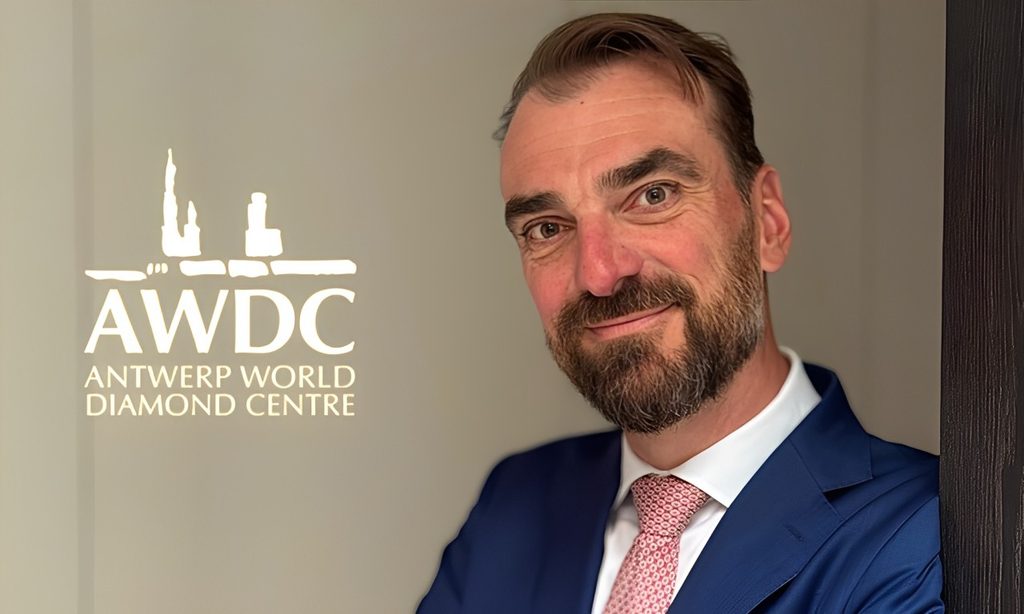
“As the authority in grading reports for natural diamonds and diamond jewellery, and in research into natural diamonds, we are already firmly established in India today”, says Paul De Wachter, CEO of HRD Antwerp. “India remains the world’s most important centre for diamond cutting. For a diamond laboratory such as HRD Antwerp, which provides cut natural diamonds with an independent and objective grading report, it is therefore essential to keep investing in this market.”
Thanks to the expansion, HRD Antwerp in Mumbai can now examine and grade up to 2,000 diamonds per day, a capacity increase of 30%. To support this additional capacity, HRD Antwerp is recruiting 40 additional employees to work full time. The investment underlines HRD Antwerp’s confidence in the Indian market and strengthens the longstanding cooperation between Belgium and India within the international diamond and jewellery sector.
During the opening, Prime Minister Bart De Wever was given a tour of the renovated office. He was shown the diamond grading process and was able to examine a diamond up close himself using a microscope. The demonstration was provided by HRD Antwerp’s Indian experts.
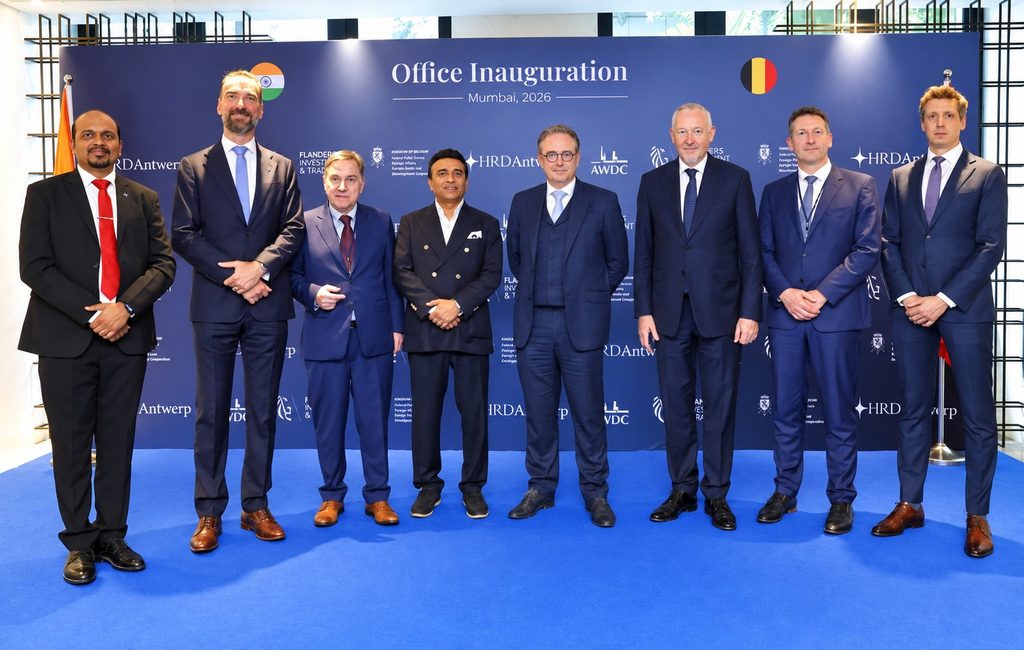
Alongside the Prime Minister, also present were Paul De Wachter, CEO of HRD Antwerp, Ramakant Mitkar, Managing Director of HRD Antwerp India, Chirag Shah, Vice Chairman of AWDC, Didier Vanderhasselt, Belgian Ambassador to India, and Frank Geerkens, Consul General of Belgium in Mumbai.
Paul De Wachter, CEO of HRD Antwerp: “The visit of our Prime Minister underlines the importance of cooperation between Belgium and India within the global diamond sector. India and Antwerp together form two indispensable links in the international diamond chain. With this expansion, we are investing not only in additional capacity, but above all in the future of our cooperation with the Indian diamond and jewellery sector.”
Bart De Wever, Prime Minister of Belgium wrote the following message in HRD Antwerp’s guestbook during his visit: ” Sicut adamas fulget, ita fiducia inter gentes monet. As a diamond shines, so trust endures between nations “



Belgian Prime Minister Bart De Wever opens expanded HRD Antwerp laboratory in Mumbai

Verlas Introduces the ‘Alyssa’ Collection in India, Bringing Modern Luxe Floral-Inspired Design to Lab-Grown Diamond Jewelry Crafted in Fine Gold

Gold rebounds,Silver reclaims Rs 2.33 lakh mark

Limelight Lab Grown Diamonds Inaugurates Showroom In Kalyan, Its 8th Exclusive Store MMR
Verlas Introduces the ‘Alyssa’ Collection in India, Bringing Modern Luxe Floral-Inspired Design to Lab-Grown Diamond Jewelry Crafted in Fine Gold
Belgian Prime Minister Bart De Wever opens expanded HRD Antwerp laboratory in Mumbai
-
 National News3 days ago
Limelight Lab Grown Diamonds Inaugurates Showroom In Kalyan, Its 8th Exclusive Store MMR
-
 BrandBuzz2 days ago
Verlas Introduces the ‘Alyssa’ Collection in India, Bringing Modern Luxe Floral-Inspired Design to Lab-Grown Diamond Jewelry Crafted in Fine Gold
-
 DiamondBuzz2 days ago
Belgian Prime Minister Bart De Wever opens expanded HRD Antwerp laboratory in Mumbai
-
 National News2 days ago
Gold rebounds,Silver reclaims Rs 2.33 lakh mark
