
National News
Deccan Gold Mines reports Rs 14.45 cr net profit in the quarter ended March 2025


Net profit of Deccan Gold Mines reported to Rs 14.45 crore in the quarter ended March 2025 as against net loss of Rs 67.40 crore during the previous quarter ended March 2024. Sales declined 99.70% to Rs 0.01 crore in the quarter ended March 2025 as against Rs 3.36 crore during the previous quarter ended March 2024.
For the full year,net loss reported to Rs 32.80 crore in the year ended March 2025 as against net loss of Rs 63.69 crore during the previous year ended March 2024. Sales rose 11.37% to Rs 3.82 crore in the year ended March 2025 as against Rs 3.43 crore during the previous year ended March 2024.
Deccan Gold Mines, currently has its share price at ₹153.85. The stock has experienced fluctuations as of Jun 3 with a low of ₹147.1 and a high of ₹157.25 Over the past 52 weeks, the shares have seen a low of ₹85.3 and a high of ₹178.7.
Deccan Gold Mines share prices have risen from Rs14.04 five years ago to Rs ₹153.85 . In spite of no gold exploration or production in India yet , the share price has appreciated significantly.
Deccan Gold Mine recently acquired a 60% stake in Avelum Partners LLC in Kyrgyzstan and a 31.52% stake in Kalevala Gold Oy in Finland. These acquisitions are expected to add approximately 10 tonnes of potential gold resources to Deccan’s portfolio.







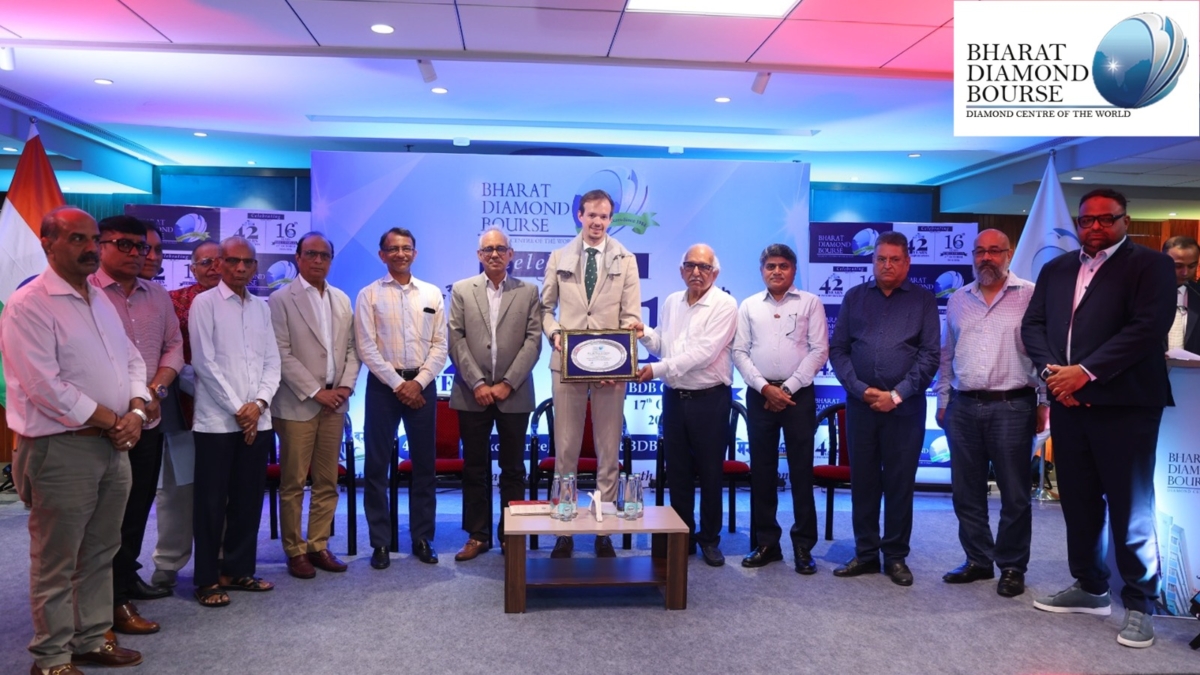
- Event marks 42 years of Incorporation and 16 years of Operations
- Recently-appointed Consul-General’s first visit to the Bourse helps strengthen a century-old bond
- Long service awards presented to outstanding employees
Bharat Diamond Bourse today marked 42 years of incorporation and 16 years since the commencement of operations at the BDB Complex in BKC with a special programme graced by H. E. Pierre Stverlynck – Consul General of Belgium in Mumbai as Chief Guest and a number of leading diamantaires.
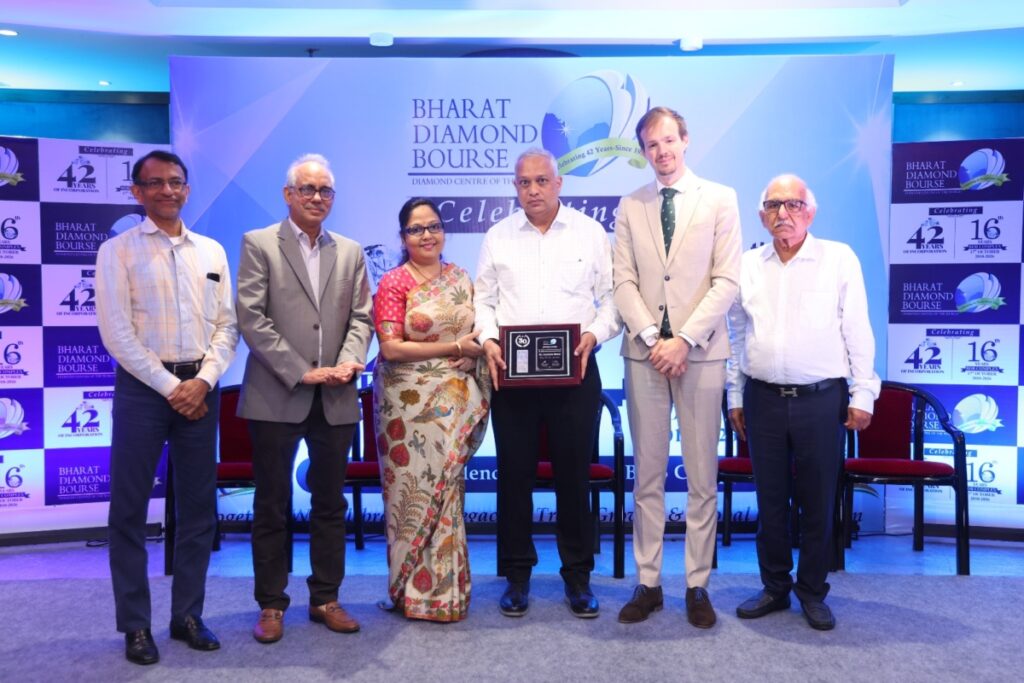
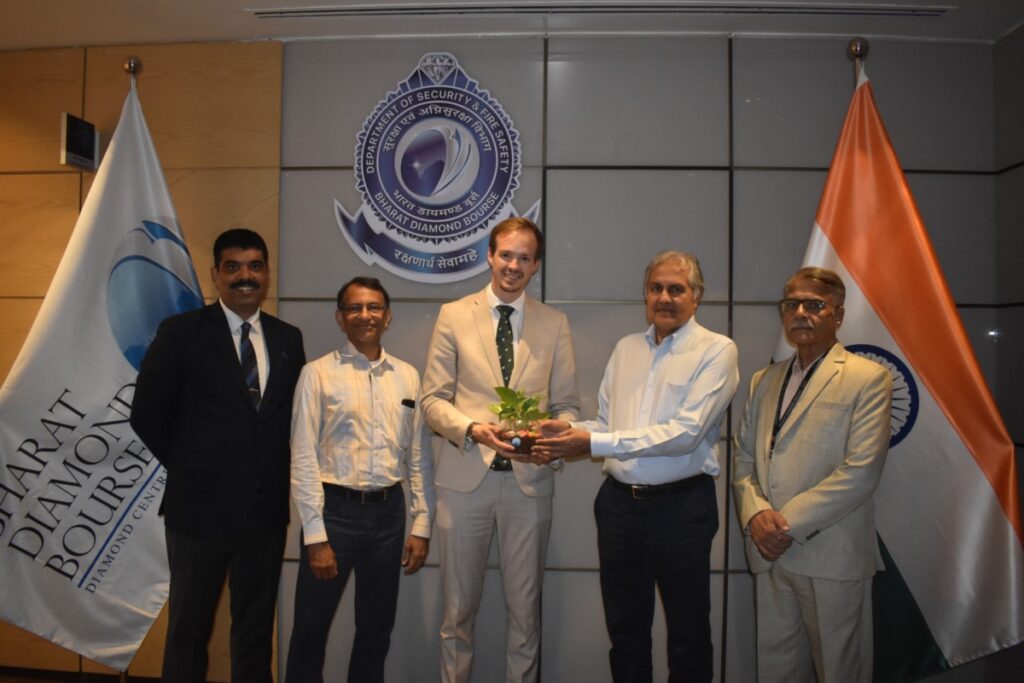
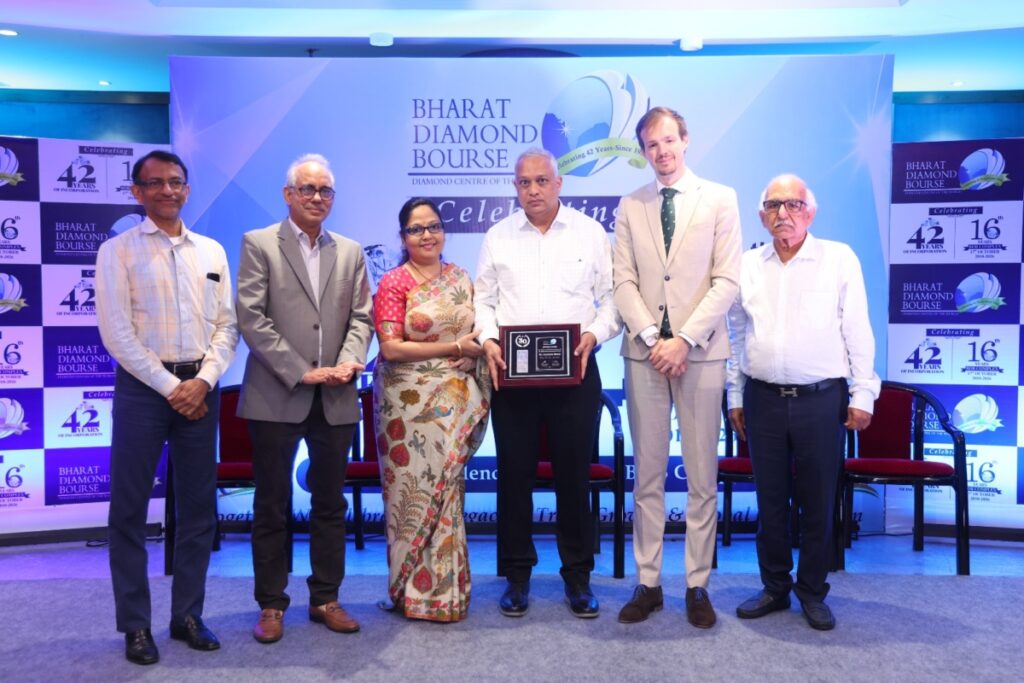
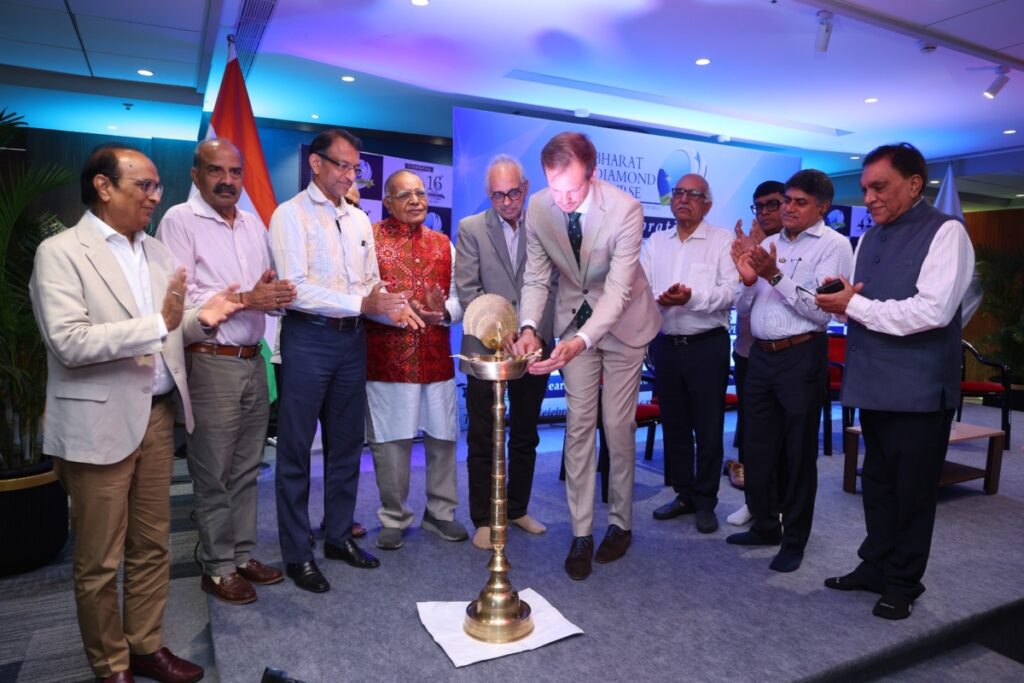
The function was organised to celebrate the crucial roles played both by the visionaries who conceptualised the need for a centralised infrastructure to boost the diamond trade over four decades ago, and the employees who have run the daily operations in a highly efficient and professional manner.
In his Welcome Address, BDB Vice President, Mehul Shah explained the significance of celebrating twin milestones – 42 years of incorporation and 16 years of operations. He said:
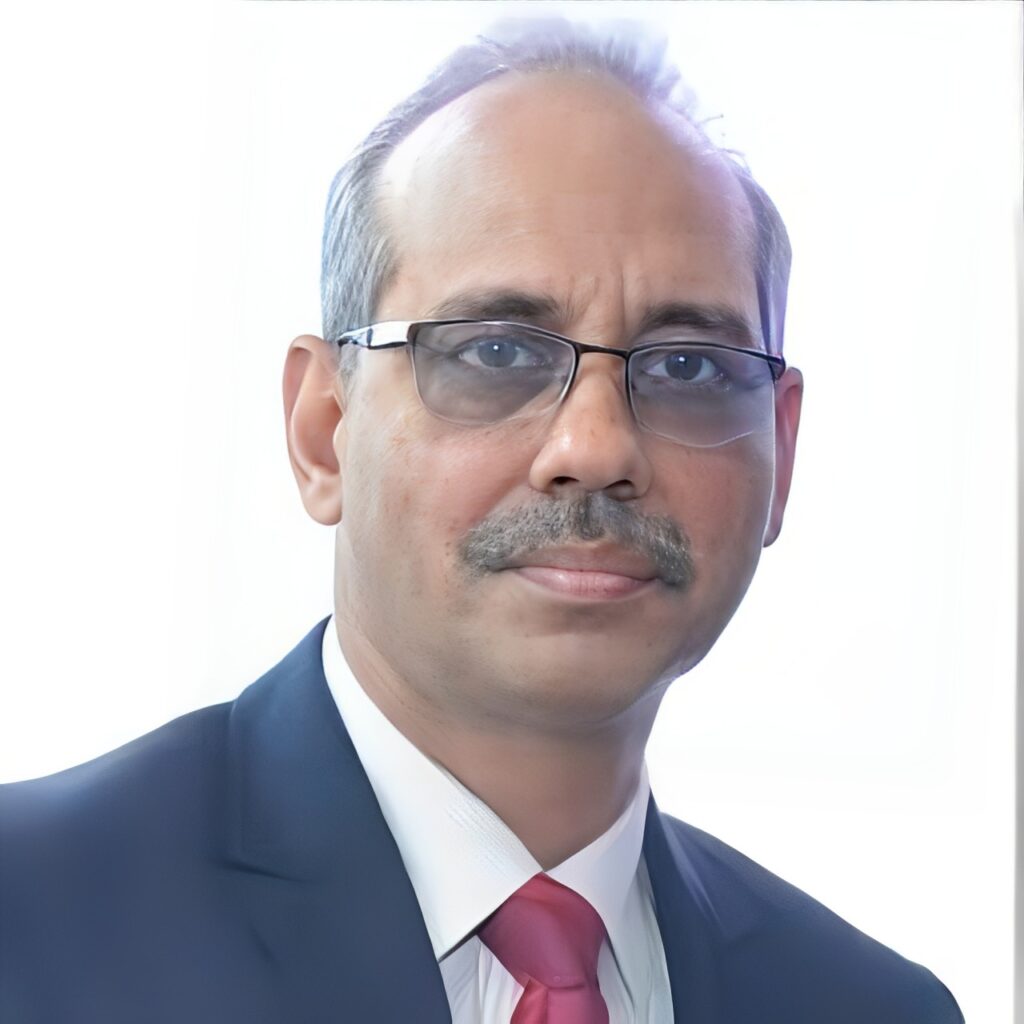
“BDB began with a vision and is now the world’s largest operational bourse, and a symbol of India’s leadership in the diamond world and excellence in every aspect of operations.”
He added, “It is significant that the Consul General of Belgium is with us on this special occasion. Antwerp and Mumbai have a very close relationship, going back more than 100 years. Today the two cities have bonds based on trust, trade and friendship. We are committed to strengthening this bond over the next century as well.”
Congratulating the awardees he said that members may be the owners, but it is the staff who run the complex and have helped build it as the “best of the best” centres for diamonds. “Personal integrity combined with hi-tech surveillance have made BDB one of the safest places in the world,” he explained, and urged all present never to forget that “it is the soldiers who fight and win the wars.” Mr Shah offered compliments to all the awardees and congratulated Team BDB.
Speaking on the occasion, Anoop Mehta, President BDB, welcomed Mr Stverlynck who has recently assumed charge as Consul General of Belgium in Mumbai.
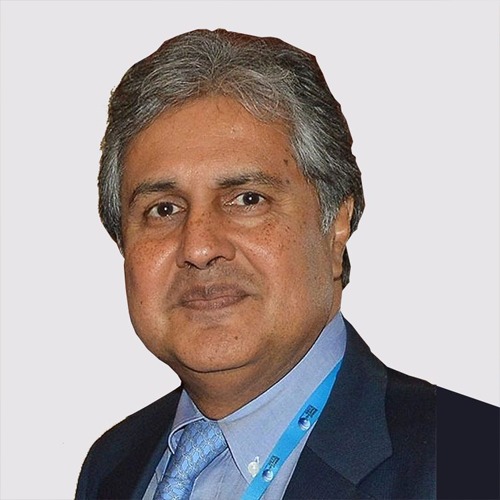
“We are sure that this will be the first of many visits to our Bourse,” he said, noting that the Consulate is the nearest neighbour of the complex.
“The BDB leadership has always enjoyed a very special relationship with the Belgian consulate,” he added, “built on the longstanding bonds between the diamond industry in our two countries.”
Mr Mehta said it was heartening that so many employees had remained loyal to the BDB for multiple years, and urged all gathered to reach out through their department heads to put forward suggestions for further changes and improvements
Mr Stverlynck, who was on his first visit to the Bourse after assuming charge as Consul General, said he was extremely impressed with the facilities available for exporters within the complex. Assuring the trade of cooperation and support, he said he was happy to be personally present to celebrate such a remarkable institution as BDB that has become a key pillar of the India diamond industry.
Congratulating the leadership for its role in steering the bourse, as well as those employees who had received long service awards, Mr. Stverlynck said:
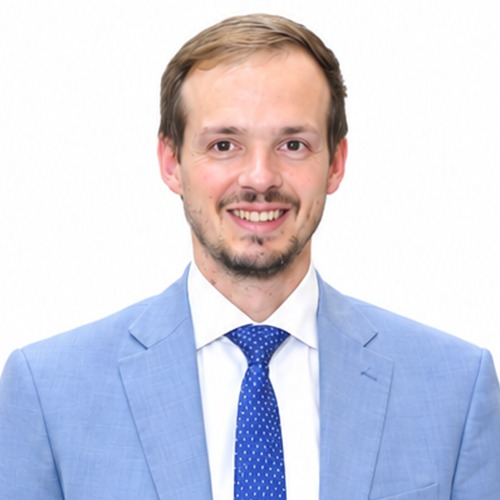
“The consolidated knowledge and experience of so many from those at the top to a number of others who contributed in various ways, is an asset to the industry.”
Special long service awards were presented to employees who completed special milestones during the year. These included 30-year, 25-, 15-, 10- and 5-year service awards to a few employees.



Belgian Consul General H. E. Mr. Pierre Stverlynck Graces BDB Annual Day

Limelight Lab Grown Diamonds Crosses 100 Stores Milestone This Dussehra: Targets 200 In 2027

Joyalukkas Opens Its 2nd Bengaluru Showroom in Jayanagar

US Holiday Shopping Expected To Top $1 Trillion For The First Time: NRF
Belgian Consul General H. E. Mr. Pierre Stverlynck Graces BDB Annual Day
Limelight Lab Grown Diamonds Crosses 100 Stores Milestone This Dussehra: Targets 200 In 2027
-
 International News14 hours ago
US Holiday Shopping Expected To Top $1 Trillion For The First Time: NRF
-
 National News7 hours ago
Belgian Consul General H. E. Mr. Pierre Stverlynck Graces BDB Annual Day
-
 National News8 hours ago
Limelight Lab Grown Diamonds Crosses 100 Stores Milestone This Dussehra: Targets 200 In 2027
-
 New Premises9 hours ago
Joyalukkas Opens Its 2nd Bengaluru Showroom in Jayanagar
