
DiamondBuzz
De Beers CEO Al Cook: India’s Natural Diamond Market to Hit $20 Billion by 2030 Amid Rising Demand


India’s natural diamond market is poised for a major leap, with De Beers Group CEO Al Cook projecting the market will double in value—from nearly $10 billion today to $20 billion by 2030. Cook shared this vision during his first official visit to India, speaking at a press event held at Taj Lands End, Mumbai.
“India is the heart and home of diamonds, and it’s now leading the world in diamond demand,” Cook said. Highlighting a 12% annual growth in demand, he credited the rise to India’s expanding middle class, increasing disposable incomes, and deep cultural affinity for natural diamonds. India currently processes 90% of the world’s diamonds and supports over one million jobs in the sector.
To tap into this momentum, De Beers is rolling out an ambitious, India-focused strategy. Its Forevermark brand will launch in Mumbai and Delhi in 2025, with plans to expand to over 100 outlets nationwide. The company will use a “cluster-based” approach, combining company-run and franchise stores with strong e-commerce integration. The offerings will target aspirational consumers, with an average ticket size of ₹2.5 lakh.
De Beers is also ramping up marketing efforts. Its “Love From Dad” campaign, celebrating family milestones, has resonated strongly with Indian consumers. Strategic partnerships with the Indian Premier League (IPL) and top jeweller Tanishq are deepening brand presence. De Beers is training thousands of Tanishq sales staff through its Institute of Diamonds in Surat to help customers understand the rarity and ethical sourcing of natural diamonds.
A major new initiative, INDRA, will launch in August in partnership with the Gem & Jewellery Export Promotion Council (GJEPC), with 1,700 retailers already showing interest. “We are shifting from ‘from and by India’ to ‘to and for India,’” said Cook, stressing the growing domestic appetite for natural diamonds.

Addressing the rise of lab-grown diamonds (LGDs), Cook noted that LGD prices have dropped by 90% and are now available for as little as $299 in the US. De Beers has since closed its Lightbox LGD business in the US. “Our job to distinguish natural diamonds from LGDs is done,” he said, underlining the brand’s renewed focus on natural stones.
To reinforce consumer trust, De Beers has introduced Diamond Proof, a tool that can verify natural diamonds in just three seconds with 100% accuracy. “It’s critical that consumers know what they’re buying,” Cook emphasized.
Sustainability remains central to De Beers’ growth model, with a company-wide goal of achieving carbon neutrality by 2030. Cook highlighted the adoption of solar energy by Indian diamond polishers in Surat, and De Beers’ own green energy initiatives in South Africa and Namibia, including a new wind energy deal.
Additionally, De Beers’ synthetic diamond arm, Element Six, is exploring applications for advanced technology sectors like 6G and quantum computing. Cook said India’s rapid emergence as a tech leader makes it an ideal partner, pointing to potential investments in the country’s semiconductor industry.
Cook also addressed global trade concerns, expressing optimism over securing tariff exemptions on natural diamond imports in the US-India trade talks. With no domestic diamond production in the U.S., such tariffs function only as consumer taxes, he argued.
De Beers’ vision for India goes beyond business. “India fell in love with diamonds 2,000 years ago, and that bond is stronger than ever,” Cook concluded, affirming De Beers’ long-term commitment to making India the epicenter of global natural diamond consumption.





DiamondBuzz
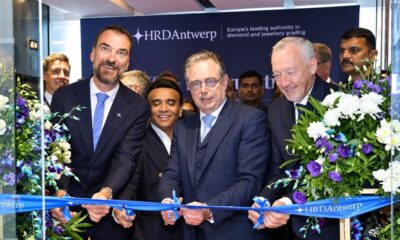
Belgian Prime Minister Bart De Wever opens expanded HRD Antwerp laboratory in Mumbai
HRD Antwerp is increasing its research capacity in Mumbai by 30%. The official opening, which takes place as part of a two-day visit by Prime Minister Bart De Wever to India, marks an important next step in the growth of HRD Antwerp in India
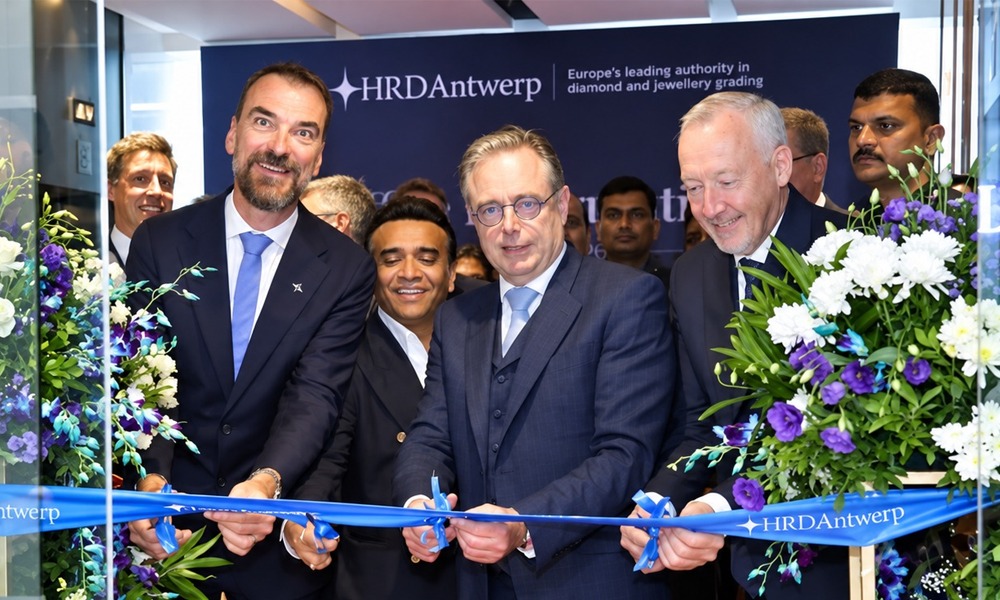
In the presence of Belgian Prime Minister Bart De Wever, HRD Antwerp, Europe’s leading authority in diamond and jewellery grading and a subsidiary of the Antwerp World Diamond Centre (AWDC), officially opened its renovated and significantly expanded laboratory in the Bandra Kurla Complex (BKC) in Mumbai, India. Thanks to the expansion, HRD Antwerp is increasing its research capacity in Mumbai by 30%. The official opening, which takes place as part of a two-day visit by Prime Minister Bart De Wever to India, marks an important next step in the growth of HRD Antwerp in India, one of the world’s leading centres for the trade and cutting of natural diamonds.
For HRD Antwerp, a grading report is not an administrative document but a guarantee of trust, transparency and authenticity. As an independent, neutral party between science, industry and consumer, HRD Antwerp is a worldwide guarantor of objective and reliable diamond and jewellery grading, a principle the organisation has upheld since its founding. HRD Antwerp was established in 1973 and has been active in India since 2012. Today it serves around 1,500 clients there, including jewellery manufacturers and retailers, as well as companies that produce and trade cut diamonds.
The Indian branch now accounts for 59% of HRD Antwerp’s total group revenue and is expected to grow by 15.4% this year, compared with a projected growth of 12.6% for the group as a whole. Jewellery grading is an important growth driver in this respect: as much as 47% of HRD Antwerp’s total revenue increase comes from that segment.
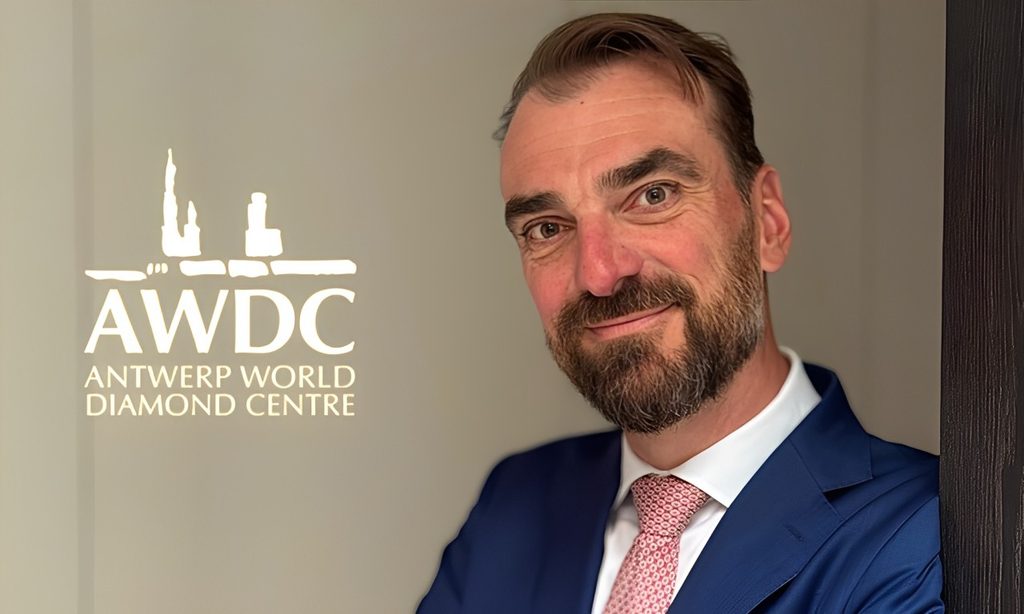
“As the authority in grading reports for natural diamonds and diamond jewellery, and in research into natural diamonds, we are already firmly established in India today”, says Paul De Wachter, CEO of HRD Antwerp. “India remains the world’s most important centre for diamond cutting. For a diamond laboratory such as HRD Antwerp, which provides cut natural diamonds with an independent and objective grading report, it is therefore essential to keep investing in this market.”
Thanks to the expansion, HRD Antwerp in Mumbai can now examine and grade up to 2,000 diamonds per day, a capacity increase of 30%. To support this additional capacity, HRD Antwerp is recruiting 40 additional employees to work full time. The investment underlines HRD Antwerp’s confidence in the Indian market and strengthens the longstanding cooperation between Belgium and India within the international diamond and jewellery sector.
During the opening, Prime Minister Bart De Wever was given a tour of the renovated office. He was shown the diamond grading process and was able to examine a diamond up close himself using a microscope. The demonstration was provided by HRD Antwerp’s Indian experts.
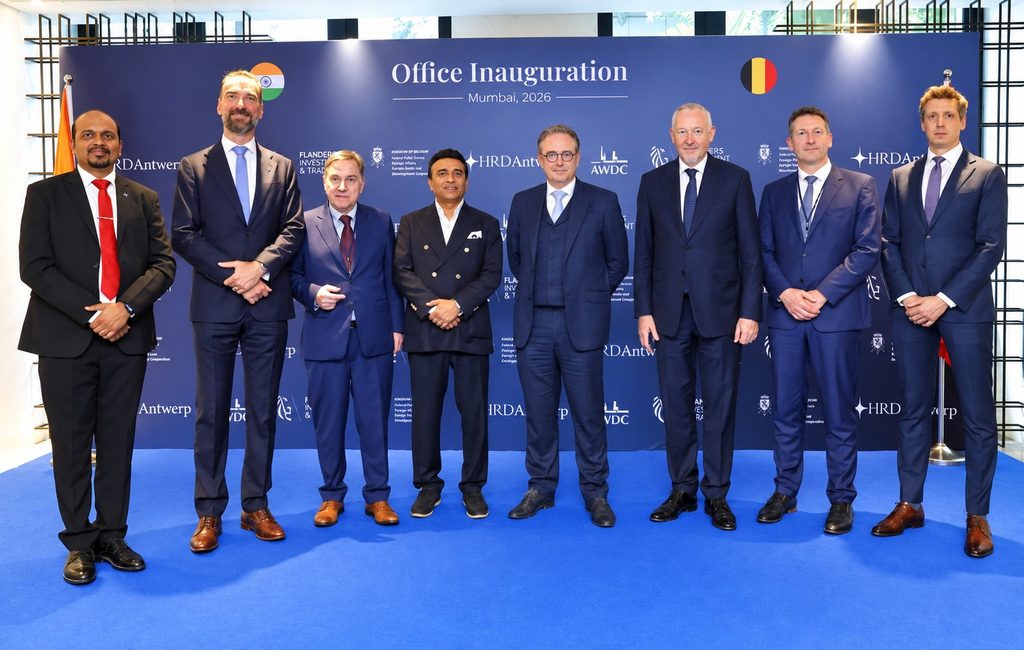
Alongside the Prime Minister, also present were Paul De Wachter, CEO of HRD Antwerp, Ramakant Mitkar, Managing Director of HRD Antwerp India, Chirag Shah, Vice Chairman of AWDC, Didier Vanderhasselt, Belgian Ambassador to India, and Frank Geerkens, Consul General of Belgium in Mumbai.
Paul De Wachter, CEO of HRD Antwerp: “The visit of our Prime Minister underlines the importance of cooperation between Belgium and India within the global diamond sector. India and Antwerp together form two indispensable links in the international diamond chain. With this expansion, we are investing not only in additional capacity, but above all in the future of our cooperation with the Indian diamond and jewellery sector.”
Bart De Wever, Prime Minister of Belgium wrote the following message in HRD Antwerp’s guestbook during his visit: ” Sicut adamas fulget, ita fiducia inter gentes monet. As a diamond shines, so trust endures between nations “



Belgian Prime Minister Bart De Wever opens expanded HRD Antwerp laboratory in Mumbai

Verlas Introduces the ‘Alyssa’ Collection in India, Bringing Modern Luxe Floral-Inspired Design to Lab-Grown Diamond Jewelry Crafted in Fine Gold

Gold rebounds,Silver reclaims Rs 2.33 lakh mark

Limelight Lab Grown Diamonds Inaugurates Showroom In Kalyan, Its 8th Exclusive Store MMR
Verlas Introduces the ‘Alyssa’ Collection in India, Bringing Modern Luxe Floral-Inspired Design to Lab-Grown Diamond Jewelry Crafted in Fine Gold
Belgian Prime Minister Bart De Wever opens expanded HRD Antwerp laboratory in Mumbai
-
 National News3 days ago
Limelight Lab Grown Diamonds Inaugurates Showroom In Kalyan, Its 8th Exclusive Store MMR
-
 BrandBuzz2 days ago
Verlas Introduces the ‘Alyssa’ Collection in India, Bringing Modern Luxe Floral-Inspired Design to Lab-Grown Diamond Jewelry Crafted in Fine Gold
-
 DiamondBuzz2 days ago
Belgian Prime Minister Bart De Wever opens expanded HRD Antwerp laboratory in Mumbai
-

 National News2 days ago
Value Addition Drives August Jewellery Exports as Studded Gold Jewellery Rises 51.22% to US$642.85 Million
