

JB Insights
Titanium: Forged for the Future with Strength, Style, and Innovation

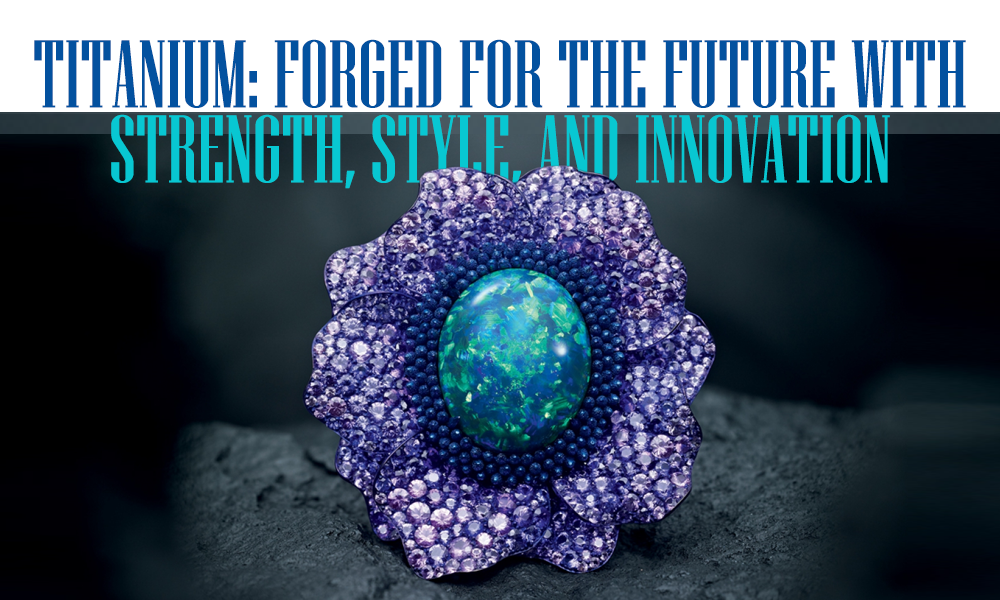
Titanium, once a niche material in the jewellery world, is rapidly gaining recognition for its unique blend of strength, lightness, and design versatility. Titanium was first discovered in Cornwall, Great Britain, in 1791 by William Gregor and named after the Titans of Greek mythology. Its remarkable properties—exceptional strength, light weight, hypoallergenic nature, and ability to display vibrant colours—have made it an attractive alternative for luxury jewellery designers worldwide.
Titanium’s unique properties and appeal
- Strength & Durability: Stronger than silver or white gold and lighter than platinum, titanium is ideal for large, gem-set designs and everyday wear.
- Hypoallergenic: Suitable for clients with allergies to traditional alloys.
- Colour Versatility: Heat and oxidation treatments allow jewellers to create a spectrum of colours, from cobalt blue to rich purple, enhancing design possibilities.
- Lightweight: Enables the creation of large statement pieces without the weight of precious metals.
Luxe jewellery trends
Chopard’s use of titanium in its Fleurs d’Opales rings demonstrates the metal’s creative potential. By oxidising titanium, Chopard achieved purple petals to complement sapphires and amethysts, creating the illusion of invisibly set gems. The collection highlights how titanium can be both a structural and aesthetic star in high jewellery.
Swiss jeweller Suzanne Syz and British designer Glenn Spiro are notable for their innovative use of titanium. Syz’s work showcases titanium’s ability to hold colour and shape, while Spiro’s engagement rings leverage titanium’s strength for intricate stone settings and unique colour options. Both demonstrate that titanium can rival traditional precious metals in luxury appeal.
Estaa founded by Pratik Shah became the first Indian jewellery house to craft fine jewellery in titanium in 2018, launching the Arya collection. The collection’s large, sculptural forms are made possible by titanium’s lightness—an advantage in the Indian market, where visual scale is prized.
Cost and Pricing Dynamics
- Material Cost: Titanium is much cheaper than gold or platinum.
- Production Cost: High technical difficulty, specialized equipment, and longer crafting times mean the retail price is driven by craftsmanship, not just material value.
- Margins: Margins are lower than gold jewellery due to higher production complexity.
- Durability: Titanium is highly resistant to scratches, corrosion, and tarnish, making it ideal for daily wear—even in humid or high-contact environments
.
Design & Manufacturing Challenges
- Technical Barriers: High skill and investment required for working with titanium.
- Market Education: Consumers must be educated to appreciate the value of design and craftsmanship over traditional hallmarks.
- Pricing: Final prices may surprise buyers expecting titanium to be “cheap” due to its raw material cost.
Working with titanium requires advanced skills, specialised tools, and significant investment. Unlike traditional precious metals, titanium cannot be soldered easily, making processes like stone setting and forming particularly demanding. Mastery of titanium jewellery demands both craftsmanship and technological innovation.Traditional jewellery techniques are often unsuitable for titanium. Estaa has developed proprietary tools and systems for stone setting and design, and uses advanced technologies like 3D printing to achieve intricate forms and reduce waste.
Opportunities and Future Outlook
- Innovation: Titanium’s properties allow for bold, lightweight, and colourful designs, pushing the boundaries of high jewellery.
- Technology Integration: 3D printing and digital design are making complex titanium pieces more feasible, reducing material waste and expanding creative possibilities.
- Market Expansion: As consumer mindsets shift towards valuing design and craftsmanship over material weight, titanium’s appeal will grow—especially among younger, design-forward buyers.
- Sustainability: Titanium’s durability and lower environmental impact compared to precious metals may attract eco-conscious consumers.
Titanium is redefining the language of luxury jewellery. Its blend of strength, lightness, and colour versatility is inspiring a new generation of designers and buyers. Titanium pieces are bought more for their design and craftsmanship value rather than intrinsic material value, which creates a different pricing dynamic.
While challenges remain in terms of production and market perception, the future for titanium jewellery—especially in innovative markets like India—is bright and full of creative potential.





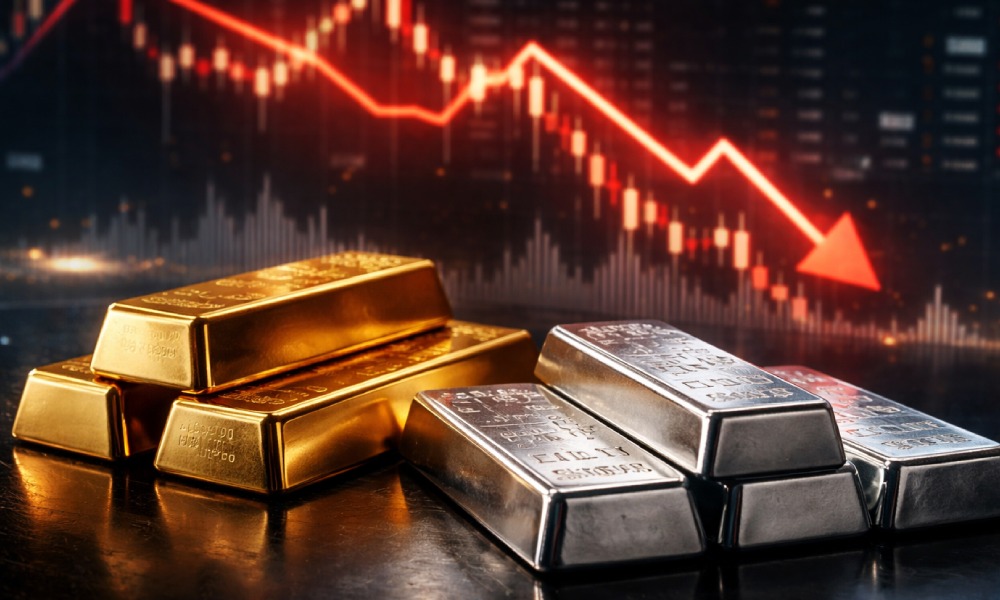
Gold and silver ended lower on the week despite sharp intraday rebounds, with price action reflecting continued volatility and fragile positioning rather than a sustained recovery. In the absence of a definitive macro catalyst, a broad-based decline across equities and cryptocurrencies prompted investors to raise liquidity, briefly dragging gold below the key $5,000 per ounce threshold. Non-yielding assets came under pressure as earlier stronger-than-expected US employment data pushed expectations for the first Federal Reserve rate cut further into midyear, reducing the appeal of bullion. Sentiment shifted, however, after inflation data showed annual CPI slowing to 2.4% and core inflation easing to 2.5%, reviving dovish expectations. The softer inflation print weighed on Treasury yields and pressured the dollar, allowing gold to recover toward the $4,990 region. Silver experienced similar turbulence, sliding sharply during the liquidation phase before rebounding above $76 per ounce, though it remained on track for another weekly decline.

Gnanasekar Thiagarajan
Introduction:
Gold finished the period under pressure despite sharp rebounds, with price action dominated by cross-asset volatility and shifting rate expectations. After initially recovering more than 2% on softer-than-expected US inflation, bullion briefly pushed back toward the $5,000–$5,020 region as annual CPI slowed to 2.4% and core inflation eased to 2.5%, reinforcing expectations of multiple Federal Reserve rate cuts this year. Lower yields and a softer dollar provided near-term relief, reviving the structural appeal of non-yielding assets.
However, gains proved fragile as the dollar rebounded and gold slipped back below $5,020, underscoring hesitation around the psychological $5,000 threshold. Earlier strength in US labor data had already delayed expectations for the first rate cut toward midyear, capping upside momentum. Markets now await further guidance from FOMC minutes, GDP data and the core PCE print, while geopolitical developments — including renewed US-Iran nuclear talks and broader Middle East tensions — continue to shape safe-haven flows.
Silver tracked gold’s volatility but continued to underperform structurally, remaining in a corrective phase after January’s extreme surge. The metal rebounded nearly 3% on softer inflation data and firmer rate-cut expectations, briefly moving back above $76 per ounce, but gains faded as liquidity stayed thin amid China holidays and broader risk sentiment remained fragile. Heavy speculative positioning left silver exposed to sharp reversals, and prices are still far below late-January highs above $120 after the collapse toward the mid-$60s. While lower yields and debasement concerns offer underlying support, near-term trade points to consolidation rather than a swift return to the prior rally.
Gold and Silver:
Gold fell below $5,020 per ounce on Monday after rising more than 2% in the previous session, following weaker-than-expected US CPI data. The soft inflation print reinforced expectations for Federal Reserve rate cuts this year, with markets now pricing in slightly more than two reductions. Investors are awaiting the release of FOMC meeting minutes, the US GDP advance estimate, and PCE inflation data for further clues on the timing of the next rate cut. On the geopolitical front, traders are monitoring nuclear talks between the US and Iran, as well as US-led negotiations aimed at ending the war in Ukraine, both scheduled to resume on Tuesday. Developments in these areas could influence risk sentiment and safe-haven demand. Despite recent volatility, the precious metal remained supported by ongoing geopolitical uncertainty, strong central bank buying, and investor flight from sovereign bonds and currencies.
Silver March
Silver fell more than 1% toward $76 per ounce on Monday, reversing gains from the previous session, although trading volumes were subdued due to market holidays in the US, China and other countries. On Friday, the metal had jumped nearly 3% after soft US inflation data reinforced expectations that the Federal Reserve will cut interest rates later this year. Markets are currently pricing in a Fed rate cut in July, with a strong probability of a move in June. Investors now turn to the latest Fed minutes and the Fed-preferred core PCE price index report for further guidance on the US monetary outlook.
Meanwhile, mainland China’s markets are closed this week for the Lunar New Year holiday. Chinese traders had driven a speculative surge in precious metals in recent weeks, prompting authorities to curb market risks through various measures. Silver peaked above $120 an ounce in late January before falling to around $64 earlier this month as sentiment reversed.
Gold April
Technical View: $4996. Weekly chart shows a strong underlying uptrend with price holding well above the short-term moving averages and momentum expanding positively. The recent pullback appears corrective, with support seen near $4886/4878; holding above this zone keeps the broader structure intact for a move towards $5460. A decisive break below $4765 will be the first sign of deeper corrective pressure.



Indriya, Aditya Birla Jewellery, crosses 50 Stores Nationwide

Candere expands Karnataka presence with Kengeri store opening

Priority Jewels Raises ₹15.67 Crore in Pre-IPO Placement; Invictus Continuum Fund I Leads Investment
-

 International News4 days ago
Oroarezzo 2026, with Italian Exhibition Group, Manufacturing Explores New Markets
-

 National News4 days ago
IIBS-11: Navigating the ‘New Gold Rush’ in a fragmenting global economy
-
 International News4 days ago
Gemfields nets $53m in Bangkok ruby auction
-

 New Premises4 days ago
Limelight Diamonds Unveils Exclusive Visakhapatnam Store in the Presence of Union Minister of Civil Aviation Shri Kinjarapu Ram Mohan Naidu
