
JB Insights
Titanium: Forged for the Future with Strength, Style, and Innovation

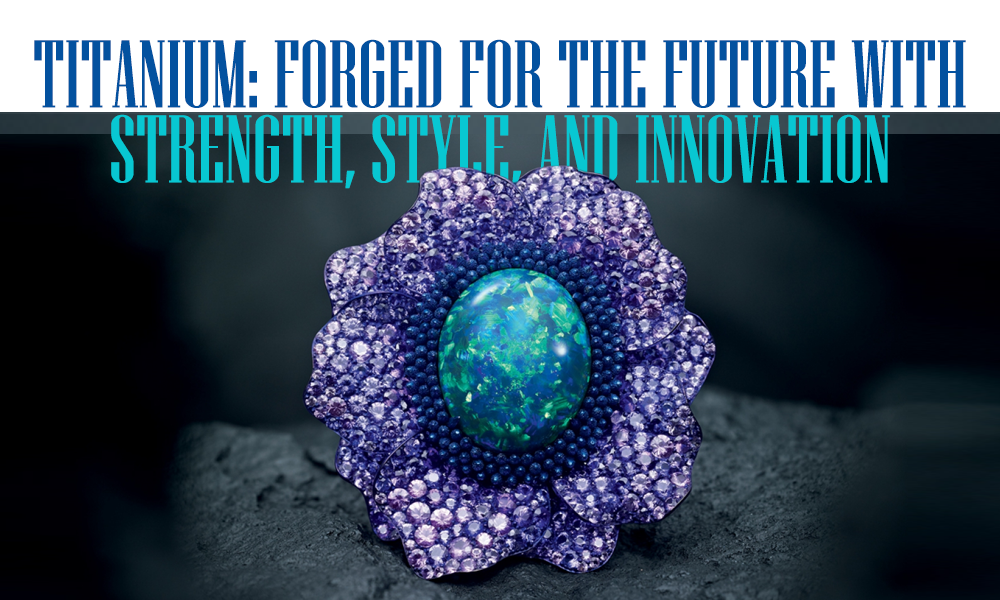
Titanium, once a niche material in the jewellery world, is rapidly gaining recognition for its unique blend of strength, lightness, and design versatility. Titanium was first discovered in Cornwall, Great Britain, in 1791 by William Gregor and named after the Titans of Greek mythology. Its remarkable properties—exceptional strength, light weight, hypoallergenic nature, and ability to display vibrant colours—have made it an attractive alternative for luxury jewellery designers worldwide.
Titanium’s unique properties and appeal
- Strength & Durability: Stronger than silver or white gold and lighter than platinum, titanium is ideal for large, gem-set designs and everyday wear.
- Hypoallergenic: Suitable for clients with allergies to traditional alloys.
- Colour Versatility: Heat and oxidation treatments allow jewellers to create a spectrum of colours, from cobalt blue to rich purple, enhancing design possibilities.
- Lightweight: Enables the creation of large statement pieces without the weight of precious metals.
Luxe jewellery trends
Chopard’s use of titanium in its Fleurs d’Opales rings demonstrates the metal’s creative potential. By oxidising titanium, Chopard achieved purple petals to complement sapphires and amethysts, creating the illusion of invisibly set gems. The collection highlights how titanium can be both a structural and aesthetic star in high jewellery.
Swiss jeweller Suzanne Syz and British designer Glenn Spiro are notable for their innovative use of titanium. Syz’s work showcases titanium’s ability to hold colour and shape, while Spiro’s engagement rings leverage titanium’s strength for intricate stone settings and unique colour options. Both demonstrate that titanium can rival traditional precious metals in luxury appeal.
Estaa founded by Pratik Shah became the first Indian jewellery house to craft fine jewellery in titanium in 2018, launching the Arya collection. The collection’s large, sculptural forms are made possible by titanium’s lightness—an advantage in the Indian market, where visual scale is prized.
Cost and Pricing Dynamics
- Material Cost: Titanium is much cheaper than gold or platinum.
- Production Cost: High technical difficulty, specialized equipment, and longer crafting times mean the retail price is driven by craftsmanship, not just material value.
- Margins: Margins are lower than gold jewellery due to higher production complexity.
- Durability: Titanium is highly resistant to scratches, corrosion, and tarnish, making it ideal for daily wear—even in humid or high-contact environments
.
Design & Manufacturing Challenges
- Technical Barriers: High skill and investment required for working with titanium.
- Market Education: Consumers must be educated to appreciate the value of design and craftsmanship over traditional hallmarks.
- Pricing: Final prices may surprise buyers expecting titanium to be “cheap” due to its raw material cost.
Working with titanium requires advanced skills, specialised tools, and significant investment. Unlike traditional precious metals, titanium cannot be soldered easily, making processes like stone setting and forming particularly demanding. Mastery of titanium jewellery demands both craftsmanship and technological innovation.Traditional jewellery techniques are often unsuitable for titanium. Estaa has developed proprietary tools and systems for stone setting and design, and uses advanced technologies like 3D printing to achieve intricate forms and reduce waste.
Opportunities and Future Outlook
- Innovation: Titanium’s properties allow for bold, lightweight, and colourful designs, pushing the boundaries of high jewellery.
- Technology Integration: 3D printing and digital design are making complex titanium pieces more feasible, reducing material waste and expanding creative possibilities.
- Market Expansion: As consumer mindsets shift towards valuing design and craftsmanship over material weight, titanium’s appeal will grow—especially among younger, design-forward buyers.
- Sustainability: Titanium’s durability and lower environmental impact compared to precious metals may attract eco-conscious consumers.
Titanium is redefining the language of luxury jewellery. Its blend of strength, lightness, and colour versatility is inspiring a new generation of designers and buyers. Titanium pieces are bought more for their design and craftsmanship value rather than intrinsic material value, which creates a different pricing dynamic.
While challenges remain in terms of production and market perception, the future for titanium jewellery—especially in innovative markets like India—is bright and full of creative potential.




JB Insights
US Holiday Sales Will See 5.5% Growth For 2026 : Mastercard Economics Institute
This Resilience Reflects A Robust Labor Market, Rising Household Wealth, and Broad-Based Consumer Demand Across Income Cohorts. Overall, The 2026 Holiday Season Showcases An Adaptable U.S. Consumer Using Digital and AI Tools To Maximize Value While Continuing To Drive Broader Economic Momentum.

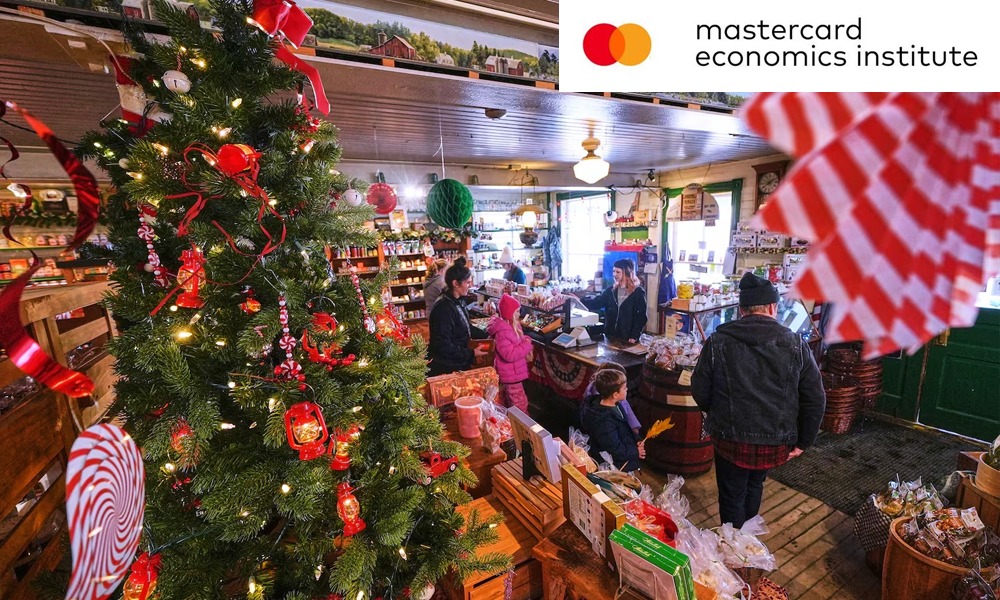
The Mastercard Economics Institute (MEI) forecasts a strong 2026 U.S. holiday shopping season (November 1–December 24), projecting retail sales excluding gas and autos to grow 5.5% year-over-year (YoY). This resilience reflects a robust labor market, rising household wealth, and broad-based consumer demand across income cohorts.
Key Drivers and Growth Channels
- Channel Performance: E-commerce continues to lead with an expected 11% YoY growth, but in-store sales are set to grow 3.6%—their strongest pace since 2022. This highlights the critical role of omnichannel strategies.
- Inflation Dynamics: Inflation accounts for 2.8 percentage points of the total 5.5% growth. Unlike last year’s tariff pressures, current price increases are driven by elevated energy/diesel costs and the massive AI infrastructure buildout.
- Calendar Shifts: A late Thanksgiving compresses the shopping window, pushing retailers toward early promotions. Additionally, Cyber Monday falling in November will shift significant online volume into the month.
The Role of Artificial Intelligence
AI is reshaping both prices and consumer behavior:
- Tech Inflation: High demand for memory chips and data infrastructure components has driven a 12.2% YoY increase in prices for info-processing equipment. Consequently, the consumer electronics category is projected to post outsized nominal sales growth (+10.7% YoY).
- AI Power Users: Consumers with paid AI subscriptions demonstrate distinct “optimization” habits. Data shows these users plan early, shop across a wider variety of boutique and specialty merchants, and aggressively target promotions during Thanksgiving weekend before transitioning to experience and hospitality spending in December.
Last-Minute Shopping Behavior
The final rush to Christmas offers key operational insights for retailers:
- In-Person and Malls: The final week before Christmas sees heavy physical store foot traffic, especially in enclosed shopping malls where consumers can complete multi-category purchases. Climate also plays a role: warmer-state residents (e.g., Florida, Nevada) are far more likely to make last-minute in-store runs than those in colder states.
- Transaction Value Trends: Average order values for children’s items peak near Black Friday, while premium categories—such as jewelry, cosmetics, luxury handbags, and department stores—see transaction values climb steadily from December 15, peaking on Christmas Eve as procrastinating shoppers pay a premium for convenience.
AI tools lower search costs for consumers, making price transparency higher than ever. Retailers must capture early November demand through targeted promotions before comparison tools push shoppers toward alternative or boutique brands.
Last-minute shoppers are price-inelastic and seeking speed. Malls and physical stores should maximize inventory for high-margin, rush-gift items (jewelry, cosmetics, designer goods, gift cards) in the final 10 days, leveraging store availability over promotional discounting.
Overall, the 2026 holiday season showcases an adaptable U.S. consumer using digital and AI tools to maximize value while continuing to drive broader economic momentum.



Kangana Ranaut Unveils PNG Jewellers New Showroom In Ayodhya~

GGJS 2026 Concludes With High-Volume Trade and Strategic Focus On Next-Gen Leadership

The Solitaire Festival Of India Concludes; Bumper Prize Winner At Ranka Jewellers Wins XUV 7XO
GGJS 2026 Concludes With High-Volume Trade and Strategic Focus On Next-Gen Leadership

ABARAN Commemorates The 125th Birth Anniversary Of Founder Shri Burde Sadananda Kamath With Special Gold Coin Launch

MCX Gold Silver Futures See Dip
-
 National News2 hours ago
GGJS 2026 Concludes With High-Volume Trade and Strategic Focus On Next-Gen Leadership
-
 National News6 hours ago
ABARAN Commemorates The 125th Birth Anniversary Of Founder Shri Burde Sadananda Kamath With Special Gold Coin Launch
-
 National News6 hours ago
MCX Gold Silver Futures See Dip
-
 National News3 days ago
P N Gadgil Jewellers Limited – Quarterly Update Q2FY27
