
JB Insights
Florida’s Gold Standard – Catalyst for De-dollarization or Symbolic Gesture?

Overview
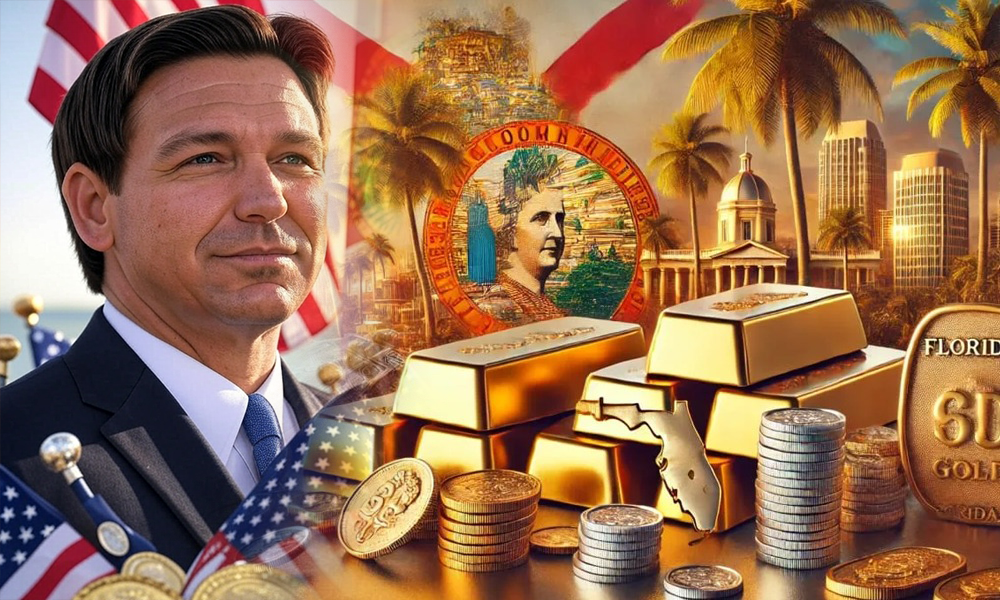
Florida’s decision to recognize gold and silver as legal tender marks a rare departure from conventional monetary practices within the United States. This policy raises critical questions about the potential for state-level monetary autonomy and its impact on global de-dollarization efforts. While the gesture is symbolically potent, its practical viability and influence on the global financial order remain limited by substantial structural and legal constraints.
Florida’s Policy and Constitutional Dimensions
By adopting gold and silver for transactional use, Florida becomes the first major U.S. state in modern times to formally endorse precious metals as currency. This policy is technically grounded in Article I, Section 10 of the U.S. Constitution, which allows states to make only gold and silver coin legal tender. While this appears constitutionally valid, it introduces operational complexities such as exchange rate management, price volatility, and infrastructure development for storage and authentication—issues that severely restrict practical implementation.
Context: Global De-dollarization Momentum
Florida’s move aligns with a broader international trend of reducing dependency on the U.S. dollar. Notably:
- BRICS nations are exploring commodity-backed currencies.
- Central banks globally have increased gold reserves at record levels (2024–2025).
- More nations are settling trade in local currencies.
- Central Bank Digital Currencies (CBDCs) are emerging to bypass dollar systems.
These shifts are driven by geopolitical concerns, especially around U.S. sanctions and trade policies, which have intensified interest in alternative monetary frameworks.
USD’s Enduring Advantages
Despite growing de-dollarization efforts, the U.S. dollar retains powerful structural advantages:
- Network effects: Deeply embedded in global finance systems.
- Market depth: The U.S. Treasury market remains the most liquid and trusted globally.
- Institutional reliability: The Federal Reserve and associated infrastructure offer predictability and scale.
- Economic size: The dollar’s use remains essential due to the scale of the U.S. economy and global trade integration.
Gold’s Evolving Role
Rather than displacing the dollar, gold is positioned to serve as a complementary asset in a more diversified global monetary environment. Its value as a reserve asset, inflation hedge, and potential settlement tool in non-dollar trade is growing. However, significant barriers—such as price volatility, supply constraints, and lack of transactional convenience—limit gold’s scalability as a daily-use currency.

Scenario Analysis
Three potential outcomes are identified:
- Symbolic Gesture (60%): Minimal real-world adoption; gold remains a store of value, not a medium of exchange.
- Regional Adoption (30%): Other states follow suit, but practical and legal hurdles limit systemic change.
- Systemic Transformation (10%): Gold gains broader use, contributing to monetary diversification and global financial restructuring—though this remains unlikely in the near term.
Strategic Implications
Investors are advised to consider portfolio diversification, gold-related infrastructure investments, and multi-currency strategies. Policymakers must prepare for legal scrutiny and potentially coordinate internationally. Corporations should evaluate treasury management strategies and invest in technologies enabling alternative payments.




JB Insights
US Holiday Sales Will See 5.5% Growth For 2026 : Mastercard Economics Institute
This Resilience Reflects A Robust Labor Market, Rising Household Wealth, and Broad-Based Consumer Demand Across Income Cohorts. Overall, The 2026 Holiday Season Showcases An Adaptable U.S. Consumer Using Digital and AI Tools To Maximize Value While Continuing To Drive Broader Economic Momentum.

The Mastercard Economics Institute (MEI) forecasts a strong 2026 U.S. holiday shopping season (November 1–December 24), projecting retail sales excluding gas and autos to grow 5.5% year-over-year (YoY). This resilience reflects a robust labor market, rising household wealth, and broad-based consumer demand across income cohorts.
Key Drivers and Growth Channels
- Channel Performance: E-commerce continues to lead with an expected 11% YoY growth, but in-store sales are set to grow 3.6%—their strongest pace since 2022. This highlights the critical role of omnichannel strategies.
- Inflation Dynamics: Inflation accounts for 2.8 percentage points of the total 5.5% growth. Unlike last year’s tariff pressures, current price increases are driven by elevated energy/diesel costs and the massive AI infrastructure buildout.
- Calendar Shifts: A late Thanksgiving compresses the shopping window, pushing retailers toward early promotions. Additionally, Cyber Monday falling in November will shift significant online volume into the month.
The Role of Artificial Intelligence
AI is reshaping both prices and consumer behavior:
- Tech Inflation: High demand for memory chips and data infrastructure components has driven a 12.2% YoY increase in prices for info-processing equipment. Consequently, the consumer electronics category is projected to post outsized nominal sales growth (+10.7% YoY).
- AI Power Users: Consumers with paid AI subscriptions demonstrate distinct “optimization” habits. Data shows these users plan early, shop across a wider variety of boutique and specialty merchants, and aggressively target promotions during Thanksgiving weekend before transitioning to experience and hospitality spending in December.
Last-Minute Shopping Behavior
The final rush to Christmas offers key operational insights for retailers:
- In-Person and Malls: The final week before Christmas sees heavy physical store foot traffic, especially in enclosed shopping malls where consumers can complete multi-category purchases. Climate also plays a role: warmer-state residents (e.g., Florida, Nevada) are far more likely to make last-minute in-store runs than those in colder states.
- Transaction Value Trends: Average order values for children’s items peak near Black Friday, while premium categories—such as jewelry, cosmetics, luxury handbags, and department stores—see transaction values climb steadily from December 15, peaking on Christmas Eve as procrastinating shoppers pay a premium for convenience.
AI tools lower search costs for consumers, making price transparency higher than ever. Retailers must capture early November demand through targeted promotions before comparison tools push shoppers toward alternative or boutique brands.
Last-minute shoppers are price-inelastic and seeking speed. Malls and physical stores should maximize inventory for high-margin, rush-gift items (jewelry, cosmetics, designer goods, gift cards) in the final 10 days, leveraging store availability over promotional discounting.
Overall, the 2026 holiday season showcases an adaptable U.S. consumer using digital and AI tools to maximize value while continuing to drive broader economic momentum.



Kangana Ranaut Unveils PNG Jewellers New Showroom In Ayodhya~

GGJS 2026 Concludes With High-Volume Trade and Strategic Focus On Next-Gen Leadership

The Solitaire Festival Of India Concludes; Bumper Prize Winner At Ranka Jewellers Wins XUV 7XO
GGJS 2026 Concludes With High-Volume Trade and Strategic Focus On Next-Gen Leadership

ABARAN Commemorates The 125th Birth Anniversary Of Founder Shri Burde Sadananda Kamath With Special Gold Coin Launch

MCX Gold Silver Futures See Dip
-
 National News2 hours ago
GGJS 2026 Concludes With High-Volume Trade and Strategic Focus On Next-Gen Leadership
-
 National News6 hours ago
ABARAN Commemorates The 125th Birth Anniversary Of Founder Shri Burde Sadananda Kamath With Special Gold Coin Launch
-
 National News6 hours ago
MCX Gold Silver Futures See Dip
-

 National News3 days ago
P N Gadgil Jewellers Limited – Quarterly Update Q2FY27
