
National News
Senco Gold Shares Rise as Q4 Profit Nearly Doubles to ₹94 Cr; EBITDA Margin Improves to 9.2%


Shares of Senco Gold rose 2.11% to ₹388.85 after the company posted a sharp rise in earnings for the fourth quarter ended March 2025. The company’s net profit nearly doubled — rising 94.1% year-on-year (YoY) to ₹94 crore — driven by strong revenue growth and improved operational performance. Revenue from operations for Q4 stood at ₹1,377.71 crore, up 21.1% compared to Q4 FY24.
Profit before tax (PBT) increased by 62.4% YoY to ₹85.08 crore, while EBITDA rose 44.8% to ₹127.01 crore. The EBITDA margin improved by 150 basis points to 9.2%, reflecting better cost efficiency and higher value sales.
Operating expenses for the quarter grew by 19.2% to ₹1,250.69 crore. The cost of materials consumed increased 21.6% to ₹1,146.46 crore, and employee benefit expenses rose 27.1% to ₹35.65 crore.
For the full fiscal year FY25, Senco reported a 20.7% increase in revenue to ₹6,328.07 crore. However, net profit declined by 12% to ₹159.31 crore due to a one-time impact from a customs duty cut in July 2024. Adjusted PAT for FY25 stood at ₹207.9 crore, a YoY growth of 10.1%.

Suvankar Sen, Managing Director & CEO, highlighted the company’s robust Q4 performance, with same-store sales growth (SSSG) at 18% and a 21% volume growth in diamond jewellery, which translated to a 38% rise in value terms. Company-owned outlets, contributing 64% of retail revenues, posted a 21% growth, while the franchise segment, contributing 36%, grew by 28% YoY.
The company opened five new showrooms in Q4, across COCO, FOCO, and FOFO models. Senco also saw a surge in old gold exchanges, which made up 40% of total sales, with 61% of that coming from new, non-Senco customers.
Senco Gold, a prominent national jewellery retailer, offers a wide range of products including gold, diamond, Polki, Platinum, Kundan, Jadau, silver, and both precious and semi-precious stones.








National News
BIS Introduces The Silver Refinery Certification Scheme; Framework Introduces “India Good Delivery For Silver”
Buyers, Institutional Investors, and Jewelers Are Guaranteed Strict Adherence To Exact Quality, Testing, and Traceability Standards. Silver From Any BIS-Approved Refinery Ensures A Verified Fineness and Purity

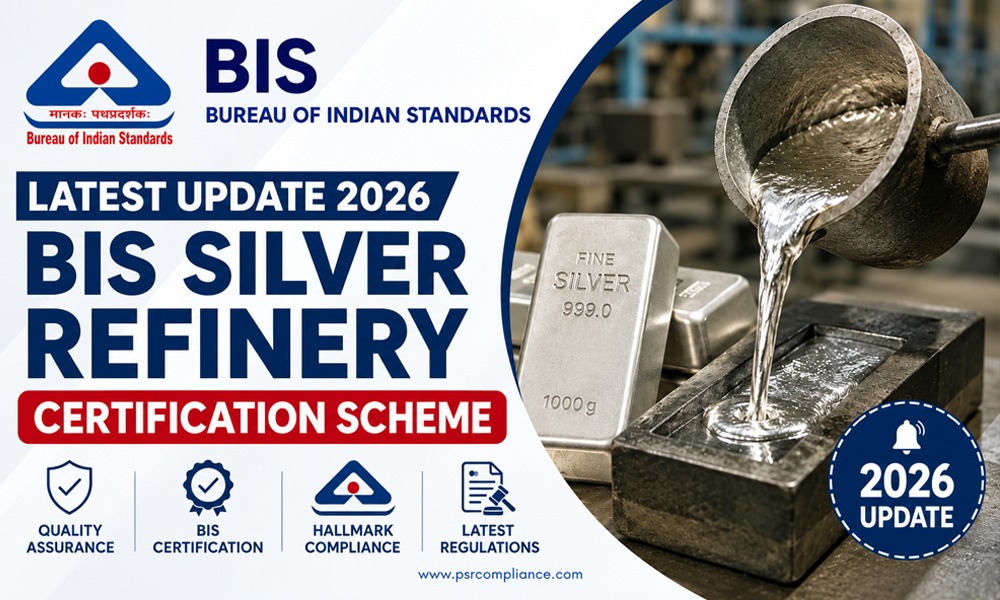
The Bureau of Indian Standards (BIS) has officially prioritized the domestic bullion sector by introducing the Silver Refinery Certification Scheme, that involved critical inputs and efforts by IBJA.
Mirroring the long-established certification ecosystem for gold, this framework introduces a structured “India Good Delivery for Silver” standard specifically tailored for silver bars and coins.
Buyers, institutional investors, and jewelers are guaranteed strict adherence to exact quality, testing, and traceability standards. Silver from any BIS-approved refinery ensures a verified fineness and purity.
Surendra Mehta, National Secretary- IBJA, said:

“BIS is introducing the Silver Refinery Certification Scheme, an initiative that involved critical inputs and efforts by IBJA. Mirroring the long-established certification ecosystem for gold, this framework introduces a structured India Good Delivery for Silver. Now, silver from any BIS-approved refinery ensures a verified fineness and purity. This will gradually end the impure silver bar market.”
Market structures have already evolved alongside this rollout. The Multi Commodity Exchange (MCX) aligned its exchange delivery protocols to accept BIS-standard domestic silver, allowing empanelled Indian refiners to fulfill physical delivery contracts directly on the exchange.
By formalizing the local refining of silver (including silver recovered as a by-product of gold dore), this scheme strengthens the domestic precious metals ecosystem in line with Aatmanirbhar Bharat objectives



India Delegation Arrives In Paris For Three Days Of Learning, Business & Collaboration

BIS Introduces The Silver Refinery Certification Scheme; Framework Introduces “India Good Delivery For Silver”

Navratri Edit By DAIMANTÉ: 9 Pendants, 9 Expressions Of Intention
BIS Introduces The Silver Refinery Certification Scheme; Framework Introduces “India Good Delivery For Silver”

Aspect Bullion & Refinery Launches “India’s Biggest Gold Fest” With Zero Making Charges On Gold Coins and Bars

GJEPC, ECGC Programme Underlines Recent Changes In Export Credit Insurance For The GJ Sector.
-
 National News6 hours ago
BIS Introduces The Silver Refinery Certification Scheme; Framework Introduces “India Good Delivery For Silver”
-
 National News7 hours ago
Aspect Bullion & Refinery Launches “India’s Biggest Gold Fest” With Zero Making Charges On Gold Coins and Bars
-
 National News7 hours ago
GJEPC, ECGC Programme Underlines Recent Changes In Export Credit Insurance For The GJ Sector.
-
 International News5 hours ago
India Delegation Arrives In Paris For Three Days Of Learning, Business & Collaboration
