
DiamondBuzz
41st World Diamond Congress To Tackle Geopolitics and Shifting Consumer Tides
Industry To Discuss Russian Sanctions, African Supply Dominance, and A Looming Generational Handover.

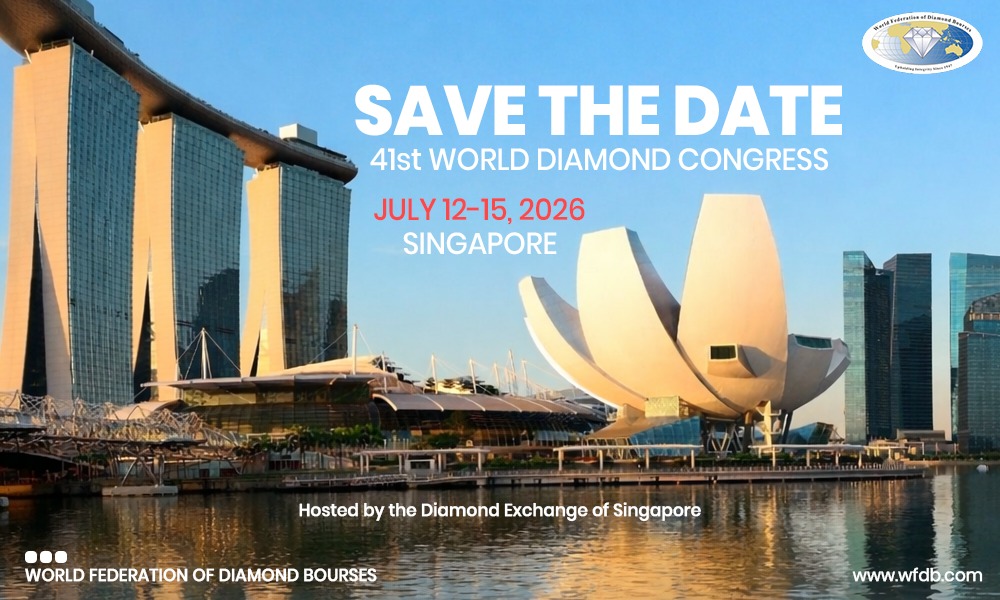
The World Federation of Diamond Bourses (WFDB) and the International Diamond Manufacturers Association (IDMA) announced Friday that the 41st World Diamond Congress will convene in Singapore from July 12–15, 2026. The four-day summit arrives at a pivotal moment for the $100 billion jewelry market, which is currently wrestling with the rise of lab-grown alternatives and tightening transparency requirements.
Five Pillars of the 2026 Agenda
The Congress has structured its programming around five core challenges that are expected to define the industry’s trajectory through the end of the decade:
- African Supply Leadership: A deep dive into the continent’s evolving role from a raw material source to a strategic power player.
- The Asian Pivot: Executives will explore untapped potential in the ASEAN bloc, specifically targeting emerging middle-class wealth in Indonesia, Vietnam, and Malaysia.
- Geopolitics and Sanctions: Critical sessions will address the ongoing trade-related restrictions that have reshaped global supply chains since 2022.
- The Demand Deficit: Stakeholders will brainstorm strategies to revitalize the global desire for natural diamonds over synthetic competitors.
- Generational Transition: A focus on integrating the “next gen” of leadership into the traditionally conservative diamond pipeline.
A Strategic Crossroads
The Congress will host an international mix of government representatives, manufacturers, and trade bodies. It noted that the ASEAN region represents a vital frontier for trade as traditional Western markets mature.
The timing of the event is strategic; it will run concurrently with the Singapore International Jewelry Expo (SIJE), bridging the gap between raw supply discussions and the high-end retail sector.
Market Outlook
For many in attendance, the primary concern remains the “natural vs. lab” debate. As Gen Z and Millennial buyers prioritize ethical sourcing and price transparency, the industry is under pressure to refine its narrative. The Congress is expected to serve as the primary forum for establishing a unified marketing front to bolster natural diamond demand.
Registration for the event remains open, with the industry’s top brass expected to finalize the roster of panel participants in the coming weeks.


DiamondBuzz
Botswana Looks Beyond Rough Diamond Sales, Eyes U.S. Jewelry Market
The Duty Exemption By US Presents An Opportunity For Domestic Jewelry Manufacturers In Gaborone To Bypass Traditional Middle-Market Hubs and Establish A Direct Pipeline To American Consumers

Grappling with a painful downturn in global rough-diamond demand, Botswana is pivoting its economic strategy: expanding up the supply chain directly into American retail shelves while leveraging its resource wealth to fund conservation and diversification.
Speaking on the sidelines of New York Climate Week, Bogolo Joy Kenewendo, Botswana’s Minister of Minerals and Energy, highlighted the southern African nation’s plan to capitalize on a 0% import-tariff rate to the U.S. market. The duty exemption presents an opportunity for domestic jewelry manufacturers in Gaborone to bypass traditional middle-market hubs and establish a direct pipeline to American consumers.
shift The push into value-added manufacturing comes as the world’s top diamond producer by value navigates a broader structural Diamond revenues have long formed the bedrock of Botswana’s post-independence balance sheet, underwriting universal secondary education and tuition-free university funding. However, recent market volatility has underscored the vulnerabilities of a mono-sectoral economy.
Under the Botswana Economic Transformation Programme (BETP)—an initiative spearheaded directly by President Duma Boko and his vice president—the government is directing resources toward manufacturing, agriculture, and broader mining sectors to reduce its heavy reliance on rough diamond sales.
To support its luxury exports, Botswana is recalibrating its brand narrative around origin, environmental stewardship, and social impact. The country recently announced a five-year extension of the “Okavango Eternal” partnership alongside De Beers Group and the National Geographic Society. The initiative aims to protect the ecological integrity of the Okavango River Basin while tying diamond purchases to conservation efforts.
With De Beers currently facing an impending ownership change, officials remain optimistic that any capital restructuring could bring additional funds into Botswana to accelerate its domestic economic transition.



GJS 2026 Diwali Edition Concludes On A High Note With Record Sales

GJEPC Launches UNNATI: Powering Women In GJ Sector To Drive Industry Growth Towards Viksit Bharat

Divine Solitaires and SGL Launch The Know Your Diamond Zone At GJS Diwali Edition 2026
GJEPC Launches UNNATI: Powering Women In GJ Sector To Drive Industry Growth Towards Viksit Bharat

KEYA By Adbhut Brings Wearable Art and Indian Craftsmanship To Delhi Art Weekend 2026
Divine Solitaires and SGL Launch The Know Your Diamond Zone At GJS Diwali Edition 2026
-
 National News1 day ago
GJEPC Launches UNNATI: Powering Women In GJ Sector To Drive Industry Growth Towards Viksit Bharat
-
 National News1 day ago
KEYA By Adbhut Brings Wearable Art and Indian Craftsmanship To Delhi Art Weekend 2026
-
 National News1 day ago
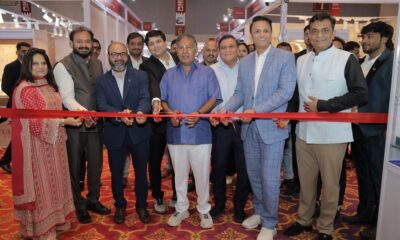
Divine Solitaires and SGL Launch The Know Your Diamond Zone At GJS Diwali Edition 2026
-

 National News1 day ago
Titan, Kalyan, Malabar, Senco and Indriya Lead 54 Champions Crowned At The First India International Jewellery Awards
