
International News
Precious metals extend rally on rising geopolitical and trade risks AUGMONT BULLION REPORT
A New Chapter of Sustainable Luxury from the House of Senco


Gold and silver climbed to fresh record highs, with gold touching $4,698 (~Rs.1,45,500) and silver reaching $94.36 (~Rs.3,01,300), as investors rushed into safe-haven assets amid a sharp escalation in geopolitical tensions. The move was triggered after U.S. President Donald Trump threatened to impose additional tariffs on European countries over control of Greenland.
The announcement drew swift criticism from European officials and raised fears of a wider transatlantic trade dispute. Trump warned that tariffs could rise to 25% by June if no agreement is reached. Combined with already elevated geopolitical risks, the rhetoric reignited global risk aversion, driving investors toward traditional safe havens like gold and silver. U.S. stock futures and the dollar weakened, while the yen and Swiss franc also benefited. European Union ambassadors have since agreed to step up diplomatic efforts to dissuade the U.S. from imposing tariffs, while preparing retaliatory measures if talks fail.
Geopolitical risks remain elevated elsewhere as well. Iran warned that any attack on Supreme Leader Ayatollah Ali Khamenei could trigger an all-out war with the U.S. Meanwhile, the Russia–Ukraine conflict continues to intensify, with Ukraine’s foreign minister citing evidence that Russia may be considering strikes near nuclear-linked infrastructure. President Volodymyr Zelensky said recent attacks suggest Moscow is not interested in diplomacy.
Silver has gained nearly 30% year-to-date, attracting strong speculative interest from both buyers and sellers, leading to sharp and erratic price swings. Physical tightness is showing early signs of easing as silver flows back from COMEX warehouses to Europe, while high prices may temper industrial demand. However, speculative appetite in China remains strong, with Shanghai prices trading almost $10 above London.
Markets now turn their attention to the U.S. PCE inflation data and the final Q3 GDP print for fresh direction. Even so, the broader fundamental backdrop continues to favor gold and silver bulls, keeping the case for further gains intact.
The gold boom began in mid-August, around $3400, and reached $4400 by mid-October. The prices then retraced and have been taking support from the uptrendline since. Gold is heading towards next resistance of $4750-60 (78.6% fibonnicci extension) (~Rs 147000) and $4990-5000 (100% fibonnicci extension) (~Rs 155,000).
As suggested last week, Silver has touched the 61.8% Fibonnicci resistance target of $93(~Rs 300,000). Next level to watch for is 78.6% Fibonnici extension of $99.2-100 (~Rs 320,000) and 100% fibonnicci extension of $107(~Rs 340,000). Strong support lies at $86.5 (~Rs 285,000).


International News
US Holiday Shopping Expected To Top $1 Trillion For The First Time: NRF
While Overall Buying Power Remains High, Ongoing Inflation and Rising Household Costs Mean Some Families Will Have To Watch Their Spending More Carefully Than Others

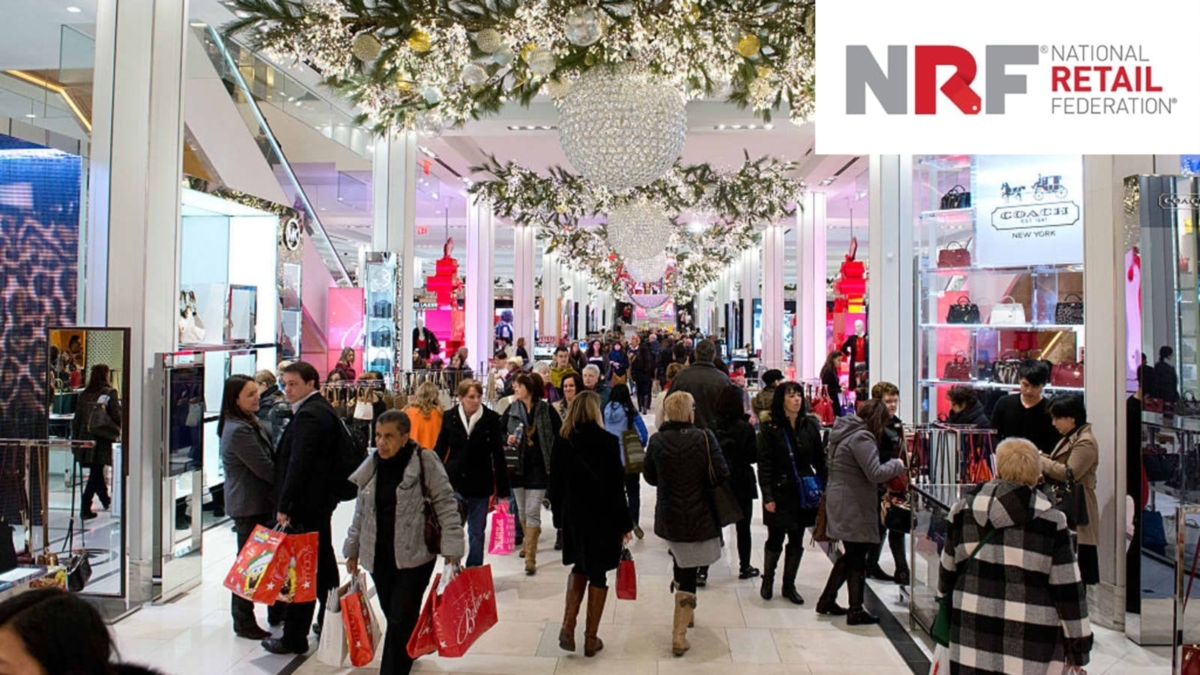
The National Retail Federation (NRF) predicts Americans will spend $1.01 trillion on holiday shopping in November and December. That is a 4.2% jump from $972 billion last year.
NRF said its forecast was based on economic modeling that incorporates consumer spending, employment, wages and historical retail sales data. It excludes automobile, gasoline and restaurant sales
Extra Hiring: To handle the surge in shoppers, stores plan to hire 325,000 to 375,000 temporary holiday workers.
Mixed Budget Impact: Higher gas prices and inflation could still strain some family budgets, affecting low- and high-income shoppers differently.
Retailers expect a strong shopping season because people continue to make holiday spending a priority.
Store owners are ready to attract shoppers by offering competitive prices, deals, and choices for every budget.
While overall buying power remains high, ongoing inflation and rising household costs mean some families will have to watch their spending more carefully than others.



Belgian Consul General H. E. Mr. Pierre Stverlynck Graces BDB Annual Day

Limelight Lab Grown Diamonds Crosses 100 Stores Milestone This Dussehra: Targets 200 In 2027

Joyalukkas Opens Its 2nd Bengaluru Showroom in Jayanagar

US Holiday Shopping Expected To Top $1 Trillion For The First Time: NRF
Belgian Consul General H. E. Mr. Pierre Stverlynck Graces BDB Annual Day
Limelight Lab Grown Diamonds Crosses 100 Stores Milestone This Dussehra: Targets 200 In 2027
-
 International News14 hours ago
US Holiday Shopping Expected To Top $1 Trillion For The First Time: NRF
-
 National News8 hours ago
Belgian Consul General H. E. Mr. Pierre Stverlynck Graces BDB Annual Day
-
 National News8 hours ago
Limelight Lab Grown Diamonds Crosses 100 Stores Milestone This Dussehra: Targets 200 In 2027
-
 New Premises9 hours ago
Joyalukkas Opens Its 2nd Bengaluru Showroom in Jayanagar
