

JB Insights
Jewellery and watches have remained standout performers in the global personal luxury market

The global luxury industry stands at an inflection point. Following years of vigorous recovery, the personal luxury segment is now entering what experts describe as a “reset” phase. Yet amid this broader slowdown, fine jewelry and watches have distinguished themselves by demonstrating remarkable resilience and sustained momentum—defying the challenges that have tempered growth in other luxury categories.
The latest True-Luxury survey by Boston Consulting Group (BCG) and Italian luxury think tank Altagamma reveals that the personal luxury market—which includes jewelry, apparel, and leather goods—is contending with significant headwinds driven by economic uncertainty and evolving consumer behavior. Despite this, fine jewelry and watches have continued on a stable growth trajectory, with positive projections for the near term.
A major driver behind this resilience is the steadfast loyalty of top-tier clients. This ultra-affluent group, representing just 0.1% of the global population, accounts for an outsized 23% of total luxury spending. Notably, over half of these consumers plan to increase their expenditure on luxury jewelry and watches by 5% to 25% over the next 18 months—providing a solid foundation for continued growth.
By contrast, the aspirational segment—comprising consumers who value luxury but face tighter financial constraints—paints a different picture. Around 35% of aspirational shoppers have cut back or paused luxury purchases in the past year, channeling spending instead toward savings, wellness, and the secondhand market. This divergence underscores a growing polarization within the luxury landscape.
Beyond consumption, fine jewelry and watches hold a distinct allure as tangible assets. The survey found that 34% of high-net-worth individuals view these purchases as investments—valuing them as both symbols of craftsmanship and stores of enduring value.
Looking ahead, Generation Z emerges as a promising growth driver for luxury jewelry and watches. According to the survey, 80% of Gen Z respondents plan to buy premium goods in the next year, and 70% feel represented by luxury brands.
To stay competitive, luxury brands must evolve alongside these shifting dynamics. BCG emphasizes the need to recommit to core values: exceptional quality, exclusivity, and cultivating deep personal relationships with clients. Many jewelry houses are responding by investing in “clienteling”—an approach that builds one-on-one connections and offers highly personalized services—aimed at strengthening loyalty and maintaining brand prestige.
Ultimately, the enduring success of jewelry and watches reflects a unique blend of attributes: emotional resonance, investment potential, superior craftsmanship, and cultural symbolism. As the broader luxury market undergoes its reset, these products remain highly sought after for their ability to offer immediate gratification coupled with long-term value.






Education
The New-Age Jewellery Professional: Why Tech Education for Jewellery Industry is the Biggest Growth Driver
#JbExclusive
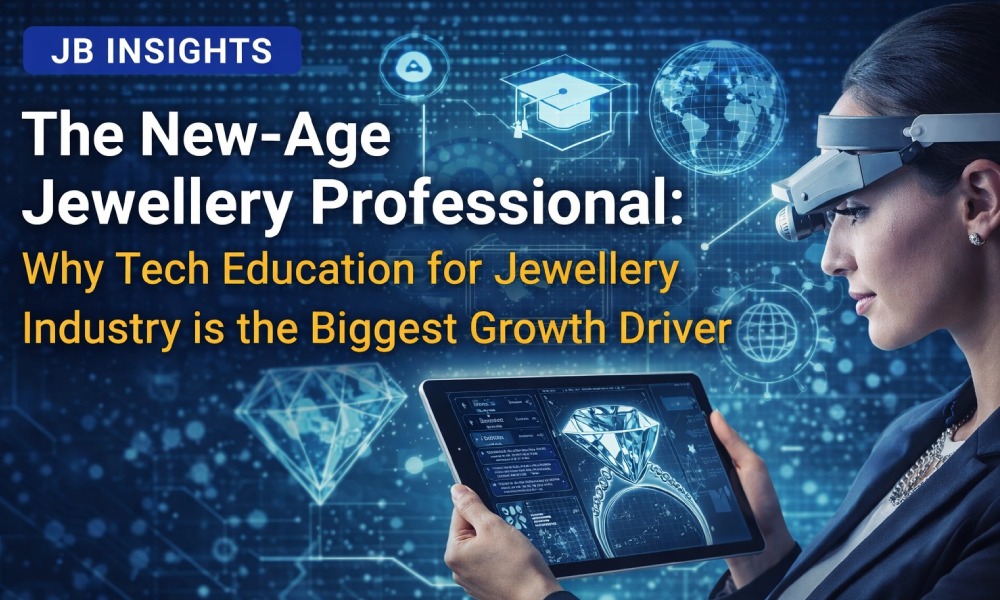
The jewellery industry is no longer defined by craftsmanship alone. Today, it sits at the intersection of design, technology, sustainability, finance, branding, and global trade. As consumer expectations evolve and competition intensifies, structured education and continuous skill development are emerging as the most powerful growth catalysts for the sector.
For a dynamic industry like India’s jewellery market, education is not optional — it is strategic.
From Karigar to Knowledge Professional
For decades, the backbone of the industry has been generational craftsmanship. While this legacy remains invaluable, modern jewellery businesses now demand professionals who understand:
- Gemology and diamond grading
- CAD and 3D jewellery design
- Retail management and consumer psychology
- Digital marketing and brand storytelling
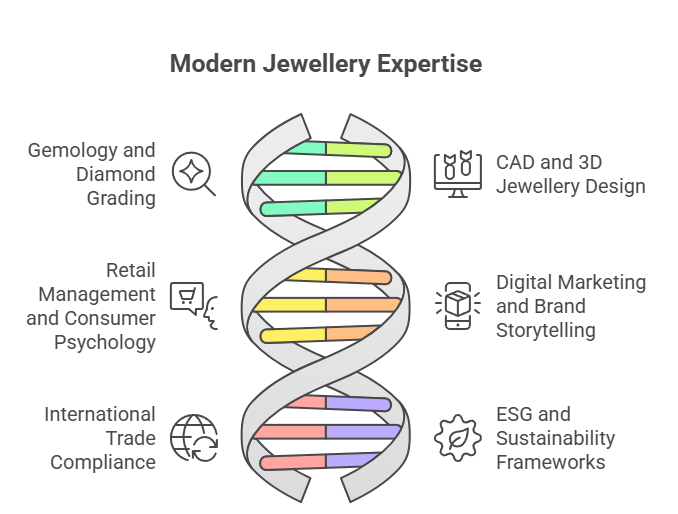
- International trade compliance and tariffs
- ESG and sustainability frameworks
Institutions such as the Gemological Institute of America and the Indian Institute of Gems and Jewellery have played a key role in formalising education pathways, helping transform traditional artisans and retailers into globally competitive professionals.
Trend Watch: Rise of Tech-Integrated Learning
One of the strongest education trends shaping the industry is technology integration.
- CAD & CAM Training: Digital prototyping reduces costs and speeds up product development cycles.
- AI in Retail Forecasting: Data-driven inventory planning is replacing intuition-based buying.
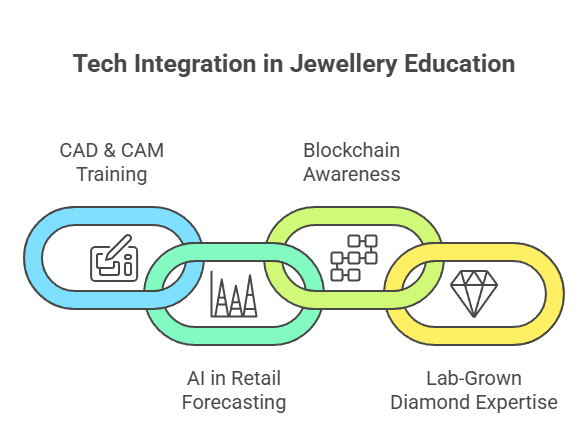
- Blockchain Awareness: Traceability in diamonds and coloured gemstones is becoming a compliance requirement rather than a luxury.
- Lab-Grown Diamond Expertise: As lab-grown diamonds gain market share, understanding grading, pricing dynamics, and consumer positioning has become critical.
Educational programs now increasingly blend online modules with hands-on workshops, enabling faster upskilling for working professionals.
The Bridal Economy & Consumer Education
India’s bridal jewellery segment continues to drive demand, but the modern bride is informed and research-oriented. She compares:
- Natural vs lab-grown diamonds
- Hallmarking standards
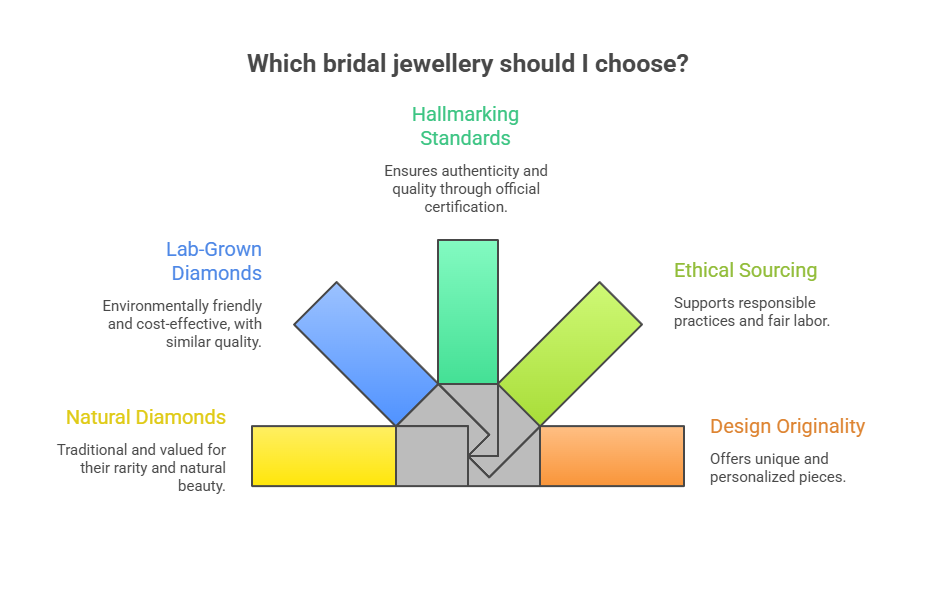
- Ethical sourcing claims
- Design originality
Retailers who invest in staff education see higher trust conversion rates. Well-trained sales professionals are no longer “salespeople” — they are consultants guiding life-defining purchases.
Financial Literacy in Jewellery
Another emerging area is financial education within the industry itself. With gold functioning as both adornment and asset, professionals must understand:
- Gold monetisation frameworks
- Hedging strategies
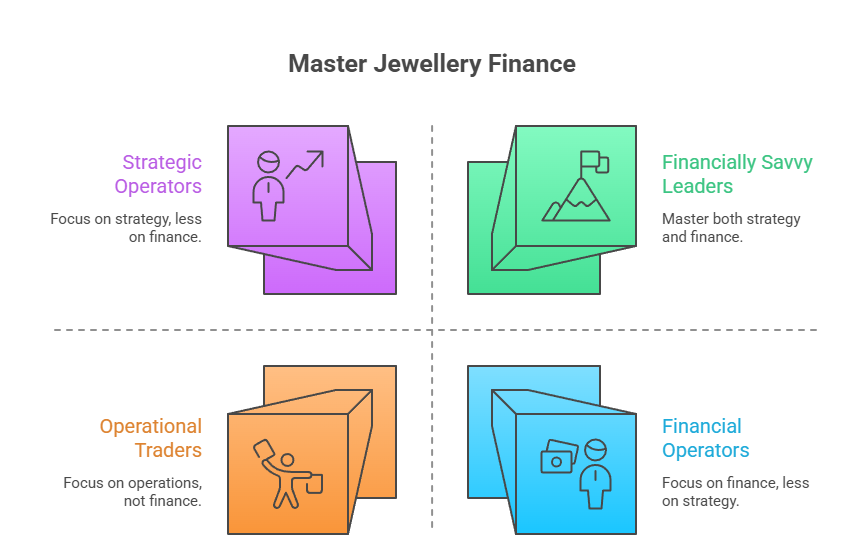
- Commodity price cycles
- Working capital management
Structured knowledge helps businesses move from being inventory-heavy traders to strategically managed enterprises.
Sustainability & Responsible Sourcing
Global buyers increasingly demand proof of ethical sourcing and environmental compliance. Education around responsible mining practices, supply-chain transparency, and ESG reporting is becoming central to export competitiveness.
Industry bodies such as the Gem & Jewellery Export Promotion Council regularly conduct seminars and workshops to align Indian exporters with evolving global standards.
The Future: Hybrid Skills Will Win
The next generation jewellery professional will not be defined by a single skill. The future belongs to those who combine:
- Design sensibility
- Technical expertise
- Business acumen
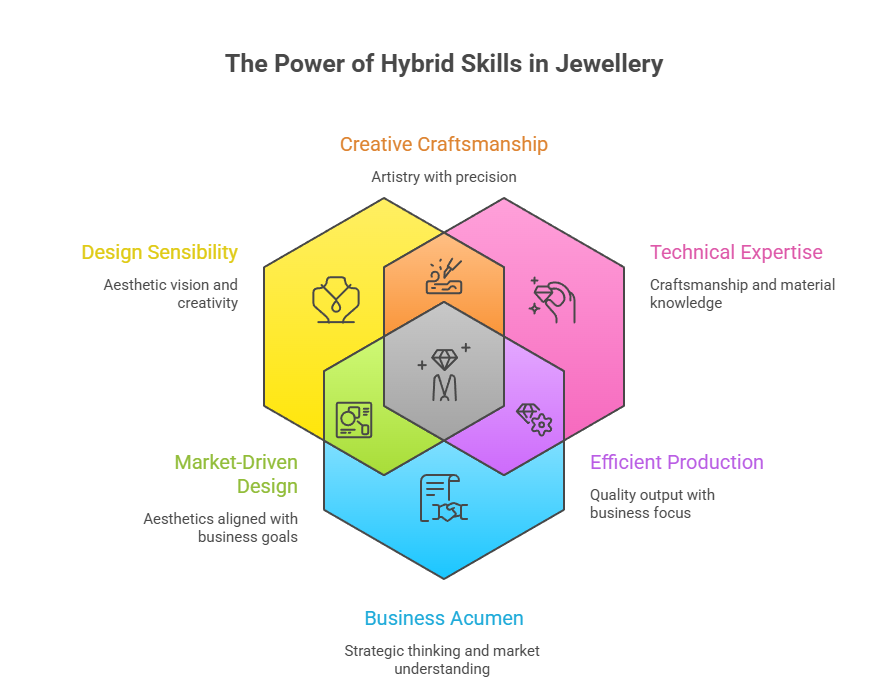
- Digital fluency
- Ethical awareness
For a sector contributing significantly to India’s exports and employment, education is the bridge between heritage and high growth.
Knowledge is the new luxury. As the jewellery industry transitions into a more organised, tech-enabled, and globally integrated ecosystem, continuous learning will determine who leads and who lags. The sparkle of the future will not just come from diamonds — it will come from informed minds shaping the industry.

-

 DiamondBuzz4 hours ago
Botswana Diamonds rebrands as Botswana Minerals PLC
-
 DiamondBuzz5 hours ago
Despite revenue growth in jewellery sector, natural diamond upstream sees stagnation
-
 International News6 hours ago
India Pavilion at HK twin shows showcases exceptional craftsmanship
-

 International News7 hours ago
Gold continues to get strength on the Middle East conflict