JB Insights
Indian Gold Industry announces ‘Indian Association for Gold Excellence and Standards’ (IAGES)
IAGES is self-regulatory organization (SRO) for the Indian gold industry, by the Indian gold industry that is supported by the WGC


The Indian gold industry has today announced the formation of the Indian Association for Gold Excellence and Standards (IAGES – pronounced as I-AAY-GES), a self regulatory organisation (SRO) created by the Indian gold industry, for the Indian gold industry and supported by the World Gold Council.
IAGES will aim at increasing consumer confidence and enhancing trust in the Indian gold industry through encouraging adoption of fair, transparent and sustainable practices, regulatory compliance, establishing code of conduct and introducing an audit framework – created by the Indian gold industry, for the Indian gold industry across the entire industry value chain. It will be inspired by the World Gold Council’s Retail Gold Investment Principles IAGES will aim to give gold providers a detailed set of best practices and a road map for implementing them.
IAGES will be formed by national industry associations including Indian Bullion and Jewellers Association (IBJA), All India Gems and Jewellery Council of India (GJC) and Gem and Jewellery Export Promotion Council (GJEPC) and supported by the World Gold Council.
IAGES logo represents coming together of various stakeholders of the Indian industry for the greater good of the gold industry and colour red denotes purity, commitment and represents India’s warm diversified culture.
IAGES will be independently governed and professionally managed. The Code of Conduct created by it will be available for everyone from the industry, however, its adoption will be entirely voluntary. The registrations for IAGES membership will be announced soon and the organisation will be operational by early 2025.

Sachin Jain, Regional CEO, India, World Gold Council, said, “The gold industry is integral to the Indian economy, contributing approx. 2% to Indian GDP and 3-5mn in employment. The World Gold Council has been promoting a need for creating a Self-regulatory organisation to promote adoption of best practices. The launch of IAGES marks a pivotal step towards enhancing trust for the Indian gold industry. Self-regulation will help empower stakeholders to build a sustainable and trusted gold market. We at the World Gold Council are fully committed to supporting IAGES. It is a unique initiative and global gold industry will be watching it, it should help propel India’s gold market to global prominence.”
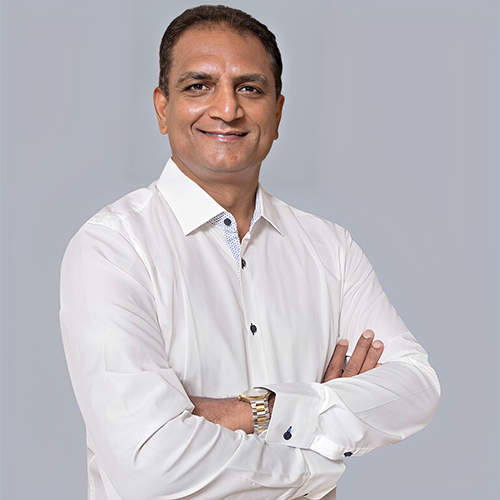
Vipul Shah, Chairman, Gem and Jewellery Export Promotion Council (GJEPC), said, “The formation of IAGES is a landmark achievement for the Indian gold industry. It underscores our collective commitment to establishing the highest standards of ethics, transparency, and sustainability. By creating a self-regulatory body, we are taking a proactive step to build trust and confidence among Govt., consumers, investors, and international stakeholders in the Indian gem & jewellery industry. IAGES will not only strengthen India’s position as a global gold hub but also drive innovation and growth within the industry.
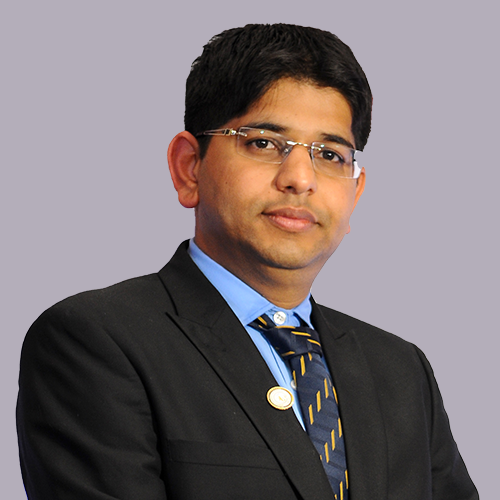
Saiyam Mehra, Chairman, All India Gems and Jewellery Council of India (GJC); “All India Gem & Jewellery Domestic Council is honoured to be associated with the IAGES. IAGES is surely the need of the hour, and this collaboration represents a significant step towards advancing the standards of excellence and transparency within the gold industry in India.
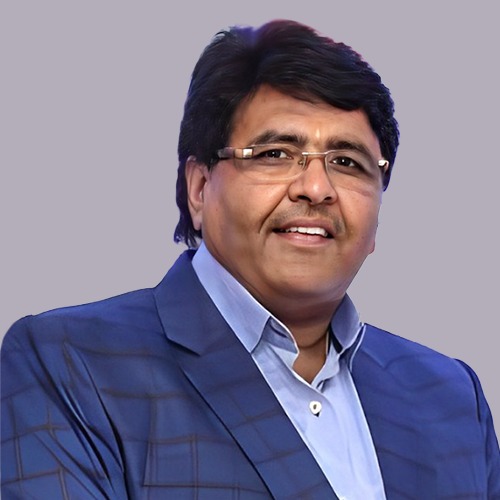
Prithviraj Kothari, National President, India Bullion and Jewellers Association (IBJA); “The establishment of IAGES marks a significant milestone for the Indian gold sector, showcasing our united dedication to upholding the highest standards of integrity, transparency, and sustainability. Through the creation of a self-regulating entity, we are proactively fostering trust and confidence among governmental bodies, consumers, investors, and international partners within the Indian gem and jewellery domain.






JB Insights
Gold Rate-Locking and Advance-Booking Ahead Of Dhanteras 2026
The Strategy Is To Mitigate The Impact Of Heightened Price Volatility and Recent Bullion Price Corrections On Consumer Sentiment

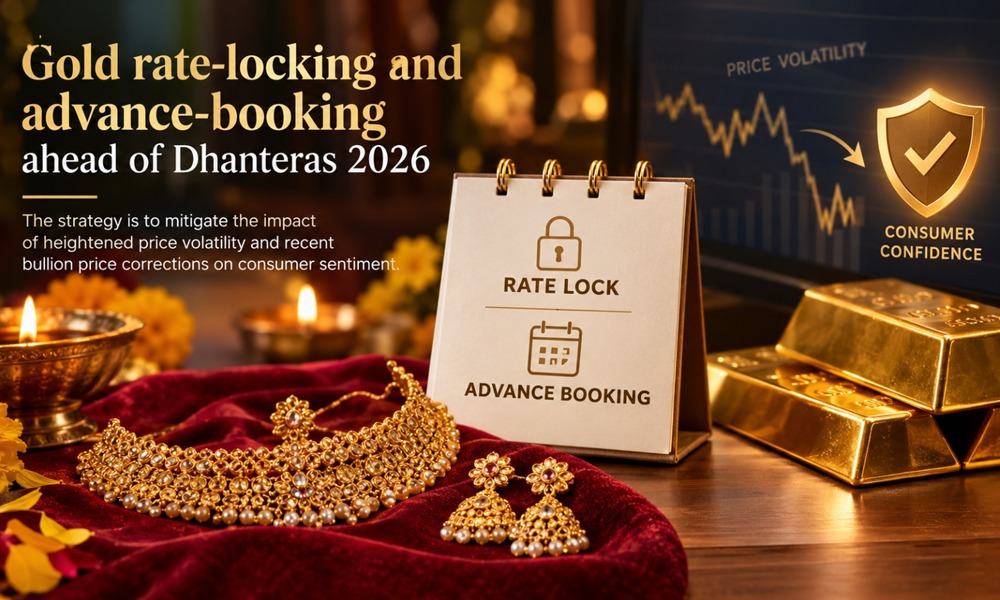
Ahead of Dhanteras on November 6, 2026, Indian jewellery retailers are aggressively leveraging advance-booking and gold rate-locking schemes to mitigate the impact of heightened price volatility and recent bullion price corrections on consumer sentiment.
Following subdued sales during Dussehra, retailers are banking on the dual convergence of Dhanteras and the upcoming wedding season to drive robust revenue recovery. Leading national and regional brands report optimistic projections, bolstered by strong interest in both heavy bridal pieces and budget-conscious solutions like lightweight jewellery and old-gold exchanges.
1. Market Context & Bullion Price Trends
Recent gold and silver trading ranges reflect elevated price levels driven by ongoing global geopolitical uncertainty, sustained central-bank purchases, and fluctuations in international currency markets.
- Gold Prices: Standard 10-gram rates are hovering between Rs 1.42 lakh and Rs 1.44 lakh.
- Silver Prices: Standard 1-kilogram rates range from Rs 1.95 lakh to Rs 1.96 lakh.
While high prices have created initial friction, recent price corrections have provided an entry window for consumers, encouraging advance commitments ahead of expected festive demand spikes.
Retail Outlook & Strategic Schemes
To capitalize on festive tailwinds and hedge consumers against potential price surges, major retailers—including Kalyan Jewellers, Joyalukkas, Senco Gold & Diamonds,—have deployed price-protection mechanisms.
Rate-Locking Mechanisms
Advance-booking schemes allow buyers to reserve jewellery by locking in current gold prices. If prices rise before final delivery, consumers pay the lower locked-in rate; if prices decline, consumers benefit from the lower market price at the time of final settlement.
Consumer Buying Patterns & Product Demand
Rising gold rates are bifurcating consumer preferences into two distinct buying trends:
High-Value Bridal & Heritage Segment
Wedding-related purchasing remains a resilient anchor for the market. Consumers continue to allocate budgets toward high-ticket items, including:
- Heavy Gold Pieces: Essential traditional bridal sets.
- Heritage & Polki Work: Intricate traditional craftsmanship.
- Diamond Jewellery: Increasingly favored in modern bridal trouseaus.
Budget Management & Value Optimization
To offset high unit costs for non-wedding or casual festive purchases, consumers are adjusting their buying strategies:
- Lightweight Jewellery: Lower overall grammage to fit fixed budget caps.
- Old-Gold Exchanges: Recycling existing family holdings into contemporary designs.
Key Insight: Senco Gold reported that old-gold exchanges now account for more than 50% of its overall business, underscoring exchange programs as the single most critical driver of sales enablement during high-price regimes.
Operational Outlook & Risks
The immediate business outlook for Indian jewellery retailers hinges on execution during the final days leading up to Dhanteras and the subsequent wedding peak:
- Conversion Metrics: The final festive revenue numbers will depend on the successful conversion rate of advance bookings into finalized, fulfilled sales.
- Margin Protection: While rate-locking drives volume, unhedged price movements pose minor margin risks for smaller retailers lacking robust bullion hedging practices.
- Inventory Management: Retailers must balance inventory stocks between high-margin bridal inventory and fast-moving, lightweight everyday wear.
Indian jewellery retailers are entering the Dhanteras 2026 period with high expectations, relying on structural price-protection tools to overcome earlier seasonal slumps. As advance bookings build momentum, old-gold recycling and rate-locking schemes are effectively bridging the gap between record-high bullion prices and strong consumer appetite for seasonal gold accumulation.


Gargi By P N Gadgil & Sons Invites Women To #GETNOTICED This Diwali In New Campaign With Mithila Palkar

IBJA, SAARTHI 360 Sign MoU To Launch ‘NextGen CEO: Leadership for the Future’

Jos Alukkas Unveils New Website For A Seamless Online Jewellery Shopping Experience

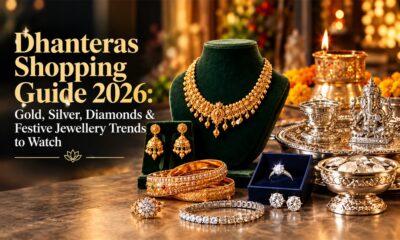
Dhanteras Shopping Guide 2026:Gold, Silver, Diamonds & Festive Jewellery Trends To Watch

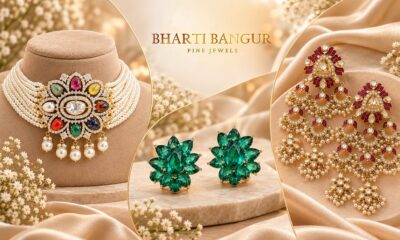
The Solenne Collection: A Celebration Of Diwali By Bharti Bangur Fine Jewels

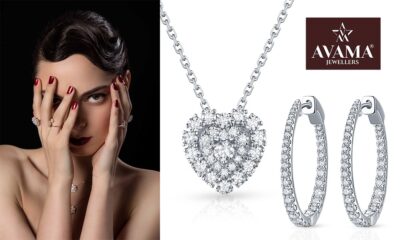
From Diya Puja To Diwali Soirées: Jewellery Designed To Go Beyond The Festive Season
-
 JB Insights4 days ago
Dhanteras Shopping Guide 2026:Gold, Silver, Diamonds & Festive Jewellery Trends To Watch
-
 BrandBuzz4 days ago
The Solenne Collection: A Celebration Of Diwali By Bharti Bangur Fine Jewels
-
 BrandBuzz4 days ago
From Diya Puja To Diwali Soirées: Jewellery Designed To Go Beyond The Festive Season
-
 National News4 days ago
Indriya, Aditya Birla Jewellery Unveiled India’s Largest Sustainable Jewellery Rangavalli