JB Insights
LGDs are fundamentally changing the definition and accessibility of luxury

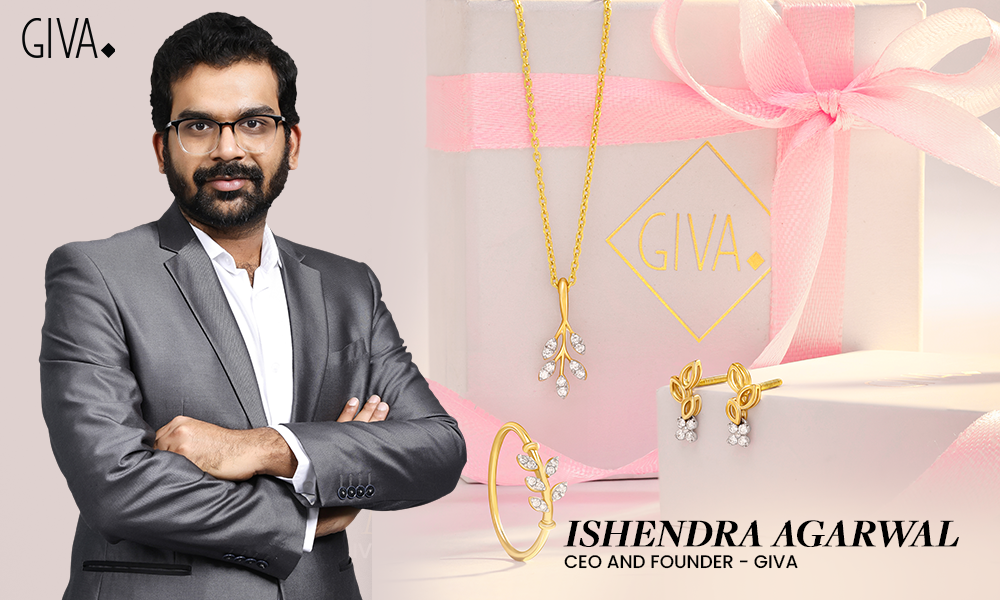
Over the past year, GIVA has witnessed a growing demand for LGDs, driven largely by millennials and Gen Z. Ishendra Agarwal, CEO and Founder, GIVA speaking to JewelBuzz underscores the fact that LGDs offer timeless beauty with lower environmental impact, aligning with modern values and redefining fine jewellery in India. GIVA is leveraging their flexibility and affordability to democratize aspiration, delivering high-quality, customizable designs. As LGDs gain traction, GIVA aims to lead the shift toward a more inclusive, responsible, and innovative jewellery future.

- Over the last year, consumer preferences have noticeably shifted toward conscious luxury. How is GIVA seeing this trend play out in terms of demand for lab-grown diamonds, especially among millennials and Gen Z?
We’re seeing a clear shift in the way younger consumers define luxury. Millennials and Gen Z are leaning into purpose-driven purchases, where beauty meets responsibility. Lab-grown diamonds (LGDs) align perfectly with this ethos, offering timeless clarity and shine with a conscious edge. At GIVA, the response has been phenomenal. We’re witnessing a steady rise in first-time fine jewellery buyers choosing LGDs because they reflect both their style and values.
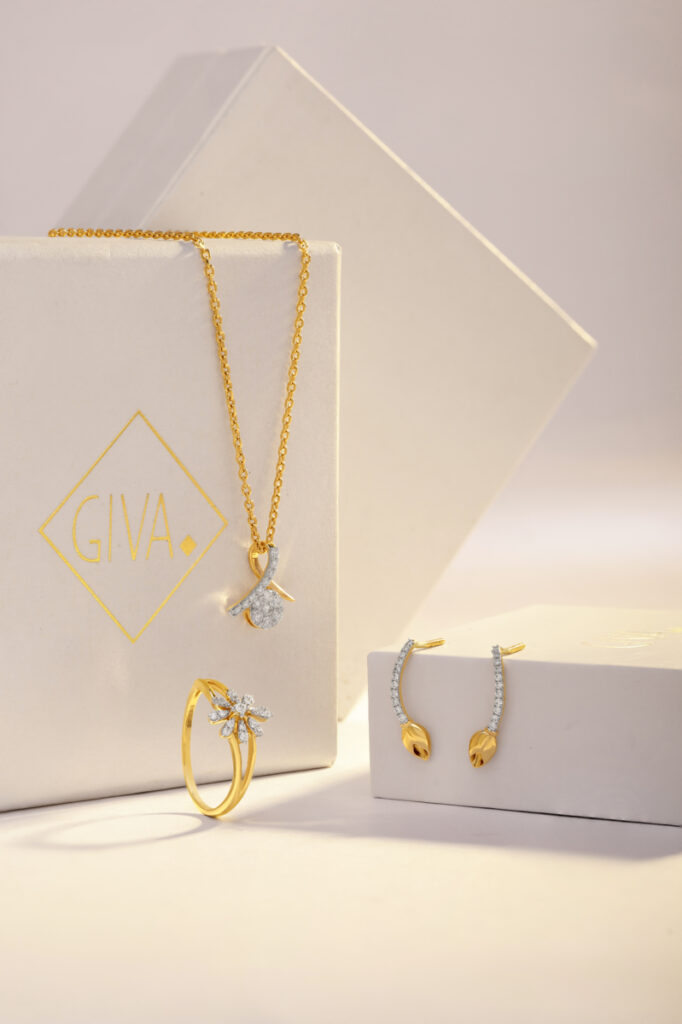
Our Mother’s Day collection was met with a fantastic response, especially popular were our earrings and pendant sets, along with 18K rings and earrings that saw strong customer interest.
- Lab-grown diamonds are being touted as the next big thing in fine jewellery. What makes this category so exciting for GIVA, and how do you see it reshaping the future of the jewellery industry in India?
Lab-grown diamonds are more than a passing trend; they are fundamentally changing the definition and accessibility of luxury. GIVA is enthusiastic about their potential to merge innovation, ethical considerations, and elegance, appealing to today’s environmentally aware customers. LGDs provide greater design possibilities, promote sustainability, and offer more accessible price points, making fine jewelry more inclusive and forward-thinking. As their popularity increases, lab-grown diamonds are expected to significantly reshape India’s jewelry market.
- Lab-grown diamonds offer the charm of fine jewellery at a more accessible price point. How is GIVA using this to democratize aspiration, making premium design and craftsmanship available to a wider audience?
We’ve always believed that luxury should feel personal and not out of reach. Lab-grown diamonds allow us to deliver exceptional craftsmanship, meaningful design, and lasting brilliance at a price point that’s more accessible.
At GIVA, we’re not just offering jewellery; we’re creating opportunities for more people to celebrate life’s moments with pieces that reflect both value and values. Whether it’s a first fine jewellery purchase or a conscious choice for love, LGDs are helping us democratize aspiration without compromising on quality or emotion.
- Sustainability has become a buzzword across industries — but what does it mean in the context of lab-grown diamonds?
In the world of jewellery, sustainability means transparency, responsibility, and innovation. Lab-grown diamonds are created in controlled environments with significantly lower environmental impact. For GIVA, embracing LGDs is part of our commitment to a cleaner, kinder future, where beauty doesn’t come at the planet’s expense. And we’re committed to educating our customers about why that matters.
- With LGDs offering more flexibility in size, shape, and quality — how has this impacted GIVA’s approach to product design and innovation?
Lab-grown diamonds have unlocked a new dimension of design freedom for us at GIVA. With greater flexibility in size, shape, and quality, we at GIVA are able to now experiment with cuts and settings that were previously limited by cost or sourcing constraints.
This has led to bolder, more intricate designs and importantly, the ability to offer made-to-order pieces that reflect personal stories and preferences. From concept to creation, we’re able to deliver variety, brilliance, and customization at a pace and price that today’s consumer expects.
- Do you foresee lab-grown diamonds becoming mainstream in India? And what role will GIVA play in building this next chapter of modern jewellery?
Yes, we believe lab-grown diamonds are on the cusp of becoming mainstream in India. As awareness builds and barriers fall, LGDs will define a new era of jewellery that is aspirational yet ethical, premium yet personal. At GIVA, we see ourselves at the forefront of this change, driving education, expanding access, and building a brand that evolves with the modern consumer.
- Trade and industry needs to strictly adhere to the ethical guidelines of LGD declaration. What is the level of this compliance in industry and retail trade?
Transparency is the cornerstone of trust in the jewellery industry, especially with an emerging category like lab-grown diamonds. While awareness and compliance around LGD declaration are steadily improving, there’s still work to be done across both trade and retail.
Leading brands and responsible retailers are taking clear steps to label LGDs correctly and educate consumers about their origin, quality, and value. However, consistent industry-wide adherence to ethical guidelines is critical to protect consumer trust and ensure the category’s long-term credibility. As the market matures, we expect stricter self-regulation and more informed choices, both from sellers and buyers.







JB Insights
Silver Wholesale Goes Digital: How India’s 925 Silver Trade Is Changing The Way It Buys and Sells
The buyers on the wholesale side have changed too. Alongside the traditional jeweller, the trade now serves Instagram and WhatsApp sellers working from home, marketplace sellers, and first-time founders building their own jewellery brands online

By BanwariLal Bamalwa CEO | Director, GlamBug Mart Pvt Ltd

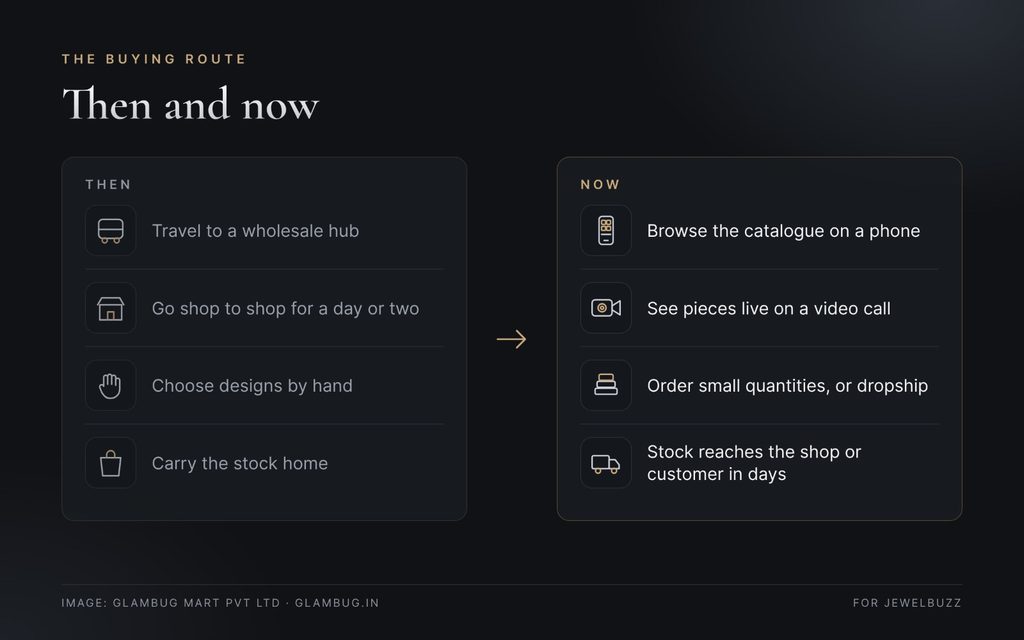
For decades, buying silver jewellery wholesale in India followed a familiar route. A retailer from a smaller town would travel to a wholesale hub, spend a day or two going from shop to shop, choose designs by hand, settle the price by weight, and carry the stock home. The model worked, but it favoured buyers with time, travel budgets and the capital to hold inventory.
That route is now changing quickly.
A New Kind Of Buyer
925 sterling silver has become one of the most active categories in Indian jewellery. As gold has grown more expensive, silver has found a wider audience in everyday fashion, gifting and festive wear, especially among younger customers.
The buyers on the wholesale side have changed too. Alongside the traditional jeweller, the trade now serves Instagram and WhatsApp sellers working from home, marketplace sellers, and first-time founders building their own jewellery brands online. Many of them have never visited a wholesale market. They want to see designs on a phone, order in small quantities, and have stock reach them, or their customer, within days.
Four Shifts In How The Trade Works
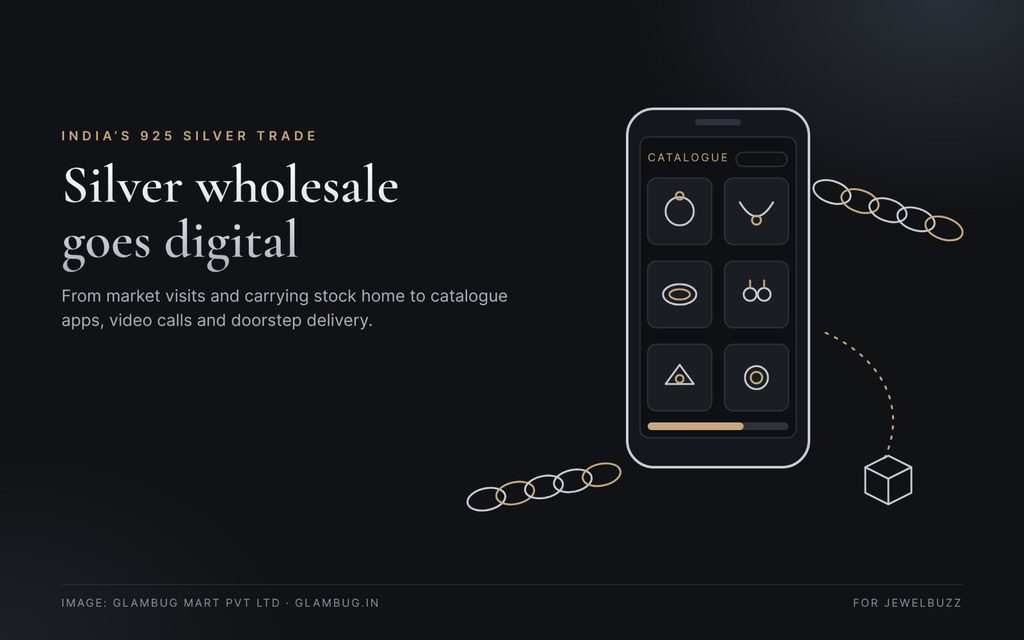
1. Catalogue apps are replacing market visits. Wholesalers are moving their catalogues into B2B apps where approved buyers can see designs, weights and per-gram rates, and send an enquiry for a quotation. Pricing by weight, once negotiated at the counter, is becoming visible and consistent.
2. Video calls are replacing the showroom. For buyers who still want to see a piece before ordering, live video selection lets them check finish, size, clasps and hallmarks on camera without travelling.
3. Dropshipping is lowering the cost of entry. A growing number of small sellers start with no inventory. They list designs online, and the wholesaler packs and ships each order directly to the end customer. For a home-based reseller, this removes the biggest barrier to starting: the cost of stock.
4. Integration is replacing manual updates. Online brands on platforms such as Shopify increasingly expect a supplier’s catalogue, stock levels and order flow to connect directly to their store, rather than copying product details and updating stock by hand.
Trust Becomes The Product
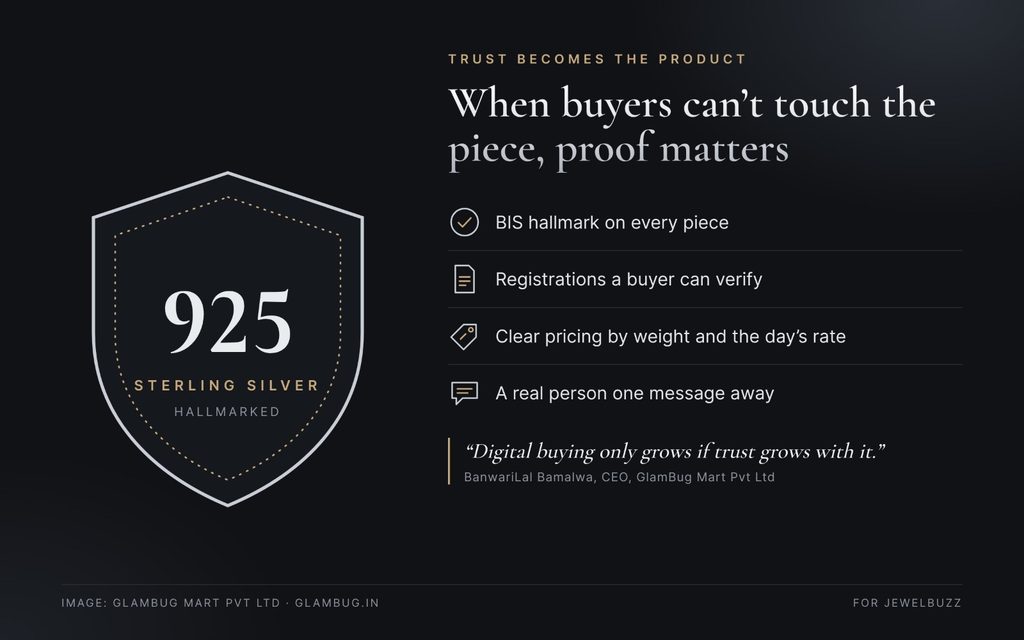
When buyers can no longer hold a piece before paying for it, trust becomes the deciding factor. Purity concerns are among the biggest worries for online jewellery shoppers and new resellers, and this is pushing hallmarking and verifiable registrations to the front of the buying decision.
Online, a buyer cannot touch the piece, so the first question is whether the silver is genuine. A supplier who openly shares their BIS registration and other credentials makes that question easy to answer. Digital buying only grows if trust grows with it.
GlamBug’s own path reflects the wider shift. The company, which imports from Italy, Turkey and Hong Kong and has held BIS hallmark registration since 2020, has over the past two years added a B2B catalogue app, video-call selection, dropshipping, a Shopify app and an API for partners, alongside its traditional wholesale business.
Our buyers changed before we did.A jeweller in a smaller town and a reseller working from home both want the same thing: to order quickly, with clear pricing and genuine silver. Technology is simply how we meet them where they already are.
The Challenges Ahead
The shift is not without friction. Silver prices can move sharply, which makes quotations harder to hold. Many traders now attach a validity window to each quote and price strictly by weight and the day’s rate. Small orders and direct shipping add packaging and logistics costs. And as more sellers enter the market, discounting can quickly erode thin margins.
Industry participants also point out that technology does not replace relationships. Many jewellers still value a call with a trusted supplier, and the most successful digital models keep a human contact a message away.
What It Means For The Trade
Digital wholesale is not replacing the traditional jeweller. It is widening the market. The same retailer who once bought only at the counter can now reorder from an app, and sellers who could never afford a showroom can build a business on hallmarked silver.
For wholesalers, the message is becoming clear: digitise the catalogue, make purity and registrations easy to verify, lower the barriers for small buyers, and connect to the platforms buyers already use. The buyers have already moved online. The trade is now catching up.


Rhenium, Iridium In Gold Under Scrutiny; GJC Urges Industry To Stay Calm and Alert, BIS Assures Vigilance and Action

GJEPC Conducts IIJS Bharat Retailers’ Connect In Kozhikode

CaratLane’s Retail Network Reaches 400 Stores In India With Chennai’s 16th Store In Pallikaranai
CaratLane’s Retail Network Reaches 400 Stores In India With Chennai’s 16th Store In Pallikaranai

Bengaluru Based Inventor Claims To Turn Elements Into Gold & Silver Using GNT
Rhenium, Iridium In Gold Under Scrutiny; GJC Urges Industry To Stay Calm and Alert, BIS Assures Vigilance and Action
-
 New Premises18 hours ago
CaratLane’s Retail Network Reaches 400 Stores In India With Chennai’s 16th Store In Pallikaranai
-
 National News22 hours ago
Bengaluru Based Inventor Claims To Turn Elements Into Gold & Silver Using GNT
-
 National News15 hours ago
Rhenium, Iridium In Gold Under Scrutiny; GJC Urges Industry To Stay Calm and Alert, BIS Assures Vigilance and Action
-
 JB Insights2 days ago
Silver Wholesale Goes Digital: How India’s 925 Silver Trade Is Changing The Way It Buys and Sells