
National News
How India Has rebalanced its jewellery exports

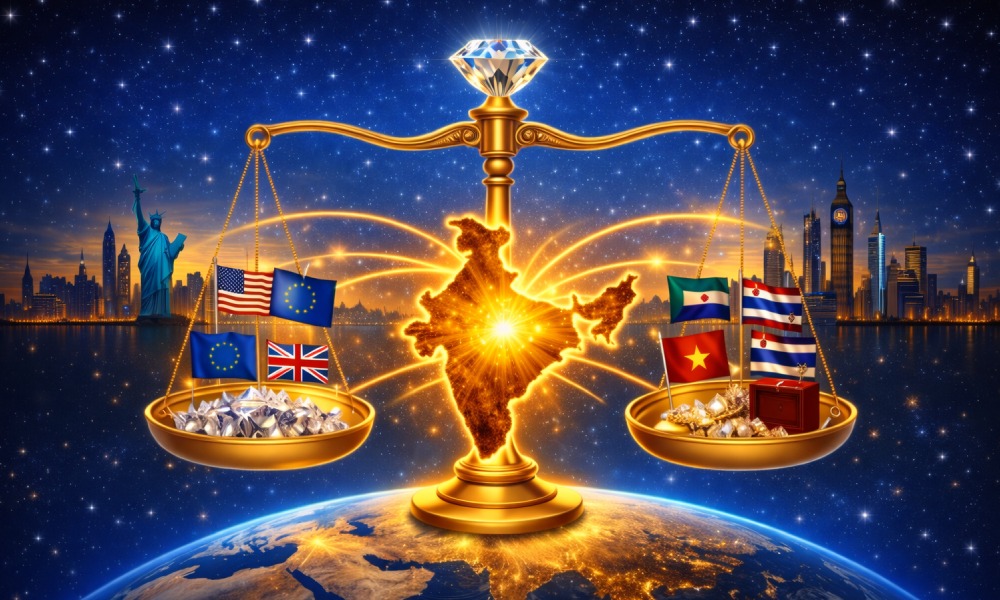
The year 2025 proved to be one of recalibration for the global gem and jewellery trade, shaped by shifting markets, policy changes and geopolitical uncertainty. Reflecting on the year gone by, Kirit Bhansali, Chairman, GJEPC, examines how India’s industry adapted through diversification, strategic outreach and renewed resilience.
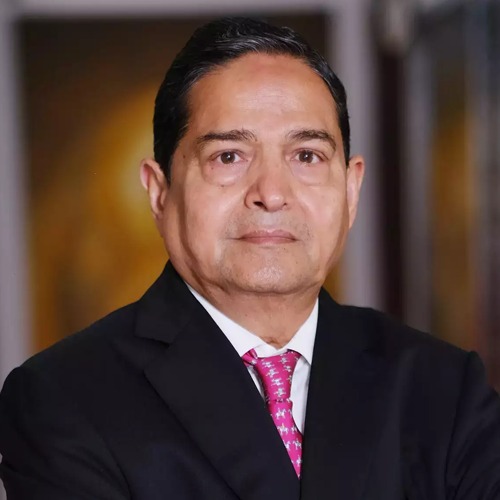
Global trade rarely moves in straight lines, and the Indian gem and jewellery industry experienced this reality first-hand in 2025. The year unfolded against a backdrop of shifting consumer sentiment, evolving trade policies and geopolitical uncertainty, compelling exporters to recalibrate strategies even as they strengthened long-term fundamentals. What emerged was not a story of disruption alone, but one of adjustment, diversification and structural resilience.
Key consumption markets displayed uneven demand patterns. The United States, traditionally India’s largest export destination, witnessed a moderation in buying as tariff-related developments and a more protectionist trade environment weighed on sentiment. This had a tangible impact on margins and order volumes, particularly in diamonds and diamond-studded jewellery. China’s recovery, meanwhile, remained selective and cautious, with retailers maintaining tight inventory levels and adopting conservative procurement strategies.
In such an environment, sustaining export momentum required a shift from volume-driven growth to a more balanced, risk-mitigated approach. This transition is visible in India’s export performance during April–November 2025. Gem and jewellery exports during this period stood at US$ 18.87 billion, marginally higher than US$ 18.85 billion in the corresponding period last year. While growth was modest, the stability itself is significant, reflecting the industry’s capacity to absorb external volatility without losing ground.
This outcome was shaped by a conscious, multi-year effort to reduce dependence on a handful of mature markets and build a broader geographic base. Indian exporters increasingly focused on product-market alignment, deeper buyer relationships and entry into non-traditional destinations across Latin America, Southeast Asia and the Middle East. These efforts ensured that softness in one region was offset by traction in others.
The results of this diversification are evident in market-wise performance. During April–November 2025, exports to the UAE rose sharply by 32.4% to US$ 6.25 billion, underlining the growing importance of the Gulf as a strategic hub. Hong Kong recorded growth of 22.72% to US$ 3.78 billion, while markets such as Australia, Thailand and Israel also delivered double-digit expansion. A wide set of emerging destinations contributed incremental gains, collectively strengthening the export base.
Supporting this geographic expansion has been sustained international outreach under the Brand India showcase. Through curated platforms such as India Design Galleries, India Experience Lounges, Buyer–Seller Meets and India Pavilions at global exhibitions, Indian exporters have been able to engage new buyers while reinforcing trust in established markets. These initiatives have positioned India not merely as a volume supplier, but as a reliable sourcing partner offering design depth, manufacturing scale and consistency.
A central pillar of this ecosystem is IIJS Bharat, now the world’s second-largest gem and jewellery trade fair. Across its multiple editions, the show has evolved into a key driver of business discovery, market signalling and buyer engagement. For international buyers, IIJS offers a comprehensive view of India’s capabilities across product categories, price points and technologies, reinforcing the country’s role as a global sourcing destination.
Another notable development has been the launch of the Saudi Arabia Jewellery Exposition (SAJEX) in Jeddah. The initiative marks a strategic push into one of the region’s fastest-growing jewellery markets. With Saudi Arabia’s jewellery sector projected to approach US$ 8.34 billion by 2030, SAJEX provides a structured platform for Indian exporters to build direct trade linkages and long-term partnerships in the Kingdom.
Beyond exports, the industry’s demand base itself is becoming more balanced. Indian jewellery retailers are expanding their overseas presence, particularly in the UK, the US and the Middle East, adding stability to order flows. Organised retail is playing a growing role, both domestically and internationally, smoothing demand cycles and improving visibility for manufacturers. At the same time, India’s domestic jewellery market—estimated at around US$ 85 billion—continues to serve as a critical anchor. Steady economic growth and evolving consumer preferences are sustaining demand across gold, diamonds, platinum and coloured gemstones.
Trade agreements have further enhanced India’s competitive positioning. Tariff benefits under the India–UAE CEPA contributed to a near 44% rise in plain gold jewellery exports to the UAE during April–November 2025, while diamond-set jewellery continues to gain traction in premium retail segments across the Gulf. Free Trade Agreements with partners such as the UAE, Australia, EFTA countries, the UK, Oman, New Zealand, and EU, are steadily improving market access for Indian exporters.
A landmark development has been the recent securing of the India–EU Free Trade Agreement—often described as the “mother of all FTAs” given the scale and sophistication of the 27-member European bloc. The agreement eliminates the 2–4% import duties on Indian gem and jewellery products entering the EU, creating a significantly more competitive environment for Indian exporters in one of the world’s most affluent consumer markets.
Policy support has complemented these market-driven shifts. Initiatives aimed at streamlining trade processes and improving ease of doing business are beginning to show results. Digital platforms like the Trade Connect Portal are enabling early-stage market access by linking exporters with verified buyers. The Export Promotion Mission launched in November 2025 is particularly relevant for the sector, enhancing access to credit and institutional support in an industry where MSMEs form the backbone.
Category-level promotion also remains essential. Collaborative campaigns to stimulate diamond demand in key markets and sustained efforts to strengthen gold jewellery consumption are reinforcing long-term demand drivers alongside trade expansion.
Taken together, these developments point to a structural rebalancing of India’s gem and jewellery export model. The industry is becoming more diversified, less market-concentrated and better equipped to manage cyclical shifts. As it works towards a medium-term export target of US$ 45 billion by 2030 and a longer-term vision of US$ 100 billion by 2047, the emphasis will remain on disciplined growth, market expansion and close coordination between industry and government.
Going forward, the outlook is one of cautious confidence. With wider market access, a resilient domestic base and a strengthening policy framework, the industry is positioned to navigate near-term uncertainties while laying the foundation for sustainable, long-term growth.


National News
MCX Gold Silver August Futures Decline
The Precious Metal Dropped As Much As 0.8% To Near $4,040 An Bounce, Erasing A Modest Gain In The Previous Session

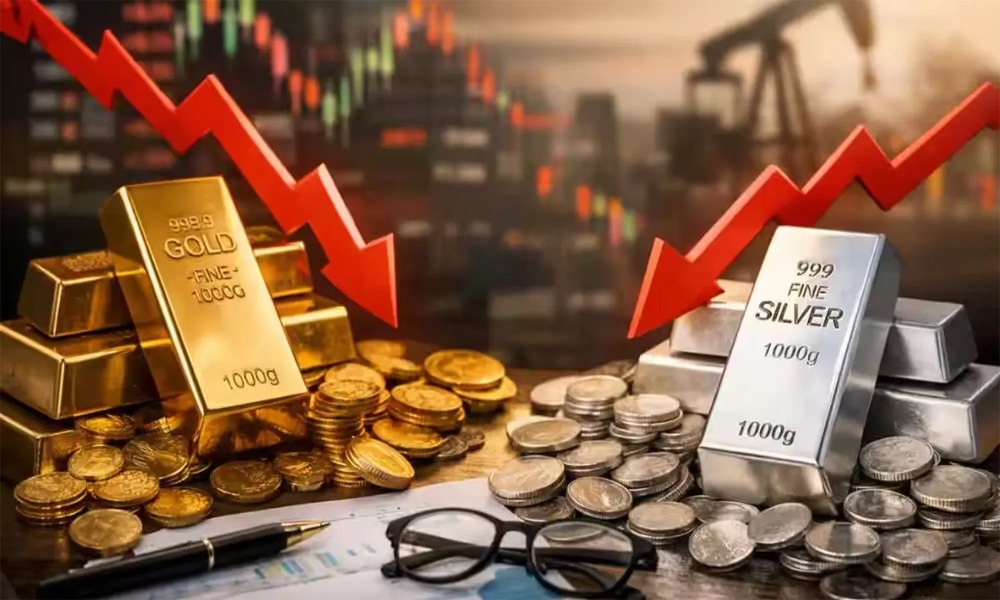
The MCX gold August futures contract dipped 0.56% to Rs 1,42,100 per 10 grams, while the MCX silver September futures dropped 1.42% to Rs 2,18,025 per kg.In the global markets too, gold dipped days before a possibly divisive decision on US Federal Reserve interest rates, while an uncertain halt in Middle East tensions soothed inflation fears.
The precious metal dropped as much as 0.8% to near $4,040 an ounce, erasing a modest gain in the previous session. Traders are looking at the Federal Reserve’s rate decision Wednesday, with policymakers remain divided between June’s tamer-than-expected inflation data and the latest jump in oil prices that accompanied a flare-up in fighting between the US and Iran.
Gold ETFs showed mixed movements during the session. Edelweiss Gold ETF slipped by 1.36% to Rs 141.45, while Groww Gold ETF fell 1.43% to Rs 13.82. On the positive side, Motilal Oswal Gold ETF gained 0.51% to reach Rs 142.30, and Angel One Gold ETF rose by 0.60% to Rs 13.38.


-

 JB Insights2 hours ago
Fiona Diamonds: Combining AI, Sustainability, Customization and Allure Of LGD
-

 National News9 minutes ago
MCX Gold Silver August Futures Decline
-
 JB Insights1 hour ago
Legacy, Loyalty & Local Insight: How Karan Kothari Jewellers Is Shaping Vidarbha’s Jewellery Narrative
-
 JB Insights2 hours ago
Reimagining Luxury Jewellery Retail: How Technology Is Empowering The New-Age Indian Consumer
